Hydroelectric Energy Report
: Analysis on the Market, Trends, and TechnologiesThe hydroelectric sector sits on a strategic inflection point where technology-driven flexibility and legacy asset management together determine near-term value creation; the global hydroelectric market reached $278,570,000,000 in 2024 with a projected CAGR of 5.4%, signaling meaningful commercial momentum even as structural headwinds persist. Global capacity additions and pumped-storage growth in 2024 further underscore investment appetite, with 24.6 GW of new hydropower capacity reported alongside rising interest in pumped-storage expansion Hydro industry toasts 2024 growth spurt. This combination frames a dual-market dynamic: incumbents must extract more value from existing dams through modernization and storage while a cohort of modular, low-impact firms scale in-conduit and hydrokinetic solutions to unlock previously unusable flows.
We updated this report 232 days ago. Missing information? Contact us to add your insights.
Topic Dominance Index of Hydroelectric Energy
The Topic Dominance Index combines the distribution of news articles that mention Hydroelectric Energy, the timeline of newly founded companies working within this sector, and the share of voice within the global search data
Key Activities and Applications
- Modernization and life-extension of conventional plants: Upgrades focus on turbines, generators, control systems, and digital monitoring to raise output and compliance with environmental rules.
- Pumped-Storage Hydropower (PSH) deployment and repurposing: Utilities and developers target PSH for long-duration grid services and to integrate variable renewables.
- In-conduit and municipal water energy recovery: Harvesting excess pressure in drinking water and wastewater networks to generate distributed electricity without new civil works.
- Micro, small and modular hydro rollouts: Low-head and hydrokinetic devices deployed for rural electrification, irrigation networks, and industrial sites to provide continuous, local power.
- Environmental service integration: Fish-friendly turbines, improved fish passage, and sediment management are becoming embedded features that influence permitting and revenue outcomes.
- Hybridization with storage and other renewables: Pairing hydro with batteries or floating PV on reservoirs to protect energy yields during low inflow periods and to diversify revenue streams.
Emergent Trends and Core Insights
- Pumped-storage is reasserting strategic value. PSH additions and project pipelines increased in 2024, reflecting the market imperative for long-duration dispatchable assets as wind and solar penetration rises.
- Decentralized kinetic capture gains commercial traction. Innovations that exploit low-head or conduit flows remove dependency on new reservoirs and accelerate deployment cycles.
- Environmental performance becomes a commercial lever. Technologies demonstrating near-zero fish mortality and reduced habitat impact shorten permitting pathways and open new project windows.
- Digital operations and asset optimization deliver margin uplift. Cloud monitoring, digital twins and AI forecasting yield incremental generation and maintenance savings, helping justify modernization capex.
- Geographic shift in capacity additions. Emerging markets drove a disproportionate share of new capacity in recent years, highlighting where deployment and concessional financing activity concentrates Over 24 GW of hydropower capacity added worldwide in 2024.
- Water availability is an operational risk that redefines asset economics. Recent droughts compressed capacity factors in key markets, elevating the value of storage and flexible operation Executive summary – Electricity 2024 – Analysis - IEA.
Technologies and Methodologies
- In-conduit micro-hydro and Pressure-Recovery Systems: Devices that convert pressure differentials in pipelines into steady power with rapid payback in utility or industrial contexts.
- Hydrokinetic turbines and VIV/Aero-inspired converters: Designs that capture energy from slow currents, rivers, and tidal streams without dams, enabling deployment in previously uneconomic sites.
- Fish-friendly runner and adjustable-weir tech: Turbine geometries (e.g. Archimedes screw variants, vortex and screw-based runners) and adjustable weirs that increase head while protecting fauna.
- High-density fluid pumped storage and subsurface variants: Alternative storage media and geology-based pumped systems expand viable PSH site pools beyond mountainous reservoirs RheEnergise.
- Additive manufacturing and modular fabrication: 3D printed composite turbines and transportable modules cut lead times and lower capex for small and low-head units.
- Digital twins, AI forecasting and remote monitoring: Real-time inflow forecasting and predictive maintenance raise utilization and reduce outage risk.
Hydroelectric Energy Funding
A total of 262 Hydroelectric Energy companies have received funding.
Overall, Hydroelectric Energy companies have raised $100.3B.
Companies within the Hydroelectric Energy domain have secured capital from 830 funding rounds.
The chart shows the funding trendline of Hydroelectric Energy companies over the last 5 years
Hydroelectric Energy Companies
- Emrgy Inc. — Emrgy develops modular, damless turbine arrays that integrate into slow or shallow water flows and in-canal infrastructure; their resource assessment tool targets the large untapped in-conduit potential (estimated >6 GW in the US alone) and supports rapid project identification and deployment.
- Energyminer GmbH — Energyminer builds the Energyfish, a suspended micro-hydro device designed to scale through volume deployment across rivers and streams without dams; the company positions the product as a path to distributed baseload and targets aggressive roll-out objectives in Europe.
- InPipe Energy — InPipe Energy commercializes the HydroXS™ micro-hydropower solution to convert excess pressure in municipal and industrial piping into continuous electricity; the company offers turn-key integration with utilities and structures financing to accelerate adoption.
- SPEAR Hydro — SPEAR Hydro supplies a floating, pendulum-fin hydro module that operates in free-flowing rivers and urban waterways with low wildlife impact; the plug-and-play design targets urban, navigable and debris-prone contexts where conventional turbines fail.
Gain a competitive edge with access to 2.6K Hydroelectric Energy companies.
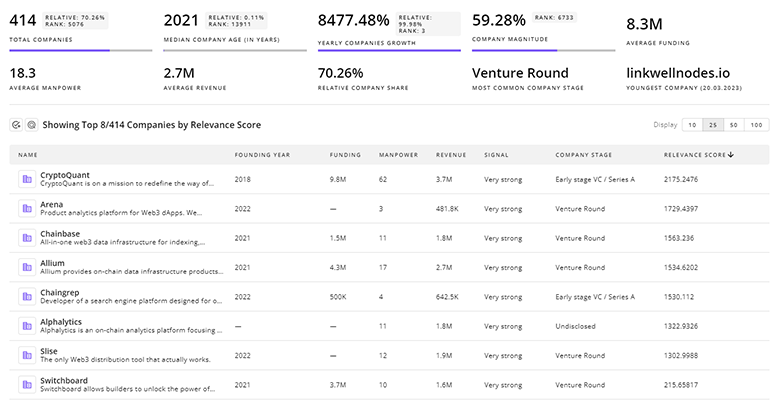
2.6K Hydroelectric Energy Companies
Discover Hydroelectric Energy Companies, their Funding, Manpower, Revenues, Stages, and much more
Hydroelectric Energy Investors
Leverage TrendFeedr’s sophisticated investment intelligence into 658 Hydroelectric Energy investors. It covers funding rounds, investor activity, and key financial metrics in Hydroelectric Energy. investors tool is ideal for business strategists and investment experts as it offers crucial insights needed to seize investment opportunities.
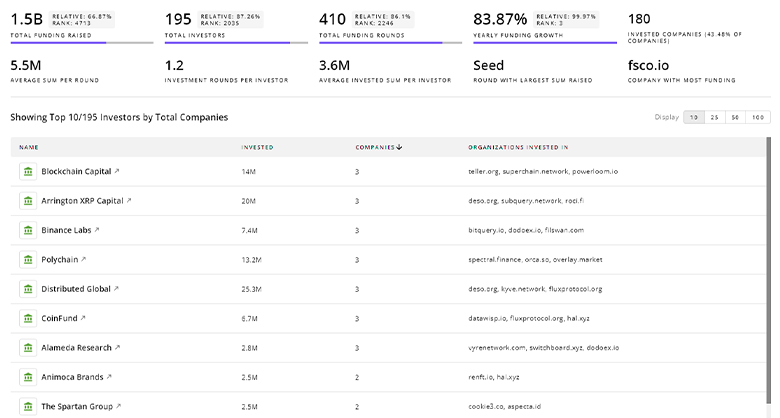
658 Hydroelectric Energy Investors
Discover Hydroelectric Energy Investors, Funding Rounds, Invested Amounts, and Funding Growth
Hydroelectric Energy News
TrendFeedr’s News feature provides a historical overview and current momentum of Hydroelectric Energy by analyzing 2.9K news articles. This tool allows market analysts and strategists to align with latest market developments.
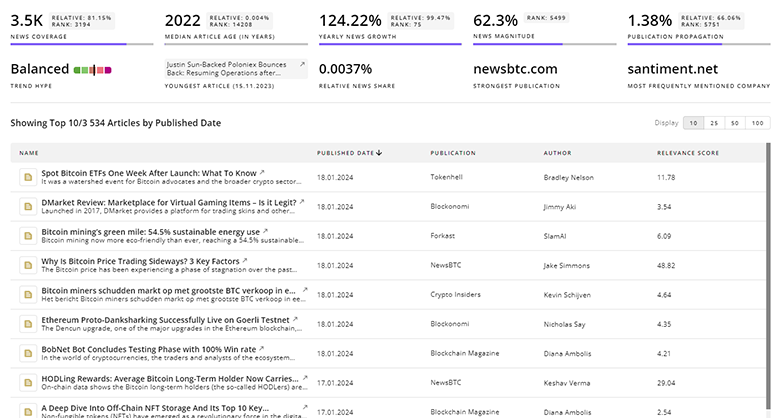
2.9K Hydroelectric Energy News Articles
Discover Latest Hydroelectric Energy Articles, News Magnitude, Publication Propagation, Yearly Growth, and Strongest Publications
Executive Summary
Hydroelectric energy remains central to system reliability, but near-term returns will flow to players that reconcile environmental requirements with operational flexibility. Investors and operators should prioritize: modernizing legacy assets where capacity-factor gains are high; acquiring or partnering with modular kinetic and in-conduit specialists to unlock latent waterway value; and funding storage solutions that convert intermittent renewables into firm capacity. Commercial outcomes will favor firms that can certify low ecological impact, deliver verified performance at scale, and position hydro as a predictable complement to wind and solar rather than an alternative.
Interested in contributing your expertise on trends and tech? We’d love to hear from you.