Food & Beverage Distribution Report
: Analysis on the Market, Trends, and TechnologiesThe distribution layer that links producers to consumers is shifting from scale alone to precision fulfillment and visibility, with the global food & beverage distribution segment reporting a marketsize of $544,180,000,000 (2025) and a forecast of $681,670,000,000 by 2029. Online channels are the highest-growth vector (online retail expanding at 5.63% CAGR globally), forcing distributors to redeploy $12.5 billion in capital into cold-chain and digital systems while handling extremely high throughput (the U.S. foodservice distribution delivered 12 billion cases in 2022) The Economic Impact of the US Foodservice Distribution Industry (IFDA).
This article was last updated 263 days ago. If you find any info is missing, let us know!
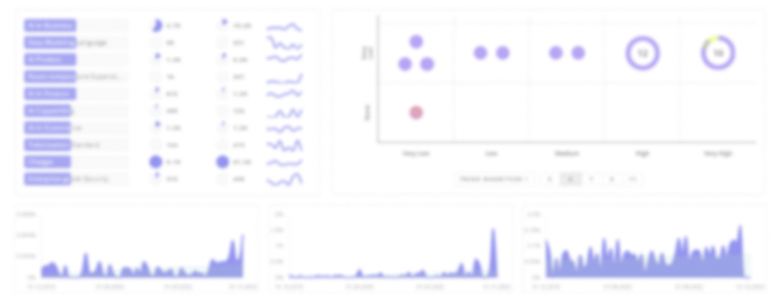
Topic Dominance Index of Food & Beverage Distribution
The Dominance Index of Food & Beverage Distribution looks at the evolution of the sector through a combination of multiple data sources. We analyze the distribution of news articles that mention Food & Beverage Distribution, the timeline of newly founded companies working in this sector, and the share of voice within the global search data
Key Activities and Applications
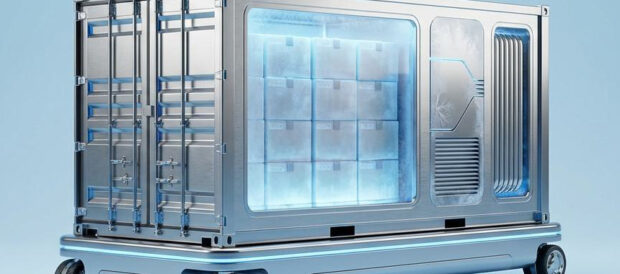
- Multi-temperature warehousing and cold chain management — designing networks that handle ambient, chilled, and frozen SKUs with continuous monitoring and FEFO controls to protect perishable margin.
- Digital B2B order and marketplace platforms — e-ordering portals and mobile apps that reduce reliance on field sales and improve demand signal fidelity, already deployed in regional markets to capture high-frequency hospitality demand Bidfood Middle East.
- Last-mile routing and micro-fulfillment for HORECA — dynamic route optimization and micro-hubs to support small, perishable orders with same-day or next-day SLAs, directly addressing the profitability gap in small-batch deliveries.
- Condition-aware batching and routing — grouping SKUs and orders by temperature sensitivity and quality lifetime rather than distance, minimizing spoilage and optimizing delivery sequence (patent activity concentrated on condition-based dispatching).
- Value-added services (VAS) — co-packing, labeling, private label manufacturing, and display creation to increase per-order margin and deepen customer stickiness Nedcargo.
Emergent Trends and Core Insights
- E-commerce and omnichannel reorientation — online grocery and digital foodservice ordering outpace traditional channels (online grocery sales in the U.S. projected to exceed $120 billion by 2028), compelling distributors to add digital storefronts and API integration with retail platforms North America Food and Beverage Market Outlook to 2030.
- Quality-first routing — dispatch algorithms increasingly prioritize remaining product life (quality guarantee time) over simple distance minimization, reducing spoilage costs and protecting liability exposure (documented in patent filings centered on microbial and freshness metrics).
- Regional hotspots and cold-chain capex concentration — the U.S. distribution footprint includes 346 million sq ft of distribution space with one-third in California, Texas, and Florida; capital investment into distribution reached $12.5 billion (2022), signaling where capacity bets are being placed.
- Specialty channels gaining margin share — plant-based proteins and functional beverages (high CAGR segments) create demand for tighter temperature control and faster replenishment, lifting contract value for capable cold-chain providers Global Food & Beverage Industry Outlook 2029 – MarketsandMarkets.
- Platformization of distribution — software firms are emerging as the operational layer (DaaS / Logistics as a Service) that lets smaller brands access national retail and foodservice footprints without capex-heavy infrastructure.
Technologies and Methodologies
- AI-driven demand forecasting and route optimization — machine learning models ingest POS, weather, and event signals to define replenishment cadence and dynamic routing that reduce stockouts and delivery miles.
- IoT and sensor networks for cold-chain visibility — in-transit temperature and humidity telemetry with edge thresholds to trigger rework, claims, or re-routing interventions; required for cross-border perishables handling.
- Condition-aware orchestration and digital twins — systems that model product degradation curves and map inventory to demand nodes, enabling preemptive inventory repositioning to micro-fulfillment points (patent emphasis on digital control tied to microbial/quality metrics).
- Specialized WMS + EDI + API stacks — integrated ERP/WMS with bespoke EDI connectors and B2B API endpoints to support complex pricing tiers, promotions, and multi-vendor order flows Distribution Alternatives.
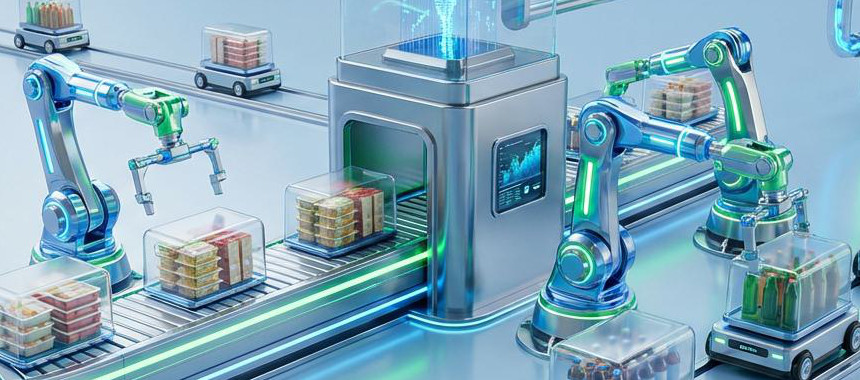
- Robotics and zone automation in fulfillment — targeted automation (robotic picking, AGVs) focused on temperature-segregated nodes to increase throughput without increasing shrink risk Distribution Management.
Food & Beverage Distribution Funding
A total of 675 Food & Beverage Distribution companies have received funding.
Overall, Food & Beverage Distribution companies have raised $128.1B.
Companies within the Food & Beverage Distribution domain have secured capital from 2.8K funding rounds.
The chart shows the funding trendline of Food & Beverage Distribution companies over the last 5 years
Food & Beverage Distribution Companies
- SupplyNow — A lean SaaS + operations provider helping distributors stabilize daily perishable fulfillment. The company reports 350+ paid users, $700K+ monthly volume, and integrates AI routing to convert complex, small-order restaurant runs into repeatable, lower-cost routes. Its business model targets independent distributors that lack scale to build proprietary routing systems.
- Distribution 2000 Inc. — Niche 3PL that specializes in organic and specialty foods with FDA-registered, NOP compliance warehousing. It combines high-touch handling, multi-channel distribution, and co-packing to serve brands that require certification and traceability, commanding higher service margins for specialty SKUs.
- FreshSpoke — Offers Distribution as a Service (DaaS) for emerging retail brands in Ontario, bundling warehousing, last-mile delivery, and account management on a subscription basis. By abstracting logistics overhead, it reduces go-to-shelf barriers for local producers and lowers distribution cost per SKU for scale-up brands.
- True Grade — Specialized supplier and logistics partner to cruise lines and hospitality with multi-temperature, free trade zone capabilities and MSC/ASC certifications. Its focus on traceability and sustainability lets it access contracts where procurement requires verified ethical sourcing and regulatory throughput.
- BFC Software — Market-focused WMS and operations platform tailored to food distributors, providing FEFO enforcement, real-time KPI dashboards, and integrated financial controls. The software acts as an operational backbone that converts manual distribution processes into measurable, auditable workflows.
Uncover actionable market insights on 3.7K companies driving Food & Beverage Distribution with TrendFeedr's Companies tool.
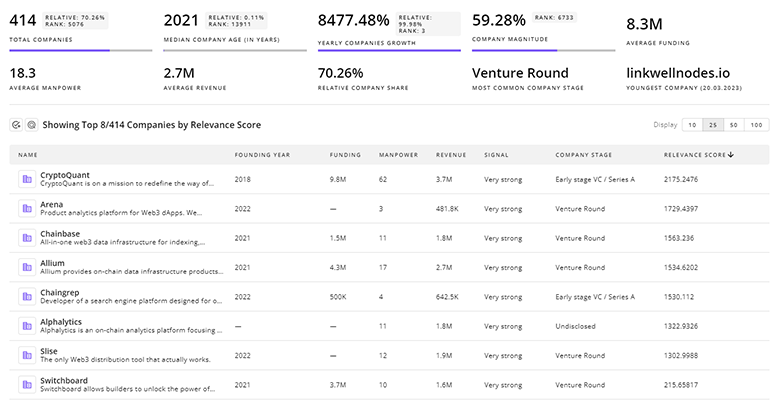
3.7K Food & Beverage Distribution Companies
Discover Food & Beverage Distribution Companies, their Funding, Manpower, Revenues, Stages, and much more
Food & Beverage Distribution Investors
Get ahead with your investment strategy with insights into 3.5K Food & Beverage Distribution investors. TrendFeedr’s investors tool is your go-to source for comprehensive analysis of investment activities and financial trends. The tool is tailored for navigating the investment world, offering insights for successful market positioning and partnerships within Food & Beverage Distribution.
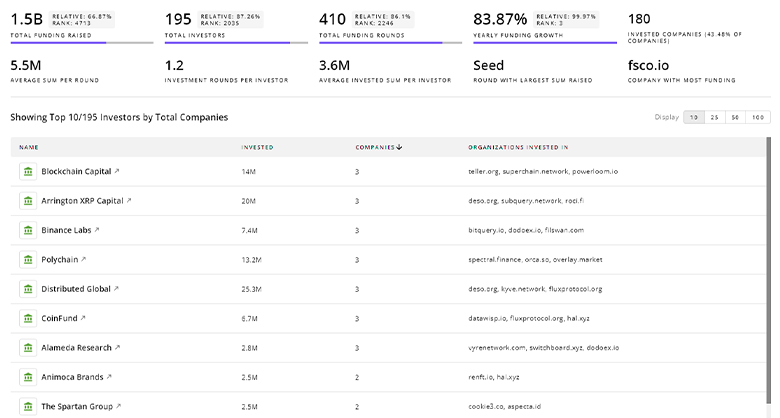
3.5K Food & Beverage Distribution Investors
Discover Food & Beverage Distribution Investors, Funding Rounds, Invested Amounts, and Funding Growth
Food & Beverage Distribution News
TrendFeedr’s News feature offers access to 156 news articles on Food & Beverage Distribution. The tool provides up-to-date news on trends, technologies, and companies, enabling effective trend and sentiment tracking.
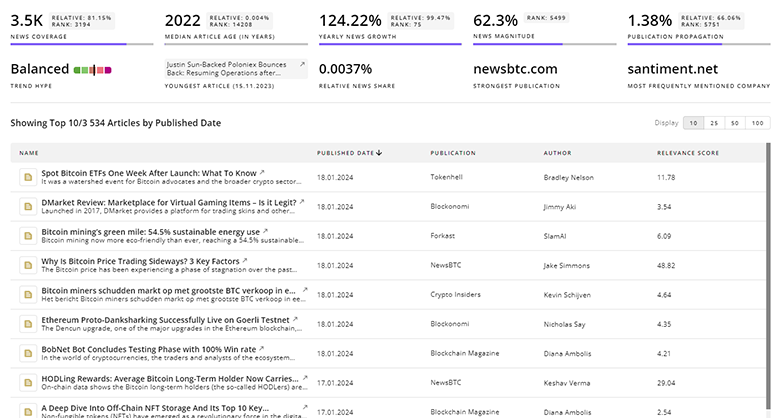
156 Food & Beverage Distribution News Articles
Discover Latest Food & Beverage Distribution Articles, News Magnitude, Publication Propagation, Yearly Growth, and Strongest Publications
Executive Summary
The food & beverage distribution sector has entered a phase where operational intelligence and product-state management determine financial outcomes more than sheer route density. Capital investments now favor cold-chain resilience, digital order platforms, and AI orchestration, reflecting both the shift in consumer demand toward online ordering and the growth of temperature-sensitive categories that require faster replenishment. Incumbent broadline distributors will retain advantages in purchasing and footprint, but their long-term margin outlook depends on rapid integration of targeted software capabilities or acquisitive consolidation. For smaller and mid-market players, the path to durable differentiation lies in deep vertical specialization (certification, provenance, ethnic/specialty channels), partnership with platform providers for scalable fulfillment, and carving price-to-service propositions that reflect the true cost of preserving product quality across the last mile.
Have expertise in trends or technology? Your input can enrich our content — consider collaborating with us!