
Fraud Prevention Report
: Analysis on the Market, Trends, and TechnologiesThe fraud prevention market is accelerating: it reached $44.68 billion in 2024 and is projected at a 16.9% CAGR, forcing firms to reorganize detection, identity and orchestration controls around real-time, AI-first architectures. Attack volume and sophistication rose sharply through 2023–2025 (consumer losses reported in other sources at ~$32 billion in 2024 and a 15% rise in attack volume), which amplifies operational risk, regulatory exposure and customer-experience friction unless organizations adopt layered identity signals, fast risk scoring and shared intelligence alloy.com feedzai.com.
This article was last updated 123 days ago. If you find any info is missing, let us know!
Topic Dominance Index of Fraud Prevention
The Dominance Index of Fraud Prevention looks at the evolution of the sector through a combination of multiple data sources. We analyze the distribution of news articles that mention Fraud Prevention, the timeline of newly founded companies working in this sector, and the share of voice within the global search data
Key Activities and Applications
- Real-time transaction monitoring and automated orchestration — continuous scoring of transactions with automated remediation (block, step-up auth, manual review) to stop events before loss researchandmarkets.com.
So what: Real-time orchestration converts detection into loss avoidance and is the primary lever banks and e-commerce platforms use to reduce chargebacks and ATO losses. - Identity verification and lifecycle KYC/KYB — document forensics, biometric liveness and KYB workflows to stop synthetic and mule networks at onboarding researchandmarkets.com.
So what: Stopping bad identities at onboarding reduces downstream investigation cost and materially lowers synthetic-identity losses. - Behavioral biometrics and continuous authentication — keystroke, touch, mouse and session signals used to authenticate without extra user friction gminsights.com.
So what: These signals enable targeted friction only when risk rises, cutting false positives and preserving conversion. - Synthetic-identity and network/graph analysis — cross-account linking and consortium intelligence to detect fraud rings and synthetic builds.
So what: Graph analytics expose organized fraud that single-account scoring misses, enabling upstream blocking and law-enforcement responses. - Chargeback and dispute prevention (deflection workflows) — automated customer outreach, evidence collection and merchant guarantees to recover revenue.
So what: For merchants, effective dispute deflection reduces revenue churn and the economic cost of false declines. - Phishing and brand protection — takedown, domain monitoring and multi-channel detection for impersonation and deep-fake attacks.
So what: Brand protection preserves customer trust and closes the channel attackers use for credential harvesting and social engineering.
Emergent Trends and Core Insights
- AI-first detection becomes table stakes; models move from advisory scoring to orchestration engines that take automated, policy-driven actions.
So what: Vendors that only provide scores rather than execution workflows face commoditization. - Regulatory pressure is shifting the economics of prevention — "failure to prevent" rules and stiffer fines push firms to invest proactively (regulatory-driven spend growth cited broadly in market research).
So what: Compliance budgets now fund prevention projects that have ROI through avoided fines and reduced loss. - Deep-fake and synthetic content exploitation is increasing; voice/video cloning doubles impersonation risk and forces innovation in liveness and media forensics.
So what: Contact center and remote-onboarding flows require media forensics to preserve authentication confidence. - Data consortiums and federated learning expand — firms share anonymized fraud signals or train shared models to catch cross-institution patterns while respecting privacy.
So what: Participation in consortiums materially improves detection for mid-sized players that lack broad data. - Customer experience-driven "risk-based" flows — passive signals and adaptive step-up strategies reduce false declines and lower customer churn.
So what: Fraud teams that measure conversion metrics alongside fraud KPIs achieve better commercial outcomes. - Vertical specialization continues — industry-specific solutions (insurance claims, medical identity, gaming, telecom) capture value where generic models underperform Medical Identity Fraud Alliance.
So what: Buyers in verticals will prefer vendors that embed domain rules and data.
Technologies and Methodologies
- Machine learning ensembles and streaming scoring pipelines — supervised + unsupervised hybrids for anomaly detection and adaptive risk scoring technologyreview.com.
Implication: Mature ML ops and model governance are required to keep models performant and explainable. - Behavioral biometrics and continuous authentication — passive device and interaction signals fed to decision engines to lower friction BioCatch.
Implication: Firms that combine behavioral signals with transaction context reduce false positives significantly. - Device fingerprinting, telemetry and persistent identifiers — join account signals across channels to detect sock-puppet networks Fraudlabs.
Implication: Device persistence helps detect repeat attackers even with rotating credentials. - Document forensics and AI-based verification — pixel and metadata analysis, generative-AI detection for ID/doc validation Finovox.
Implication: Accurate document checks reduce manual review load and onboarding fraud. - Graph analytics and consortium intelligence — link analysis to reveal fraud rings and mule networks, often implemented in shared data fabrics Perseuss.
Implication: Graph approaches catch coordinated attacks missed by per-account scoring. - Federated learning and privacy-preserving analytics — enable model improvements without raw data sharing, addressing data-sovereignty concerns market.us.
Implication: Federated approaches speed cross-institution learning while limiting regulatory friction. - Automated orchestration and case management — integrate multiple signals, route investigations and capture feedback loops to retrain models Fraud.com International.
Implication: Orchestration converts detection into scalable operational responses.
Fraud Prevention Funding
A total of 1.1K Fraud Prevention companies have received funding.
Overall, Fraud Prevention companies have raised $146.2B.
Companies within the Fraud Prevention domain have secured capital from 4.3K funding rounds.
The chart shows the funding trendline of Fraud Prevention companies over the last 5 years
Fraud Prevention Companies
- Fraud Deflect — Fraud Deflect focuses on chargeback deflection through automated evidence collection, behavioral tracking and pre-dispute workflows; the vendor claims recovery of up to 50% of disputed transactions and high automation that prevents up to 99% of disputes from impacting merchant accounts. Fraud Deflect targets merchants seeking revenue recovery without heavy engineering lift; its model shifts merchant economics by converting disputes into recoverable revenue rather than refunds. This is valuable for mid-market e-commerce firms where margins and conversion matter.
- Eye4Fraud — Eye4Fraud offers guaranteed order screening and merchant-facing API services that synthesize multi-source shopper intelligence to approve or reject high-risk orders; it positions as a revenue protection partner for online merchants. The company sells on conversion preservation and chargeback reduction, which appeals to retailers that cannot accept high false-positive rates. Eye4Fraud's data-driven merchant network augments individual teams with pooled signals.
- PhishFort — PhishFort provides fast detection and takedown services for phishing sites, fake apps and social-impersonation threats, prioritizing brand protection and rapid remediation for enterprises exposed to impersonation-led fraud. Its strength lies in digital-native monitoring and scalable takedown playbooks that reduce the window of exposure for credential harvesting campaigns. For firms with large digital footprints (marketplaces, banks), PhishFort reduces the downstream cost of credential compromise.
- Resistant AI — Resistant AI specializes in automated document forensics, claiming high accuracy and rapid verdicts across thousands of document types; it positions for onboarding, loan underwriting and claims verification where fraudulent documents are common. The product reduces manual reviews and accelerates decisioning while preventing altered or synthetic documents from entering client systems. This fills a critical gap where identity or income documents create onboarding exposure.
- Apate.AI — Apate.AI deploys conversational AI to engage and triage scam calls at scale, using AI callees to waste attacker time, extract campaign signals and reduce successful phone-scam volume. The approach provides telecoms and governments with proactive intelligence on scam campaigns and measurable reductions in successful social-engineering attacks. For regions where voice fraud dominates, this model turns engagement into threat intelligence.
Uncover actionable market insights on 5.1K companies driving Fraud Prevention with TrendFeedr's Companies tool.
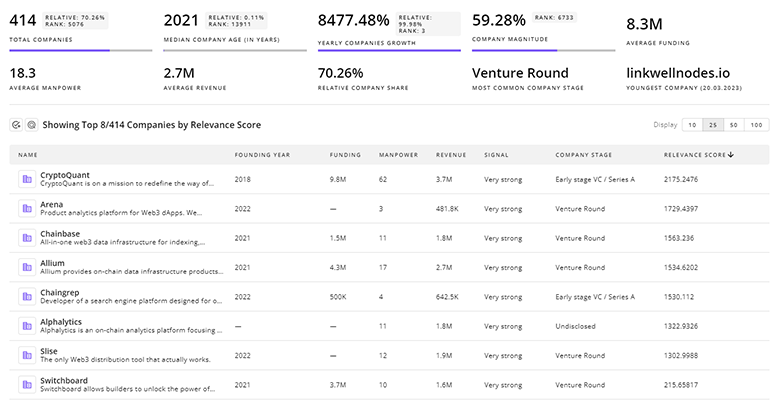
5.1K Fraud Prevention Companies
Discover Fraud Prevention Companies, their Funding, Manpower, Revenues, Stages, and much more
Fraud Prevention Investors
Get ahead with your investment strategy with insights into 4.8K Fraud Prevention investors. TrendFeedr’s investors tool is your go-to source for comprehensive analysis of investment activities and financial trends. The tool is tailored for navigating the investment world, offering insights for successful market positioning and partnerships within Fraud Prevention.
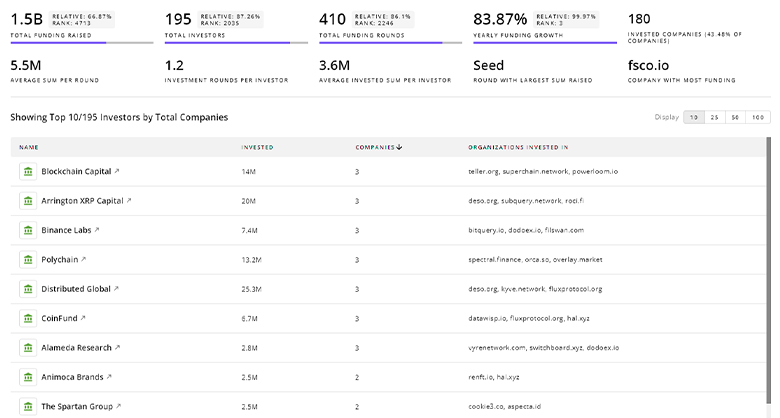
4.8K Fraud Prevention Investors
Discover Fraud Prevention Investors, Funding Rounds, Invested Amounts, and Funding Growth
Fraud Prevention News
TrendFeedr’s News feature offers access to 10.0K news articles on Fraud Prevention. The tool provides up-to-date news on trends, technologies, and companies, enabling effective trend and sentiment tracking.
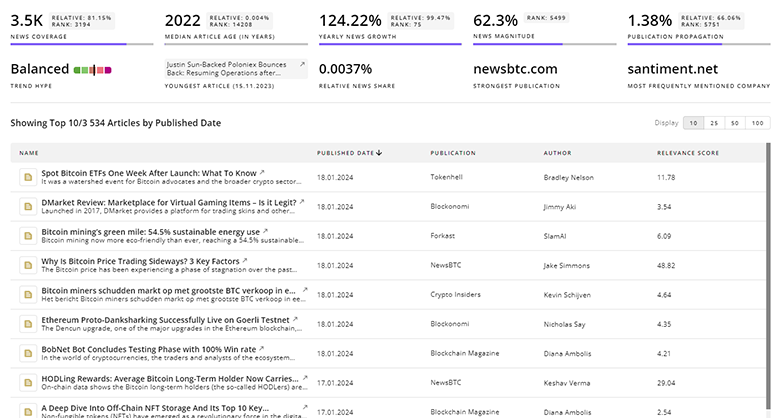
10.0K Fraud Prevention News Articles
Discover Latest Fraud Prevention Articles, News Magnitude, Publication Propagation, Yearly Growth, and Strongest Publications
Executive Summary
Firms that treat fraud prevention as an integrated, measurable part of product and compliance strategy will gain both defensive and commercial advantage. The data show a large and growing market with strong adoption of AI, behavioral biometrics and shared intelligence; the practical implication is that investments should prioritize (1) real-time scoring and orchestration, (2) identity-first onboarding, and (3) consortium or federated signals to detect cross-account campaigns. Execution matters: the winners will pair explainable models and well-governed ML ops with low-friction customer journeys and clear feedback loops that convert detection into sustained loss reduction.
Have expertise in trends or technology? Your input can enrich our content — consider collaborating with us!