
Generative Design Report
: Analysis on the Market, Trends, and TechnologiesThe generative design market is at a commercial inflection: while enterprise adoption remains selective, computational design is moving into production workflows with measurable scale. The market was valued at $279,400,000 in 2024, and multiple market studies point to mid-single to high-teens CAGRs that push the sector into a $7–9 billion opportunity window by the end of the decade. For product leaders and investors this means the near term competition will be decided by two capabilities: integrating manufacturability and verification into the generation loop, and providing cloud-scale design workflows that map directly to production processes.
We updated this report 97 days ago. Missing information? Contact us to add your insights.
Topic Dominance Index of Generative Design
The Topic Dominance Index combines the distribution of news articles that mention Generative Design, the timeline of newly founded companies working within this sector, and the share of voice within the global search data
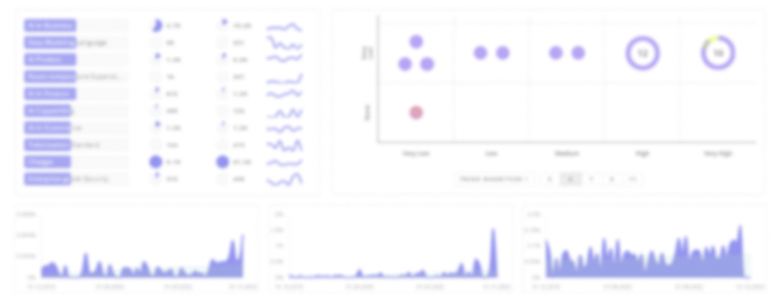
Key Activities and Applications
- Lightweighting and structural optimization — Generative engines produce topology-optimised geometries that reduce part mass while preserving or improving strength; this remains the dominant industrial use case in automotive and aerospace.
- Design-to-manufacture workflows — Embedding manufacturing constraints (additive, 2.5-axis machining, toolpath limits) inside objective functions so outputs are production-ready and minimise downstream rework.
- Thermal and multi-physics co-optimization — Coupled thermal-structural or fluid-structural objectives for electronics cooling, battery housings, and heat exchangers shorten iteration cycles by combining simulation with generative search.
- Urban and layout optimisation — From building massing to infrastructure routing, generative methods explore thousands of zoning- and energy-compliant options faster than manual alternatives.
- Process and factory redesign (Generative Process Twins) — Autonomous reconfiguration of factory layouts and workflows to support mass-customisation and reduce lead times, linking digital twin data with generative solvers.
Emergent Trends and Core Insights
- ML-native engines replacing classical heuristics — Topology solvers are increasingly augmented or replaced by neural approximators and learned surrogates to enable faster exploration of large design spaces.
- Manufacturability and verification as default constraints — The competitive edge shifts from novel shapes to auditable, validated designs that pass simulation and regulatory checks before release to production.
- Human-steered exploration — Engineers curate algorithmic families and trade-off frontiers rather than accepting single automatic outputs; design teams demand interpretability and confidence bounds on choices during exploration.
- Industry verticalization — Solutions tuned for regulated sectors (aerospace, medical devices, automotive E/E architectures) capture premium value because they embed domain rules, testing artefacts, and certification flows thebusinessresearchcompany - Generative Design Market, 2025.
- Sustainability as an optimization axis — Carbon, material usage, and end-of-life impacts become formal objectives in many deployments, forcing design engines to report environmental tradeoffs alongside cost and performance marketdataforecast - Generative Design Market, 2024.
Technologies and Methodologies
- Topology and gradient-based optimization — Fast continuous optimizers remain central for structural lightweighting and are being combined with learned priors to accelerate convergence.
- Physics-informed ML and surrogate models — Neural surrogates (physics-aware networks) reduce the reliance on expensive full-fidelity simulation during early exploration, enabling larger sweep budgets.
- Generative Adversarial Networks and diffusion methods for patterning — Used in urban morphology and texture/feature generation where statistical realism matters.
- LLM and natural-language interfaces as intent layers — Textual prompting and hierarchical prompts are emerging to translate high-level function or style intent into constraints and priors for geometry engines.
- Chained iterative pipelines and digital twin integration — Outputs feed into downstream verification, manufacturing planning, and live digital twins that return operational data to refine objectives in subsequent runs.
- Agentic orchestration (RAG/agents) — Systems that orchestrate multi-step reasoning and data retrieval across knowledge bases and simulation services are starting to coordinate complex design tasks at scale thebusinessresearchcompany - Generative AI in Design Market, 2025.
Generative Design Funding
A total of 134 Generative Design companies have received funding.
Overall, Generative Design companies have raised $2.7B.
Companies within the Generative Design domain have secured capital from 481 funding rounds.
The chart shows the funding trendline of Generative Design companies over the last 5 years
Generative Design Companies
- ToffeeX — ToffeeX focuses on industrial generative design applications and recently won an Aerospace Technology Institute Hub Breakthrough Award 2024, signalling traction with regulated engineering customers and aerospace use cases. The company pairs physics-forward solvers with manufacturing constraints to shorten design-to-print cycles in metal additive workflows, positioning itself as a supplier to OEMs that require validated parts rather than exploratory art. Its industry recognition and programmatic wins suggest a route to enterprise adoption through proven project outcomes.
- Novineer — Novineer builds specialised toolpath and additive-aware optimisation tools that convert topology outputs into manufacturable build sequences. The firm targets mechanical engineers who need deterministic, certification-grade outputs, and its rapid funding velocity and product focus indicate a strategy of being the "ingredient" licensed into larger CAD/PLM stacks rather than a standalone generalist.
- Diabatix — Diabatix commercialises AI-driven thermal and heat-sink optimisation for electronics and power systems, offering significant mass and material reductions in thermal hardware. The startup's platform combines high-speed ML surrogates with topology techniques to deliver validated thermal parts, addressing a critical industrial pain point where thermal performance constrains package design mordorintelligence.
- Infraspace — Infraspace applies generative methods to infrastructure and urban planning (floorplans, zoning-aware massing), embedding regulatory and energy constraints into the generation loop. The company's product roadmap shows explicit digital-twin linkages that feed operational performance back into early-stage generative choices, which reduces downstream redesign and approval friction on large projects.
- Genia — Genia concentrates on architecture and mass timber design, coupling supply-chain-aware libraries with generative exploration to produce buildable alternatives quickly. By connecting generative outputs to procurement and fabrication constraints, the company reduces validation time for construction clients and captures value in the handoff from design to supplier execution.
Gain a competitive edge with access to 603 Generative Design companies.
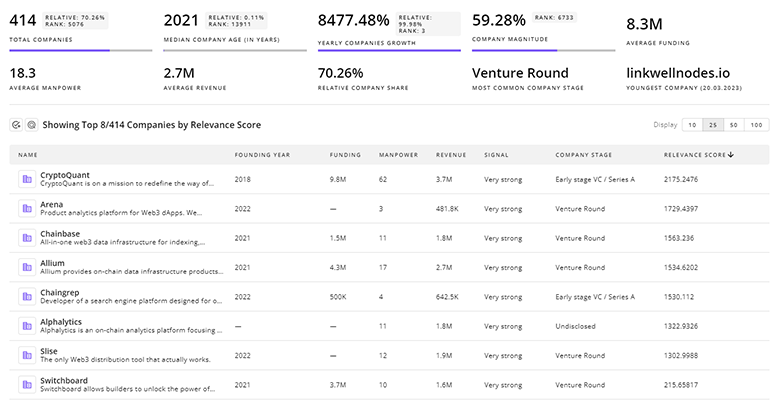
603 Generative Design Companies
Discover Generative Design Companies, their Funding, Manpower, Revenues, Stages, and much more
Generative Design Investors
Leverage TrendFeedr’s sophisticated investment intelligence into 722 Generative Design investors. It covers funding rounds, investor activity, and key financial metrics in Generative Design. investors tool is ideal for business strategists and investment experts as it offers crucial insights needed to seize investment opportunities.
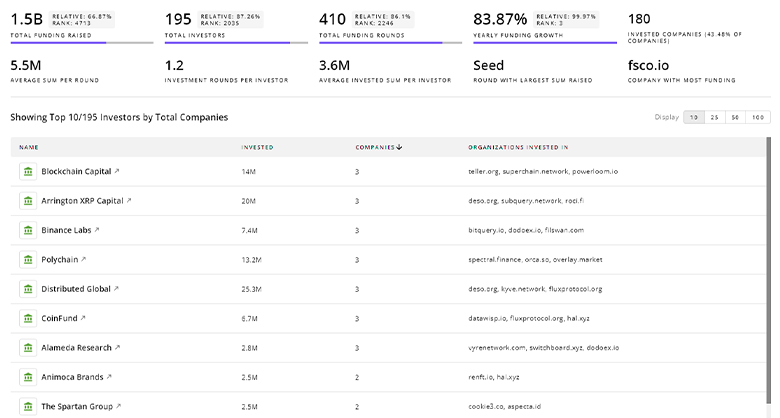
722 Generative Design Investors
Discover Generative Design Investors, Funding Rounds, Invested Amounts, and Funding Growth
Generative Design News
TrendFeedr’s News feature provides a historical overview and current momentum of Generative Design by analyzing 839 news articles. This tool allows market analysts and strategists to align with latest market developments.

839 Generative Design News Articles
Discover Latest Generative Design Articles, News Magnitude, Publication Propagation, Yearly Growth, and Strongest Publications
Executive Summary
Generative design has moved from academic novelty into commercial infrastructure: firms that combine fast, ML-native exploration with verifiable, manufacturable outputs will capture the premium enterprise spend. In practice that means investing in validated simulation stacks, domain-specific libraries, and interfaces that let practitioners guide large solution families rather than replace them. For business leaders the choice is strategic: back horizontal platforms that offer scale and ecosystem control, or secure niche, verifiable "ingredient" providers whose constraint engines become indispensable to industrial workflows. The near-term winners will be those who demonstrate measurable reductions in material, cycle time, or compliance cost—not just more options.
Interested in contributing your expertise on trends and tech? We’d love to hear from you.