Genome Sequencing Report
: Analysis on the Market, Trends, and TechnologiesThe genome sequencing market is expanding fast: market data peg global revenue at $2,220,000,000 in 2024 with a projected market size of $7,230,000,000 by 2033 and a 14.04% CAGR, driven by falling per-sample costs, national sequencing programs and growing clinical use cases. Investment flows (aggregate funding across the landscape exceed multi-billion dollars) concentrate on scaling throughput and building AI-first interpretation stacks that convert raw reads into clinically actionable reports (funding data integrated). The practical consequence: instrument and consumable vendors will compete on cost-per-genome while software and interpretation providers will capture margin as sequencing volume commoditizes.
We updated this report 162 days ago. Missing information? Contact us to add your insights.
Topic Dominance Index of Genome Sequencing
The Topic Dominance Index combines the distribution of news articles that mention Genome Sequencing, the timeline of newly founded companies working within this sector, and the share of voice within the global search data
Key Activities and Applications
- Clinical diagnostics and rare-disease diagnosis — deploying whole-genome and targeted panels to identify pathogenic variants for neonatal, pediatric and oncology workflows, reducing diagnostic odysseys and informing therapy selection.
- Population genomics and biobanking — national programs and large cohorts drive volume sequencing for association studies and pharmacogenomics, increasing demand for high-throughput services and standardized pipelines.
- Infectious-disease and pathogen surveillance — pathogen WGS and metagenomic workflows enable outbreak tracking and antimicrobial-resistance monitoring in public health and food safety contexts.
- Single-cell and spatial applications — single-cell RNA/DNA and spatial transcriptomics add cellular context to genomic variants, used in oncology biomarker discovery and immunology R&D.
- Agricultural and environmental genomics — trait mapping, de-novo assemblies and microbiome profiling support crop and livestock improvement plus environmental monitoring.
- Bioinformatics, variant interpretation and clinical reporting — turnkey, regulatory-aware pipelines and AI models translate sequence data into clinician-ready interpretations and research insights.
Emergent Trends and Core Insights
- Accelerating cost reduction enabling clinical scale: multiple analyses show rapidly falling per-genome costs and rising throughput, which creates a two-tier economics where instruments/consumables scale on volume while interpretation/clinical validation sells differentiated, higher-margin services and BCC market projections for whole-genome sequencing support sizable near-term expansion Whole Genome Sequencing Market to Reach New Heights by 2030.
- Long-read and hybrid workflows move into clinical use: demand for structural-variant detection and complete assemblies pushes adoption of long-read platforms and hybrid short/long pipelines to fill gaps left by short reads and recent platform launches in the market PacBio Vega benchtop system for HiFi sequencing.
- Data interpretation becomes the strategic moat: as sequence generation commoditizes, AI/ML-enabled variant calling, clinical scoring and federated knowledgebases drive differentiation and willingness-to-pay among clinical customers.
- Service outsourcing and lab consolidation: many labs outsource analysis and high-volume sequencing to centralized providers, creating scale advantages for service operators and contracting opportunities for specialized software vendors.
- Faster public sequencing programs and sample volume concentration: national initiatives and large biobank projects concentrate sequencing demand regionally, shifting incremental instrument and reagent demand into a smaller set of high-volume customers.
- Patent and innovation signals: the internal data shows thousands of sequencing-related patents and strong recent filing activity in computational analysis, indicating persistent technical innovation at the algorithm and workflow level.
Technologies and Methodologies
- Next-Generation Sequencing (NGS) by sequencing by synthesis — the backbone for high-throughput, cost-sensitive applications and the dominant instrument class for clinical and population work.
- Long-read single-molecule methods (SMRT, nanopore) — improve structural-variant detection, phasing and de-novo assembly; critical for clinical cases where repeat regions and complex rearrangements matter and Oxford Nanopore platform developments.
- Shotgun metagenomics and mNGS — enabling unbiased pathogen detection and strain-level microbiome analysis for clinical and environmental applications.
- Single-cell and spatial sequencing workflows — droplet microfluidics, combinatorial barcoding and spatial transcriptomics tie genome/ transcriptome signals to cellular context for biomarker discovery.
- Automated library preparation and integrated workflows — automation reduces hands-on time and per-sample variability, necessary to scale clinical sequencing throughput.
- AI/ML for variant interpretation and federated knowledgebases — machine models accelerate variant classification and drive reproducible clinical reporting pipelines.
- Cloud-native, regulated bioinformatics platforms — secure, scalable analysis and compliant reporting solutions to serve distributed clinical customers.
Genome Sequencing Funding
A total of 407 Genome Sequencing companies have received funding.
Overall, Genome Sequencing companies have raised $41.2B.
Companies within the Genome Sequencing domain have secured capital from 1.7K funding rounds.
The chart shows the funding trendline of Genome Sequencing companies over the last 5 years
Genome Sequencing Companies
- Ultima Genomics — developing a high-throughput sequencing architecture intended to materially lower per-genome reagent and instrument costs; the company positions its UG platform for population and clinical scale sequencing and aims to capture volume-sensitive segments by reducing total cost per sample.
- Oxford Nanopore Technologies — provides portable, real-time nanopore sequencing that reads very long native DNA/RNA molecules; the platform supports fieldable pathogen surveillance, long-read clinical assays and direct RNA sequencing use cases.
- Phase Genomics — focuses on proximity ligation and long-range sequencing solutions that enable chromosome-scale assemblies and improved structural-variant resolution, targeted at researchers needing accurate assemblies for complex genomes and metagenomic deconvolution.
- Saphetor — offers the VarSome interpretation platform that aggregates numerous databases and literature sources into explainable variant classifications; the company emphasizes automated clinical annotation pipelines to shorten time-to-report for diagnostic labs.
- Geneseeq Technology Inc. — provides precision oncology panels, MRD monitoring and sequencing services with a focus on integrating WGS/WES outputs into cancer-care workflows across research and clinical sites, particularly within markets in Asia and North America.
Gain a competitive edge with access to 1.4K Genome Sequencing companies.
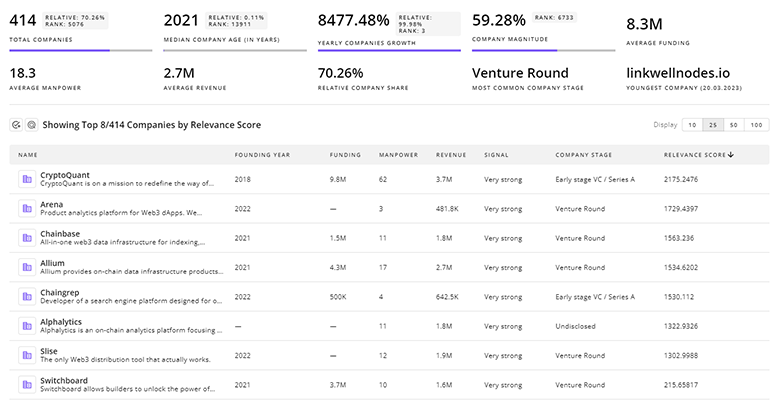
1.4K Genome Sequencing Companies
Discover Genome Sequencing Companies, their Funding, Manpower, Revenues, Stages, and much more
Genome Sequencing Investors
Leverage TrendFeedr’s sophisticated investment intelligence into 2.1K Genome Sequencing investors. It covers funding rounds, investor activity, and key financial metrics in Genome Sequencing. investors tool is ideal for business strategists and investment experts as it offers crucial insights needed to seize investment opportunities.
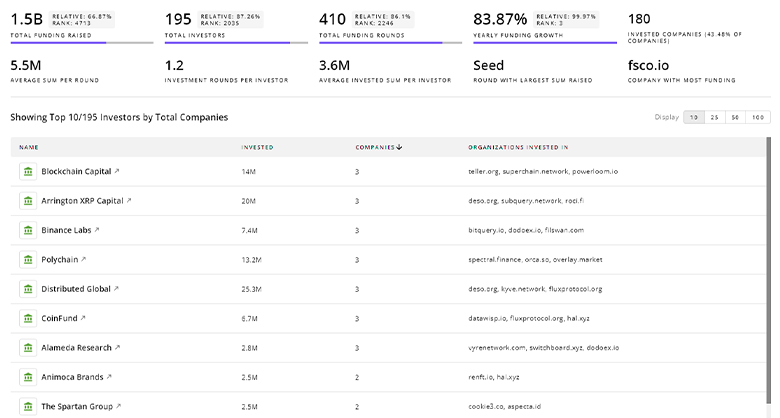
2.1K Genome Sequencing Investors
Discover Genome Sequencing Investors, Funding Rounds, Invested Amounts, and Funding Growth
Genome Sequencing News
TrendFeedr’s News feature provides a historical overview and current momentum of Genome Sequencing by analyzing 15.7K news articles. This tool allows market analysts and strategists to align with latest market developments.
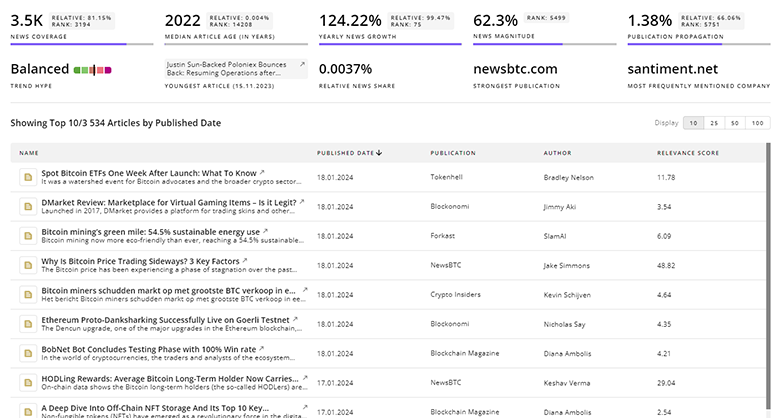
15.7K Genome Sequencing News Articles
Discover Latest Genome Sequencing Articles, News Magnitude, Publication Propagation, Yearly Growth, and Strongest Publications
Executive Summary
Sequencing capacity is scaling while per-sample economics fall, creating a structural shift: commoditization of raw reads and premium value in validated interpretation, clinical accreditation and integrated workflows. Market growth projections and government programs guarantee persistent volume demand, but commercial returns will concentrate where regulated, reproducible clinical outputs and AI-driven interpretation meet demonstrable patient benefit. For operators and investors, the practical strategy is to pair scale in sequencing throughput with defensible software and data assets that produce repeatable clinical value; for service buyers, the immediate priority is selecting partners that combine high throughput with accredited, explainable analysis pipelines and clear regulatory pathways.
Interested in contributing your expertise on trends and tech? We’d love to hear from you.