Genomics Analysis Report
: Analysis on the Market, Trends, and TechnologiesThe genomics analysis market sits at a practical inflection where integrated sequencing workflows, AI-driven interpretation, and multi-omics data converge to create measurable commercial opportunity: the internal genomics analysis report records a 2023 market size of USD 1.71 billion and a 2028 projection of USD 3.21 billion (13.35% CAGR). Rapid platform partnerships and standardization efforts are shortening clinical validation time and raising clinical adoption, while larger public-health sequencing programs and private multi-omics efforts supply training data that materially improve AI model performance Genomics Market 2025: Detailed Insights into Market Size and Future Growth.
We updated this report 367 days ago. Missing information? Contact us to add your insights.
Topic Dominance Index of Genomics Analysis
The Topic Dominance Index combines the distribution of news articles that mention Genomics Analysis, the timeline of newly founded companies working within this sector, and the share of voice within the global search data
Key Activities and Applications
- Integrated sequencing-to-report pipelines: end-to-end offerings that move raw reads into clinically interpretable reports reduce laboratory hands-on time and operating cost.
- Variant detection and clinical interpretation: high-accuracy calling, annotation, and ACMG-guided classification for rare diseases and oncology drive diagnostic adoption and payor interest.
- Multi-omics biomarker discovery for early detection: proteomics, metabolomics, and transcriptomics complement genomics to increase sensitivity of early-stage disease tests and improve biomarker specificity prognomiq.com.
- Single-cell and spatial profiling for drug discovery: single-cell and spatial assays generate targetable biology at cellular resolution for oncology and immunology programs Vizgen.
- Decentralized and point-of-need testing: portable qPCR and benchtop sequencers enable time-critical genotyping in clinics and field settings for pharmacogenomics and infectious disease surveillance.
Emergent Trends and Core Insights
- AI-first interpretation stacks scale clinical throughput: explainable variant-ranking and clinical decision support reduce turnaround and help labs adopt genomic tests at scale and Fabric Genomics clinical deployments Fabric Genomics acquisition details.
- Data standardization and reference collections improve reproducibility: new APIs for consistent reference retrieval cut validation time for comparative studies, improving cross-laboratory interoperability and meta-analysis potential UVA refget Sequence Collections press release.
- Population cohorts and national programs supply scale and diversity: cohorts exceeding 500,000 participants increase statistical power for polygenic risk scores and rare-variant discovery, which strengthens clinical-grade models and reduces bias when coupled with pangenome approaches Nature coverage of Taiwan Precision Medicine Initiative.
- Platform consolidation through partnerships: hardware vendors and analytics providers form strategic alliances to deliver turnkey workflows that shorten lab integration cycles and raise switching costs for customers Complete Genomics + Velsera announcement industry news aggregation.
- Clinical and regulatory focus shifts to interpretability and certification: IVD and IVDR certifications for interpretation platforms accelerate hospital procurement and payer conversations (examples include VarSome Clinical and CE/IVDR milestones reported across vendors) Congenica NHS partnership.
Technologies and Methodologies
- Next-Generation Sequencing (short read and DNBSEQ): high throughput sequencing remains the backbone for large-scale projects and clinical panels.
- Long-read and optical methods: long reads resolve structural variation and paralogous regions, improving variant calling in complex loci News on HiFi sequencing benefits.
- Cloud-native automated pipelines and low-code bioinformatics: platforms deliver standardized, auditable workflows and reduce lab dependence on in-house bioinformatics teams.
- AI/ML for variant prioritization and pathogenicity scoring: machine learning models accelerate triage and produce ranked candidate variants for clinician review AlphaGenome and AI regulatory research context [Genomadix qPCR clinical kits IG].
- Spatial and single-cell multi-omics: in situ methods map expression and regulatory states, enabling functional follow-up on genomic signals for target validation.
- Secure data collaboration and confidential computing: GA4GH and confidential computing patterns enable federated analysis while protecting genomic privacy, a requirement for multi-institutional model training.
Genomics Analysis Funding
A total of 128 Genomics Analysis companies have received funding.
Overall, Genomics Analysis companies have raised $4.3B.
Companies within the Genomics Analysis domain have secured capital from 468 funding rounds.
The chart shows the funding trendline of Genomics Analysis companies over the last 5 years
Genomics Analysis Companies
- Genomize — Genomize operates the SEQ platform delivering end-to-end NGS analysis from raw reads to clinical report generation. The company emphasizes automated data transfer, backup, and ACMG classification for variant interpretation and already processes large sample volumes for hospitals and diagnostic centers.
- SIVOTEC BioInformatics — SIVOTEC offers the GENA AI platform for SNP array and Mendelian disorder interpretation; the vendor claims diagnostic decision support that shortens discovery to diagnosis time substantially, targeting clinical labs that lack large in-house bioinformatics teams.
- Panome Bio — Panome integrates next-generation metabolomics, proteomics, and transcriptomics to drive biomarker discovery. The company packages untargeted LC/MS with computational integration to deliver discovery-grade multi-omics reports suitable for translational programs.
- Genomadix — Genomadix commercializes a portable qPCR point-of-need instrument (the Cube) that runs FDA-cleared genotyping assays such as rapid CYP2C19, enabling on-site pharmacogenetic decisions in clinical settings where turnaround time matters.
- Qtlomics — QTLomics focuses on agri-genomics and marker-assisted breeding, combining traditional breeding programs with genomic tools for trait selection, and explores metagenomic and siRNA approaches to reduce agrochemical dependence.
Gain a competitive edge with access to 446 Genomics Analysis companies.
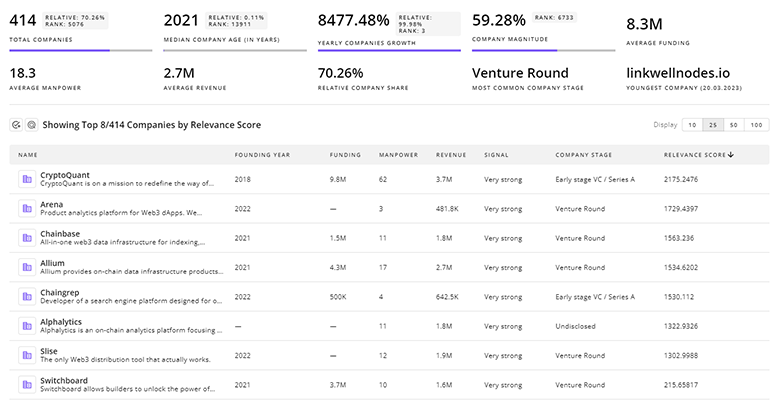
446 Genomics Analysis Companies
Discover Genomics Analysis Companies, their Funding, Manpower, Revenues, Stages, and much more
Genomics Analysis Investors
Leverage TrendFeedr’s sophisticated investment intelligence into 466 Genomics Analysis investors. It covers funding rounds, investor activity, and key financial metrics in Genomics Analysis. investors tool is ideal for business strategists and investment experts as it offers crucial insights needed to seize investment opportunities.
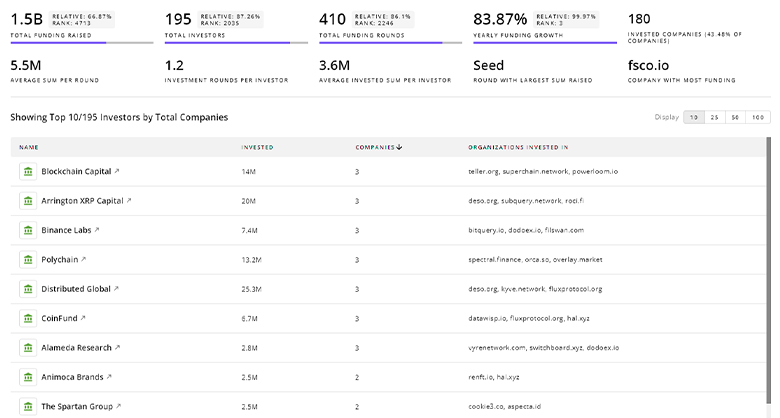
466 Genomics Analysis Investors
Discover Genomics Analysis Investors, Funding Rounds, Invested Amounts, and Funding Growth
Genomics Analysis News
TrendFeedr’s News feature provides a historical overview and current momentum of Genomics Analysis by analyzing 171 news articles. This tool allows market analysts and strategists to align with latest market developments.
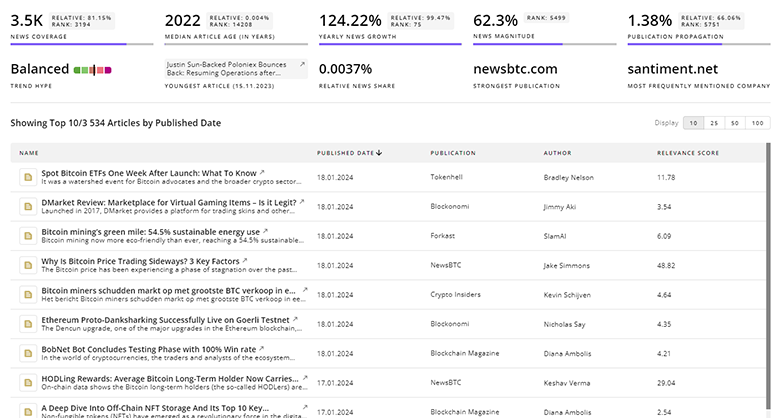
171 Genomics Analysis News Articles
Discover Latest Genomics Analysis Articles, News Magnitude, Publication Propagation, Yearly Growth, and Strongest Publications
Executive Summary
Genomics analysis now operates in a practical, commercially meaningful environment: the market slice for interpretation and clinical reporting is growing at double-digit rates and benefits from expanding cohort datasets, rising demand for actionable diagnostics, and faster, cheaper sequencing. Strategic winners will be those that combine validated AI models, regulatory readiness, and interoperable data standards while choosing either to integrate deeply into full sequencing platforms or to dominate the interpretation layer as a trusted clinical partner. Investment that pairs multi-omic capabilities with secure, federated data flows and certified clinical workflows will most directly capture the near-term value created by shifting healthcare workflows to genomic-informed decision making.
Interested in contributing your expertise on trends and tech? We’d love to hear from you.