
High Fidelity Simulation Report
: Analysis on the Market, Trends, and TechnologiesThe high fidelity simulation sector is entering a strategic inflection where measurable validation and scalable data production compete for enterprise budgets: the internal trend report records 227 active companies and $1.40B total funding across the topic, underscoring both concentration and material capital flows into targeted capability areas. Industry demand is strongest where simulation reduces physical risk and certification time—healthcare procedural rehearsal, autonomous systems validation, and avionics/HIL testing—while suppliers split between physics-first vendors and synthetic-data platforms thebusinessresearchcompany – Simulation Software Market Report.
We updated this report 111 days ago. Missing information? Contact us to add your insights.
Topic Dominance Index of High Fidelity Simulation
The Topic Dominance Index combines the distribution of news articles that mention High Fidelity Simulation, the timeline of newly founded companies working within this sector, and the share of voice within the global search data
Key Activities and Applications
- Clinical procedural rehearsal and device validation — Surgical and interventional teams use patient-quality anatomical models and perfused-cadaver systems to rehearse complex procedures and produce regulatory evidence of device performance marketresearchfuture.com - France Medical Simulation Market Report.
- Autonomous system scenario generation and synthetic-data pipelines — Simulation platforms generate large, annotated datasets and corner-case scenes to accelerate ML lifecycle testing and reduce on-road mileage needs for AV validation.
- Hardware-in-the-Loop (HIL) validation for embedded controls — Integrating real ECUs, sensors, and actuators with simulation enables regulatory and production-scale verification of powertrains, domain controllers, and avionics.
- Driver/Operator-in-the-Loop and human factors testing — Human-in-the-loop rigs and motion cueing systems quantify subjective responses (sickness, situational awareness) and tune interfaces before prototypes exist.
- Digital twin operations and maintenance — Continuous coupling of live operational telemetry with simulation models supports predictive maintenance and operational decision-support beyond R&D use cases.
Emergent Trends and Core Insights
- AI-driven scene generation and coverage-first testing — The industry is moving to coverage metrics (how many meaningful edge cases a test set spans) and using foundation models to generate and annotate scenarios at scale, materially lowering data costs for perception stacks.
- Multi-fidelity orchestration as a cost lever — Providers increasingly orchestrate fidelity over simulation components (high-fidelity where it matters, low-fidelity or surrogates elsewhere) to balance accuracy with compute cost, enabling practical deployment in CI pipelines.
- Simulation credibility and auditability as a sellable asset — Clients demand verifiable traceability between simulated outputs and measurable real-world performance; services that certify simulation validity against benchmarks or regulatory criteria are emerging as high-value propositions.
- Edge-case and long-tail assetization — Scene libraries and curated corner-case datasets are being packaged, traded, and reused across projects to compress verification timelines and reduce duplication of scene engineering effort.
- Sensory fidelity beyond visuals — Auditory modeling and tactile/haptic realism are rising priorities in domains where human perceptual response is central (medical, military, pilot training), creating defensive moats for specialized suppliers.
- Operational integration is replacing one-off gate tests — Organizations expect simulation to feed continuous development loops rather than act as a final verification step.
Technologies and Methodologies
- Hardware acceleration and metamodeling (reduced-order models) — GPU, FPGA, and mathematically reduced surrogates enable near-real-time execution of physics models that previously took hours, permitting their use inside automated test pipelines.
- Ray-traced, physics-based sensor emulation — Accurate camera, LiDAR, and radar simulation that models reflections, multipath, and sensor artifacts is required to validate perception algorithms and close the sim-to-real gap.
- X-in-loop testing (MIL/SIL/HIL/DIL/VIL) frameworks — Modular test harnesses that slide software and hardware through the same scenarios accelerate iteration and reduce integration friction.
- Scene library engineering and automated annotation — Tools that generalize and recombine scenario fragments at scale enable high coverage testing and rapid dataset generation for ML training.
- Mixed reality overlays for task trainers — Combining physical manikins or rigs with AR/VR overlays yields high perceived fidelity at lower system cost, particularly effective for clinical and skills training.
- Data-looped digital twins — Continuous feedback from operational telemetry refines simulation parameters and keeps models aligned with field behavior, enabling predictive decision support rather than static validation.
High Fidelity Simulation Funding
A total of 68 High Fidelity Simulation companies have received funding.
Overall, High Fidelity Simulation companies have raised $1.8B.
Companies within the High Fidelity Simulation domain have secured capital from 208 funding rounds.
The chart shows the funding trendline of High Fidelity Simulation companies over the last 5 years
High Fidelity Simulation Companies
- Maximum Fidelity Surgical Simulations — Maximum Fidelity Surgical Simulations provides cadaver perfusion platforms that reproduce warm, pulsatile circulation to recreate clinically authentic tissue behavior for surgical rehearsal and device validation; this physical fidelity reduces reliance on animals and shortens device testing cycles. The company sells training sessions and R&D services to device teams, positioning itself as a verification partner for high-risk procedures.
- Miura Simulation — Miura Simulation offers a data-centric platform that centralizes engineering simulation outputs and exposes AI-ready endpoints, focusing on traceability and integration across toolchains to enable faster ML workflows and explainable simulation artifacts. Its open standards approach helps engineering teams reuse metamodels and reduce vendor lock-in.
- ATOR Labs — ATOR Labs builds industry-grade respiratory and metabolic simulators for certification testing of protective equipment and medical devices; the firm's devices align with ISO testing flows and serve a narrow but high-value compliance niche. That regulatory focus creates durable purchase justification for public health agencies and device manufacturers.
- Hyfydy — Hyfydy develops a high-performance dynamics engine aimed at biomechanics and control applications, trading off noaccuracy for speed and providing a Python API that makes integration into ML training and fast prototyping straightforward. The technology targets researchers and startups needing repeatable, fast musculoskeletal simulations for product R&D.
- CGA Simulation — CGA Simulation produces bespoke digital-twin city and mobility models that simulate pattern-of-life behavior, sensor impacts from weather, and policy scenarios used for AV safety validation and urban resilience planning. Their focus on rare environmental interactions (for example, rain effects on sensors) supplies scenario types missing from standard libraries.
Gain a competitive edge with access to 301 High Fidelity Simulation companies.
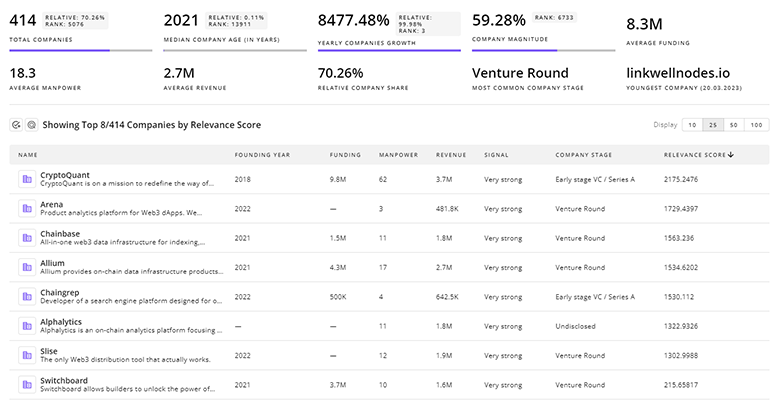
301 High Fidelity Simulation Companies
Discover High Fidelity Simulation Companies, their Funding, Manpower, Revenues, Stages, and much more
High Fidelity Simulation Investors
Leverage TrendFeedr’s sophisticated investment intelligence into 235 High Fidelity Simulation investors. It covers funding rounds, investor activity, and key financial metrics in High Fidelity Simulation. investors tool is ideal for business strategists and investment experts as it offers crucial insights needed to seize investment opportunities.
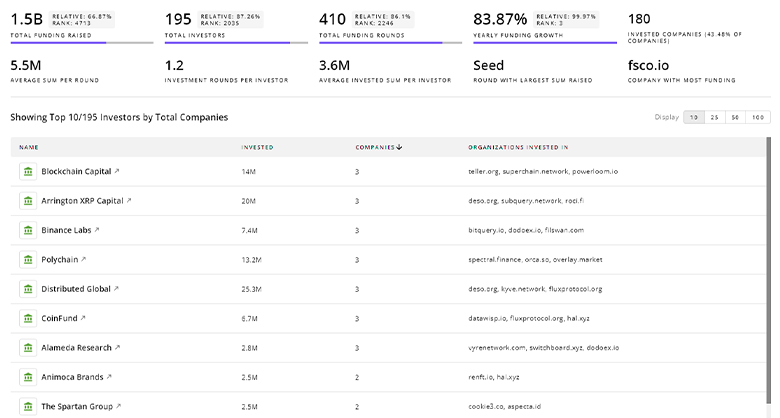
235 High Fidelity Simulation Investors
Discover High Fidelity Simulation Investors, Funding Rounds, Invested Amounts, and Funding Growth
High Fidelity Simulation News
TrendFeedr’s News feature provides a historical overview and current momentum of High Fidelity Simulation by analyzing 1.0K news articles. This tool allows market analysts and strategists to align with latest market developments.
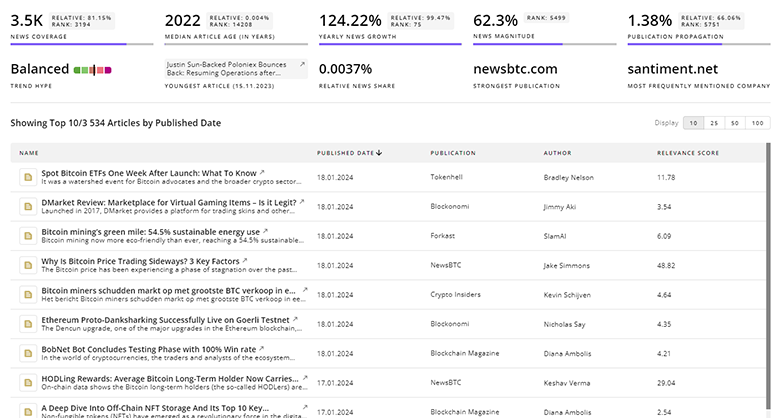
1.0K High Fidelity Simulation News Articles
Discover Latest High Fidelity Simulation Articles, News Magnitude, Publication Propagation, Yearly Growth, and Strongest Publications
Executive Summary
High fidelity simulation now splits into two commercial plays: domain-specific physical fidelity that meets certification thresholds (medical cadavers, regulatory HIL rigs, tactile heart models) and scale-first synthetic data platforms that serve ML model training. The balanced winners will be firms that both produce validated ground truth from physics-rooted models and make that ground truth consumable at scale through automated scene generation, metamodels, and cloud orchestration. For buyers, the immediate strategy is to adopt a fidelity portfolio—prioritize physics-exact simulation for certification paths and use scaled synthetic pipelines for algorithmic training and regression. For providers, the value lies in packaging validated simulation outputs as auditable artifacts and embedding them into continuous verification loops that integrate with enterprise CI/CD and ML training systems.
Interested in contributing your expertise on trends and tech? We’d love to hear from you.