Hydrogen Fueling Station Report
: Analysis on the Market, Trends, and TechnologiesThe hydrogen fueling station market is at a decisive deployment phase where capital and technical progress are converging on operational scale: the internal trend report places the market at $610,000,000 (2025) with a projected CAGR of 17.3% and a forecasted market value of $2,550,000,000 by 2034. This growth is driven by concentrated fleet programs, rapid innovation in modular and on-site supply, and heterogeneous regional strategies that favor either centralized production or point-of-use solutions Hydrogen Refueling Station Market, 2025–2034.
We updated this report 45 days ago. Missing information? Contact us to add your insights.
Topic Dominance Index of Hydrogen Fueling Station
The Topic Dominance Index combines the distribution of news articles that mention Hydrogen Fueling Station, the timeline of newly founded companies working within this sector, and the share of voice within the global search data
Key Activities and Applications
- Heavy-duty vehicle refueling (trucks, buses) at high-capacity HRS — direct fleet deployments and truck/bus depots are the dominant near-term demand source; large stations with daily capacities measured in hundreds to thousands of kilograms are being commissioned to serve commercial routes Global Hydrogen Station Database.
- Mixed-use public retail + fleet stations — dual-pressure dispensers (H35/H70) and multi-hose dispensers enable shared use models where passenger FCEVs and fleet vehicles co-exist, reducing idle capacity risk Hydrogen Fueling Stations: Global Markets.
- Mobile and trailer-based refueling solutions — containerized and truck-mounted units bridge early coverage gaps and support temporary or pilot operations; they compress deployment risk and enable staged network growth.
- On-site hydrogen generation (electrolysis and reforming) — modular electrolyzers and small reformers reduce logistics cost by producing fuel at or adjacent to demand centers, improving effective uptime and lowering per-kg delivered cost for clustered fleets Hysata.
- Alternative carrier logistics (LOHC, powder carriers, ammonia cracking) — where pipeline or cryogenic delivery is impractical, chemical carriers allow ambient-condition transport into regions lacking cryogenic infrastructure Hydrogenious LOHC.
Emergent Trends and Core Insights
- Fleet-first deployment logic. The deployment sequence emphasizes buses, regional trucks, and logistics (last-mile, port drayage), because these applications deliver predictable high throughput and concentrated fueling cycles that justify high station capex North America HRS market analysis.
- Two platform strategies crystallize. One group (network builders, utilities, majors) pursues centralized supply plus pipeline/truck distribution; a second cohort (modular on-site and mobile specialists) seeks to remove distribution cost by producing hydrogen at or near demand.
- Liquid hydrogen methods and LOHCs expand to high-throughput use cases. Liquid hydrogen and LOHC approaches gain traction for heavy and maritime refueling because they reduce volumetric penalties for long range and bulk transport Nikkiso / Clean Energy liquid depot.
- Modularity shortens time-to-operation. Factory-built, skid/container solutions materially compress permitting and commissioning timelines versus bespoke builds, improving payback for early fleet customers.
- Funding volatility and permitting barriers create asymmetric risk. Large grant returns and delayed land-use approvals have reduced some projected station counts even as private funding accelerates; this forces developers to hedge via multi-revenue commercial models or lease-based services 2025 AB-126 California station projections and grant returns.
- Standards movement around 70 MPa high-flow fueling hardware is enabling HDV scaling. Industry consortia are industrializing H70HF specifications to standardize refueling performance for heavy-duty vehicles H70HF industrialization projects and heavy-duty industry group reporting.
Technologies and Methodologies
- Modular, containerized HRS designs — factory certification plus plug-and-play balance-of-plant reduces on-site civil and permitting risk and lets operators relocate capacity to match fleet shifts.
- High-capacity liquefaction and cryogenic pumping — cryo-based LH2 depots reduce compressor energy and enable high-mass deliveries required by long-haul truck and maritime refueling.
- Advanced electrolyzer architectures (PEM, AEM, decoupled/novel cycles) that reduce LCOH — next-generation electrolysis is central to shifting station economics from fuel-import to local green supply H2PRO.
- Electrochemical hydrogen compression (EHC) — solid-state compressors promise lower maintenance and quieter operation than mechanical units and enable flexible modular designs for distributed HRS HyET Hydrogen electrochemical compression.
- Carrier technologies (LOHC, chemical powders, ammonia cracking) — these decouple transport from cryogenics or high-pressure tube trailers and are showing early commercial projects in maritime and regional supply chains.
- Digital station management and operational telemetry — uptime tracking, predictive maintenance, and station availability services are converging into planner and fleet UIs, which materially increase usable capacity of sparse networks.
Hydrogen Fueling Station Funding
A total of 108 Hydrogen Fueling Station companies have received funding.
Overall, Hydrogen Fueling Station companies have raised $27.3B.
Companies within the Hydrogen Fueling Station domain have secured capital from 411 funding rounds.
The chart shows the funding trendline of Hydrogen Fueling Station companies over the last 5 years
Hydrogen Fueling Station Companies
- Hyfluence — Hyfluence is a small specialist team that has delivered over 25 station systems in North America and claims a perfect accident-free safety record; the company focuses on fast-fill 700 bar systems, moveable semi-permanent stations, and performance testing devices that shorten commissioning risk for adopters.
- HydroFleet — HydroFleet offers a lease-based ecosystem (vehicle + fuel + maintenance + on-site fueling) targeted at heavy truck and forklift fleets to remove adoption friction; its all-in monthly pricing aligns fleet economics and accelerates fleet conversion by removing capex hurdles.
- Enhywhere — Enhywhere packages competitive, all-inclusive hydrogen supply and fueling solutions for industrial and municipal customers, positioning itself as a low-friction supplier for early adopters that require single-counter contracting for fuel and station O&M.
- Hydrogen West — Hydrogen West pursues a geography-constrained strategy in Western Australia by converting existing roadhouse footprints into combined hydrogen/EV hubs and securing long-term off-take for liquefied hydrogen to guarantee supply for initial network nodes.
- H2i Technology — H2i Technology develops hydrogen injection retrofit kits for existing diesel engines that can reduce fuel consumption by up to 20% and emissions by up to 30%, creating an immediate emissions-mitigation pathway for fleets that cannot wait for full HRS coverage.
Each company profile above references company technical focus and commercial positioning drawn from firm profiles and sector trend material.
Gain a competitive edge with access to 516 Hydrogen Fueling Station companies.
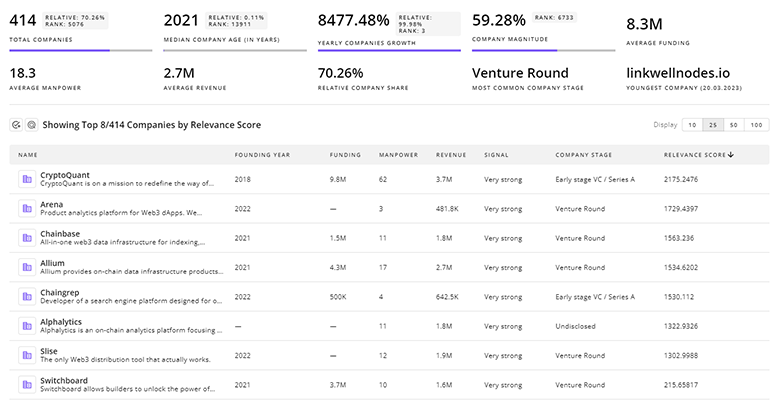
516 Hydrogen Fueling Station Companies
Discover Hydrogen Fueling Station Companies, their Funding, Manpower, Revenues, Stages, and much more
Hydrogen Fueling Station Investors
Leverage TrendFeedr’s sophisticated investment intelligence into 453 Hydrogen Fueling Station investors. It covers funding rounds, investor activity, and key financial metrics in Hydrogen Fueling Station. investors tool is ideal for business strategists and investment experts as it offers crucial insights needed to seize investment opportunities.
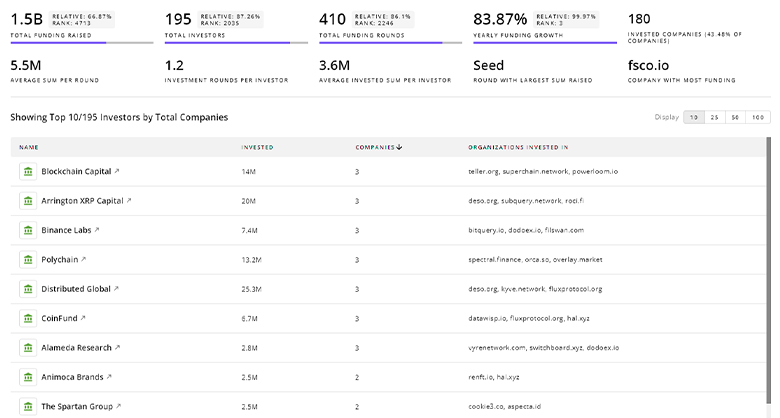
453 Hydrogen Fueling Station Investors
Discover Hydrogen Fueling Station Investors, Funding Rounds, Invested Amounts, and Funding Growth
Hydrogen Fueling Station News
TrendFeedr’s News feature provides a historical overview and current momentum of Hydrogen Fueling Station by analyzing 1.4K news articles. This tool allows market analysts and strategists to align with latest market developments.
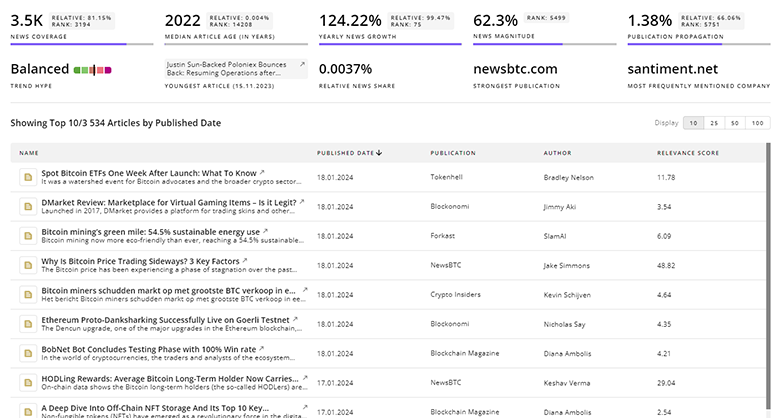
1.4K Hydrogen Fueling Station News Articles
Discover Latest Hydrogen Fueling Station Articles, News Magnitude, Publication Propagation, Yearly Growth, and Strongest Publications
Executive Summary
The hydrogen fueling station market will be decided by execution on two linked fronts: reducing delivered hydrogen cost per kilogram and guaranteeing reliable, high-uptime dispensing for concentrated fleet customers. Investors and operators should orient capital toward solutions that shorten deployment timelines (modular stations, mobile units, turnkey fleet offers) and toward technologies that lower the cost base of fuel (high-efficiency electrolysis, novel carriers). Regulatory certainty and streamlined permitting will materially lower risk premiums; where that certainty lags, hybrid business models that combine on-site generation with flexible mobile delivery and retrofit pathways will capture immediate revenue while the network matures. Concentrated fleet corridors—ports, logistics hubs, and municipal bus depots—represent the clearest near-term commercial opportunities; capturing long-term land-use and utility connection rights in these corridors will determine which players consolidate leadership as the market scales.
Interested in contributing your expertise on trends and tech? We’d love to hear from you.