Hydrogen Production Report
: Analysis on the Market, Trends, and TechnologiesThe hydrogen production market sits at a critical inflection where scale economics and feedstock flexibility determine winners: market analysis records a 2025 market size of $192,550,000,000 with a forecast to $236,870,000,000 by 2030. Rapid electrolyzer roll-out and falling renewable electricity costs are compressing the gap between fossil-derived and low-emission hydrogen, while policy incentives and large industrial offtakes are concentrating capital into both utility-scale green projects and feedstock-agnostic, distributed production models.
We updated this report 61 days ago. Missing information? Contact us to add your insights.
Topic Dominance Index of Hydrogen Production
The Topic Dominance Index combines the distribution of news articles that mention Hydrogen Production, the timeline of newly founded companies working within this sector, and the share of voice within the global search data
Key Activities and Applications
- Large-scale renewable electrolysis deployed co-located with wind and solar to produce green hydrogen for industrial feedstock and export markets; projects emphasize GW-scale electrolyzers and integrated power supply contracts.
- Steam methane reforming (SMR) with CCS and autothermal reforming (ATR) to supply near-term low-carbon hydrogen for refineries and chemicals where pipeline and incumbent infrastructure dominate demand.
- Methane pyrolysis and thermal plasma routes that produce hydrogen plus solid carbon as a salable co-product, enabling lower apparent carbon intensity without full reliance on capture infrastructure.
- On-site and distributed (captive) hydrogen generation using modular electrolyzers and electrified reformers to remove transport premium and guarantee high-purity supply for industrial users.
- Waste-to-hydrogen and biohydrogen systems, integrating municipal or industrial waste streams (gasification, aqueous phase reforming, anaerobic digestion) to produce low- or negative-carbon hydrogen while valorizing residues.
- Hydrogen for hard-to-abate industry (steel DRI, ammonia, methanol) and heavy transport (maritime, aviation fuels via e-fuel pathways) where hydrogen replaces process heat or provides chemical feedstock Global Hydrogen Review 2025 – IEA.
Emergent Trends and Core Insights
- Electrolyzer capacity scale-up is the single most influential short-term determinant of cost: market studies project dramatic annual additions and manufacturing scale that compress capital cost per kW and LCOH Hydrogen Generation Industry Research 2025 - Yahoo Finance.
- Low-emission hydrogen share remains small today, creating a large demand runway; however, policy incentives (tax credits, hydrogen hubs) and procurement commitments are accelerating commercial FIDs in Europe, North America, and parts of Asia researchandmarkets - Global Hydrogen Generation Market, 2023.
- Feedstock arbitrage and co-product monetization are emerging as pragmatic routes to competitive pricing: methane pyrolysis and waste-to-hydrogen can produce attractive LCOH when the market accepts solid-carbon coproducts or when disposal costs of waste streams are high.
- Water and location constraints drive technology selection: coastal and offshore hubs push seawater electrolysis and floating platforms, while water-scarce regions prioritize water reuse, treated wastewater, or non-electrolytic pathways New Electrode Revolutionizes Hydrogen Production.
- Digital operations and material substitution matter: AI/digital twins for plant optimization and PGM-free catalyst developments materially reduce OPEX and CAPEX drivers for electrolyzer deployments.
Technologies and Methodologies
- PEM, AEM, and Alkaline Electrolyzers remain the backbone of green hydrogen production, with each technology chosen for response time, material intensity, and scale trade-offs.
- Solid Oxide Electrolysis (SOEC) for high-temperature conversion where industrial process heat integration can improve electrical efficiency and reduce LCOH.
- Methane Pyrolysis and Plasma-Enhanced Pyrolysis offering hydrogen plus solid carbon, enabling lower lifecycle CO2 intensity where electricity economics or feedstock access favor thermal routes.
- Thermochemical water-splitting cycles and heat-to-hydrogen using concentrated solar or industrial waste heat to run lower-temperature redox cycles and modular thermochemical reactors.
- Membrane-free and decoupled electrolysis architectures (E-TAC, decoupled AEM) that separate oxygen and hydrogen steps to relax material constraints and improve dynamic operation with intermittent renewables.
- Hydrogen carriers and storage technologies (LOHCs, metal hydrides, underground caverns) that solve distribution and seasonal storage economics for merchant hydrogen supply chains.
- AI, digital twin and real-time forecasting to optimize operation of electrolyzer fleets and integrate variable renewable supply while minimizing degradation and OPEX.
Hydrogen Production Funding
A total of 616 Hydrogen Production companies have received funding.
Overall, Hydrogen Production companies have raised $81.8B.
Companies within the Hydrogen Production domain have secured capital from 2.2K funding rounds.
The chart shows the funding trendline of Hydrogen Production companies over the last 5 years
Hydrogen Production Companies
- Hysata — Hysata develops a capillary-fed electrolyzer architecture that targets large efficiency gains and lower stack costs through a bubble-free design and simplified balance of plant. The company has attracted sizable private investment and public grants that support scale-up of stack manufacturing. Its strategy centers on reducing LCOH by attacking both stack efficiency and manufacturing cost per unit. Hysata is positioned as a component-level innovator for utility and industrial electrolyzer modules.
- Hycamite — Hycamite focuses on methane pyrolysis reactors that produce hydrogen plus a solid carbon product, targeting regions with cheap natural gas or waste methane streams. The firm emphasizes reactor modularity and material durability for continuous operation at high temperatures. By creating a marketable carbon coproduct, Hycamite aims to alter the feedstock economics for low-emission hydrogen in industrial clusters.
- Hydrolyca — Hydrolyca develops thermochemical water splitting and heat-integrated reactors designed to use industrial waste heat and moderate-temperature renewable heat sources. The company positions its technology for industrial sites seeking decentralized green hydrogen without full reliance on grid electricity. Hydrolyca's pathway targets lower electrical consumption per kg of hydrogen by substituting heat inputs where available.
- E9H2 — E9H2 offers modular, containerized electrolyzer systems and project delivery for captive on-site hydrogen production at industrial and mobility sites. The firm focuses on rapid deployment, plug-and-play integration with existing industrial gas systems, and service-based contracts that reduce customer capex exposure. E9H2 addresses the logistics and purity demands of mid-scale industrial users seeking localized hydrogen supply.
- Neovolt — Neovolt provides software and digital twin solutions tailored to electrolyzer fleets and green hydrogen plants, focusing on predictive maintenance and energy-price-aware dispatch. The company sells operational software that reduces degradation and improves capacity factor when electrolyzers run against intermittent renewables. By lowering OPEX and extending stack life, Neovolt's platform improves project bankability for utility and merchant hydrogen projects.
Gain a competitive edge with access to 2.8K Hydrogen Production companies.
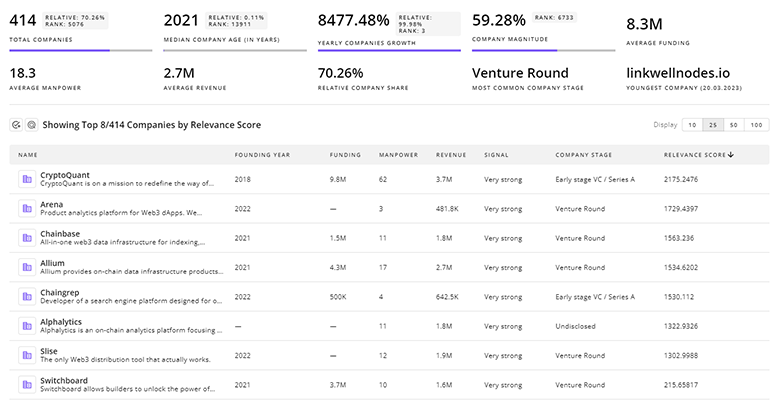
2.8K Hydrogen Production Companies
Discover Hydrogen Production Companies, their Funding, Manpower, Revenues, Stages, and much more
Hydrogen Production Investors
Leverage TrendFeedr’s sophisticated investment intelligence into 2.0K Hydrogen Production investors. It covers funding rounds, investor activity, and key financial metrics in Hydrogen Production. investors tool is ideal for business strategists and investment experts as it offers crucial insights needed to seize investment opportunities.
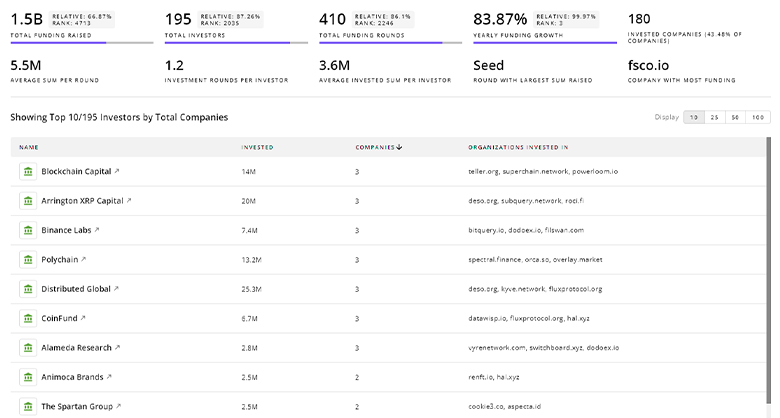
2.0K Hydrogen Production Investors
Discover Hydrogen Production Investors, Funding Rounds, Invested Amounts, and Funding Growth
Hydrogen Production News
TrendFeedr’s News feature provides a historical overview and current momentum of Hydrogen Production by analyzing 15.5K news articles. This tool allows market analysts and strategists to align with latest market developments.
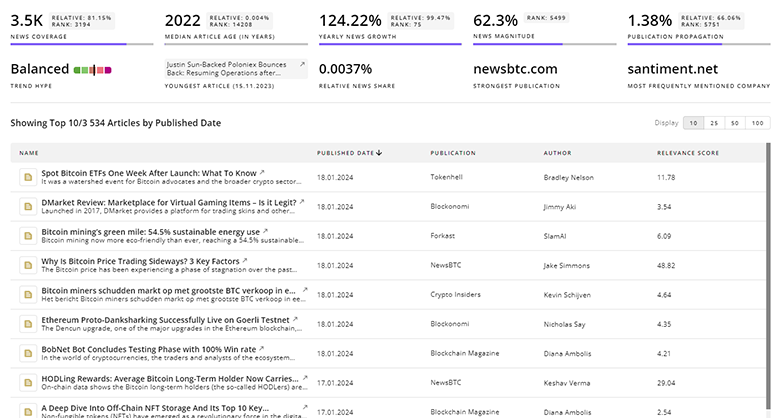
15.5K Hydrogen Production News Articles
Discover Latest Hydrogen Production Articles, News Magnitude, Publication Propagation, Yearly Growth, and Strongest Publications
Executive Summary
Hydrogen production now balances two commercial logics: scale-driven electrolyzer roll-out enabled by cheaper renewables and manufacturing scale, and feedstock-flexible chemistry that circumvents electricity dependence by valorizing waste or converting hydrocarbons into hydrogen with lower lifecycle emissions. Market data show a sizable addressable opportunity—$192.55B in 2025 and a projected rise to $236.87B by 2030—but the practical prize belongs to players that combine low LCOH, flexible feedstock access, and integrated logistics or digital O&M capabilities. Strategic priorities for investors and industrial buyers are clear: secure long-term offtake contracts, pursue PGM-light electrolyzer suppliers or alternative thermal pathways, and de-risk projects by aligning production with stable low-cost power or monetizable coproducts. Companies that reduce the delivered cost of hydrogen at industrial scale while removing reliance on constrained water or transport infrastructure will capture disproportionate value as demand moves from pilots to commercial offtake.
Interested in contributing your expertise on trends and tech? We’d love to hear from you.