Individualized Treatment Report
: Analysis on the Market, Trends, and TechnologiesThe individualized treatment market is entering an execution phase where data-to-decision pipelines determine winners: clinical platforms that reliably match a patient to a measurable intervention will capture disproportionate value, driven in part by the personalized cell therapy segment’s estimated CAGR of 22.8% and a forecasted market of $21,000,000,000 in 2025. Market signals show both high capital velocity into tech-enabled service models and strong growth in deep-science therapeutics, creating a split landscape between high-frequency behavioral personalization and capital-intensive genomic/cell therapy plays.
The last update of this report was 53 days ago. If you spot incomplete or incorrect info, please let us know.
Topic Dominance Index of Individualized Treatment
The Topic Dominance Index analyzes the time series distribution of published articles, founded companies, and global search data to identify the trajectory of Individualized Treatment relative to all known Trends and Technologies.
Key Activities and Applications
- Precision psychiatry using neuro-biomarkers: Clinics and platforms use EEG/ECG and MRI-derived markers to predict treatment response and to target neuromodulation, reducing trial-and-error prescribing and informing selection for interventions such as TMS and ketamine.
- Genetically guided immunotherapies and ultra-rare individualized drugs: Teams design patient-specific vaccines, neoantigen approaches, and one-off genetic therapies that directly address unique tumor or mutation profiles, elevating clinical benefit for selected patients while imposing bespoke manufacturing and regulatory pathways YGION Biomedical.
- Functional precision diagnostics for rapid treatment optimization: AI-enabled nanosensor and organoid-based assays generate actionable drug-response profiles to shorten time-to-effective therapy for cancers and complex conditions.
- Data-driven behavioral customization and digital therapeutics: Algorithmic plans and VR-assisted programs tailor intensity, modality, and pacing for autism, addiction, and IOP models, improving adherence and measurable functional outcomes NorthStar.
- Clinical-trial design and Net Treatment Benefit analytics: B2B platforms synthesize multi-dimensional endpoints and patient preferences to create smaller, more efficient trials that demonstrate personalized benefit signals to payors and regulators One2Treat.
Emergent Trends and Core Insights
- Objective matching displaces empirical sequencing of care. Predictive biomarkers and outcome models are shifting first-line decisions from clinician preference toward measurable stratification; failure to adopt objective matching will increasingly erode reimbursement prospects Psych-STRATA.
- Two-speed market structure is consolidating. High-volume behavioral personalization (telehealth, digital therapeutics) attracts frequent, smaller rounds while deep-biotech personalization (cell, neoantigen vaccines) draws large Series A/B investments and strategic partnerships, creating differentiated business economics.
- Data exhaust becomes strategic IP. Continuous outcome capture—from wearables, nanosensors, and routine diagnostics—creates feedback loops that improve algorithms and lock in clinical partners; companies that operationalize this loop create a durable advantage.
- Adaptive clinical designs are entering practice. Regulatory and academic acceptance of SMART and reinforcement-learning-based dynamic treatment regimes accelerates clinical adoption of adaptive multi-stage care pathways nature - Dynamic Treatment Regimes.
- Manufacturing and reimbursement remain gating constraints. High per-patient production costs for individualized biologics and fragmented payment models require new commercial structures (outcomes-based, annuity, or public-private frameworks) to scale therapies beyond niche use.
Technologies and Methodologies
- Machine-learning treatment-prediction pipelines: Supervised and outcome-weighted learning models translate multimodal inputs into treatment rules that can be operationalized at the point of care Applied ML for DTRs.
- qEEG and MRI-guided neurotargeting for neuromodulation: Neuro-navigation and imaging-derived targeting convert TMS and other stimulation modalities into patient-specific interventions with higher probability of response Brainstim Centers, Inc..
- Organoid and nanosensor functional assays: Patient-derived organoids and nanosensor arrays provide ex vivo drug-response data that can outperform genomic-only approaches for predicting therapeutic efficacy.
- Digital twin simulations and real-time feedback loops: Computational patient models integrate genomics, imaging, clinical history, and wearable telemetry to simulate treatment trajectories and enable intra-protocol adaptation FAU research grant on personalization.
- Scalable cell-manufacturing automation: Robotics and automated bioprocess platforms are emerging to reduce per-patient cost and improve reproducibility for autologous and allogeneic cell therapies Global CGT manufacturing partnerships and investments.
Individualized Treatment Funding
A total of 379 Individualized Treatment companies have received funding.
Overall, Individualized Treatment companies have raised $2.1B.
Companies within the Individualized Treatment domain have secured capital from 543 funding rounds.
The chart shows the funding trendline of Individualized Treatment companies over the last 5 years
Individualized Treatment Companies
- DeepPsy AG — DeepPsy uses electrophysiological biomarkers (EEG/ECG) combined with AI to predict treatment response for depression and to personalize rTMS protocols; its product is registered and reimbursed in Switzerland, supporting clinic deployment and trial stratification for pharma partners. The company emphasizes short-term clinical validation and payer acceptance to scale precision psychiatry within established health systems.
- B1Neuro — B1Neuro converts structural and functional MRI into individualized neurotargeting coordinates for brain stimulation, using machine learning to optimize stimulation site and parameters; this approach increases the probability of meaningful clinical change by reducing anatomical and functional targeting variance. Their asset-light model focuses on software licensing to clinics and device partners, enabling rapid geographic expansion from a low-capex base.
- Nine Diagnostics — Nine Diagnostics develops AI-driven nanosensor assays and multidimensional patient profiles to infer treatment effectiveness from small biosamples, positioning functional diagnostics as the gatekeeper to faster therapy selection for oncology; the company emphasizes iterative learning from every test to strengthen its predictive models. Selection into industry cohorts validates its data-fusion approach and improves go-to-market credibility for clinical and pharma customers.
- EveryONE Medicines — EveryONE Medicines targets ultra-rare and single-patient genetic disorders with individualized precision therapeutics, offering a pathway for rapid, patient-specific drug design where traditional pipelines cannot respond; their model couples academic discovery with accelerated manufacturing and regulatory navigation for one-off therapies. The company's focus on procedural playbooks for regulatory and reimbursement negotiation lowers the execution risk for these otherwise orphan applications.
- TheraMeal — TheraMeal applies an AI engine to generate nutrient-dense, treatment-aligned meal plans for oncology patients, integrating protocol constraints and clinical nutrition research to support recovery and adherence; the platform links kitchen and delivery partners with nutritionists to create continuous outcome feedback. By codifying nutrition as a measurable adjunct therapy, the company captures downstream value in adherence and complication reduction, creating a practical entry point for personalized supportive care in cancer pathways.
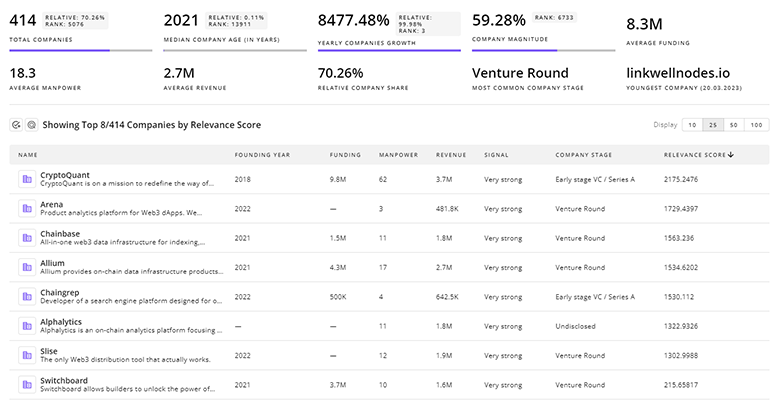
TrendFeedr’s Companies tool is an exhaustive resource for in-depth analysis of 4.5K Individualized Treatment companies.
4.5K Individualized Treatment Companies
Discover Individualized Treatment Companies, their Funding, Manpower, Revenues, Stages, and much more
Individualized Treatment Investors
The TrendFeedr’s investors tool features data on 344 investors and funding activities within Individualized Treatment. This tool makes it easier to analyze complex investment patterns and assess market potential with thorough and up-to-date financial insights.
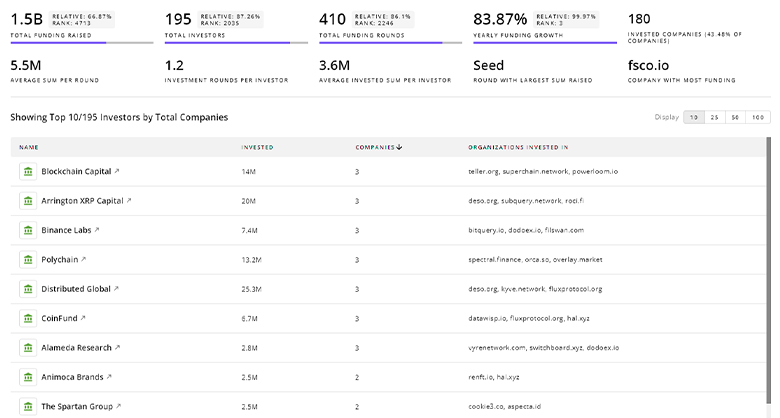
344 Individualized Treatment Investors
Discover Individualized Treatment Investors, Funding Rounds, Invested Amounts, and Funding Growth
Individualized Treatment News
Stay ahead of the curve with Trendfeedr’s News feature. The tool provides access to 1.0K Individualized Treatment. Navigate the current business landscape with historical and current Individualized Treatment data at your fingertips.
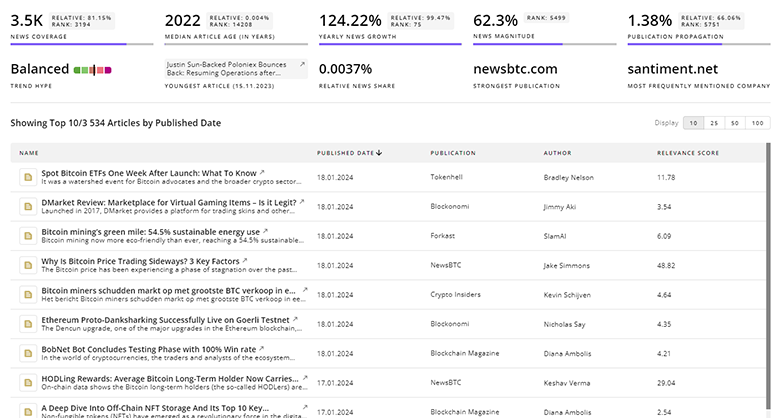
1.0K Individualized Treatment News Articles
Discover Latest Individualized Treatment Articles, News Magnitude, Publication Propagation, Yearly Growth, and Strongest Publications
Executive Summary
The individualized treatment opportunity now rewards companies that convert heterogeneous patient signals into repeatable clinical actions. Short-term winners will be those that pair defensible diagnostic signals with scalable delivery pathways: imaging and electrophysiology firms that license targeting algorithms, functional-diagnostic teams that sell treatment-selection services to oncologists, and digital behavioral platforms that embed measurable outcome capture. Strategic priorities for investors and operators include funding automation and manufacturing to reduce per-patient costs, building outcome-linked commercial models acceptable to payors, and acquiring complementary data assets to accelerate predictive accuracy. Implementing these priorities will separate firms that merely customize services from those that set the new standard for individualized care.
If you’re an expert in trends or emerging tech, we invite you to contribute to our insights.