
Logistics Platform Report
: Analysis on the Market, Trends, and TechnologiesThe logistics platform segment is at an inflection where software is becoming the control plane for physical operations and the market is projected to grow on a double-digit trajectory—the core market CAGR is *18.33% and the industry forecast targets $71,100,000,000 by 2030.* Demand concentrates on platforms that deliver end-to-end orchestration (order to last-mile), real-time visibility and modular integration layers that reduce manual handoffs; regional growth is bifurcated with APAC showing the fastest adoption and North America leading high-value enterprise deployments gminsights – Smart Logistics Platforms Market Report, 2025.
Our latest update of this report was 277 days ago. If you found a mistake or missing information, tell us!
Topic Dominance Index of Logistics Platform
The Topic Dominance Index evaluates Logistics Platform's significance by analyzing data on the distribution of news articles that mention Logistics Platform, the timeline of newly founded companies working in this sector, and global search trends
Key Activities and Applications
- End-to-end order-to-delivery orchestration — unified platforms that combine order intake, customs, warehousing, transport execution and reverse logistics into a single operational flow to remove handoff errors and shorten cycle times.
- Real-time shipment and asset visibility — GPS, RFID and IoT sensor streams aggregated into visibility layers that provide continuous location, condition and ETA signals for multimodal flows.
- AI-driven route optimisation and predictive ETA — machine learning models that replan on traffic, weather and capacity constraints to cut empty miles and improve on-time performance.
- Automated compliance and financial settlement — platforms that produce customs filings, exception documentation and milestone-linked settlement records to compress billing cycles and reduce disputes.
- Yard, dock and micro-fulfilment orchestration — localized control towers for gates, spotting and micro-fulfilment nodes that reduce dwell time and improve throughput at transfer points.
- Integration and iPaaS connectivity — no-code and API-first layers (EDI/API translation) that shorten partner onboarding and enable composable stacks for carriers, 3PLs and shippers.
Emergent Trends and Core Insights
- APAC acceleration: platform adoption in APAC is expanding fastest (regional CAGR cited at 24.2%), driven by high e-commerce volumes and national digital logistics programs that favor cloud and IoT investments.
- Cloud-first, standalone demand: the market prefers cloud deployments and modular, standalone solutions for rapid ROI; the cloud segment captured 68.7% of deployments in recent measures while standalone solutions represented ~61.6% of 2024 spend.
- Visibility → baseline; optimisation → value: visibility moved from differentiator to hygiene; platforms now compete on predictive optimisation (dynamic matching, cost/time tradeoffs) and verified emissions reporting DataBridge Market Research.
- Data moats win: operators that control high-frequency shipment and asset telemetry (carrier/TEU/container lifecycles) can convert visibility into predictive pricing and capacity products, creating defensible revenue streams Gnosis Freight.
- Sustainability as contract gating: verifiable scope-3 and shipment-level emissions data is becoming a procurement filter; platforms that embed emissions calculation and reporting gain preferential access to enterprise RFPs cargomotion.
- Regional specialists scale fast: focused regional networks that solve asset density and empty-mile problems deliver faster commercial traction than generalized global products—this is evident in several APAC and African platforms with accelerated growth metrics Logistik Pintar Indonesia.
Technologies and Methodologies
- Cloud-native, multi-tenant SaaS for elastic scale and rapid feature rollout across global networks.
- AI / ML orchestration engines for dynamic allocation, predictive ETAs and demand forecasting (models trained on high-volume telemetry and booking data).
- IoT sensor fabric and edge telemetry for container, trailer and pallet condition monitoring enabling exception management and cold-chain guarantees.
- API-first integration and iPaaS/no-code connectors that reduce onboarding time and preserve legacy systems while enabling modern orchestration layers 1Logtech Inc.
- Digital twin and simulation frameworks to test network scenarios (port choice, inventory pre-positioning, surge planning) prior to physical moves.
- Blockchain and verified data fabrics for trade finance, provenance and multi-party settlement—applied in high-trust cross-border flows and documentary automation.
- Robotics and automation (AMR/AGV) in fulfilment coupled with RaaS commercial models to lower capex barriers for warehouse automation.
Logistics Platform Funding
A total of 562 Logistics Platform companies have received funding.
Overall, Logistics Platform companies have raised $37.6B.
Companies within the Logistics Platform domain have secured capital from 2.4K funding rounds.
The chart shows the funding trendline of Logistics Platform companies over the last 5 years
Logistics Platform Companies
- Loady — Loady operates a neutral, standardised data hub for loading/unloading specifications that reduces data friction across shipper, carrier and consignee systems; its API integrations cut manual data efforts by over 40% according to company metrics. Loady targets the frequent operational failure point of first-attempt rejections and positions its dataset as the canonical supply-side master for execution engines. This makes it a clear fit for platforms aiming to improve gate throughput and reduce failed deliveries.
- BOX ID Systems — BOX ID Systems focuses on IoT-enabled tracking for returnable transport packaging (RTP) and reports large reductions in loss and misrouting through sensor-to-ERP fusion. Their asset-level visibility complements container and pallet strategies, enabling platforms to generate utilization metrics and reduce fleet replacement cost. That capability is especially valuable for industrial and automotive supply chains where RTP utilization tightly correlates to working capital efficiency.
- TradeLink — TradeLink addresses dock time and time-slot coordination with a lightweight collaboration layer that connects shippers, yards and carriers to eliminate ramp surprises. By standardising time-window management and digitalizing arrival coordination, TradeLink reduces idle time and improves asset turn rates—a direct lever for operators focussed on yard optimisation and gate KPIs. Its product design deliberately targets the interoperability gaps that cause cascading delays across multimodal chains.
- Fleetbase — Fleetbase provides an open-source stack (TMS, driver app, storefront) intended for developers and smaller operators to deploy full delivery stacks without starting from scratch. The open model lowers implementation cost and supports bespoke last-mile workflows where off-the-shelf systems fail, enabling rapid pilots and localized scaling. For platform builders, Fleetbase offers a modular way to spin up execution environments while retaining direct control of data and UX.
- Cargonexx — Cargonexx operates a transport management platform that focuses on reducing empty truck kilometers via matching algorithms and marketplace liquidity tools, positioning sustainability as a commercial lever to lower costs and emissions. The platform sells directly to shippers and brokers who require higher utilisation and transparent CO2 reporting, aligning with procurement requirements that now include emissions scoring. Its methodology demonstrates how targeted optimisation (empty-mile reduction) can produce credible environmental and margin outcomes in regional road networks.
Explore comprehensive profiles of 2.7K companies shaping the future of Logistics Platform with TrendFeedr's Companies feature.
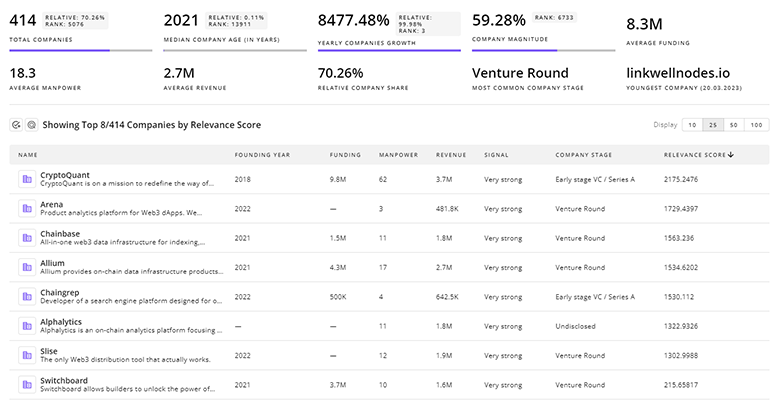
2.7K Logistics Platform Companies
Discover Logistics Platform Companies, their Funding, Manpower, Revenues, Stages, and much more
Logistics Platform Investors
TrendFeedr’s Investors tool allows you to explore detailed investment activities and trends based on 3.2K Logistics Platform investors. This tool provides an in-depth analysis of funding rounds and market dynamics to make informed investment decisions.
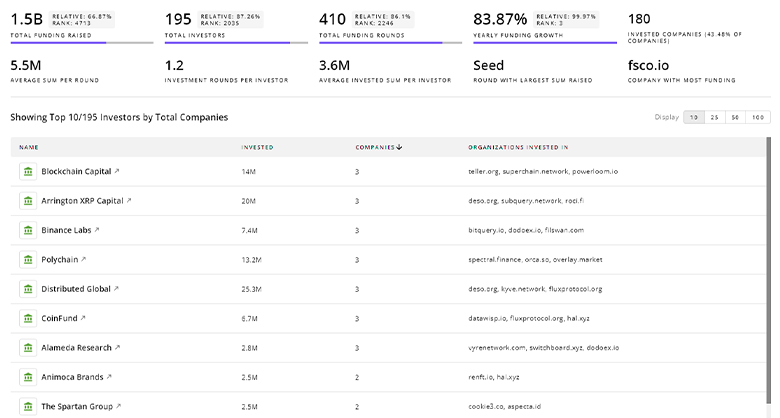
3.2K Logistics Platform Investors
Discover Logistics Platform Investors, Funding Rounds, Invested Amounts, and Funding Growth
Logistics Platform News
Stay updated with TrendFeedr’s News feature, which offers you access to 2.6K Logistics Platform articles. This tool provides you with a comprehensive understanding of the historical and current trends shaping the market.
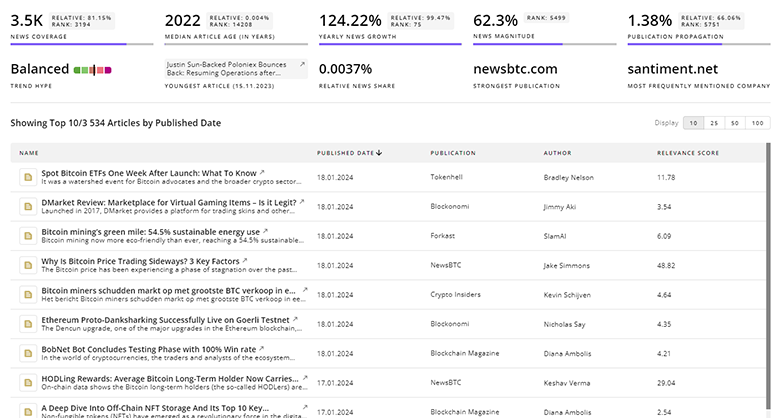
2.6K Logistics Platform News Articles
Discover Latest Logistics Platform Articles, News Magnitude, Publication Propagation, Yearly Growth, and Strongest Publications
Executive Summary
Logistics platforms have moved from visibility tools to operational control planes: winners will either own the neutral, high-frequency data fabric that powers prediction and pricing or embed themselves as indispensable execution ingredients at the yard, gate and last-mile. The commercial opportunity concentrates on modular SaaS that exposes APIs for partner onboarding, AI models trained on proprietary telemetry, and verified emissions reporting that maps directly to procurement decision criteria. For operators and investors the practical playbook is to prioritize (1) data capture at asset and event level, (2) composable integration layers that lower adoption friction, and (3) productizing optimisation outcomes (reduced empty miles, lower dwell, faster settlement) into monetizable services.
We’re keen to partner with subject matter experts to enrich our coverage. Think you can help? Let us know.