
Micro-mobility Report
: Analysis on the Market, Trends, and TechnologiesThe micro-mobility market is expanding rapidly around integration points: infrastructure, data orchestration, and specialized vehicle segments now capture disproportionate share of future value; the market reached $63,100,000,000 in 2024 and is forecast to grow at 12.86% CAGR, targeting $204,800,000,000 by 2033. Market reports and city usage studies confirm electrified shared fleets, charging/docking infrastructure, and AI fleet orchestration as the three commercial levers that determine which operators scale profitably What is Micromobility? (McKinsey).
We last updated this report 140 days ago. Tell us if you find something’s not quite right!
Topic Dominance Index of Micro-mobility
To gauge the impact of Micro-mobility, the Topic Dominance Index integrates time series data from three key sources: published articles, number of newly founded startups in the sector, and global search popularity.
Key Activities and Applications
- First/last-mile passenger transport — short, on-demand trips via e-scooters and e-bikes integrated with transit nodes; utilization and fare-integration determine unit economics Micro-Mobility Market Size & Share (Grand View Research).
- Last-mile logistics — cargo e-bikes, small electric three-wheelers, and micro-pods address urban parcel and food delivery where density and stop frequency make LEVs more efficient than vans Micro-Mobility Global Market Report (The Business Research Company).
- Corporate mobility and mobility budgets — employer fleets and subscription models replace employee car allowances with pooled, electrified vehicle access to meet sustainability targets Urban Connect.
- Charging, docking and CaaS (Charging as a Service) — modular operator-agnostic parking/charging stations that reduce battery swap logistics and recovery costs for shared fleets.
- Paratransit and inclusive mobility — regulated, higher-value services (insurance/MediCare channels) for users with limited mobility, creating durable revenue streams less sensitive to price wars Matia Mobility.
- Fleet orchestration & demand-response transit — AI dispatch and dynamic routing for pooled trips and microtransit that maximize vehicle utilization and lower marginal cost per trip Spare.
Emergent Trends and Core Insights
- Electrification is dominant — electrified LEVs (scooters, e-bikes) are the de facto deployment choice; electrification shifts operational cost structure toward battery lifecycle and charging infrastructure.
- Value aggregator shift to orchestration layers — software, APIs, and standards that connect modes (MaaS) capture higher margins than owning large fleets; modular digital marketplaces and orchestration engines win enterprise contracts more often than pure-asset operators.
- Cargo micro-vehicles accelerating — demand for last-mile freight solutions raises the commercial TAM; cargo pods and utility scooters target the 10–30 km urban delivery use cases where speed and parking footprint matter Zen Mobility product launches noted in industry coverage.
- Infrastructure monetization — neutral charging/docking can be financed by cities and captured through service-funded models; this converts fleet operational cost into a recurring infrastructure revenue stream.
- Inclusion & regulation converge — cities increasingly attach licensing and accessibility requirements to operating permits; companies that design insurable and accessible vehicles gain regulatory preference and longer-term municipal contracts Shared Micromobility State reports and policy analyses.
- Data as monetizable asset — telematics, curb usage, and aggregated mobility patterns are becoming products for cities, insurers and logistics firms, representing an emerging revenue stream beyond rides.
Technologies and Methodologies
- AI-powered fleet orchestration and demand forecasting — real-time dispatch algorithms and predictive maintenance drive utilization improvements and reduce rebalancing costs Moovex AI.
- Swappable battery and modular charging systems — battery modules and CaaS deployments shorten turnaround, reduce depot density needs, and lower OPEX for shared services.
- IoT telematics + edge diagnostics — embedded sensors, cellular telematics and edge processing deliver low-latency health reporting and automated safety interventions that lower downtime and liability exposure.
- Modular vehicle architectures — standardized base platforms with interchangeable upper modules (passenger, cargo, refrigerated) compress product development cycles and enable multi-use fleet economics.
- Autonomy in constrained environments — facility and campus deployments of low-speed autonomous PMVs and shuttles reduce labor costs for last-mile and intra-campus transport while opening markets in airports, hospitals, and campuses ALBA Robot.
- Standards & decentralized trust primitives — identity, battery provenance, and micropayments (blockchain approaches) are emerging in pilots to solve interoperability and asset-provenance problems across multiple operators MOBI.
Micro-mobility Funding
A total of 673 Micro-mobility companies have received funding.
Overall, Micro-mobility companies have raised $28.0B.
Companies within the Micro-mobility domain have secured capital from 2.8K funding rounds.
The chart shows the funding trendline of Micro-mobility companies over the last 5 years
Micro-mobility Companies
- Standab — Standab designs operator-agnostic modular parking and charging infrastructure that locks and charges shared LEVs; deployed in 45+ cities and supporting 17,000+ vehicles, the product reduces battery swap cycles and operational recovery cost for operators, positioning it as a municipal-friendly infrastructure partner. Standab has raised early growth capital and markets a service-funded model that converts street furniture into recurring revenue.
- microFleet® — microFleet® provides universal docking stations that automatically lock and charge a very broad range of two- and three-wheel LEVs; the system targets residential complexes, campuses and B2B depots where interoperability and compact footprint are decisive for adoption.
- Pinge — Pinge focuses on inclusive micro-mobility for seniors and people with limited mobility, designing vehicles and service models tailored to assisted users; the company's niche reduces regulatory friction and opens reimbursement and subsidy channels that commodity scooter operators cannot access.
- SCOOTILITY — SCOOTILITY builds a utility scooter form factor optimized for dense urban delivery and B2B rapid logistics, emphasizing payload, durability and compact parking; the design directly addresses bakery/food and small-parcel delivery segments where moped replacements deliver clear cost and curbspace advantages.
- Hergele Mobility — Hergele Mobility translates micro-mobility concepts into warehouse and material-handling vehicles (order pickers, tuggers) that cut walking time and increase throughput for logistics operators; this industrial application shows micro-mobility engineering applied to high-margin enterprise workflows.
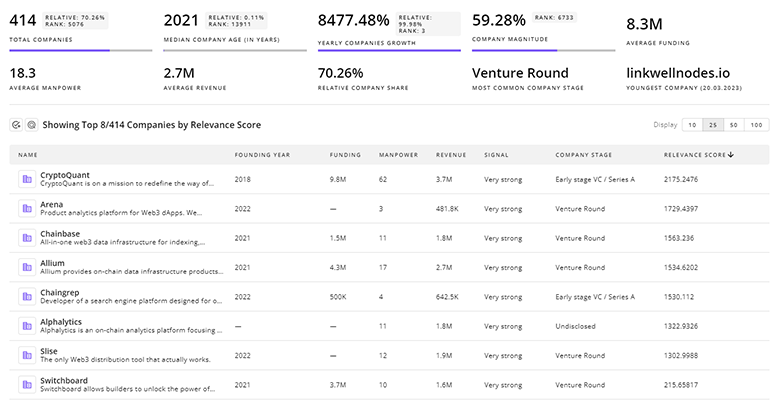
Enhance your understanding of market leadership and innovation patterns in your business domain.
2.0K Micro-mobility Companies
Discover Micro-mobility Companies, their Funding, Manpower, Revenues, Stages, and much more
Micro-mobility Investors
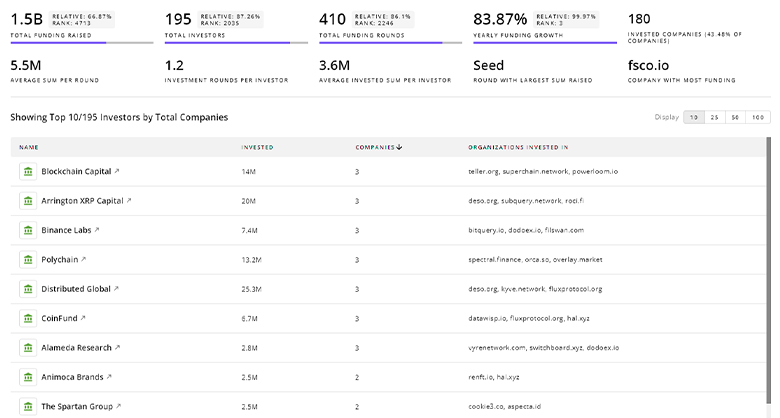
TrendFeedr’s Investors tool offers comprehensive insights into 2.8K Micro-mobility investors by examining funding patterns and investment trends. This enables you to strategize effectively and identify opportunities in the Micro-mobility sector.
2.8K Micro-mobility Investors
Discover Micro-mobility Investors, Funding Rounds, Invested Amounts, and Funding Growth
Micro-mobility News
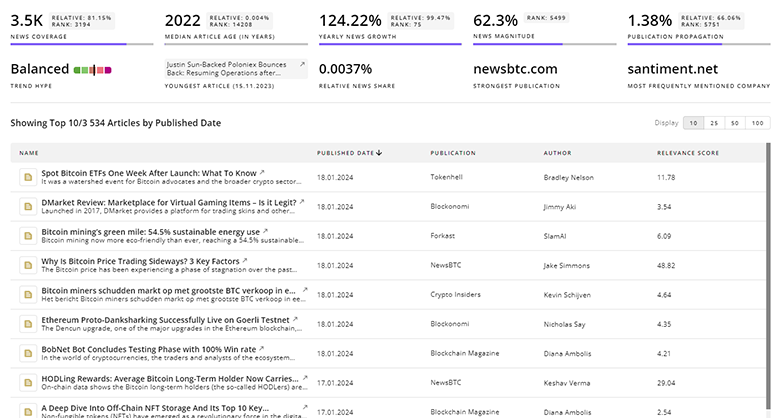
TrendFeedr’s News feature provides access to 1.4K Micro-mobility articles. This extensive database covers both historical and recent developments, enabling innovators and leaders to stay informed.
1.4K Micro-mobility News Articles
Discover Latest Micro-mobility Articles, News Magnitude, Publication Propagation, Yearly Growth, and Strongest Publications
Executive Summary
Micro-mobility is moving beyond an experiment in urban convenience toward a layered market where infrastructure, software orchestration and specialized vehicles define commercial winners. The largest, most sustainable opportunities sit at the intersections: charging/docking systems that neutralize operational friction, AI orchestration that converts sparse assets into high utilization, and verticalized vehicle offers (cargo, inclusive mobility, industrial logistics) that avoid low-margin consumer churn. Investors and operators should reallocate capital away from undifferentiated fleet expansion and toward integrated plays that (1) reduce per-trip OPEX through better charging and telematics, (2) capture recurring infrastructure or software revenue, and (3) secure regulated, high-value contracts in logistics and inclusive mobility.
We value collaboration with industry professionals to offer even better insights. Interested in contributing? Get in touch!