Micro-oled Displays Report
: Analysis on the Market, Trends, and TechnologiesThe micro-OLED sector is accelerating toward commercial scale with concentrated funding and intense technical iteration: total ecosystem funding stands at $2.35B and news coverage has risen by 65.62% over five years, signalling a market under active commercialization pressure. Market forecasts and vendor announcements reinforce a multi-billion dollar opportunity as near-eye systems, automotive HUDs, and defense optics drive demand Micro OLED Display Market Size, Future Growth and Forecast 2033. Technical competition splits between OLED-on-Silicon (OLEDoS) paths (favored for driver integration and high pixel density) and MicroLED approaches (favored for peak brightness and lifetime), while manufacturing yield, backplane integration, and full-color strategies remain the gating factors for broad consumer adoption.
We last updated this report 24 days ago. Tell us if you find something’s not quite right!
Topic Dominance Index of Micro-oled Displays
To gauge the impact of Micro-oled Displays, the Topic Dominance Index integrates time series data from three key sources: published articles, number of newly founded startups in the sector, and global search popularity.
Key Activities and Applications
- Near-Eye (AR/VR) Displays: Development focuses on extreme pixel density and low power for headsets and smart glasses; manufacturers pursue >3,000 ppi backplanes and optical engines that support high perceived resolution OLED Microdisplay – Market Share Analysis, Industry Trends & Statistics, Growth Forecasts (2025 – 2030).
- Automotive Augmented HUDs: System suppliers optimize for high on-road luminance, reliable environmental qualification, and integration with ADAS stacks; automotive OEM pilots justify premium pricing and long qualification cycles Microdisplay Market Forecasts from 2023 to 2028.
- Military and Ruggedized Helmet Displays: High-brightness, sealed microdisplays with secure optical paths are winning early deployments where value per unit is high and volume is lower Global Micro-LED Displays Market 2026-2036.
- Camera Electronic Viewfinders (EVFs) and Surgical Optics: Compact, high-contrast microdisplays replace larger viewfinders in professional imaging and microscopy by enabling smaller scopes and improved color fidelity
- Manufacturing & Backplane Integration: High-volume scaling activities target 300mm wafer compatibility, silicon backplane process control, and high-yield assembly (mass transfer, flip-chip, wafer bonding) that collectively determine unit economics The Global Mini- and Micro-LED Displays Market 2024-2034.
Emergent Trends and Core Insights
- Resolution escalation and optics-aware design: Vendors race toward 8K-per-eye equivalent systems by combining >3,000 ppi microdisplays with advanced waveguides</a>; this trend forces tighter co-design between optics and the emitter array OLED Microdisplay Market Analysis.
- Silicon backplane dominance for high-density panels: Investment in CMOS backplanes and OLEDoS flows as the pragmatic path to embed drivers under pixels, improving yield and integration for near-eye devices.
- Color-conversion and hybrid emitter strategies: Where red MicroLED efficiency lags, quantum-dot color conversion and stacked/tandem emitter architectures are used to reach full color while keeping die complexity manageable
- Brightness as a gating metric for AR: Optical losses in waveguides force microdisplay brightness targets into tens of thousands of nits at the emitter; this pushes developers toward tandem OLED stacks or ultra-bright MicroLED chips for outdoor visibility Micro OLED and MicroLED technology reporting.
- Manufacturability and yield have shifted from secondary concerns to the central commercial challenge. Patent and process activity concentrates on packaging, RDL, and thermal management rather than only on new emitter chemistries.
Technologies and Methodologies
- OLED-on-Silicon (OLEDoS): Integrates OLED stacks directly on CMOS drivers to enable ultra-high pixel density and complex driving schemes; this is the immediate platform for many near-eye suppliers.
- GaN-on-Silicon and Monolithic MicroLED: GaN epiwafers on silicon permit direct integration with CMOS and are central to monolithic MicroLED programs targeting extreme brightness and lifetime.
- High-throughput transfer and MicroSolid Printing™: Mass-transfer alternatives (flip-chip, elastomer stamp, laser-assisted, and MicroSolid Printing™) aim to reach yields compatible with consumer economics; these processes define the practical path for MicroLED adoption.
- Tandem / multi-stack emitter architectures: Tandem OLED stacks and high-voltage CMOS backplanes let emissive stacks trade current density for brightness, extending life under high-drive conditions Tandem OLED microdisplays and backplane R&D.
- Nanoimprint and patterning for optical elements: Roll-to-plate nanoimprint lithography creates large-area micro-optical structures and diffractive elements required for waveguides and light-management layers Morphotonics.
- System-level foveated rendering and eye-tracking: Integration of NIR-transparent sensors and foveated pipelines reduces delivered pixel budget and power by aligning compute to gaze, enabling higher effective resolution within thermal and power constraints.
Micro-oled Displays Funding
A total of 36 Micro-oled Displays companies have received funding.
Overall, Micro-oled Displays companies have raised $2.3B.
Companies within the Micro-oled Displays domain have secured capital from 186 funding rounds.
The chart shows the funding trendline of Micro-oled Displays companies over the last 5 years
Micro-oled Displays Companies
- MICLEDI microdisplays — MICLEDI microdisplays develops high-performance MicroLED arrays on a 300mm CMOS manufacturing platform targeted at AR near-eye engines. The company operates as a fabless design house focused on monolithic RGB microLEDs and claims rapid prototyping and demo systems for ultra-high PPI AR engines. Financials and R&D focus indicate a small engineering-heavy team scaling demonstrators toward commercial modules.
- VueReal Inc. — VueReal commercializes MicroSolid Printing™, a high-yield transfer process designed to place millions of micro-emitters with low defect rates and high throughput. Their value proposition reduces the mass-transfer bottleneck for MicroLED commercialization and targets wearables, automotive HUDs, and AR optical engines where cost per die and yield control module economics.
- ALLOS Semiconductors — ALLOS Semiconductors licenses GaN-on-Si epiwafer technology and supporting process IP, positioning itself as an ingredient supplier enabling CMOS-compatible MicroLED flows. The firm targets partnerships with fabs and foundries that must adopt epi and processing steps to lower die cost for high-density microdisplays.
- VisoChrome — VisoChrome develops high-speed electrofluidic reflective displays that operate at near-zero power for always-on applications like dashboards and low-power wearables. Their approach creates a differentiated low-power niche that competes on energy rather than on emissive brightness, offering a commercially attractive alternative for many IoT and automotive surfaces.
- SeeYA Technology — SeeYA Technology builds OLEDoS microdisplays on 12-inch wafers and integrates the driving circuitry into the wafer stack, focusing on ultra-high resolution EVFs, thermal optics, and AR/VR modules with a factory designed for wafer-level scale.
Enhance your understanding of market leadership and innovation patterns in your business domain.
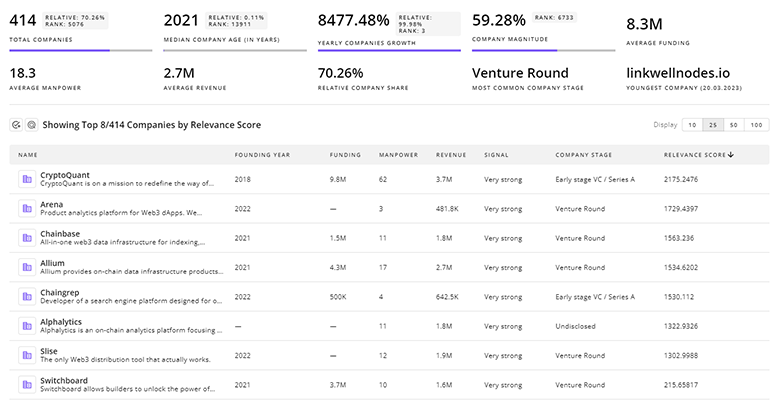
140 Micro-oled Displays Companies
Discover Micro-oled Displays Companies, their Funding, Manpower, Revenues, Stages, and much more
Micro-oled Displays Investors
TrendFeedr’s Investors tool offers comprehensive insights into 311 Micro-oled Displays investors by examining funding patterns and investment trends. This enables you to strategize effectively and identify opportunities in the Micro-oled Displays sector.
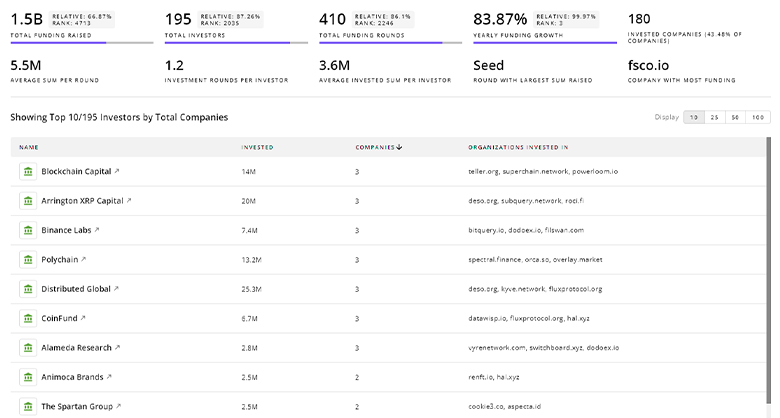
311 Micro-oled Displays Investors
Discover Micro-oled Displays Investors, Funding Rounds, Invested Amounts, and Funding Growth
Micro-oled Displays News
TrendFeedr’s News feature provides access to 1.2K Micro-oled Displays articles. This extensive database covers both historical and recent developments, enabling innovators and leaders to stay informed.
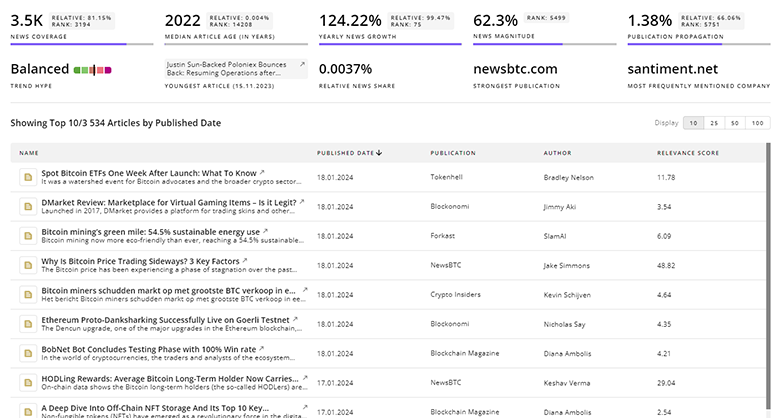
1.2K Micro-oled Displays News Articles
Discover Latest Micro-oled Displays Articles, News Magnitude, Publication Propagation, Yearly Growth, and Strongest Publications
Executive Summary
Micro-OLED sits at the intersection of materials breakthroughs and manufacturing engineering. The immediate commercial run favors firms that tie emitter performance to silicon backplane economics: companies that secure high-yield transfer processes, CMOS driver integration, or scalable GaN-on-Si epi solutions will control the upgrade path into mass markets. Near-term commercial traction will concentrate in high-value segments — AR near-eye systems, automotive HUDs, and defense optics — where price can absorb current manufacturing complexity. Parallel low-power reflective approaches will capture adjacent IoT and wearable use cases where energy is the primary constraint. Strategic choices for investors and OEMs should prioritize access to wafer-level capacity, proven mass-transfer or monolithic integration IP, and partnerships that align optical engine design with device-level emitter capability.
We value collaboration with industry professionals to offer even better insights. Interested in contributing? Get in touch!