
Mixed Reality Report
: Analysis on the Market, Trends, and TechnologiesThe mixed reality market has moved from exploratory pilots to measurable enterprise deployments: revenue was $1,175,100,000 in 2022 with a documented market CAGR of 38.71% in recent trend analysis, signaling sustained high-growth expectations for enterprise use cases. Hardware continues to carry the largest share of near-term value, but software-led workflows—training, remote assistance, and digital-twin integration—are where recurring revenue and ROI evidence are concentrating, creating distinct strategic opportunities for platform integrators and tightly focused vertical specialists Grand View Research – Mixed Reality Market.
We last updated this report 55 days ago. Tell us if you find something’s not quite right!
Topic Dominance Index of Mixed Reality
To gauge the impact of Mixed Reality, the Topic Dominance Index integrates time series data from three key sources: published articles, number of newly founded startups in the sector, and global search popularity.
Key Activities and Applications
- Industrial training and simulation — High-fidelity MR modules map directly to measurable competency gains in manufacturing, aerospace, and defense; enterprise deployments replace classroom time and lower error rates in complex tasks, supported by evidence that training and simulation represent a major share of application revenue
- Remote visual assistance and frontline support — Live MR overlays and guided workflows reduce mean time to repair and improve first-time-fix rates for field service operations; these outcomes drive rapid payback for hardware-plus-SaaS bundles, particularly in industrial maintenance and utilities
- Construction and AEC verification — On-site alignment of BIM/CAD to physical environments for progress validation, clash detection, and quality assurance converts MR into a risk-reduction instrument that directly lowers rework costs and schedule overruns, creating clear procurement cases for enterprise buyers XYZ Reality.
- Healthcare simulation and surgical planning — Volumetric models, holographic overlays, and MR-enabled rehearsal environments shorten preparation time and improve clinical decision confidence for complex procedures, making MR defensible where patient outcomes and liability are at stake.
- Marketing, retail, and experiential product visualization — Web-first MR activations and QR-triggered experiences increase buyer engagement and accelerate conversion when they remove friction to trial (no-install WebXR paths), an increasingly common short-term go-to for brands that require measurable campaign lift admagix.io.
Emergent Trends and Core Insights
- Spatial anchoring and VPS as infrastructure — Persistent placement of content across sessions and devices is emerging as a core utility; reliable Visual Positioning Systems convert ephemeral demos into repeatable, multi-user workflows
- AI-driven content generation and automation — Generative models and deep-learning pipelines are compressing 3D asset creation cycles, shifting the bottleneck from rendering hardware to scalable content production; vendors that automate photoreal assets gain decisive time-to-value advantages for enterprise rollouts
- Standalone headsets and lightweight glasses adoption — Market share is moving toward self-contained devices that eliminate PC tethering and simplify procurement and device management, increasing the addressable enterprise base Mordor Intelligence - Mixed Reality Market.
- Volumetric capture and digital-human presence — Real-time holographic capture and volumetric assets enable higher-fidelity telepresence for training and customer engagement; when paired with analytics, these assets become reusable learning content with measurable retention benefits DoubleMe.
- Edge/5G-enabled low-latency pipelines — Offloading rendering and synchronization to edge compute reduces device requirements for complex scenes and supports mobile frontline scenarios, broadening MR use in logistics and inspection workflows IoT Analytics - Enterprise Augmented/Mixed Reality Market Report.
Technologies and Methodologies
- Spatial mapping and VPS frameworks — Accurate environment scanning, semantic anchors, and persistent coordinate systems are the foundation for shared MR experiences and enterprise SLAs Immersal.
- AI-assisted asset pipelines — Deep-learning shading, photogrammetry automation, and generative 3D tools accelerate authoring while lowering marginal cost per scene; platforms that provide no-code authoring on top of these pipelines increase enterprise adoption velocity
- Digital twin integration — Synchronized IoT feeds layered onto 3D models allow immersive diagnosis and predictive maintenance; MR becomes a visualization and interaction layer for operational technology when feeds remain live and secured
- Inside-out tracking, SLAM, and sensor fusion — Systems that combine LiDAR, stereo cameras, IMUs, and on-device ML yield stable occlusion handling and body-anchored interactions needed for precision tasks.
- Cloud/edge architectures for low-latency multi-user sync — Design patterns include lightweight client geometry, authoritative state servers, and interest-driven content delivery to scale shared sessions without saturating device compute or network bandwidth Hololight.
Mixed Reality Funding
A total of 3.0K Mixed Reality companies have received funding.
Overall, Mixed Reality companies have raised $91.4B.
Companies within the Mixed Reality domain have secured capital from 11.0K funding rounds.
The chart shows the funding trendline of Mixed Reality companies over the last 5 years
Mixed Reality Companies
- DataMesh — DataMesh offers a digital-twin centric MR stack (FactVerse) that integrates live operational data with immersive 3D environments to support maintenance, simulation, and training workflows. The company positions its suite (Director, Checklist, Inspector, Simulator) as an enterprise metaverse platform that reduces context switching between OT dashboards and field procedures. $56.6M in disclosed funding and a cross-Asia presence indicate a strategic focus on industrial customers where digital-twin ROI is quantifiable.
- BIM Holoview — BIM Holoview focuses on construction-grade MR alignment of BIM/CAD to on-site conditions using HoloLens and other devices to achieve sub-millimeter placement fidelity for inspection and progress tracking. This specialist approach targets direct reductions in rework and schedule risk on large capital projects where error cost is high. Their tooling and domain expertise make them a critical integrator for large developers and contractors seeking immediate project-level ROI.
- MATSUKO — MATSUKO provides holographic instructor capture and delivery aimed at training scenarios where live human presence improves knowledge transfer. By converting instructors into volumetric holograms for remote sessions, the company advertises higher retention and faster time-to-competency in manufacturing and telecom training programs. Recent funding and partner recognition support their real-time hologram positioning and delivery pipeline as an enterprise solution for large-scale training programs.
- Serl.io — Serl.io delivers a free-to-start no-code MR authoring platform (MRx) that targets education and enterprise training teams, reducing dependence on external studios for content updates. By enabling subject-matter experts to assemble and publish MR scenarios for HoloLens and Quest devices, Serl lowers the marginal cost of iterative instructional content and accelerates program scalability. Their product strategy addresses the critical enterprise friction of content velocity documented across market analyses.
- Augmind — Augmind focuses on automated, ML-driven 3D content generation that reduces manual modeling time and improves photorealism for MR product visualization and marketing. Their pipeline is designed to convert photographic or CAD inputs into optimized MR assets rapidly, enabling brands to deploy high-quality MR experiences at scale with predictable cost structures. This positions them as a content-infrastructure partner for enterprises that plan frequent, measurement-driven MR campaigns.
Enhance your understanding of market leadership and innovation patterns in your business domain.
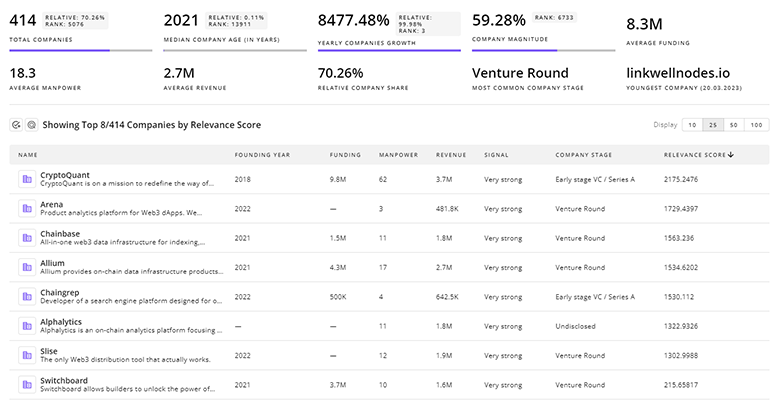
24.7K Mixed Reality Companies
Discover Mixed Reality Companies, their Funding, Manpower, Revenues, Stages, and much more
Mixed Reality Investors
TrendFeedr’s Investors tool offers comprehensive insights into 10.6K Mixed Reality investors by examining funding patterns and investment trends. This enables you to strategize effectively and identify opportunities in the Mixed Reality sector.
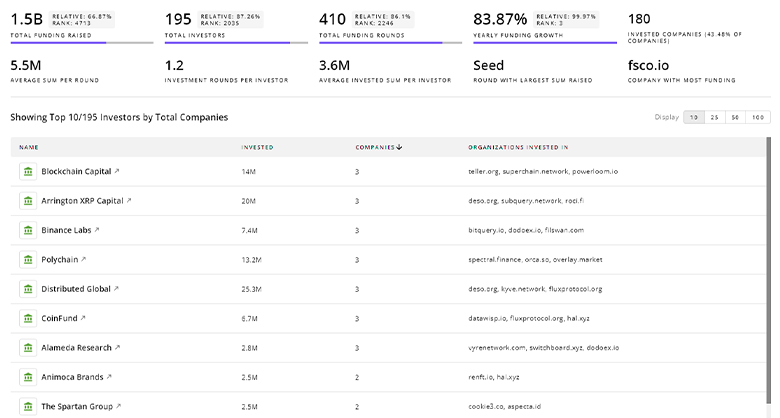
10.6K Mixed Reality Investors
Discover Mixed Reality Investors, Funding Rounds, Invested Amounts, and Funding Growth
Mixed Reality News
TrendFeedr’s News feature provides access to 31.0K Mixed Reality articles. This extensive database covers both historical and recent developments, enabling innovators and leaders to stay informed.
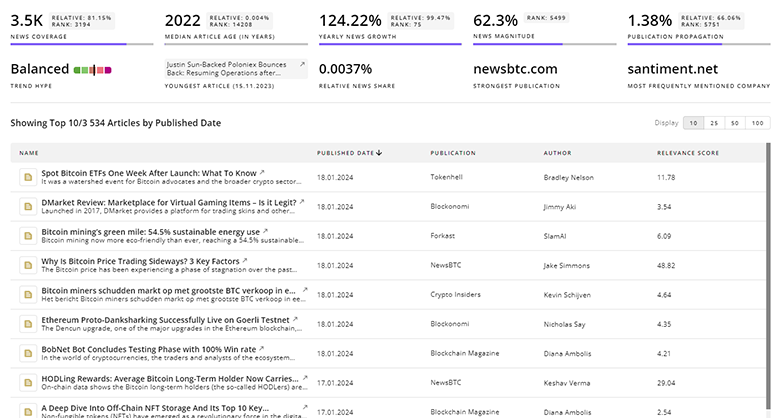
31.0K Mixed Reality News Articles
Discover Latest Mixed Reality Articles, News Magnitude, Publication Propagation, Yearly Growth, and Strongest Publications
Executive Summary
Mixed reality now shows a clear industrial purchase path: platforms that combine spatial fidelity, AI-assisted content creation, and digital-twin data integration capture the largest and most defensible value pools. Short-term winners will be vendors that turn MR into measurable productivity improvements—reduced rework in construction, lower downtime in field service, and faster skill acquisition in training—because these outcomes create contracting and procurement clarity. For investors and enterprise buyers, the pragmatic approach is to prioritize partnerships with platform integrators that prove ROI in a vertical context, while watching smaller IP-rich firms (content automation, VPS, volumetric capture) as acquisition targets that supply essential capabilities to those platform leaders.
We value collaboration with industry professionals to offer even better insights. Interested in contributing? Get in touch!