Multichannel Marketing Report
: Analysis on the Market, Trends, and TechnologiesThe multichannel marketing sector faces an urgent inflection where data centralization determines commercial winners: market analysis places the 2024 addressable market at $6,000,000,000 with a projected CAGR of 17.7%, and a pathway to $29,700,000,000 by 2034—figures that force marketing leaders to treat customer data as a financial asset rather than a technical detail. Investment and adoption patterns show that firms which consolidate identity, commerce and campaign execution see measurable uplifts in retention and time-to-market, creating a clear mandate to prioritize unified customer profiles, real-time decisioning and channel-level attribution now Multichannel Marketing Market.
We last updated this report 11 days ago. Tell us if you find something’s not quite right!
Topic Dominance Index of Multichannel Marketing
To gauge the impact of Multichannel Marketing, the Topic Dominance Index integrates time series data from three key sources: published articles, number of newly founded startups in the sector, and global search popularity.
Key Activities and Applications
- Full-funnel channel orchestration — Managing awareness, conversion and retention as a single flow across email, SMS, push, web and in-store touchpoints; this activity demands synchronized content, shared customer identity and automated journey branching.
- Product and marketplace integration (PIM/Feed management) — Preparing product data and syndicating it reliably to marketplaces and ad engines to convert exposure into transactions; feed tools and syndication services compress launch cycles and lift channel revenue.
- Through-channel partner enablement and fund management — Automating partner asset distribution, MDF administration and incentive reconciliation to scale local activation while maintaining brand governance.
- Contextual commerce / one-click purchase paths — Converting media and product discovery touchpoints directly into purchase events (cart injection, instant checkout) to reduce abandonment and shorten the purchase funnel.
- First-party data reclamation and identity resolution — Capturing offline and on-platform customer signals, resolving identities, and reconstituting longitudinal profiles to reduce dependency on third-party cookies and marketplace-owned data.
- Regulated high-volume messaging and compliance — Operating secure, auditable pipelines for SMS, email and transactional messaging in financial, healthcare and governmental contexts where deliverability and legal traceability are prerequisites Brick Street Software.
Emergent Trends and Core Insights
- From siloed channels to unified identity-first stacks. Market signals show accelerating adoption of CDP centric architectures that turn disparate channel events into a single activation fabric; this is the primary axis of competition for platform vendors Multichannel Marketing Hubs Market.
- AI for continuous channel mix and attribution decisions. Marketers deploy predictive models to recommend the next best channel and adjust budgets mid-campaign; external forecasts and vendor roadmaps highlight automated attribution and prescriptive allocation as immediate value levers SAS Insights - Multichannel Marketing: What it is and why it matters.
- Commerce convergence: media becomes transactional. Increasing investments in feed management, click-to-cart and merchant-of-record services let brands convert attention into orders without redirect friction; this trend compresses measured time-to-conversion and raises the bar for tracking fidelity.
- Partner and local activation automation climbs the priority list. Organizations with extensive indirect channels scale only when they automate asset delivery, partner training and rebate/entitlement processing; that creates sustained demand for TCMA systems Zift Solutions.
- Regulation and data privacy shape architecture choices. Data residency, consent management and event-level auditing force modular stacks (headless + API) and increase appeal for cloud vendors that offer flexible locality and strong compliance features GMI - Multi-channel Marketing Hubs Market.
- Operational divergence between platform incumbents and focused integrators. Large marketing clouds invest in breadth and embedded AI, while niche specialists capture high-value integration points (feeds, OMS linkage, deterministic attribution) that become critical inputs to the larger platforms.
Technologies and Methodologies
- Customer Data Platforms (CDP) and identity resolution — Central technology for maintaining a persistent, actionable customer record across channels; essential for 1:1 personalization and consistent suppression/consent handling.
- Headless, API-first architectures (MACH principles) — Enable independent iteration of front-end experiences while preserving centralized orchestration and analytics; favored for rapid channel expansion and integration with OMS/POS systems Kentico.
- Feed management and marketplace syndication engines — Automate product metadata normalization, pricing rules and multi-marketplace exports; critical for brands scaling beyond owned channels Channable.
- Attribution and multi-touch analytics (algorithmic attribution) — Statistical and machine-learning attribution models that assign credit across touchpoints, enabling precise campaign ROI and dynamic budget shifts MCCM Market Analysis.
- Through-Channel Marketing Automation (TCMA) and PRM/PMM tools — Systems for distributing approved creative, measuring partner performance and automating MDF/entitlement processes at scale inControl Marketing Group.
- AI for content generation and next-best-action orchestration — Generative and predictive engines reduce creative bottlenecks and enable autonomous journey adjustments; vendors are embedding these capabilities into CDP and campaign layers Pageflex.
Multichannel Marketing Funding
A total of 233 Multichannel Marketing companies have received funding.
Overall, Multichannel Marketing companies have raised $12.1B.
Companies within the Multichannel Marketing domain have secured capital from 768 funding rounds.
The chart shows the funding trendline of Multichannel Marketing companies over the last 5 years
Multichannel Marketing Companies
- Brij — Brij focuses on acquiring and activating first-party data from offline touchpoints through mobile-optimized experiences (QR-enabled product registration, progressive reorders). Its platform helps brands reclaim identities lost to marketplaces and build longitudinal shopper profiles that feed personalization engines. Brij is positioned for brands that sell through retail and need direct channels to customers for retention and lifecycle marketing. Key capability: first-party data capture and mobile re-engagement.
- omnidock (YC S24) — Omnidock acts as a merchant-of-record operator to simplify multi-marketplace expansion: it ingests catalogs, validates marketplace eligibility, and executes launches through pre-vetted accounts. This removes transactional complexity for brands entering multiple marketplaces and reduces time and legal friction for cross-border selling. Key capability: marketplace onboarding and transaction orchestration.
- SmartCommerce — SmartCommerce converts touchpoints into direct commerce using Click2Cart® technology that injects products into retailer carts from social, CTV, email and web. The company emphasizes frictionless purchases and intelligent product substitution to recover out-of-stocks. Key capability: reducing checkout friction and capturing impulse conversions from media.
- StructuredWeb — StructuredWeb specializes in AI-driven channel partner automation for enterprises, personalizing partner-facing collateral and automating partner outreach. The platform targets vendor→reseller ecosystems and solves content localization, co-branding and partner performance tracking at scale. Key capability: partner enablement and automated content personalization for channel networks.
- WAPPING NETWORKS — Wapping offers an omnichannel loyalty and activation platform that merges in-store and e-commerce behavior into unified loyalty programs and promotion analytics. The product targets retailers seeking to measure promotional lift across physical and digital touchpoints and to deliver matched incentives across both. Key capability: loyalty orchestration with unified analytics for retail.
Enhance your understanding of market leadership and innovation patterns in your business domain.
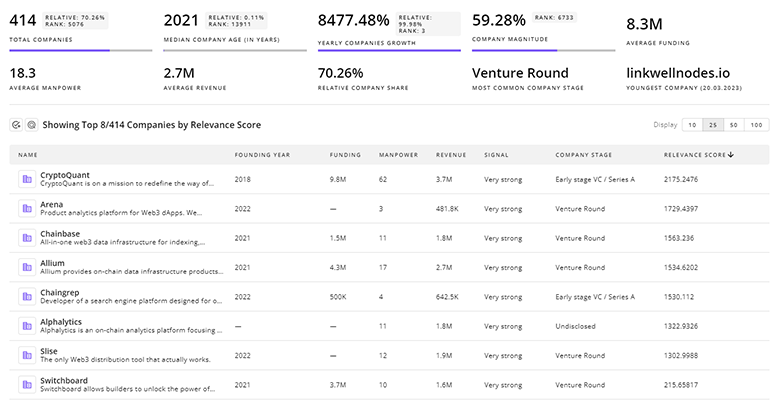
2.8K Multichannel Marketing Companies
Discover Multichannel Marketing Companies, their Funding, Manpower, Revenues, Stages, and much more
Multichannel Marketing Investors
TrendFeedr’s Investors tool offers comprehensive insights into 777 Multichannel Marketing investors by examining funding patterns and investment trends. This enables you to strategize effectively and identify opportunities in the Multichannel Marketing sector.
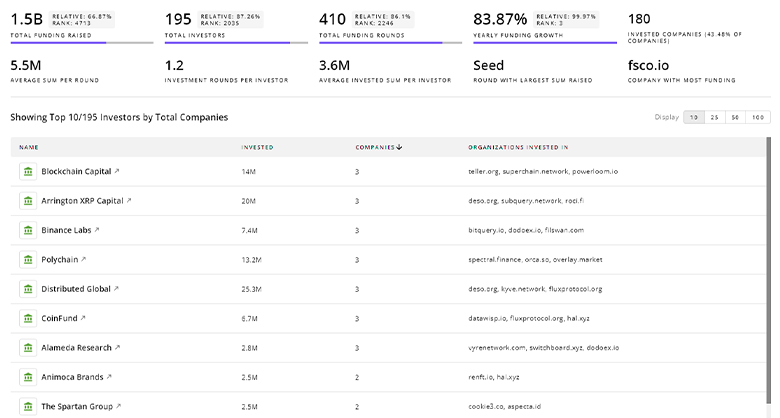
777 Multichannel Marketing Investors
Discover Multichannel Marketing Investors, Funding Rounds, Invested Amounts, and Funding Growth
Multichannel Marketing News
TrendFeedr’s News feature provides access to 1.1K Multichannel Marketing articles. This extensive database covers both historical and recent developments, enabling innovators and leaders to stay informed.
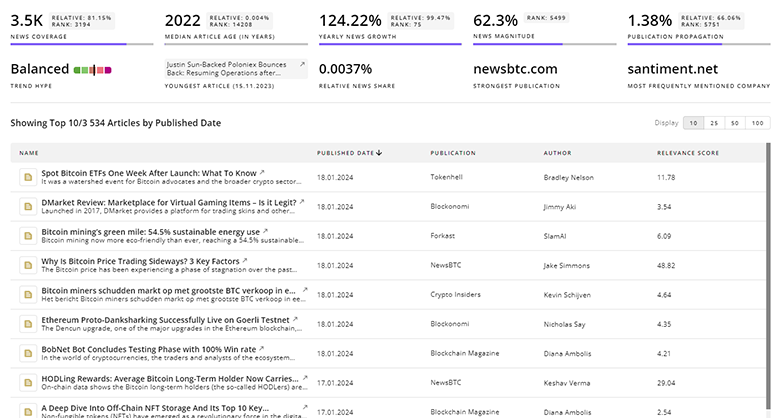
1.1K Multichannel Marketing News Articles
Discover Latest Multichannel Marketing Articles, News Magnitude, Publication Propagation, Yearly Growth, and Strongest Publications
Executive Summary
Multichannel marketing has shifted from being a channels checklist to being a data orchestration challenge: firms that engineer a single customer truth, embed deterministic attribution and connect commerce backends to personalization engines will capture disproportionate value. Strategic priorities are clear—centralize identity, instrument commerce endpoints, automate partner activation and deploy ML models that continuously reweight channel spend. For product leaders and CMOs the immediate tasks are practical: map critical integration points (PIM, OMS, POS), measure deterministic outcomes at the household or transaction level, and convert high-value integrations into standardized APIs that accelerate growth. Acting now on these priorities converts multichannel complexity into a predictable operating advantage.
We value collaboration with industry professionals to offer even better insights. Interested in contributing? Get in touch!