
Music Industry Report
: Analysis on the Market, Trends, and TechnologiesThe music industry is reconfiguring around data and creator-first services, with $27.74B in total funding having flowed into music-focused companies and a concentrated catalog-control dynamic accelerating mergers and data investments. Paid subscriptions and platform monetisation continue to lift toplines—U.S. recorded-music revenue reached $5.6 billion in H1 2025, underpinning higher deal activity and catalog acquisition strategies 2025 Mid-Year Music Industry Revenue Report | RIAA. Market forecasts project sustained expansion (global recorded-music and adjacent monetisation pathways range from conservative multi-year growth to projections that imply a structural market uplift into the low-hundreds of billions by the early 2030s) Global Music Market Size, Share, Trends | CAGR 11.50%.
We last updated this report 2 days ago. Tell us if you find something’s not quite right!
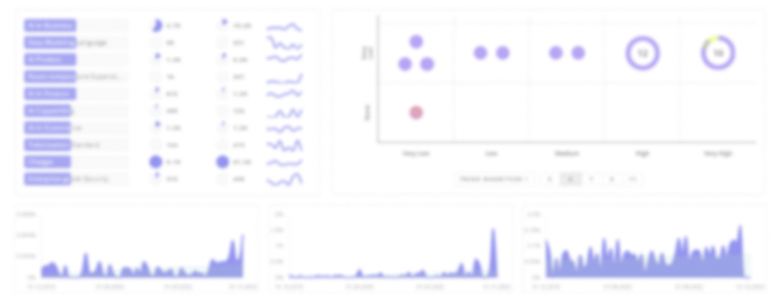
Topic Dominance Index of Music Industry
To gauge the impact of Music Industry, the Topic Dominance Index integrates time series data from three key sources: published articles, number of newly founded startups in the sector, and global search popularity.
Key Activities and Applications
- Rights reconciliation and metadata remediation — Cleaning, standardising, and auditing metadata to recover lost royalties and enable transparent payments. This addresses a measurable leakage in payouts and is the immediate commercial priority for labels, DSPs, and collection societies.
- Creator-facing operational platforms — Vertical SaaS for engineers, producers, and artists that centralise project workflows, credits, and commercial pipelines; these platforms translate activity into measurable revenue outcomes for creators and service providers.
- Sync and pre-cleared licensing — Fast-path cataloging and pre-clearance for advertising, gaming, and film where speed-to-license increases placement volumes and CPMs; this is a growing monetisation channel for curated catalogs.
- Royalty discovery and recovery — Systems that scan catalogs, match plays, and claim missing registrations to convert orphaned streams into payable royalties, producing immediate cashflow uplift for rights holders Sound Credit.
- Emotional and impact-driven discovery — Using neuroscience and advanced audio analysis to tag content by emotional resonance to increase sync match rates and ad performance metrics.
Emergent Trends and Core Insights
- Data ownership equals bargaining power — Neutral indexing and high-quality identification at scale are becoming indispensable infrastructure; entities that provide verifiable match volumes capture platform and licensor trust, creating non-replicable access to settlement flows BMAT Music Innovators.
- Subscription economics remain the growth engine — Paid subscriptions grew in recent periods and account for a majority of recorded-music revenue in leading markets, sustaining predictable recurring revenue for DSPs and licensors.
- Catalog consolidation compresses optionality for independents — Significant M&A deals (large-label acquisitions of independent catalogs) raise barriers around premium repertoire and push independents toward differentiation via service stacks rather than catalog scale Downtown Music.
- Regional monetisation asymmetry opens tactical plays — Local specialists that navigate complex DSP landscapes, especially in China and select APAC markets, secure revenue pools that are difficult for Western-first platforms to access Musicinfo.
- Web3 and token models persist as niche monetisation experiments — NFT/MFT approaches and collector-driven mechanics show high CAGR potential within specialist segments but face legal and royalty-distribution complexity that slows mainstream adoption.
Technologies and Methodologies
- AI/ML metadata scrubbing and automated crediting — Systems that ingest heterogeneous source files, apply probabilistic matching and produce auditable registries for royalty distribution; these are the immediate technical investments needed to reconcile millions of orphan plays.
- Fingerprinting and real-time airplay monitoring — High-volume matching engines that feed claim systems and reporting dashboards used by publishers, PROs and DSPs to shorten settlement cycles.
- Blockchain smart contracts for provenance and split automation — Select projects use distributed ledgers to timestamp ownership and automate elementary split payments; adoption remains selective where legal frameworks align eMusic.
- Neuroscience-backed audio analysis — Waveform and psychometric-based tagging that quantifies listener impact to improve placement relevance for advertising and sync.
- White-label streaming and B2B distribution stacks — Cloud APIs, licensing toolkits and CDN-linked delivery platforms that power telecom, fitness and gaming integrations where music is a component rather than a standalone product Tuned Global.
Music Industry Funding
A total of 632 Music Industry companies have received funding.
Overall, Music Industry companies have raised $27.7B.
Companies within the Music Industry domain have secured capital from 2.0K funding rounds.
The chart shows the funding trendline of Music Industry companies over the last 5 years
Music Industry Companies
- Program Music Ltd — An AI-powered metadata auditing platform that automates large-scale rights holder discovery and assertions, targeting the direct recovery of streaming royalties lost to poor data. Its value rests in producing verifiable claims that labels and collection agents can use to correct platform registries, making it a practical remediation tool for immediate revenue recovery. Program Music’s approach reduces manual research costs and creates an evidence trail that improves negotiation leverage with DSPs and collecting societies.
- MIIR Audio Technologies, Inc. — Combines musicology and neuroscience to score songs for emotional impact and engagement; these tags serve sync buyers and advertisers seeking high-return placements. MIIR’s output enables licensing teams to find short, high-impact segments within tracks, raising match rates for campaigns and increasing per-placement fees. The company sells analytics and licensed tech to agencies and music supervisors.
- ENGINEEARS — A vertical SaaS that centralises workflow, credits, and business operations for engineers and creators, addressing fragmentation in the production/distribution funnel and tying platform usage metrics to commercial outcomes. ENGINEEARS positions itself to capture a share of the $74B production and distribution market by streamlining bookings, rights capture, and split reporting for sessions. Their model reduces friction in crediting and accelerates the registration of compositions and masters.
- MAIA Universe — Operates a pre-cleared sync licensing marketplace that shortens turnaround for commercial and film placements through packaged rights and instant licensing tools. MAIA targets advertisers and content creators that prioritise speed and legal certainty, increasing the velocity of lower-friction sync deals. The platform’s curated catalogs and automated clearance process increase placement frequency for mid-tier artists.
- Mogul — Focuses on recovering unclaimed royalties and fixing registration errors for rights holders, combining monitoring with remediation services that convert overlooked plays into real cashflow. Mogul’s product suite maps usage to ownership and pursues automated claims where feasible, generating short-term ROI for artists and small labels. Their value proposition is pragmatic: capture lost revenue that legacy systems miss.
Enhance your understanding of market leadership and innovation patterns in your business domain.
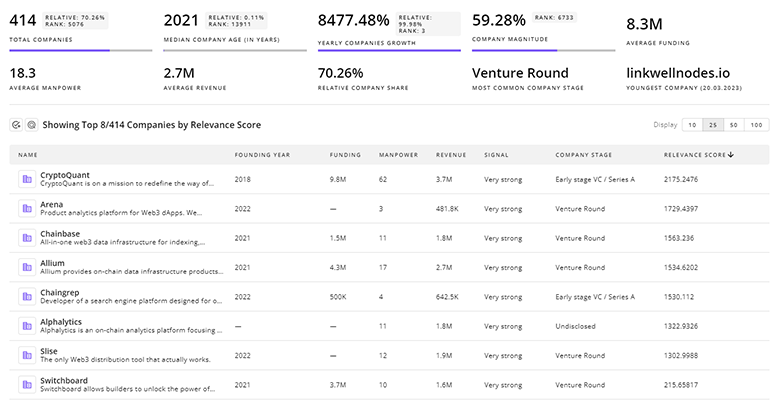
6.0K Music Industry Companies
Discover Music Industry Companies, their Funding, Manpower, Revenues, Stages, and much more
Music Industry Investors
TrendFeedr’s Investors tool offers comprehensive insights into 2.3K Music Industry investors by examining funding patterns and investment trends. This enables you to strategize effectively and identify opportunities in the Music Industry sector.
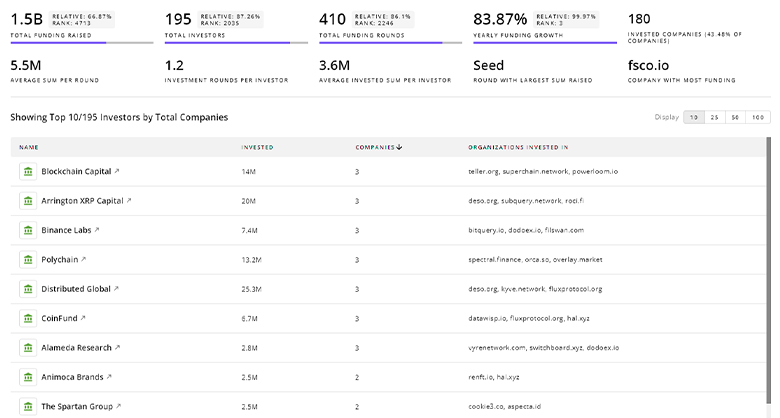
2.3K Music Industry Investors
Discover Music Industry Investors, Funding Rounds, Invested Amounts, and Funding Growth
Music Industry News
TrendFeedr’s News feature provides access to 25.1K Music Industry articles. This extensive database covers both historical and recent developments, enabling innovators and leaders to stay informed.
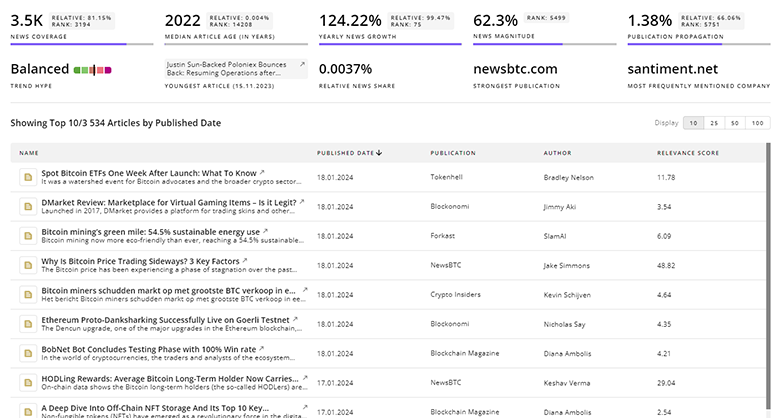
25.1K Music Industry News Articles
Discover Latest Music Industry Articles, News Magnitude, Publication Propagation, Yearly Growth, and Strongest Publications
Executive Summary
The business imperative is clear: control and accuracy of data determine who captures value as the industry grows. Investors and operators should prioritise scalable, verifiable metadata infrastructure and creator-centric operating systems that translate creative output into auditable revenue streams. Tactical plays that combine rights reconciliation, rapid licensing, and regional DSP expertise offer measurable near-term returns, while selective investments in emotional-impact discovery and automated split execution increase long-term margin on high-value placements. Companies that can deliver transparent audit trails and materially reduce settlement friction will sit at the interface between creators, platforms, and payors—and will therefore command durable pricing power.
We value collaboration with industry professionals to offer even better insights. Interested in contributing? Get in touch!