Nuclear Engineering Report
: Analysis on the Market, Trends, and TechnologiesThe nuclear engineering sector is reconfiguring from large, bespoke builds toward modular, digitally enabled delivery, driven by tighter policy support and concentrated capital flows; the internal trend data shows 589 companies addressing the topic and $9.22B in total funding across the sector, indicating accelerating commercialization activity in targeted segments.
We last updated this report 35 days ago. Tell us if you find something’s not quite right!
Topic Dominance Index of Nuclear Engineering
To gauge the impact of Nuclear Engineering, the Topic Dominance Index integrates time series data from three key sources: published articles, number of newly founded startups in the sector, and global search popularity.
Key Activities and Applications
- SMR and microreactor licensing, factory fabrication, and deployment — Industry effort centers on certifying modular reactor designs and shifting construction to repeatable factory lines to reduce lead times and cost per unit.
- Fuel-cycle modernization and spent-fuel recycling — Public funding is accelerating research into recycling and reduced-radiotoxicity fuel cycles to close the loop on used fuel and reduce long-term repository burdens Office of Nuclear Energy.
- AI and digital operations for safety and availability — Utilities and start-ups are running AI pilots for predictive maintenance and licensing support to compress operational costs and regulatory friction Nuclear Industry Kicks Off 2026 With Major Public and Private Sector Announcements.
- Non-traditional deployments (floating plants, maritime propulsion, space and mining microgrids) — Engineering work now includes marine platforms and transportable units for remote industrial loads and off-grid customers New Technologies for a New Industry - Nuclear Innovation Alliance.
- Advanced materials, instrumentation, and inspection services — Fabricators, valve services, and NDT capability upgrades support both legacy fleet life extensions and new reactor types through certified manufacturing and inspection capacity.
Emergent Trends and Core Insights
- Modularization as the default commercial path — Regulatory and investor attention concentrates on SMRs and microreactors as near-term commercial options; 12 licensing submissions in 2025 and compressed review pathways for <300 MW(e) designs are reshaping time-to-market What Nuclear Energy Technologies Are Actually Advancing in 2026?.
- Near-term capacity growth and program scale — 63 reactors under construction will add 66.2 GW(e) globally, underpinning forecasts that total nuclear capacity could double by 2050 if current pipelines and policy support persist Six Global Trends in Nuclear Power You Should Know.
- AI delivers measurable operations gains — Early pilots show 22% reductions in unplanned outages using predictive maintenance, a clear productivity lever for incumbent fleets that improves economics for life-extension and for new builds.
- Fuel supply and HALEU bottleneck risk — Analysts flag HALEU production as a principal schedule and cost constraint, with major capital programs targeting HALEU capacity to support Gen-IV and many SMR designs Nuclear: 5 things to look for in 2026.
- Policy nudges are decisive — Targeted grants (e.g. DOE awards for spent-fuel recycling) and tax incentives shorten investment break-even horizons and reduce first-of-a-kind (FOAK) risk for advanced concepts.
- Diversification of end markets — Demand from data centers, remote mining, maritime and potential space applications creates new business models beyond central grid baseload supply.
Technologies and Methodologies
- TRISO and TRISO-derived fuel systems — Particle-based fuel continues to be a focal safety and performance technology for high-temperature and microreactor applications.
- Molten-salt and lead/sodium fast systems — These coolant/fuel chemistries enable flexible fuel cycles (including waste-consuming designs) and high-temperature process heat for industrial applications.
- Digital twins, multiphysics simulation, and Monte Carlo transport tools — Advanced simulation stacks and digital twins compress licensing cycles and enable conservative uprates and load-following controls while generating auditable evidence for regulators Nuclear Power Plant Design and Analysis Codes. Development, Validation, and Application.
- AI for licensing, documentation, and condition monitoring — Specialized LLMs and expert systems are being tailored for NRC workflows and for plant-specific maintenance logic to reduce manual effort and risk CAELUS.
- Advanced manufacturing and certified supply chains — Factory fabrication, ASME N-stamped components, and validated QA processes are becoming gating factors for scalable SMR roll-out.
- In-situ inspection robotics and PAUT — Remote inspection, phased-array ultrasonic testing, and robotic decommissioning reduce manpower exposure and shorten outage windows.
Nuclear Engineering Funding
A total of 61 Nuclear Engineering companies have received funding.
Overall, Nuclear Engineering companies have raised $9.6B.
Companies within the Nuclear Engineering domain have secured capital from 180 funding rounds.
The chart shows the funding trendline of Nuclear Engineering companies over the last 5 years
Nuclear Engineering Companies
- Nuclearn — Nuclearn builds nuclear-specific AI platforms to automate workflow tasks and plant analytics for operators and licensing engineers; the company emphasizes pre-trained, sector-tailored models that reduce manual documentation and inspection time, making AI adoption operationally realistic for utilities with legacy data. Nuclearn is an early-stage provider with 22 employees and has raised $13.00M, positioning it as a pragmatic enabler of the sector's digital transition.
- Atomic Canyon — Atomic Canyon applies generative and search-oriented AI to regulatory and technical documentation, lowering the friction of NRC data discovery and compliance for reactor designers and operators; the product targets faster licensing packages and more efficient knowledge transfer across multi-year projects. Atomic Canyon is a small, specialized team with a focused product that fits the regulatory acceleration arena.
- Energy Steel — Energy Steel is a dedicated nuclear fabricator supplying pressure vessels, heat exchangers, and ASME-certified components; its value rests on nuclear-grade QA, obsolescence mitigation, and bespoke manufacturing capacity that established SMR programs will need to scale reliably. The company's legacy certifications make it a likely target for strategic supplier relationships or acquisition by platform developers.
- NWS Technologies, LLC — NWS Technologies specializes in off-site testing, repair, and certification of safety/relief valves under nuclear quality programs, providing a turnkey service for plants needing rapid valve qualification and radioactive handling; this reduces outage durations and lowers replacement lead times for critical I&C and pressure systems. NWS Technologies operates under nuclear QA regimes and offers an immediately actionable operations play for utilities.
- Clean Core Thorium Energy — Clean Core develops thorium-enriched fuel blends to improve performance in existing reactors and to support alternative fuel cycles; its small research team focuses on near-term fuel products that lower operating costs and enhance fuel-cycle diversity, which can be strategically important if HALEU constraints tighten. The firm has secured $33.55M in funding and targets incremental fuel upgrades for current fleets.
Enhance your understanding of market leadership and innovation patterns in your business domain.
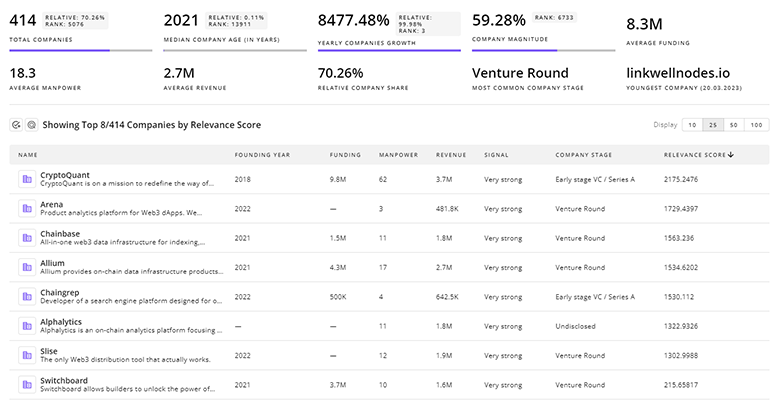
591 Nuclear Engineering Companies
Discover Nuclear Engineering Companies, their Funding, Manpower, Revenues, Stages, and much more
Nuclear Engineering Investors
TrendFeedr’s Investors tool offers comprehensive insights into 230 Nuclear Engineering investors by examining funding patterns and investment trends. This enables you to strategize effectively and identify opportunities in the Nuclear Engineering sector.
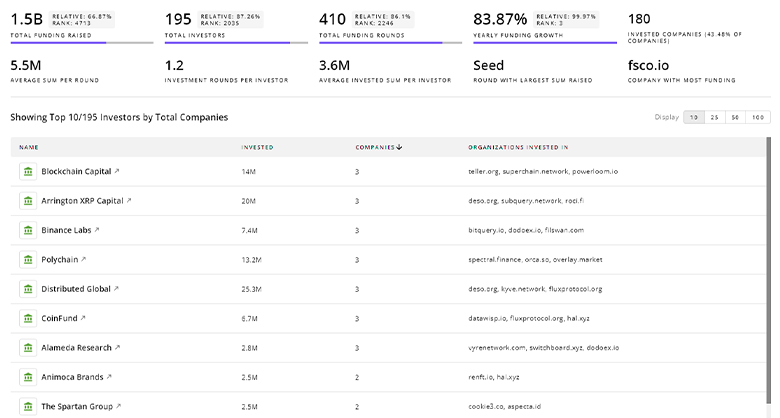
230 Nuclear Engineering Investors
Discover Nuclear Engineering Investors, Funding Rounds, Invested Amounts, and Funding Growth
Nuclear Engineering News
TrendFeedr’s News feature provides access to 1.2K Nuclear Engineering articles. This extensive database covers both historical and recent developments, enabling innovators and leaders to stay informed.
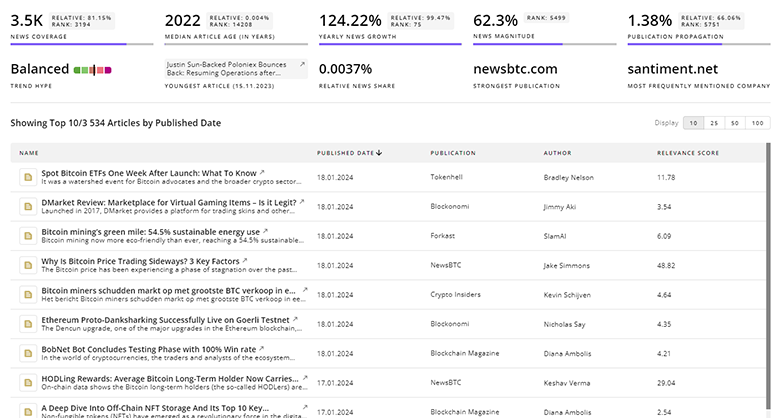
1.2K Nuclear Engineering News Articles
Discover Latest Nuclear Engineering Articles, News Magnitude, Publication Propagation, Yearly Growth, and Strongest Publications
Executive Summary
The sector's immediate battleground is regulatory certainty and supply-chain assurance: those who accelerate certification for modular reactors and secure auditable, domestic component and fuel sources will capture the bulk of near-term value. AI and digital twins will reduce operational overhead and compress evidence requirements, improving plant economics, but they complement rather than replace the hard constraints posed by HALEU availability and certified manufacturing capacity. Strategic players should prioritize (1) acquiring or partnering with certified fabricators and inspection specialists to harden supply chains, (2) investing in fuel-cycle options that reduce reliance on single suppliers, and (3) deploying targeted digital tools that shorten licensing and outage windows so that modular reactor economics become credible in competitive power markets.
We value collaboration with industry professionals to offer even better insights. Interested in contributing? Get in touch!