
Nuclear Fusion Report
: Analysis on the Market, Trends, and TechnologiesThe nuclear fusion landscape is moving from laboratory milestones to commercialization planning, anchored by a market size of $345,130,000,000 (2025) and a CAGR of 5.1%, which together frame an industry expected to exceed $633,800,000,000 by 2037 researchnester – Nuclear Fusion Market Report, 2025. Private capital, novel fuel-cycle strategies, and advances in high-temperature superconducting (HTS) magnets and control software are shifting investor preference toward firms that demonstrate engineering scale-readiness rather than purely physics-first claims precedenceresearch – Nuclear Fusion Market Report, 2024.
We last updated this report 311 days ago. Tell us if you find something’s not quite right!
Topic Dominance Index of Nuclear Fusion
To gauge the impact of Nuclear Fusion, the Topic Dominance Index integrates time series data from three key sources: published articles, number of newly founded startups in the sector, and global search popularity.
Key Activities and Applications
- Pilot and demonstration power plants for magnetic and inertial approaches, with multiple companies targeting first commercial-scale demonstrations in the 2030–2035 window.
- Near-term commercial neutron services, including medical isotope production and materials testing, using compact fusion devices that generate high neutron fluxes today SHINE Technologies.
- Fuel-cycle engineering and tritium management, creating a specialized upstream market for pumps, breeders, and closed-loop systems required by D-T pathways.
- Grid integration pilots and early power-purchase frameworks where utilities pre-contract future fusion output to de-risk capital deployment and secure baseload credits.
- Digital twins, AI-driven plasma control, and predictive operations that shorten commissioning cycles and increase device uptime for magnetic confinement systems Next Step Fusion.
Emergent Trends and Core Insights
- HTS magnet commercialization is a sector-level enabler: higher field strength reduces reactor volume and capex per MW, concentrating strategic advantage in firms that control HTS supply and magnet assembly Commonwealth Fusion Systems.
- Two-path market structure: established D-T magnetic routes compete with aneutronic and laser-driven entrants that seek to avoid tritium logistics; each path creates adjacent supplier markets (fuel handling vs laser/beam manufacturing) HB11 Energy.
- Near-term revenue from non-grid applications (isotopes, neutron sources, defense, space propulsion) is becoming a deliberate commercial strategy to extend runway and reduce reliance on long power-plant timelines.
- Supply-chain and materials bottlenecks (HTS wires, breeder blanket materials, high-duty lasers) represent the most probable gating constraints on a 2030s commercialization pathway and create investment opportunities in specialized manufacturing.
- Software and systems integration as a durable moat: firms that provide validated control stacks, digital twins, and regulatory compliance workflows will capture recurring-value streams irrespective of the dominant confinement technology.
Technologies and Methodologies
- Magnetic confinement with HTS high-field tokamaks and spherical tokamaks, enabling compact plant footprints and iterative prototyping.
- Inertial confinement and laser-driven fast ignition for aneutronic and pellet-based systems targeting high repetition rates for power production.
- Magnetized Target Fusion and MTIF variants that bridge magnetic and inertial approaches to reduce system complexity and capital intensity General Fusion.
- Nanophotonics and direct-drive, non-thermal architectures aiming for compact neutron sources and potential aneutronic routes with lower infrastructure needs.
- AI, machine learning, and digital twin platforms for plasma control, predictive maintenance, and design optimization that materially shorten commissioning and improve Q-factor trajectories.
Nuclear Fusion Funding
A total of 101 Nuclear Fusion companies have received funding.
Overall, Nuclear Fusion companies have raised $11.6B.
Companies within the Nuclear Fusion domain have secured capital from 398 funding rounds.
The chart shows the funding trendline of Nuclear Fusion companies over the last 5 years
Nuclear Fusion Companies
- Astral Systems — Astral Systems develops compact Multi-State Fusion (MSF) devices positioned for immediate commercial use as high-flux neutron sources for medical isotopes and materials testing. Their Mk1 product targets decentralized isotope production with claims of a 10x performance and lifetime improvement over incumbents, creating an early revenue pathway while larger power plants mature. Astral’s focus on deployable hardware and marketable neutron services reduces near-term capital risk and provides industrial validation points for future reactor upgrades.
- Marathon Fusion — Marathon concentrates on the fusion fuel cycle, developing fuel-processing and tritium-handling technologies that aim to make D-T plants economically operable at scale. Their engineering-first posture addresses a core system-level barrier (tritium breeding and recovery), positioning them as a critical supplier to multiple reactor architectures. By specializing in a single, high-value subsystem, Marathon reduces dependency on a single reactor outcome and addresses one of the most cited commercialization risks.
- Alpha Ring — Alpha Ring advances a proprietary FusioNow™ approach focused on modular fusion modules that emphasize rapid factory fabrication and low-footprint deployment. The company targets distributed industrial and off-grid heat applications as early markets, leveraging modularity to lower project finance complexity and accelerate licensing pathways. Their strategy creates optionality: sell compact devices for specialized markets while retaining a roadmap to scale modules into grid-capable plants.
- Cortex Fusion Systems, Inc. — Cortex pursues an ultrafast, non-thermal route using nanophotonics to create extreme light fields that directly accelerate fuel ions; their core product targets compact, high-flux neutron sources and niche defense and materials markets. Cortex’s approach deliberately targets near-term commercial use cases that prove system integration and revenue before committing to grid-scale plants. If their physics path matures, Cortex can scale from neutron services into broader power applications with relatively low incremental manufacturing complexity.
- Woodruff Scientific LTD — Woodruff provides rigorous cost modelling, technology-cost forecasting, and commercialization roadmaps tailored to fusion projects, enabling investors and developers to compare levelized cost outcomes across architectures. Their consultancy reduces investment uncertainty by converting technical milestones into de-risked capital plans and manufacturing roadmaps, creating outsized value for decision makers evaluating platform vs. ingredient strategies. As fusion shifts from physics claims to engineering deliverables, precise cost and manufacturability models become essential procurement inputs.
Enhance your understanding of market leadership and innovation patterns in your business domain.
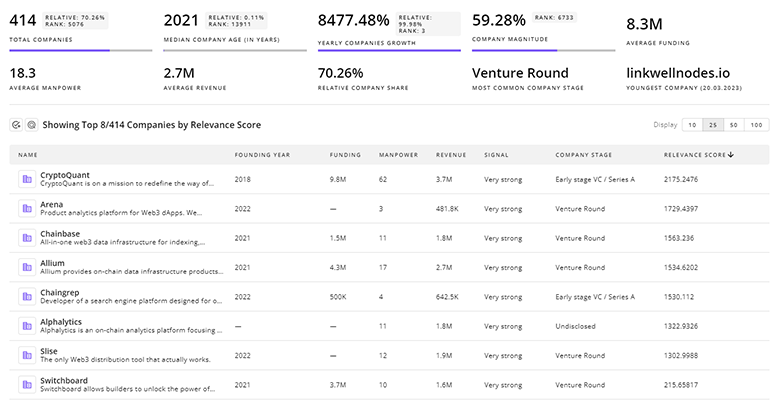
423 Nuclear Fusion Companies
Discover Nuclear Fusion Companies, their Funding, Manpower, Revenues, Stages, and much more
Nuclear Fusion Investors
TrendFeedr’s Investors tool offers comprehensive insights into 708 Nuclear Fusion investors by examining funding patterns and investment trends. This enables you to strategize effectively and identify opportunities in the Nuclear Fusion sector.
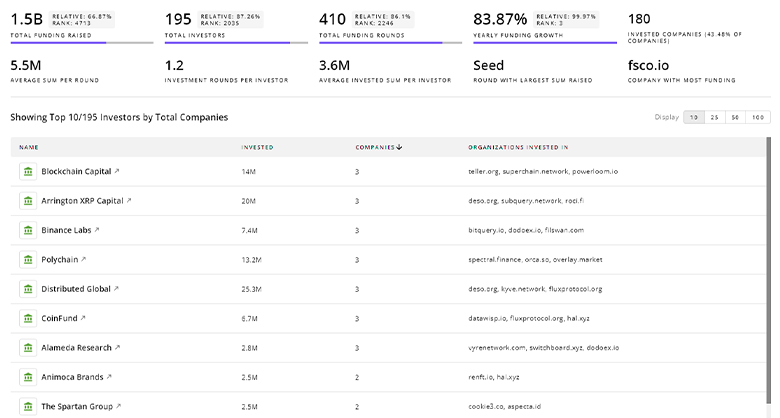
708 Nuclear Fusion Investors
Discover Nuclear Fusion Investors, Funding Rounds, Invested Amounts, and Funding Growth
Nuclear Fusion News
TrendFeedr’s News feature provides access to 6.1K Nuclear Fusion articles. This extensive database covers both historical and recent developments, enabling innovators and leaders to stay informed.
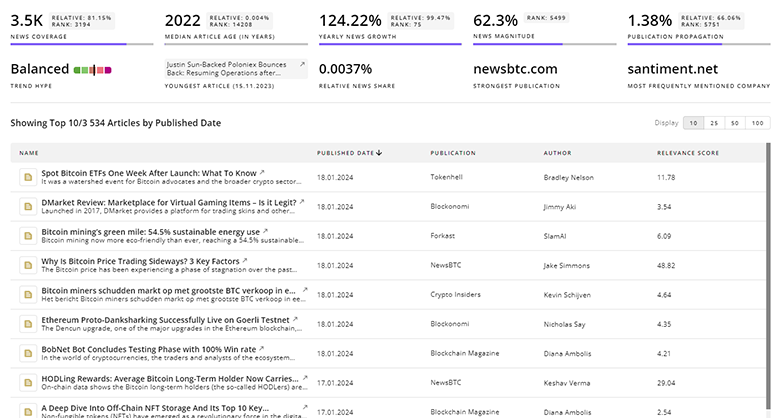
6.1K Nuclear Fusion News Articles
Discover Latest Nuclear Fusion Articles, News Magnitude, Publication Propagation, Yearly Growth, and Strongest Publications
Executive Summary
The fusion sector now balances two linked imperatives: demonstrate repeatable, high-Q fusion physics and convert those demonstrations into engineered, licensable power plants. Market signals favor companies that remove system-level uncertainty—those that manage fuel cycles, secure critical component supply chains (notably HTS magnets and high-duty lasers), or provide validated software and cost models that shorten investor decision cycles. Businesses seeking exposure should evaluate three vectors: ownership or reliable access to supply-chain chokepoints; early, monetizable non-grid revenue (isotopes, neutron services, defense); and partnerships that combine manufacturing scale with fusion engineering platforms. The companies and technologies that convert physics milestones into predictable engineering deliverables will define who captures value as fusion progresses toward commercial deployment.
We value collaboration with industry professionals to offer even better insights. Interested in contributing? Get in touch!