Oncology Drugs Report
: Analysis on the Market, Trends, and TechnologiesThe oncology drugs sector shows a two-track market dynamic: a large, fast-growing overall oncology market alongside a smaller but commercially important generic oncology segment valued at USD 29.15 billion in 2025 and projected to reach USD 38.16 billion by 2029 (7% CAGR), reflecting active lifecycle events and pricing pressure in established assets This split matters because it creates simultaneous opportunities: high-margin innovation in targeted biologics, cell and gene therapies, ADCs, and radioligands on one side, and low-cost volume plays in generics, biosimilars, and distribution optimization on the other
The last time we updated this report was 333 days ago. If there’s something missing or off, your tips are welcome!
Topic Dominance Index of Oncology Drugs
The Dominance Index for Oncology Drugs merges timelines of published articles, newly founded companies, and global search data to provide a comprehensive perspective into the topic.
Key Activities and Applications
- Targeted small-molecule inhibitor programs that address defined oncogenic drivers (e.g. kinase inhibitors and DDR pathway inhibitors); these focus R&D where biomarker-driven patient selection increases probability of clinical success Global Oncology Pharmaceuticals Market.
- Immuno-oncology development including checkpoint inhibitors, cell therapies (CAR-T / CAR-NK), and combination immunomodulators aimed at expanding durable responses across solid tumors and hematologic malignancies
- Antibody-drug conjugates and bispecific antibody programs that seek to improve therapeutic index by coupling targeted binding with potent payloads; ADC readouts increasingly drive regulatory attention and deal activity
- Generics and biosimilar manufacturing and distribution to capture value from patent expirations and reduce system costs; generics can cut prices by 60–80% versus branded drugs and expand access through retail channels Generic Oncology Drugs Market Size & Trends.
- Companion diagnostics, NGS-based profiling, and liquid biopsy adoption to enable precision prescribing and enroll biomarker-defined cohorts in trials
Emergent Trends and Core Insights
- Market-size divergence and forecast spread. Public forecasts vary widely (see synthesis table below) but converge on strong mid-to-high single-digit to low double-digit CAGRs for the decade; strategic implication: choose either platform/innovation plays for outsized returns or volume/generic plays for steady cash flow and margin compression hedges Oncology Drugs Market 2024–2033.
- Immuno-oncology and advanced modalities drive R&D weight. Novel modalities (CAR-T, ADCs, cell and gene therapies, multispecifics) now represent a substantial share of trial starts and approvals; this redirects capital and clinical resources toward combination trials and biomarker programs Global Oncology Trends 2025 (IQVIA).
- Combination regimens target resistance. Patent and R&D data show a sustained shift to multi-agent regimens designed to prevent or overcome acquired resistance; commercial winners will be combinations with clear mechanistic rationale and companion diagnostics.
- APAC and emerging markets: fastest revenue growth. North America retains the largest share today, but APAC shows the highest growth rates driven by incidence increases, capacity build-out, and localized generics/biosimilars production Oncology Market – By Region North America market analysis.
- Diagnostic-driven trial design increases efficiency. NGS, liquid biopsy, and single-cell multi-omics shorten patient selection timelines and improve signal detection in smaller, enriched trials.
Technologies and Methodologies
- High-throughput genomic and proteomic profiling (NGS and proteomics) used for biomarker discovery and patient stratification.
- AI/ML applied to target ID, predictive toxicology, and trial matching; platforms reduce hit-to-lead timelines and improve cohort selection for biomarker-enabled programs
- ADC engineering and linker-payload chemistry improvements that aim to raise therapeutic index and broaden tumor types.
- RNA-based therapeutics and mRNA vaccine methods emerging for therapeutic vaccination and combination immunotherapy.
- Novel delivery platforms (intra-tumoral depots, inhaled aerosols for lung tumors, nanoparticle systems) to improve intratumoral exposure and reduce systemic toxicity.
Oncology Drugs Funding
A total of 691 Oncology Drugs companies have received funding.
Overall, Oncology Drugs companies have raised $98.9B.
Companies within the Oncology Drugs domain have secured capital from 3.1K funding rounds.
The chart shows the funding trendline of Oncology Drugs companies over the last 5 years
Oncology Drugs Companies
- Onchilles Pharma — Focuses on systemically delivered programs targeting specific cancer pathways and recently presented preclinical data for a NEU-002 program at SITC 2024; the company exemplifies a discovery-to-proof-of-concept early-stage R&D model that partners with academic centers to accelerate translational work.
- Shasqi — Develops click-chemistry and tumor-activated drug activation methods and delivery systems to improve intratumoral selectivity; its platform targets a common industry need: raising therapeutic index for potent payloads while reducing off-tumor toxicity.
- Cumulus Oncology — Focuses on combination therapy strategies and resistance mechanisms, providing molecules intended for use with immunotherapies; the company emphasizes biomarker-driven trial design and out-licensing clinical candidates to larger partners.
- SatyaRx — Focuses on precision generic oncology formulations and modified-release products targeting outpatient oral oncology care; the company targets retail/pharmacy distribution channels to capture volume and improve adherence in oral regimens.
Delve into the corporate landscape of Oncology Drugs with TrendFeedr’s Companies tool
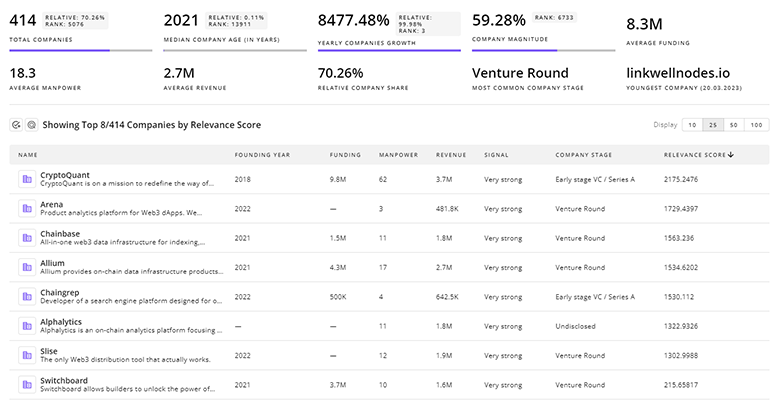
1.3K Oncology Drugs Companies
Discover Oncology Drugs Companies, their Funding, Manpower, Revenues, Stages, and much more
Oncology Drugs Investors
TrendFeedr’s Investors tool provides insights into 3.0K Oncology Drugs investors for you to keep ahead of the curve. This resource is critical for analyzing investment activities, funding trends, and market potential within the Oncology Drugs industry.
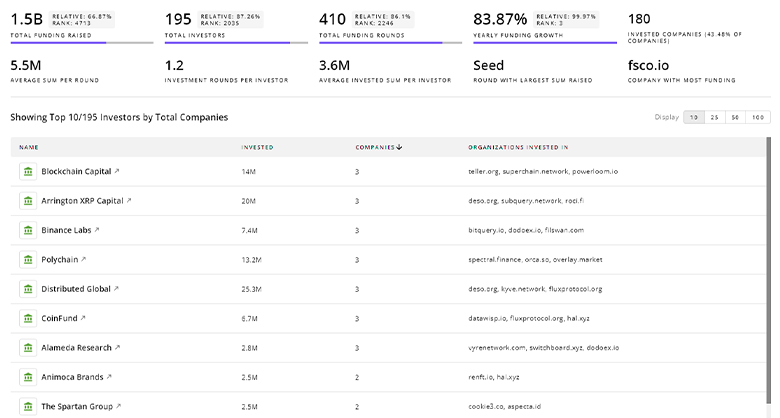
3.0K Oncology Drugs Investors
Discover Oncology Drugs Investors, Funding Rounds, Invested Amounts, and Funding Growth
Oncology Drugs News
TrendFeedr’s News feature offers you access to 4.1K articles on Oncology Drugs. Stay informed about the latest trends, technologies, and market shifts to enhance your strategic planning and decision-making.
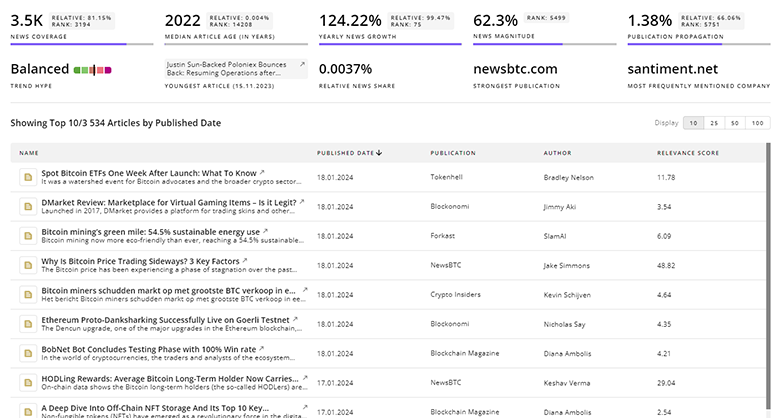
4.1K Oncology Drugs News Articles
Discover Latest Oncology Drugs Articles, News Magnitude, Publication Propagation, Yearly Growth, and Strongest Publications
Executive Summary
The oncology drugs market now runs on two interlinked agendas. The first is innovation-led: next-generation biologics, cell and gene therapies, ADCs, and diagnostic-enabled precision programs will capture high-margin value and trigger the largest share of near-term R&D investment and M&A. The second is scale-led: generics, biosimilars, and efficient distribution will compress prices for legacy products while expanding access and steady cash generation. Commercial success requires explicit alignment to one of these plays or a credible bridge strategy (for example, a platform company that licenses high-value assets while operating a low-cost manufacturing arm). For investors and executives, prioritize assets with (1) measurable biomarker-led differentiation, (2) combination regimens with a clear resistance-management hypothesis, and (3) operational models that manage the distinct economics of branded innovation versus generics distribution. Short-term tactical moves should focus on diagnostics partnerships, ADC linker/payload capabilities, and regional manufacturing capacity in APAC to capture demand and control cost exposure.
Are you an insider in the trends or tech industry? We’d love for you to contribute to our content.