Stem Cell Therapy Report
: Analysis on the Market, Trends, and TechnologiesThe global stem cell therapy sector is shifting from research to commercial deployment, supported by a 2022 market base of USD 173,000,000 and an internal forecast rising to USD 600,300,000 by 2034 at an 11.5% CAGR, which signals a strong commercial runway for targeted regenerative products and manufacturing platforms.
353 days ago, we last updated this report. Notice something that’s not right? Let’s fix it together.
Topic Dominance Index of Stem Cell Therapy
To gauge the influence of Stem Cell Therapy within the technological landscape, the Dominance Index analyzes trends from published articles, newly established companies, and global search activity
Key Activities and Applications
- Regenerative treatments for neurodegenerative disorders (Parkinson’s, Alzheimer’s, spinal cord injury): companies and patents concentrate on neural-lineage differentiation and neural stem cell delivery to restore function after injury or degeneration.
- Oncology-focused cell products and immune-cell engineering (iPSC-derived NK/T cells, engineered MSCs delivering anticancer payloads): translational activity targets both hematologic and solid tumors using engineered immune effectors and stem-cell–based delivery vehicles Cytovia Therapeutics.
- Musculoskeletal and orthopedic repair (cartilage, tendon, osteoarthritis): point-of-care autologous approaches and off-the-shelf MSC constructs compete—clinical traction in orthopedics creates near-term revenue opportunities ASC Bio.
- Cardiovascular regeneration (hiPSC- and MSC-derived cardiomyocytes, cardiac patches): focused programs aim to reverse heart failure pathology by replacing or supporting damaged myocardium StemCardia.
- Cell-free modalities and secretome/exosome therapeutics: development of EV-based products seeks comparable regenerative biology with lower immunogenicity and simpler manufacturing controls.
- Hematopoietic and transplantation services (HSCT optimization, cord blood banking, donor registries): established clinical activity continues, with incremental innovation in conditioning, engraftment, and GVHD control Hematopoietic stem cell transplantation market.
(So what) These activity clusters define near-term commercial paths: regenerative repair (orthopedics, ophthalmology), immune-oncology (engineered effector cells), and cell-derived biologics (exosomes) each require distinct manufacturing, regulatory, and payer strategies — companies that match product architecture to an aligned operational model will de-risk commercialization.
Emergent Trends and Core Insights
- Strong investor and market forecasts, but divergent estimates: recent market analyses project double-digit growth yet vary widely (examples: USD 16.02B in 2024 → USD 54.15B by 2034 at ~13% CAGR versus alternative forecasts to 2032/2034 with higher CAGRs); expect business models to be stress-tested against the more conservative internal projection (USD 173M → USD 600.3M by 2034) Stem Cell Therapy Market Size, Share, and Trends 2025 to 2034 Stem Cell Therapy Market Trends, Share & Forecast, 2025-2032.
- So what: companies should plan tiered value propositions—premium, high-cost autologous products for complex indications and lower-cost allogeneic or secretome products for broader indications—because demand and willingness-to-pay will vary by indication and evidence strength.
- Manufacturing and scale economics dominate commercial outcomes: automated closed-system bioreactors, integrated CDMO models, and intelligent factory approaches appear as decisive enablers of margin and time-to-patient.
- So what: technology-first teams without a credible GMP/CDMO pathway face commercial failure even with strong clinical data. Strategic partnerships or vertical integration into manufacturing are common defensive moves.
- Allogeneic and iPSC-derived platforms gather strategic attention: off-the-shelf products promise faster delivery and lower per-patient cost but carry immunogenicity and regulatory burden that companies attempt to mitigate via hypoimmune engineering or cell-shielding strategies hypoimmune iPSCs initiative.
- So what: near-term winners will be those who either demonstrate durable clinical outcomes with allogeneic products or present a cost/efficacy case for autologous approaches in high-value indications.
- Emergence of cell-derived, non-cell biologics (exosomes/secretome): lower regulatory friction and simplified cold chain appeal to investors and clinicians Exocel Bio.
- So what: exosome players can serve as product-extension partners for larger cell therapy developers or as stand-alone assets targeting wellness/dermatology/orthopedics with faster route-to-market.
- AI and predictive analytics enter manufacturing and discovery: foundation models for cell behavior, imaging-driven QC, and predictive bioprocess control reduce COGS and batch failure risk Somite AI.
- So what: control-loop analytics reduce capital intensity for scale; investors should value platform businesses that monetize analytics across multiple CDMO customers.
Technologies and Methodologies
- Induced pluripotent stem cell (iPSC) reprogramming and lineage-directed differentiation platforms: enable patient-specific and scalable allogeneic products; major focus on cardiac, neural, and pancreatic beta-lineage differentiation.
- Automated closed-system bioreactors and robotic “intelligent factory” manufacturing: reduce contamination risk and labor costs while increasing batch consistency—central to commercialization economics OmniaBio.
- Gene editing and immune-evasive engineering (CRISPR, TALEN, epitope editing): used to reduce rejection, enhance persistence, and add safety switches in pluripotent- or immune-cell products MxT Biotech.
- Extracellular vesicle and exosome manufacturing: cell-free therapeutic modality and adjuvant with simpler logistics and improved safety profile ExoSURE PVT. LTD..
- Single-cell omics, microfluidic purification, and imaging-led QC: enable high-purity populations and reduce tumorigenicity risk for pluripotent-derived products microfluidic device to remove undifferentiated cells CellVoyant.
- 3D bioprinting and scaffold engineering for tissue constructs: applied in cartilage and cardiac patch programs to increase engraftment and functional integration Arktus Therapeutics CellField Technologies MAJIC.
(So what) The technology stack groups into two strategic clusters: (1) clinical-efficacy enablers (gene editing, iPSC differentiation, 3D constructs) and (2) scale enablers (automation, AI, CDMO platforms). Investors and partners should evaluate companies on both axes, not just on clinical promise.
Stem Cell Therapy Funding
A total of 3.4K Stem Cell Therapy companies have received funding.
Overall, Stem Cell Therapy companies have raised $578.6B.
Companies within the Stem Cell Therapy domain have secured capital from 14.4K funding rounds.
The chart shows the funding trendline of Stem Cell Therapy companies over the last 5 years
Stem Cell Therapy Companies
- YJ Ceraputics — A Seoul-based, early-stage developer of neural stem cell technology targeting chronic spinal cord injury; the company advances small-molecule induced neural stem cells intended for clinical translation and plans GMP-aligned pipelines for neural-lineage delivery. YJ Ceraputics aims to commercialize an approach that reduces dependency on donor tissues and focuses on functional recovery endpoints relevant to severe CNS injury.
- Progenicyte Therapeutics, Inc. — Chicago startup developing small molecules (AP-100) that stimulate endogenous stem cell production to promote neurogenesis and a retinal amyloid detection system as a diagnostic companion; this dual therapeutic+diagnostic approach targets neurodegenerative disease commercialization via lower-cost, oral small-molecule interventions and biomarker-enabled development pathways.
- BetaLife — Singapore spinout from IMCB/A*STAR focused on scalable hiPSC-derived pancreatic beta-cell products and clinical-grade iPSC generation; the company pairs cell product development with personalized cell/hiPSC banking to de-risk future replacement therapies for diabetes.
- StemSight – Vision Unlimited — Finnish startup building off-the-shelf iPSC-derived cell therapies combined with functional biomaterials to treat corneal blindness; their product architecture emphasizes faster tissue regeneration and simplified delivery aimed at ophthalmic indications with defined clinical endpoints.
- Mesenbio — University of York spinout developing immortalized MSC lines for consistent extracellular vesicle (EV) production targeted to osteoarthritis and musculoskeletal inflammation; the platform aims to remove donor variability and lower COGS for EV therapeutics, positioning the company for licensing or strategic partnership with larger cell therapy firms.
Get detailed analytics and profiles on 15.3K companies driving change in Stem Cell Therapy, enabling you to make informed strategic decisions.
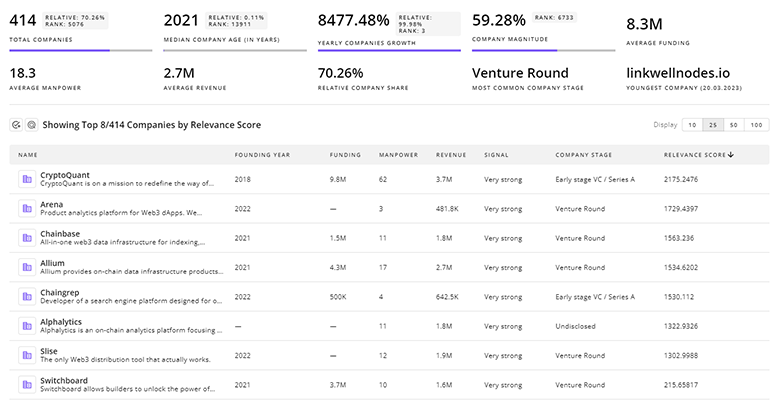
15.3K Stem Cell Therapy Companies
Discover Stem Cell Therapy Companies, their Funding, Manpower, Revenues, Stages, and much more
Stem Cell Therapy Investors
TrendFeedr’s Investors tool provides an extensive overview of 10.3K Stem Cell Therapy investors and their activities. By analyzing funding rounds and market trends, this tool equips you with the knowledge to make strategic investment decisions in the Stem Cell Therapy sector.
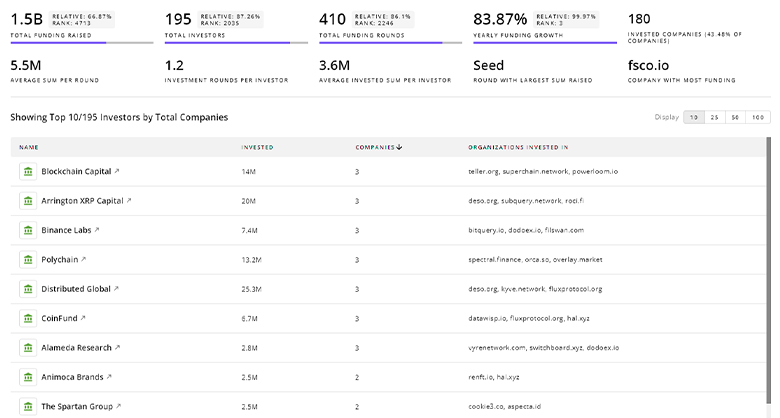
10.3K Stem Cell Therapy Investors
Discover Stem Cell Therapy Investors, Funding Rounds, Invested Amounts, and Funding Growth
Stem Cell Therapy News
Explore the evolution and current state of Stem Cell Therapy with TrendFeedr’s News feature. Access 48.4K Stem Cell Therapy articles that provide comprehensive insights into market trends and technological advancements.
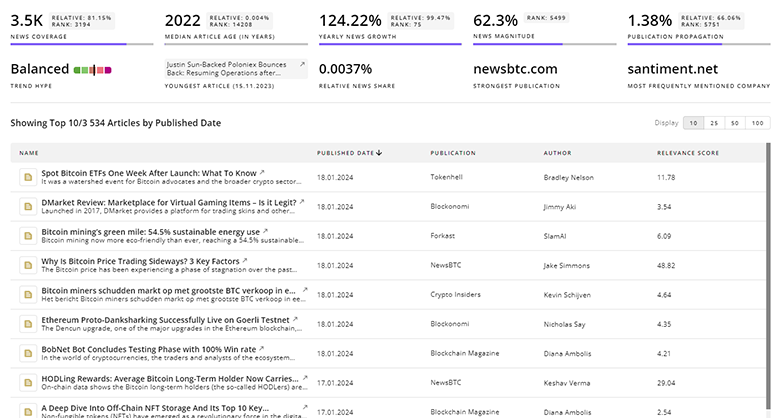
48.4K Stem Cell Therapy News Articles
Discover Latest Stem Cell Therapy Articles, News Magnitude, Publication Propagation, Yearly Growth, and Strongest Publications
Executive Summary
The stem cell therapy field has moved into a commercialization phase where technology selection, manufacturing strategy, and indication focus determine value capture. Market forecasts vary widely, but internal projections indicate modest base sizing with meaningful upside if companies resolve manufacturing and regulatory bottlenecks. For investors and corporate strategists the priority set is clear: (1) back platforms that combine clinical differentiation with scalable GMP pathways, (2) prefer modular manufacturing or proven CDMO partners to control COGS and time-to-market, and (3) select clinical indications with measurable, payer-relevant endpoints to accelerate reimbursement and adoption. Companies that align a defensible product architecture with realistic manufacturing and regulatory plans will convert scientific promise into durable commercial returns.
We're looking to collaborate with knowledgeable insiders to enhance our analysis of trends and tech. Join us!