
Order Fulfillment Report
: Analysis on the Market, Trends, and TechnologiesThe order fulfillment market is shifting into a data-and-automation-driven growth phase: the internal order fulfillment data values the market at USD 123.69 billion in 2024 with a projected CAGR of 14.2%, which translates into heavy near-term demand for capacity, software, and urban micro-sites. External market research confirms sustained expansion in e-commerce fulfillment services and micro-fulfillment — forecasts range from high-teens to mid-teens CAGRs and projection horizons that double current addressable markets by 2030–2035, pressuring providers to deliver faster last-mile service while compressing margins (see Grand View Research and MRFR) E-commerce Fulfillment Services Market Size, Share & Trends Analysis Report.
Key short summary: capacity + automation + smarter order orchestration = winners. Providers that combine geographically dispersed inventory, AI order routing, and modular micro-fulfillment will take share; pure manual or siloed operators will face margin and service pressure.
The last time we updated this report was 363 days ago. If there’s something missing or off, your tips are welcome!
Topic Dominance Index of Order Fulfillment
The Dominance Index for Order Fulfillment merges timelines of published articles, newly founded companies, and global search data to provide a comprehensive perspective into the topic.

Key Activities and Applications
- Omnichannel order orchestration (store, DC, micro-hub): Centralized rules engines and distributed order management route orders to the cheapest/fastest location while preserving service levels; this reduces split shipments and late deliveries and supports BOPIS and ship-from-store execution.
- Micro-fulfillment and urban hubs: Deploy compact automated sites near dense population centers to meet same-day and next-day promises; this lowers last-mile distance and enables higher on-time performance for grocery and DTC fulfillment Micro Fulfillment Market Analysis 2025.
- AI demand forecasting and inventory orchestration: Machine learning that predicts SKU velocity and replenishment windows reduces holding costs and stockouts — a direct lever on margins and working capital.
- Automated picking, piece-picking robotics, and AMRs: Robotics reduce per-pick labor and error rates and enable higher throughput in constrained footprints, especially important in high-SKU e-commerce assortments Micro-Fulfillment Market, Opportunity, Growth Drivers.
- Returns orchestration and reverse logistics: Efficient returns processing closes the CX loop and recaptures salvage value; firms that integrate returns at origin and automate disposition improve net margin per order.
- Cross-border D2C and customs automation: Growth in international shipping requires automated compliance, localized returns, and network placement to avoid customs delays and excess transit costs.
Emergent Trends and Core Insights
- Platform consolidation is accelerating. Large, integrated fulfillment platforms that combine networked warehousing, staging, and software are capturing share; this network effect magnifies as providers add integrations and carrier capacity ShipMonk.
So what: customers prefer a single partner for orchestration + execution; fragmentation increases switching friction and price sensitivity. - Same-day / hyperlocal expectations reshape cost structures. Market sources and industry surveys forecast same-day/next-day volumes rising materially, driving investments in micro-sites and local fleets (growing deployment of MFCs and crowdsourced delivery) ShipBob fulfillment trends 2025 Cart.com 2025 Fulfillment Industry Report.
So what: carriers and 3PLs must optimize density and routing or accept rapidly eroding margins. - AI/ML moves from pilot to operational control. AI now manages dynamic allocation, labor batching, and predictive maintenance; early adopters report measurable inventory and labor cost reductions QuickBox 2025 3PL trends — AI forecasting stats.
So what: AI gives scale advantages to platforms that can feed them clean, cross-channel data. - Micro-fulfillment hardware demand outpaces legacy retrofit economics. Vendors selling modular AS/RS, shuttle systems, and AMRs see high demand; store-integrated MFC growth targets grocery and fast moving consumer goods.
So what: real estate choices and capex models (lease vs buy, managed MFC) become strategic differentiators. - Sustainability as a procurement filter. Brands and consumers accept modest delivery tradeoffs for lower carbon options; providers that optimize packaging, consolidate shipments, and electrify fleets gain preference in RFPs.
So what: sustainability investments reduce risk and widen commercial pitches to eco-sensitive brands.
Technologies and Methodologies
- Distributed order management + intelligent routing engines: API-first, cloud OMS/DOMS coordinate fulfillment, minimize shipping cost and splits, and expose real-time inventory — required for omnichannel promises Order Management's Essential Role (IDC).
Impact: lowers abort rates for BOPIS and reduces emergency expediting spend. - Micro-fulfillment systems (AS/RS, shuttles, AMRs): Compact automated hardware for dense SKU profiles reduces footprint and supports sub-hour fulfillment.
Impact: enables urban last-mile economics that beat traditional DC-to-consumer distances. - Robotic piece-picking with vision and ML: Vision-guided robots and item-recognition models reduce manual picking labor and support high SKU variability.
Impact: faster scaling across assortments with lower error rates. - Cloud WMS + WES + orchestration: Headless, microservices architectures permit rapid integrations with marketplaces and carriers and support modular rollouts of automation.
Impact: shorter deployment cycles and safer A/B testing of automation. - IoT + telemetry for per-shipment visibility: Temperature, shock and live location sensors change handling rules and enable premium SLAs for healthcare, perishables and luxury goods.
Impact: shifts some risk premium from carriers to data providers and service layers. - Simulation-first design and iterative implementation: Use digital twins and flow simulation to size automation and slotting prior to heavy capex.
Impact: reduces ROI risk and shortens payback periods.
Order Fulfillment Funding
A total of 574 Order Fulfillment companies have received funding.
Overall, Order Fulfillment companies have raised $9.8B.
Companies within the Order Fulfillment domain have secured capital from 1.7K funding rounds.
The chart shows the funding trendline of Order Fulfillment companies over the last 5 years
Order Fulfillment Companies
- Bezos.AI — Bezos.AI operates a Fulfillment-as-a-Service network that enables DTC brands to fulfill locally in 16 countries; its value lies in reducing cross-border friction and providing local returns and customs handling for smaller brands that cannot build global networks themselves.
Why it matters: lowers the barrier for small brands to offer competitive delivery speeds internationally and reduces customs-related lead times REPORT TITLE: Direct to Customer Outsourced Fulfillment Market Research Report. - Nomagic — Nomagic sells AI-powered robotic piece-picking that handles high SKU variability using vision systems and ML; the firm integrates into WMS/WES to accelerate piece-pick automation rollouts.
Why it matters: lowers labor dependency for small-to-mid warehouses that cannot afford full AS/RS but need scalable pick performance. - Green Fulfilment — A UK-based eco-focused fulfillment network that emphasizes low-impact packaging, carbon-aware routing, and multi-warehouse procedures for brands prioritizing sustainability.
Why it matters: sustainability criteria increasingly appear in sourcing decisions; Green Fulfilment converts that demand into a commercial advantage. - Fulfillment Hub USA LLC — A multi-site 3PL specializing in e-commerce and FBA prep with broad platform integrations (47+ channels) and same-day dispatch options for orders received by early cut-offs.
Why it matters: deep marketplace integrations and distributed capacity let mid-market brands scale without building their own networks. - Ware2Go — Ware2Go (a Stord company / UPS ecosystem entrant) offers an on-demand fulfillment network that matches merchants to certified warehouses and uses ML for inventory orchestration to enable 1–2 day delivery.
Why it matters: the combination of networked warehousing and demand science is designed to deliver fast service for brands that need nationwide coverage without fixed capex Ware2Go acquisition and positioning.
Delve into the corporate landscape of Order Fulfillment with TrendFeedr’s Companies tool
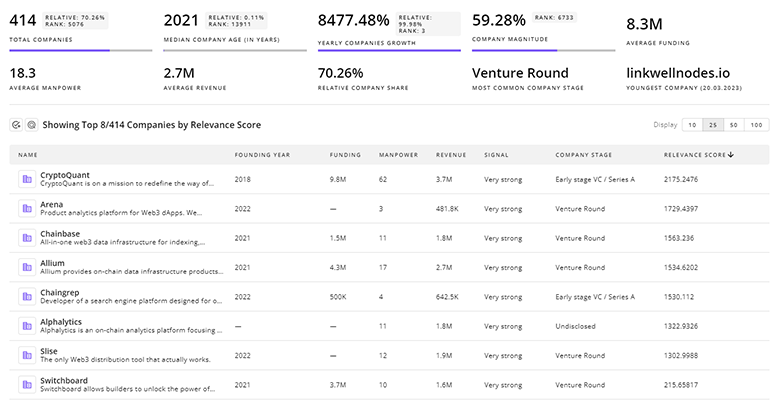
5.1K Order Fulfillment Companies
Discover Order Fulfillment Companies, their Funding, Manpower, Revenues, Stages, and much more
Order Fulfillment Investors
TrendFeedr’s Investors tool provides insights into 1.8K Order Fulfillment investors for you to keep ahead of the curve. This resource is critical for analyzing investment activities, funding trends, and market potential within the Order Fulfillment industry.
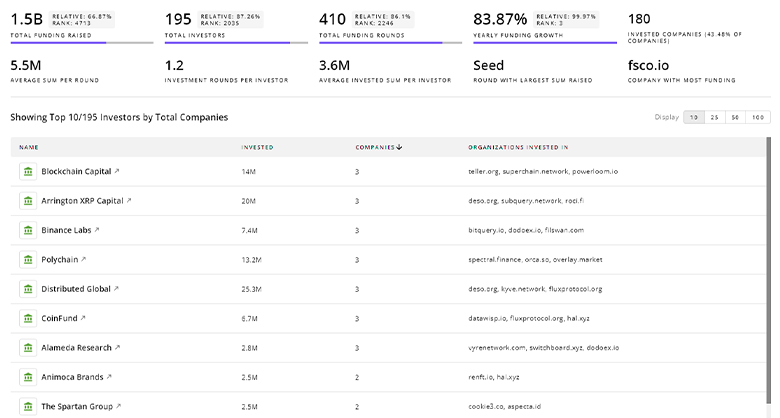
1.8K Order Fulfillment Investors
Discover Order Fulfillment Investors, Funding Rounds, Invested Amounts, and Funding Growth
Order Fulfillment News
TrendFeedr’s News feature offers you access to 6.9K articles on Order Fulfillment. Stay informed about the latest trends, technologies, and market shifts to enhance your strategic planning and decision-making.
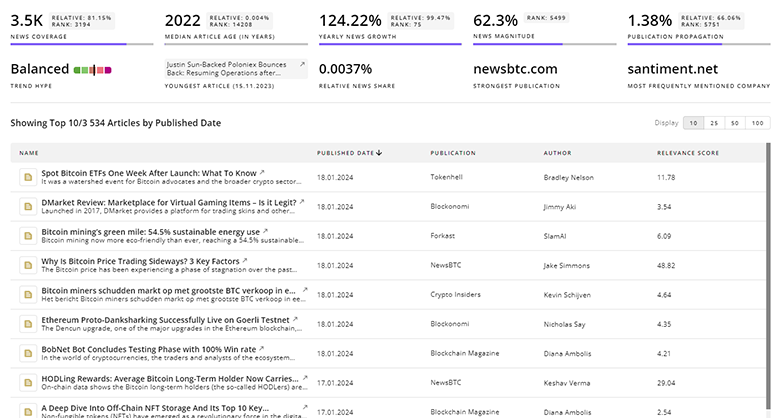
6.9K Order Fulfillment News Articles
Discover Latest Order Fulfillment Articles, News Magnitude, Publication Propagation, Yearly Growth, and Strongest Publications
Executive Summary
Order fulfillment has moved from a cost center to a strategic battleground where speed, network design, and data orchestration determine margin and customer loyalty. The internal data and market research converge on three practical imperatives: 1) architect distributed inventory to reduce last-mile distance, 2) industrialize AI and automation to control labor and inventory costs, and 3) offer differentiated commercial hooks (sustainability, cross-border convenience, branded unboxing) to avoid commoditization. Providers should prioritize modular MFC deployments, invest in OMS/DOMS integrations, and treat returns and cross-border compliance as profit levers rather than cost sinks. The firms that combine network density with clean data flows and flexible automation will secure durable commercial advantage as the sector scales.
Are you an insider in the trends or tech industry? We’d love for you to contribute to our content.