Personal Data Protection Report
: Analysis on the Market, Trends, and TechnologiesThe personal data protection landscape is at an inflection point: enterprises must manage scale while answering a rising regulatory and operational burden, evidenced by 7,352 total companies working on the topic. Market forecasts reinforce the pressure: analysts project the global data-protection market to grow from USD 74.11 billion (2024) toward USD 189.13 billion by 2030 at a ~16.9% CAGR $189.13 Bn Data Protection Markets – Global Industry Report, 2020-2030 and cloud-native Data Protection as a Service is modeled at an even higher CAGR of 28.7% (2023-2033). The combined signal is clear: compliance remains necessary, but technology and automation now determine which organizations convert regulatory cost into operational resilience and competitive trust.
The last time we updated this report was 292 days ago. If there’s something missing or off, your tips are welcome!
Topic Dominance Index of Personal Data Protection
The Dominance Index for Personal Data Protection merges timelines of published articles, newly founded companies, and global search data to provide a comprehensive perspective into the topic.
Key Activities and Applications
- Outsourced DPO and Governance-as-a-Service — Fractional DPO engagements and virtual privacy offices supply legal-technical governance at scale for mid-market and regulated enterprises; these services aim to reduce internal burden and centralize regulatory liaison.
- Automated Data Discovery, Classification and DSAR automation — Organizations deploy AI-assisted scanning to map PII, prioritize remediation and automate Data Subject Access Request workflows to handle rising volumes of access/erasure complaints.
- Automated Data Deletion and Retention Orchestration — Tools that enforce retention schedules and trigger safe deletion reduce legal exposure for stale/illegal records and operationalize statutory retention limits.
- Privacy-Enhancing Computation for analytics — Differential Privacy, homomorphic encryption and tokenization enable analytics on sensitive datasets while reducing re-identification risk; these approaches appear where data utility and strict protection must coexist.
- Real-time compliance in communications and workflows — Embedding policy enforcement into messaging/email and developer SDKs prevents policy violations at the point of action, shrinking remediation cost and audit exposure.
- Sector-specific compliance solutions — Verticalized offerings (healthcare, life sciences, education, financial services) supply tailored DPIA, clinical trial or student-data modules to meet domain regulatory complexity MyData-TRUST.
Emergent Trends and Core Insights
- Cloud-native DPaaS overtaking legacy on-prem models — Forecasts show DPaaS growth outpacing traditional systems (~28.7% CAGR), indicating enterprises prefer subscription, automated protection that integrates with cloud data flows Data Protection as a Service Market Size | CAGR of 28.7%.
- AI governance rising as primary compliance frontier — Compliance efforts shift from historical recordkeeping to forward-looking governance of ML pipelines and model data; tools that audit training data provenance and inference leakage now sit alongside DPIAs.
- Privacy-Enhancing Technologies (PETs) become mainstream for analytics — Differential Privacy and Type-Preserving Encryption appear in vendor stacks to maintain analytics value while lowering legal risk; market segments for PET-enabled analytics are expanding.
- Regulatory fragmentation forces localized product strategies — New statutes (for example India’s DPDP Act) create demand for regionally tailored compliance engines rather than single global defaults, increasing demand for localized consultancies and vertical specialists.
- Rising volume of DSARs and complaints drives automation investment — High complaint counts and DSAR complexity push firms to automate intake, verification and remediation to keep operational cost under control.
- Consumer willingness to trade/monetize data under controlled models — Decentralized consent and data tokenization pilots propose user-centric monetization models that could reframe data ownership and monetization economics in marketing stacks.
Technologies and Methodologies
- Differential Privacy — applies calibrated noise to query outputs to protect individuals while permitting aggregate insights; used where statistical utility must be preserved.
- Type-Preserving Encryption (TPE) — enables analytics without structural loss by encrypting values while preserving format/type for processing, supporting secure pipelines for analytics and testing.
- Homomorphic and Runtime Encryption — allows computation on ciphertext or enforces encryption at runtime to protect data-in-use in cloud processing. Adoption in finance and health sectors is accelerating.
- AI-driven Data Discovery and Classification — models that detect PII across polyglot stores, tag sensitivity and feed orchestration engines for policy enforcement and DSAR fulfillment Data Privacy Manager.
- Zero-Trust Data Fabrics and DCAP (Data-Centric Audit and Protection) — policy engines that bind encryption, entitlement and audit trails to the data object rather than the perimeter, enabling consistent enforcement across multi-cloud estates.
- Embedded, real-time compliance controls — in-app and in-mail “policy spellcheckers” that stop leaks at source rather than rely on post-event detection.
Personal Data Protection Funding
A total of 407 Personal Data Protection companies have received funding.
Overall, Personal Data Protection companies have raised $90.6B.
Companies within the Personal Data Protection domain have secured capital from 1.3K funding rounds.
The chart shows the funding trendline of Personal Data Protection companies over the last 5 years
Personal Data Protection Companies
- Data & More — Specializes in automated deletion of GDPR-noncompliant records using AI to locate, score and remove illegal data across enterprise repositories. The company operates a SaaS and on-premise model for regulated clients and emphasizes automation of retention enforcement to reduce legal exposure.
- DPella — A research-driven provider of Differential Privacy tooling for privacy-preserving analytics. DPella offers mathematically calibrated noise mechanisms and accuracy reporting, making it suitable for analytics teams that require provable privacy guarantees for shared datasets.
- PII Guard — Developer of Type-Preserving Encryption and gateways that depersonalize PII at rest and in transit while preserving analytical structure. PII Guard targets finance and health verticals and emphasizes practical depersonalization that preserves business utility.
- EDUDATA.IO — A niche privacy service for schools and municipalities with a curated catalog of 5,000 evaluated applications, DPIA tooling and a student privacy app. Its vertical focus solves specific education data-sharing and procurement issues that generalist vendors miss.
- Lexverify — Provides a real-time compliance assistant that flags legal, regulatory and conduct risks inside electronic communications. Lexverify embeds enforcement at point-of-action to prevent data-handling errors and leaks, reducing remediation cost and audit findings for regulated teams.
Delve into the corporate landscape of Personal Data Protection with TrendFeedr’s Companies tool
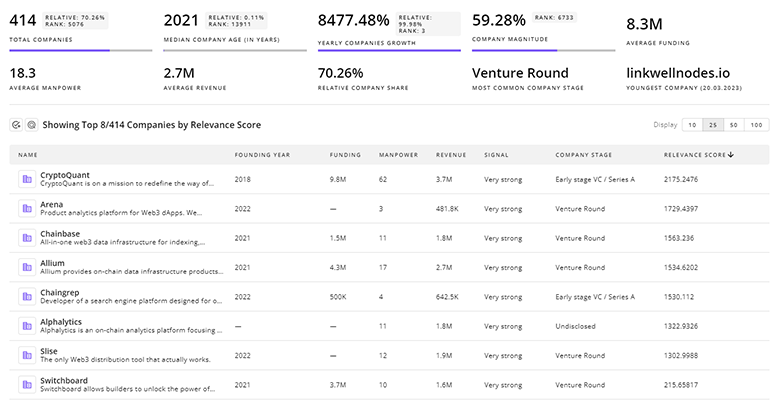
7.4K Personal Data Protection Companies
Discover Personal Data Protection Companies, their Funding, Manpower, Revenues, Stages, and much more
Personal Data Protection Investors
TrendFeedr’s Investors tool provides insights into 1.3K Personal Data Protection investors for you to keep ahead of the curve. This resource is critical for analyzing investment activities, funding trends, and market potential within the Personal Data Protection industry.
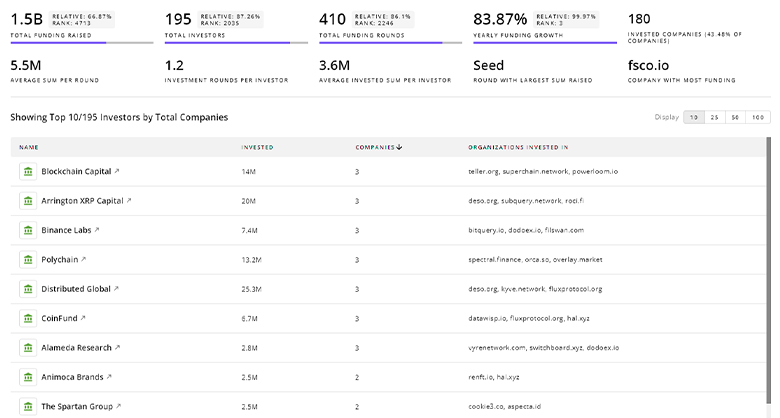
1.3K Personal Data Protection Investors
Discover Personal Data Protection Investors, Funding Rounds, Invested Amounts, and Funding Growth
Personal Data Protection News
TrendFeedr’s News feature offers you access to 4.0K articles on Personal Data Protection. Stay informed about the latest trends, technologies, and market shifts to enhance your strategic planning and decision-making.
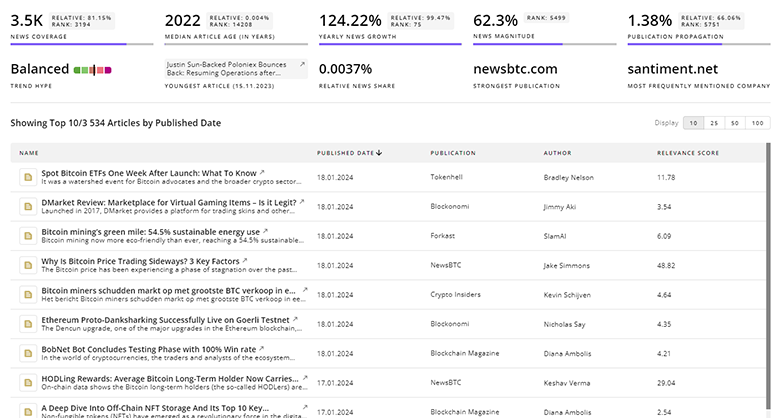
4.0K Personal Data Protection News Articles
Discover Latest Personal Data Protection Articles, News Magnitude, Publication Propagation, Yearly Growth, and Strongest Publications
Executive Summary
Personal data protection now demands a reallocation of strategy and spend: legal checklists alone no longer suffice. Organizations must integrate automated discovery, retention orchestration and privacy-preserving computation into product and data lifecycles so they can meet regulatory obligations while preserving analytic value. Vendors that pair provable PETs (Differential Privacy, TPE, homomorphic approaches) with pragmatic automation (DSAR orchestration, retention deletion, in-flow compliance) will capture the highest marginal value because they convert compliance cost into operational trust and lower breach exposure. At the same time, the regulatory patchwork favors companies that can offer localized engines and vertical specializations rather than single global defaults. Firms that want to lead should prioritize embedding privacy controls into core data flows, invest in automation for rights management, and evaluate PETs where data utility and regulatory risk collide.
Are you an insider in the trends or tech industry? We’d love for you to contribute to our content.