Precision Medicine Report
: Analysis on the Market, Trends, and TechnologiesThe precision medicine market is accelerating into measurable commercial scale: it was estimated at $115,310,000,000 in 2025 and is forecast to grow at 16.7% CAGR, supporting platform consolidation and broad clinical deployment. Market momentum is driven by falling sequencing costs, the maturation of proteomics and metabolomics pipelines, and AI systems that translate multi-omics into actionable treatment choices, creating a landscape where interpretation and workflow integration capture the majority of economic value.
The last time we updated this report was 30 days ago. If there’s something missing or off, your tips are welcome!
Topic Dominance Index of Precision Medicine
The Dominance Index for Precision Medicine merges timelines of published articles, newly founded companies, and global search data to provide a comprehensive perspective into the topic.
Key Activities and Applications
- Genomic and multi-omics profiling — Routine use of NGS, proteomics, metabolomics, and transcriptomics for diagnosis, risk stratification, and therapeutic selection; this multi-modal profiling underpins expanded companion diagnostics and clinical trial enrichment strategies.
- Companion diagnostics (CDx) and MRD monitoring — Development and deployment of biomarker-linked tests to match targeted agents and to monitor minimal residual disease via ctDNA/liquid biopsy, shortening decision cycles in oncology and improving trial readouts.
- Pharmacogenomics (PGx) at point of care — Rapid genotype-informed prescribing and perioperative medication management to reduce adverse drug events and cost; growth is visible in mental-health and perioperative applications.
- Functional precision medicine (ex vivo testing) — Patient-derived 3D microtumor and organoid assays that assess drug sensitivity directly, shortening the time to identify effective regimens for individual patients and de-risking therapeutic choices prior to clinical use.
- AI-enabled clinical decision support (CDS) and molecular tumor boards — Platforms that convert complex molecular reports into ranked, evidence-backed treatment options and standardized N-of-1 recommendations, improving clinician throughput and payer acceptance.
- Digital twins and in-silico simulations — Patient-specific computational models used for device planning and therapy simulation in cardiology and interventional specialties to optimize procedure selection and reduce trial-and-error in device deployment.
Emergent Trends and Core Insights
- Interpretation and workflow integration now determine value capture. As raw sequencing commoditizes, companies that embed evidence-backed interpretation into Electronic Medical Record and lab workflows secure defensible positions and recurring revenue Strategic Intelligence: Precision Medicine (2025).
- Multi-omics (proteomics/metabolomics) is shifting diagnostic sensitivity and lead-time. Proteomics and metabolomics provide dynamic state information that complements genomic blueprints and materially improves early detection and MRD sensitivity.
- Explainable and auditable AI (xAI) drives clinical trust and regulatory acceptance. Buyers prefer models that provide evidence chains and decision rationales; interpretability accelerates payer dialogues and hospital adoption.
- Operational bottlenecks matter as much as algorithmic performance. Turnaround time, EHR interoperability, and standardized reporting determine whether a test or model will be used in acute care settings rather than relegated to research.
- Regional deployment patterns diverge: North America leads revenue share while Asia-Pacific posts the highest growth rates. Investment and regulatory clarity in North America sustain immediate commercialization; APAC national genome initiatives and expanding diagnostic capacity drive higher CAGR projections Statista – Precision medicine spending by region.
- Cost and access remain the primary adoption constraints. Average treatment costs for precision interventions remain high and reimbursement pathways lag, constraining uptake in lower-income regions despite clinical demand Statista – Average cost for precision medicine treatment.
Technologies and Methodologies
- Next-Generation Sequencing (NGS) and Comprehensive Genomic Profiling (CGP) — Continued backbone technology for variant discovery, CDx development, and tumor profiling Global Precision Medicine Market.
- Proteomics and high-coverage metabolomics — High-throughput proteomic platforms and metabolite panels that detect early disease signals and enable creation of digital metabolic twins for trial simulation and responder prediction.
- Liquid biopsy and ultra-sensitive ctDNA/CTC assays — Methods that enable MRD detection and early relapse surveillance with allele sensitivity at very low variant allele fractions Technology Advancements in Precision Diagnostics and Testing.
- AI/ML for variant interpretation, biomarker discovery and treatment ranking — Ensemble and evidence-driven models that convert multi-modal inputs into ranked therapeutic options and trial matches; explainability is a procurement requirement in clinical settings Perthera.
- 3D microtumors, organoids and microphysiological systems (MPS) — Functional ex vivo assays that test drug combinations on patient-derived tissue models to predict in-patient response.
- Digital twin and in-silico trial simulations — Patient-level numerical models and virtual control arms used to reduce trial sizes and predict treatment outcomes in device and therapeutic development PrediSurge.
- Prime editing and next-generation gene-editing platforms — Therapeutic editing approaches that can potentially address large fractions of pathogenic alleles, reshaping long-term therapeutic pipelines Prime Medicine, Inc..
Precision Medicine Funding
A total of 4.5K Precision Medicine companies have received funding.
Overall, Precision Medicine companies have raised $362.6B.
Companies within the Precision Medicine domain have secured capital from 18.1K funding rounds.
The chart shows the funding trendline of Precision Medicine companies over the last 5 years
Precision Medicine Companies
- PrognomiQ Inc — PrognomiQ builds a high-throughput proteomics foundation and integrates genomic and metabolomic layers to enable early disease detection tests; the company spun out of a proteomics platform and focuses on scalable multi-omics assays that aim to find disease signatures earlier than genomics alone. Their technology emphasis positions them to supply the diagnostic signal layer required by downstream AI-driven interpretation platforms.
- SageMedic Corp. — SageMedic provides rapid functional testing through 3D microtumor replicates derived from fresh biopsies to model tumor heterogeneity and extracellular matrix effects; their approach shortens functional drug selection timelines and addresses cases where genomic profiling alone does not predict response, offering a complementary path to companion diagnostics.
- Genomate Health — Genomate supplies an AI-driven computational decision layer (Genomate®) clinically validated to improve individualized treatment choice in oncology; the platform automates evidence collation and produces standardized N-of-1 recommendations that enable molecular tumor boards to operate at scale and accelerate payer and institutional acceptance.
- PreComb — PreComb delivers on-site functional precision testing with its 3DTwin™ microtumor platform, enabling hospitals to run ex vivo drug sensitivity assays and test combination regimens; this on-site orientation reduces sample migration delays and supports faster clinical decision cycles in centers that adopt functional testing workflows.
- ReviveMed — ReviveMed focuses on metabolomics and creates digital metabolic twins to represent individual metabolic networks; their platform detects a far larger metabolite set per patient and is used by biopharma to predict responders, optimize trial design, and simulate placebo arm trajectories, thereby reducing trial sizes and improving go/no-go decisions.
Delve into the corporate landscape of Precision Medicine with TrendFeedr’s Companies tool
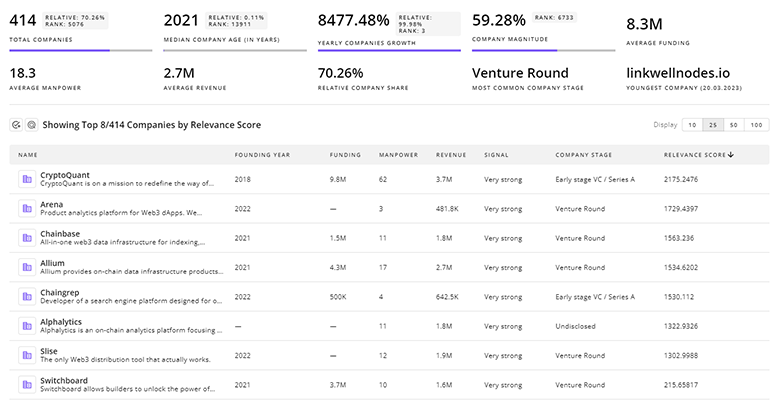
20.6K Precision Medicine Companies
Discover Precision Medicine Companies, their Funding, Manpower, Revenues, Stages, and much more
Precision Medicine Investors
TrendFeedr’s Investors tool provides insights into 14.1K Precision Medicine investors for you to keep ahead of the curve. This resource is critical for analyzing investment activities, funding trends, and market potential within the Precision Medicine industry.
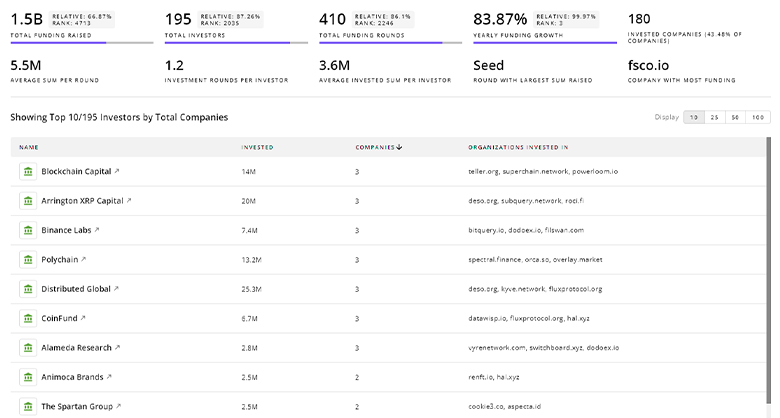
14.1K Precision Medicine Investors
Discover Precision Medicine Investors, Funding Rounds, Invested Amounts, and Funding Growth
Precision Medicine News
TrendFeedr’s News feature offers you access to 26.1K articles on Precision Medicine. Stay informed about the latest trends, technologies, and market shifts to enhance your strategic planning and decision-making.
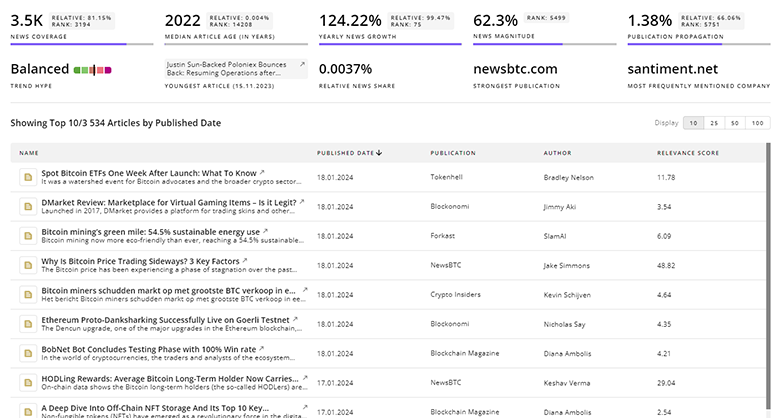
26.1K Precision Medicine News Articles
Discover Latest Precision Medicine Articles, News Magnitude, Publication Propagation, Yearly Growth, and Strongest Publications
Executive Summary
Precision medicine has moved beyond isolated genomic tests toward an ecosystem where multi-omics data, functional assays, and explainable AI determine clinical utility and commercial value. Market projections and funding flows indicate a multi-year expansion that favors companies able to integrate evidence-backed interpretation into clinician workflows, to deliver low-latency diagnostics suitable for acute care, and to provide auditable AI that regulators and payers accept. Strategic bets that prioritize actionable insight delivery (not only data generation), that enable seamless EHR/LIS embedding, and that address cost and reimbursement pathways will capture disproportionate economic returns as the field matures.
Are you an insider in the trends or tech industry? We’d love for you to contribute to our content.