Precision Oncology Report
: Analysis on the Market, Trends, and TechnologiesThe precision oncology market has reached a pivotal growth inflection: market analysis records a market size of $126,040,000,000 in 2025 with a forecast CAGR of 10.2%, reflecting sustained capital inflows and rapid technology adoption. Clinical value is shifting from single-marker detection toward integrated decision loops that combine high-resolution diagnostics, functional testing, and targeted delivery; leading indicators from multiple market studies show modal forecasts spanning ~$95B–$298B by the early 2030s, underscoring divergent methodological assumptions across forecasters marketresearchfuture – Precision Oncology Market, 2025.
The last time we updated this report was 26 days ago. If there’s something missing or off, your tips are welcome!
Topic Dominance Index of Precision Oncology
The Dominance Index for Precision Oncology merges timelines of published articles, newly founded companies, and global search data to provide a comprehensive perspective into the topic.
Key Activities and Applications
- Targeted therapeutics development: design and clinical testing of mutation-directed small molecules, bi-functional antibodies, and antibody-drug conjugates (ADCs) for genetically defined patient subsets.
- Comprehensive Genomic Profiling (CGP) and NGS panels: broad gene panels used at diagnosis to identify actionable variants and trial eligibility; regulatory approvals and reimbursement expansions are accelerating clinical CGP deployment.
- Liquid biopsy and MRD monitoring: ctDNA assays for early detection, minimal residual disease tracking, and therapy response surveillance are moving into routine clinical workflows.
- Functional precision oncology (ex vivo testing): patient-derived organoids/ tumoroids and short-term live tumor slices used to measure drug sensitivity directly, narrowing therapeutic uncertainty where genomics alone is insufficient.
- AI-enabled clinical decision support and molecular tumor boards: platforms that aggregate multi-omic, imaging, and real-world outcomes to recommend ranked therapy options and trial matches, improving time-to-decision at point of care.
- Theranostics and radioligand therapies: integrated diagnostic tracers and localized radiotherapeutics for precise staging and targeted therapeutic delivery in indications like prostate and neuroendocrine tumors.
Emergent Trends and Core Insights
- AI as the workflow integrator: machine learning moves from narrow tasks to cross-modal models that synthesize pathology, genomics, and imaging to produce clinically actionable stratifications; this reduces cognitive friction for clinicians and shifts competitive value toward platforms that embed into EHR and workflow emergenresearch - Oncology Precision Medicine Market, 2025.
- From genotype to multi-omic phenotype: protein and proteogenomic signatures now steer immunotherapy decisions more frequently than static DNA profiles, particularly for IO response prediction.
- Functional validation increasingly required for treatment selection: evidence from organoid and tumoroid studies shows higher predictive value for drug response in some solid tumors, creating commercial opportunity for platforms that can scale ex vivo assays into clinical timelines.
- Localized delivery and intratumoral approaches to reduce systemic toxicity: platforms that concentrate active agents at tumor sites (catheters, implantable depots, engineered microparticles) are gaining clinical traction, enabling intensified local control and immunomodulation.
- Regulatory and reimbursement inflection points: expansion of coverage for NGS/CGP and breakthrough device designations for multi-cancer detection tests materially change adoption curves, but cross-jurisdictional regulatory alignment remains a gating factor for global scale.
- Comparative and veterinary oncology as de-risking pathways: increasing use of canine genomics and veterinary response datasets supplies earlier efficacy signals for some agents and repurposes comparative oncology as a pragmatic proof channel.
Technologies and Methodologies
- Next-Generation Sequencing (NGS) & Comprehensive Genomic Profiling (CGP): high-throughput panels remain the backbone for variant discovery and companion diagnostics; platform improvements compress turnaround and cost.
- Liquid biopsy (ctDNA, CTC, fragmentomics): enables longitudinal monitoring, early relapse detection, and noninvasive pharmacodynamic readouts.
- Spatial single-cell proteomics and imaging mass cytometry: maps protein expression in anatomical context to reveal immune exclusion, stromal barriers, and microenvironmental niches that govern resistance.
- Patient-derived 3D models (PDOs, PDTs) and short-term slice assays: functional screening platforms produce direct drug response data that complement genomic predictions and improve trial matching.
- AI/ML for integrated decision support: multi-modal models that synthesize genomics, histology, radiology, and outcomes to recommend prioritized treatments and trial matches.
- Targeted radiopharmaceutical engineering and local delivery devices: radioligand design and polymer-based sustained release systems enable potent tumor-site dosing with controlled systemic exposure.
- Synthetic lethality discovery and CRISPR functional screens: identify vulnerability pairs and enable novel targeted drug programs for patients with homologous recombination deficiencies and related genotypes.
Precision Oncology Funding
A total of 448 Precision Oncology companies have received funding.
Overall, Precision Oncology companies have raised $90.4B.
Companies within the Precision Oncology domain have secured capital from 2.1K funding rounds.
The chart shows the funding trendline of Precision Oncology companies over the last 5 years
Precision Oncology Companies
Spanios — Spanios leverages Patient-Derived Tumoroids (PDTs) to create scalable, biobanked tumor models for drug sensitivity testing. Their platform preserves tumor microenvironment elements to assess immunotherapy and combination responses, enabling pharma partners to de-risk candidate selection. Spanios focuses on reproducibility and rapid deployment to inform clinical decision timelines.
Invitrocue — Invitrocue commercializes Onco-PDO organoid testing to guide personalized treatment, combining 3D culture assays with image analytics. The company emphasizes throughput and geographic reach across Asia-Pacific and Europe, positioning its services as near-clinical diagnostic support for oncologists. Invitrocue couples lab services with bioanalytic pipelines to accelerate therapy selection for solid tumors.
EMPIRI INC. — EMPIRI builds automated LDTs and aims to scale empirical drug-response diagnostics using ex vivo culture methods and single-cell analytics. The startup targets actionable, indication-specific assays and plans an instrument product to broaden clinical lab adoption. EMPIRI's proposition is empirical treatment selection before systemic therapy initiation.
PanTher Therapeutics — PanTher advances localized continuous-release polymer platforms (Sagittari™) for direct tumor administration of high-potency agents. The technology enables sustained intratumoral exposure to reduce systemic toxicity and combine well with systemic immunotherapy. Clinical data from early pancreatic programs support PanTher's use case for organ-confined, high-risk indications.
Pangea Biomed — Pangea pairs RNA sequencing with ML (ENLIGHT) to derive treatment nomination signals that go beyond DNA alterations to capture tumor state and pathway activity. The platform targets improved patient inclusion in precision regimens where mutation prevalence is low. Pangea focuses on RNA-driven decision support as a complement to existing genomic pipelines.
Delve into the corporate landscape of Precision Oncology with TrendFeedr’s Companies tool
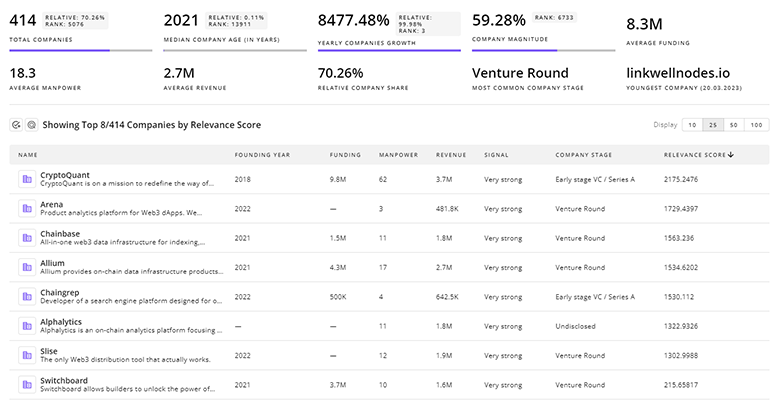
1.0K Precision Oncology Companies
Discover Precision Oncology Companies, their Funding, Manpower, Revenues, Stages, and much more
Precision Oncology Investors
TrendFeedr’s Investors tool provides insights into 2.5K Precision Oncology investors for you to keep ahead of the curve. This resource is critical for analyzing investment activities, funding trends, and market potential within the Precision Oncology industry.
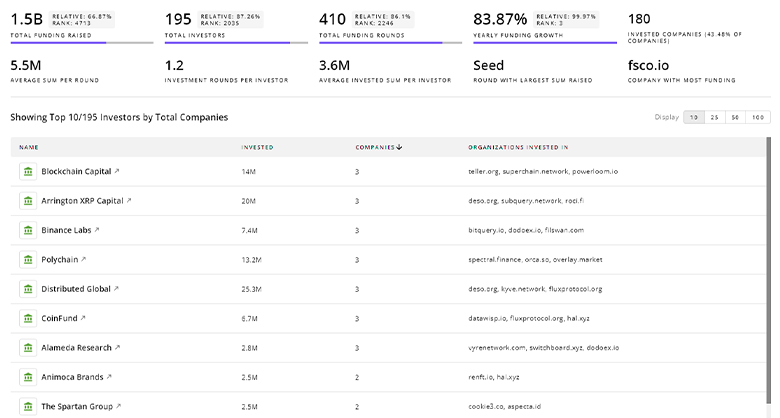
2.5K Precision Oncology Investors
Discover Precision Oncology Investors, Funding Rounds, Invested Amounts, and Funding Growth
Precision Oncology News
TrendFeedr’s News feature offers you access to 4.0K articles on Precision Oncology. Stay informed about the latest trends, technologies, and market shifts to enhance your strategic planning and decision-making.
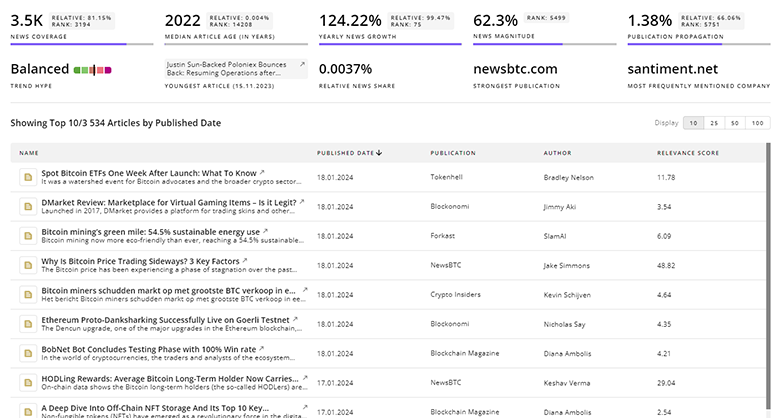
4.0K Precision Oncology News Articles
Discover Latest Precision Oncology Articles, News Magnitude, Publication Propagation, Yearly Growth, and Strongest Publications
Executive Summary
Precision oncology has matured from discovery into operational deployment: the highest-value opportunities lie where diagnostic certainty meets actionable intervention. Market and patent activity show a clear investment in multi-omic data infrastructure, functional validation systems, and targeted delivery mechanisms. For business leaders, the practical playbook is to secure one or more of the integration points that close the biomarker-to-therapy loop: validated predictive algorithms tied to rapid functional assays, or modality platforms that materially change therapeutic index and reimbursement rationale. In the near term, firms that combine demonstrable clinical utility with workflow integration and payer-aligned evidence will capture outsized clinical and commercial value.
Are you an insider in the trends or tech industry? We’d love for you to contribute to our content.