
Quantum Communication Report
: Analysis on the Market, Trends, and TechnologiesThe quantum communication market is entering a high-growth commercialization phase where infrastructure and software must align quickly to capture value; current market analysis records a 2024 market size of $1,700,000,000 with a projected CAGR of 34.60% and a 2034 projection of $33,200,000,000. These figures reflect concentrated public funding, accelerating pilot network rollouts, and a hardware-heavy spend pattern that keeps photonics and QKD at the center of short- to medium-term revenue capture while post-quantum cryptography services and key-management layers create immediate commercial entry points Quantum Communication Market – Industry Report.
This report was last revised 120 days ago. See a missing piece? Your input can help — contact us.
Topic Dominance Index of Quantum Communication
The Dominance Index for Quantum Communication delivers a multidimensional view by integrating data from three key viewpoints: published articles, companies founded, and global search trends
Key Activities and Applications
- Quantum Key Distribution (QKD) deployments for critical links. Operators deploy fiber-based QKD between data centers and government sites while satellite QKD pilots target intercontinental secure channels
- Post-Quantum Cryptography (PQC) migration and crypto-agility services. Enterprises and system integrators are offering NIST-aligned migration playbooks and managed services to protect existing data estates while QKD networks are staged Quantum Cryptography Market Report.
- Quantum network backbone work: repeaters, entanglement distribution, and interconnects. Long-distance use cases rely on quantum repeater prototypes and quantum memory integration to extend secure links beyond single-span fiber limits.
- Integration with classical telecom stacks. Projects that co-propagate quantum and classical channels (WDM approaches) and embed key-management into existing network operations accelerate adoption because they lower installation and operational friction.
- QRNG services and application-level hardening. True-random-number generation is being packaged as a service for fintech, IoT, and PKI systems as a short-term monetizable capability.
Emergent Trends and Core Insights
- Hybrid security stacks are now standard practice. Organizations combine QKD where physical links exist, and PQC for broad compatibility; this layered posture reduces single-technology risk and shortens procurement cycles.
- Photonics-first hardware economics shape near-term winners. Photonic integrated circuits and telecom-wavelength components drive most hardware revenue because they map directly onto existing fiber networks and reduce conversion loss.
- Distance-extension via repeaters and mobile entanglement nodes is a commercialization hinge. Companies that demonstrate field-capable repeaters or durable quantum memory will unlock national-scale network bids.
- National programs create segmented, subsidized markets. EuroQCI-style initiatives and national strategies produce guaranteed demand and procurement channels for regionally sourced suppliers, changing competitive dynamics in favor of companies aligned with public programs PRISM EuroQCI.
- Service-layer differentiation will win enterprise spend before full network maturity. Key-management, active link verification, and incident alerting for eavesdropping are immediate enterprise needs that create recurring-revenue business models prior to universal QKD coverage.
Technologies and Methodologies
- Quantum Key Distribution (QKD) in both discrete-variable and continuous-variable forms remains the foundational cryptographic primitive for physical-layer secrecy; CV-QKD helps compatibility with telecom photonics and offers higher key rates under some link conditions.
- Entanglement distribution, quantum repeaters, and quantum memory are the technology stack required to scale distance; notable IP activity and prototypes target practical repeater designs and entanglement swapping protocols.
- Integrated photonic circuits and SNSPDs (superconducting nanowire single-photon detectors) reduce device footprint and improve receiver efficiency, enabling compact metro QKD nodes and edge QRNG devices.
- Twin-Field and measurement-device-independent QKD variants extend secure range and mitigate certain detector-side attacks, improving usable link length within existing fiber infrastructures Twin-Field QKD advances distance scaling.
- Hardware-based root-of-trust mechanisms (photonic PUFs) and active quantum link verification add endpoint trust and real-time detection of tampering, addressing the operational security gap at nodes VeriQuantix.
Quantum Communication Funding
A total of 108 Quantum Communication companies have received funding.
Overall, Quantum Communication companies have raised $2.8B.
Companies within the Quantum Communication domain have secured capital from 360 funding rounds.
The chart shows the funding trendline of Quantum Communication companies over the last 5 years
Quantum Communication Companies
- zerothird — zerothird develops integrated QKD systems optimized for inter-city links and polarization-entangled photon pairs; the firm targets government and critical infrastructure customers with compact node designs and a small engineering team of 18 employees, positioning itself for regional pilot contracts
- qssys — qssys - Quantum Space Systems GmbH provides consulting and prototype services for QKD infrastructure rollouts, focusing on feasibility and integration of quantum payloads into telecom roadmaps; the company reports a seed-stage profile and acts as a systems integrator for metro and space-enabled pilots
- KEEQuant — KEEQuant builds compact, integrated photonic QKD hardware and key-management systems with EU funding support; its small, focused team emphasizes telecom-wavelength implementations to minimize conversion overhead and to scale using photonic integration
- LQUOM — LQUOM, Inc. targets quantum repeaters and long-distance entanglement distribution as a pathway to a usable quantum internet backbone; the company has progressed to later-stage VC activity and positions repeater development as the gate for national-scale deployments
- QSA Technology — QSA Technology commercializes photonic-chip physical unclonable functions (PUFs) for quantum-secure authentication, addressing endpoint trust gaps that QKD alone does not solve; their university spin-out status emphasizes silicon-photonics integration and hardware-based identity services
TrendFeedr's Companies feature is your gateway to 432 Quantum Communication companies.
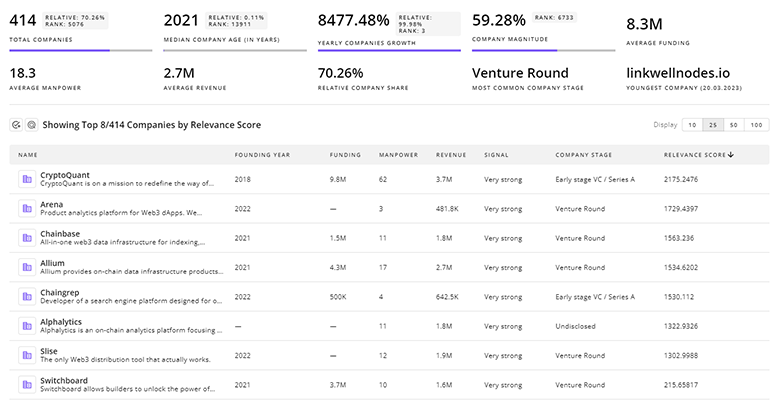
432 Quantum Communication Companies
Discover Quantum Communication Companies, their Funding, Manpower, Revenues, Stages, and much more
Quantum Communication Investors
The Investors tool by TrendFeedr offers a detailed perspective on 408 Quantum Communication investors and their funding activities. Utilize this tool to dissect investment patterns and gain actionable insights into the financial landscape of Quantum Communication.
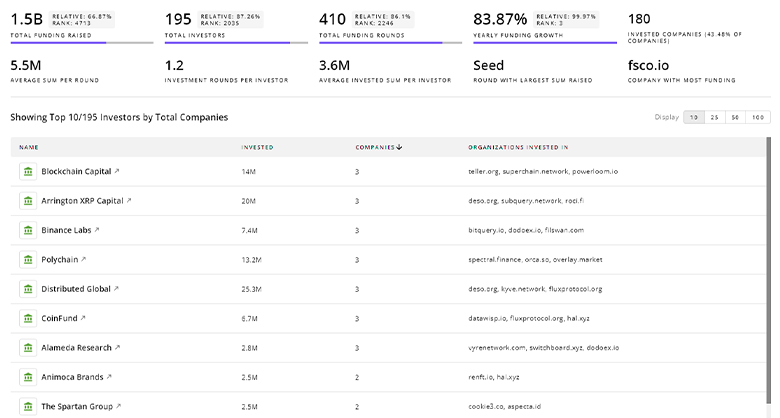
408 Quantum Communication Investors
Discover Quantum Communication Investors, Funding Rounds, Invested Amounts, and Funding Growth
Quantum Communication News
TrendFeedr’s News feature allows you to access 2.0K Quantum Communication articles as well as a detailed look at both historical trends and current market dynamics. This tool is essential for professionals seeking to stay ahead in a rapidly changing environment.
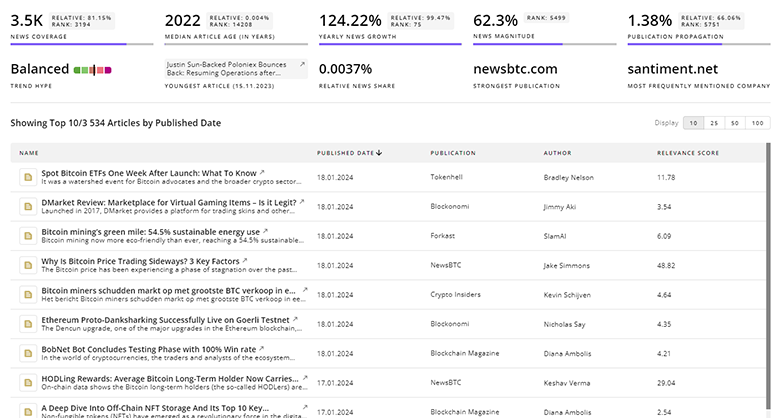
2.0K Quantum Communication News Articles
Discover Latest Quantum Communication Articles, News Magnitude, Publication Propagation, Yearly Growth, and Strongest Publications
Executive Summary
Investment and project activity indicate that quantum communication will follow a two-speed commercialization path: network and hardware spending backed by national programs and high-assurance customers, and software/services spending that enables broad enterprise adoption sooner through PQC migration, key management, and link verification. For strategy, organizations should prioritize three capabilities: (1) integration expertise that maps QKD and photonics into existing network operations, (2) modular key-management and service models that generate recurring revenue while networks scale, and (3) partnerships with national or EU-backed programs to secure early, noncompetitive procurement channels. Firms that align product roadmaps to minimize terminal complexity, demonstrate interoperable control-plane APIs, and supply endpoint authentication hardware will capture the fastest commercial returns as quantum-secure networks move from pilots to operational use.
Partner with us to offer cutting-edge insights into trends and tech. We welcome your input.