Radioactive Waste Management Report
: Analysis on the Market, Trends, and TechnologiesThe radioactive waste management sector is large and materially heterogeneous: internal market analysis values the global market at $172,724,760,000 with a projected rise to $193,044,860,000 and a CAGR of 1.40%—a baseline that frames strategic choices between containment, treatment, and resource-recovery investments. External market studies reporting near-term market sizes in the US$4–6 billion range reflect a narrower definition focused on commercial services and systems; both views are relevant because they highlight a dual economy: high-value, long-term stewardship and a smaller but active technology/service market that is growing at ~2–5% CAGR depending on scope and geography Nuclear Waste Management Market – Global Industry Size, Share, Trends Opportunity, and Forecast, 2028F.
This report was last revised 41 days ago. See a missing piece? Your input can help — contact us.
Topic Dominance Index of Radioactive Waste Management
The Dominance Index for Radioactive Waste Management delivers a multidimensional view by integrating data from three key viewpoints: published articles, companies founded, and global search trends
Key Activities and Applications
- Collection and segregation at generation sites: sorting Low-Level, Intermediate-Level, and High-Level Waste to route each stream to the most cost-effective treatment or storage path; this activity remains the primary operational workload for utilities and decommissioning contracts.
- Conditioning and immobilization (cementation, vitrification, polymer encapsulation): converting liquid/sludge/resin streams into durable forms for transport and repository acceptance; vitrification is the standard for many HLW streams and continues to receive investment for scale and throughput improvements Radioactive Waste Management: Global Markets.
- Interim and dry storage systems (cask systems and multipurpose canisters): engineered near-term capacity to hold spent fuel while long-term decisions proceed; standardization of canister systems (e.g. MAGNASTOR®) reduces logistics cost and licensing complexity.
- Secure transportation and logistics (Type A/B casks; chain-of-custody tracking): specialised freight and packaging services that mitigate risk and regulatory friction—critical where cross-jurisdictional movement is required.
- Deep geological disposal and borehole concepts: engineered repositories and newer directional-drill/horizontal borehole options intended to deliver long-term isolation for HLW and spent fuel, with programmatic activity across Europe, North America, and Asia Global Radioactive Waste Management System Market Research Report, 2025-2032.
- Volume reduction and thermal/chemical processing (calcination, pyroprocessing, plasma, hot isostatic pressing): used to shrink waste inventories and concentrate radionuclides for final forms; these methods materially change long-term repository sizing and cost. Evidence of thermal processing R&D and pilot deployments rises in recent patent and technical literature.
- Isotope management and medical isotope lifecycle services (production, handling, decay management, recycling): an expanding commercial niche that crosses waste handling and value extraction, especially as reactor-independent production and small-batch radiochemistry scale Niowave, Inc..
Emergent Trends and Core Insights
- Policy and program bifurcation: national strategies divide between direct disposal (surface/interim + DGR) and reprocessing/recycling pathways that attempt to recover fuel value and reduce HLW burden—this split shapes capital flows and regulatory designs Nuclear Waste Recycling Market, 2023-2032.
- Waste-as-resource movement: projects targeting recovery of uranium, plutonium, minor actinides, and specialty isotopes escalate funding and pilot activity; these approaches change lifecycle economics by offsetting disposal costs with recovered material value Nuclear Waste Recycling Market.
- Digital stewardship and assetization: increasing deployment of advanced tracking, digital twin concepts, and integrated inventory platforms to create verifiable, auditable records that reduce institutional risk and enable optimization of inspection/conditioning cycles.
- Modular, mobile treatment solutions: mobile conditioning, on-site segregation and treatment units reduce transport needs and enable faster decommissioning workstreams—these systems lower near-term operational cost and community friction.
- Emerging transmutation and accelerator approaches: accelerator-driven transmutation and pyroprocessing projects seek to shorten hazard timelines for particular nuclides; commercial viability depends on capex reduction and regulatory acceptance.
- Public consent and financing as constraints: siting and financing repositories remain the strongest bottlenecks; consent-based approaches and dedicated funds are moving into policy debates to unblock multi-decadal liabilities Finding a Solution to America's Nuclear Waste Problem.
Technologies and Methodologies
- Vitrification and cold crucible systems for HLW immobilization: proven field applications; engineering work focuses on throughput, secondary off-gas handling, and long-term leach modeling Radioactive Waste Management: Global Markets.
- Advanced thermal processing (calcination, plasma gasification, ScrollTherm variants) to reduce volume and produce stable residues; these are applied across LLW/ILW streams and in pilot decommissioning contracts.
- Electrochemical and pyrometallurgical separation for actinide partitioning and resource recovery—techniques target reuse (fuel) or transmutation feedstock and are central to recycling pathways.
- Hot Isostatic Pressing (HIP) and metallic matrix encapsulation provide dense, low-leach forms suitable for repository packages where metallic containment is preferred.
- Automated NDA (non-destructive assay) and mobile radiography (X-ray + gamma characterization) for drum-level decisioning—these reduce misclassification, lower disposal costs, and speed decommissioning timelines.
- Specialized packaging innovations (soft-sided containers, multipurpose canisters) plus integrated logistics tracking to reduce handling syllabi and lower transport cost and dose exposure Strategic Packaging Systems.
- Sensor networks and analytics for surveillance of storage and repository performance; emphasis on automated anomaly detection and long-duration data governance to satisfy stewardship obligations.
Radioactive Waste Management Funding
A total of 69 Radioactive Waste Management companies have received funding.
Overall, Radioactive Waste Management companies have raised $16.2B.
Companies within the Radioactive Waste Management domain have secured capital from 215 funding rounds.
The chart shows the funding trendline of Radioactive Waste Management companies over the last 5 years
Radioactive Waste Management Companies
- Perma-Fix Environmental Services, Inc.
Perma-Fix operates treatment facilities and offers hazardous/radioactive waste conditioning, mobile characterization (Perma-Sort), and PFAS destruction (Perma-FAS), positioning the company at the intersection of legacy cleanup and regulatory-driven remediation contracting. Its multi-facility footprint and contracting experience with government and commercial customers make it a practical partner for decommissioning projects that need mobile and fixed treatment capacity. Financial data shows multi-year operational variability but continuing revenue scale that supports both service contracts and targeted technology deployments. - Curie Environmental Services
Curie runs practical, consumer-facing recycling programs (notably mail-back for Am-241 smoke alarm foils) and acts as a broker and low-level materials recycler; that niche consumer-plus-industry model demonstrates how dispersed, low-activity sources can be aggregated into economically viable streams rather than routed to conventional disposal. As a recently acquired unit operating under a larger corporate umbrella, its model offers replicable logistics for nation-scale take-back programs. - TRANSMUTEX
TRANSMUTEX develops accelerator-driven transmutation and isotope production leveraging CERN-validated science; the company's grant- and project-funded trajectory focuses on converting long-lived radionuclides into shorter-lived products while producing medically valuable isotopes. If scaled, this technology would shift some HLW cost drivers by reducing long-term radiotoxicity; commercialization hinges on cost reductions and regulatory pathways for non-reactor fuel processing. - DEEP ISOLATION
DEEP ISOLATION offers directional drilling/horizontal borehole disposal as a lower-capex alternative to mined repositories. The company's model reduces siting friction by shortening timelines and uses industry-standard drilling methods to put spent fuel in geologically stable host rock—an option attractive to jurisdictions that want a faster, lower-visual-impact disposal option while work on mined repositories continues. - Syscade
Syscade provides compact mobile radiography units that combine X-ray inspection with gamma characterization for drum-level analysis, enabling more accurate waste classification at decommissioning sites. Their field systems reduce transport and misclassification costs, accelerate drum disposition decisions, and lower dose to personnel—practical advantages for utilities and remediation contractors facing large legacy inventories.
TrendFeedr's Companies feature is your gateway to 615 Radioactive Waste Management companies.
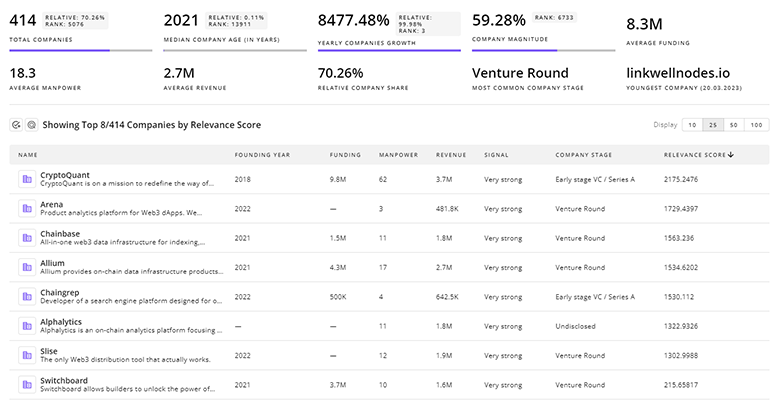
615 Radioactive Waste Management Companies
Discover Radioactive Waste Management Companies, their Funding, Manpower, Revenues, Stages, and much more
Radioactive Waste Management Investors
The Investors tool by TrendFeedr offers a detailed perspective on 243 Radioactive Waste Management investors and their funding activities. Utilize this tool to dissect investment patterns and gain actionable insights into the financial landscape of Radioactive Waste Management.
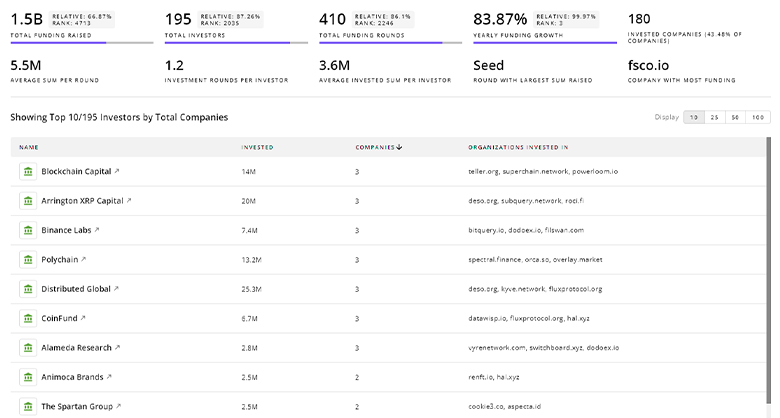
243 Radioactive Waste Management Investors
Discover Radioactive Waste Management Investors, Funding Rounds, Invested Amounts, and Funding Growth
Radioactive Waste Management News
TrendFeedr’s News feature allows you to access 4.2K Radioactive Waste Management articles as well as a detailed look at both historical trends and current market dynamics. This tool is essential for professionals seeking to stay ahead in a rapidly changing environment.
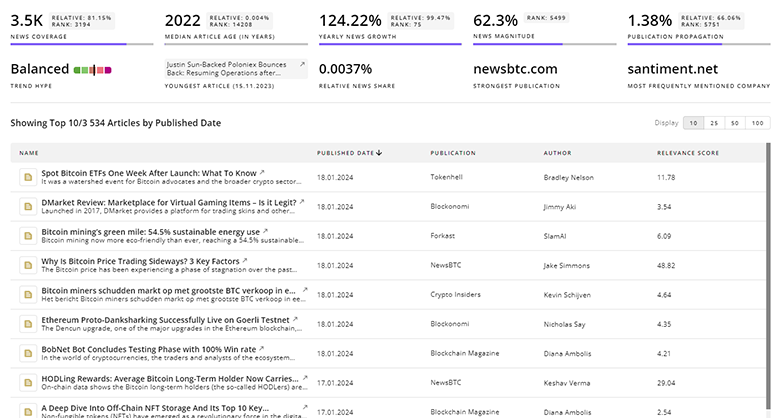
4.2K Radioactive Waste Management News Articles
Discover Latest Radioactive Waste Management Articles, News Magnitude, Publication Propagation, Yearly Growth, and Strongest Publications
Executive Summary
The business imperative in radioactive waste management is now twofold: manage long-term public liabilities securely while compressing near-term operational costs through smarter treatment and logistics. The internal market view (a $172.7 billion baseline) reframes the sector as one of enduring capital commitments and multigenerational stewardship, while narrower market studies show an active technology and service market of single-digit billions growing at low single-digit CAGRs. Strategic winners will combine licensing and regulatory competency with demonstrated reductions in lifecycle cost—either by shrinking inventories through processing and recovery or by lowering stewardship expenses via improved packaging, monitoring, and consented disposal options. Investors should prioritize scalable process technologies (thermal/chemical reduction, separation) that integrate with validated logistics and digital inventory systems; utilities and governments should prioritize funding paths that align interim storage investments with demonstrable progress on repository or recycling outcomes.
Partner with us to offer cutting-edge insights into trends and tech. We welcome your input.