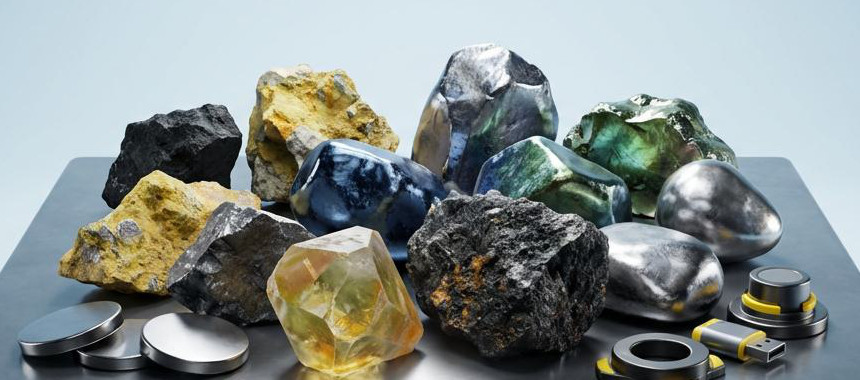
Rare-earth Elements Report
: Analysis on the Market, Trends, and TechnologiesThe rare-earth elements market is at an inflection where processing capability defines strategic value, with the internal trend report estimating a 2024 market size of USD 12,400,000,000 and a projected CAGR of 12.83% for the coming decade. Demand is concentrated in neodymium/praseodymium (NdPr) for permanent magnets used in EV traction motors and direct-drive wind turbines, while supply risk stems from disproportionate downstream processing capacity concentrated in Asia; these dynamics are driving heavy public and private investment into separation IP, recycling infrastructure, and low-impact extraction technologies.
This report was last revised 217 days ago. See a missing piece? Your input can help — contact us.
Topic Dominance Index of Rare-earth Elements
The Dominance Index for Rare-earth Elements delivers a multidimensional view by integrating data from three key viewpoints: published articles, companies founded, and global search trends
Key Activities and Applications
- Mining of REE-bearing ores (bastnäsite, monazite, ion-adsorption clays): Primary feedstock supply remains essential for large-scale NdPr and HREE production, but long permitting timelines and environmental constraints slow new greenfield projects IMARC Group.
- Separation and purification into high-purity oxides (Nd, Pr, Dy, Tb): High-value activity that converts mixed concentrates into saleable rare-earth oxides and metals; process efficiency and waste management determine downstream margin capture.
- Permanent magnet fabrication (NdFeB, graded NdPr alloys): Manufacture of sintered and bonded NdFeB magnets for EV motors, wind generators, robotics and defense—this step captures significant value if integrated with upstream separation.
- Recycling and urban-mining of end-of-life magnets and electronics: Short-loop recycling (swapping ore for EOL magnets) delivers rapid supply security and lower carbon intensity; pilot and commercial plants are scaling in North America and Europe HyProMag Ltd.
- Chemical and bio-based extraction methods for low-impact feedstocks (coal tailings, phosphogypsum, phytomining): Alternative sourcing routes provide politically palatable supply while avoiding large mine footprints Rainbow Rare Earths Market Review 2024.
- Catalysts, phosphors and specialty oxides: Use of cerium, europium, yttrium and others in catalytic converters, LED phosphors and polishing powders sustains diversified demand beyond magnets ResearchAndMarkets - Rare Earth Elements.
Emergent Trends and Core Insights
- Processing IP outranks resource ownership for near-term strategic value: Investors and governments prioritize affordable, scalable separation and refining systems that can be deployed quickly near feedstock or recycling hubs; value accrues to separation innovators more than to raw-tonnage owners.
- Projected magnet-grade shortfall around 2029 under base demand scenarios: Market reviews indicate magnet-grade REE demand growth will create structural deficits if downstream capacity does not expand—this compresses prices for NdPr and HREEs and accelerates offtake and build programs.
- Circular supply chains move from ESG checkbox to strategic hedge: Recyclers converting end-of-life magnets into separated oxides offer quicker, lower-CAPEX supply than new mines; public funding and OEM offtakes are validating recycling business models.
- Biological and modular approaches reduce environmental and capital barriers: Genetically optimized microbes and modular, deployable refining units lower permitting friction and allow processing near unconventional feedstocks (coal ash, phosphogypsum, mine tailings).
- Geopolitically driven public capital is reshaping project economics: Direct grants, tax credits and defense procurement commitments accelerate build-outs of downstream capacity in the U.S. Canada and allied nations, shortening commercialization timelines for integrated supply chains MP Materials.
Technologies and Methodologies
- Refined solvent-extraction alternatives (ion exchange, ligand-assisted chromatography, RapidSX™): Chromatographic and continuous ion-exchange approaches compress separation stages and reduce chemical footprint compared with legacy SX cascades Ucore.
- Hydrogen Processing of Magnet Scrap (HPMS) and direct magnet recycling: HPMS recovers NdFeB alloy powders with large energy savings versus primary refining and supports short-loop magnet supply to manufacturers.
- Modular, deployable refining units and selective molecular separation: Small-footprint units can be sited near secondary feedstocks to avoid centralization risks and reduce CAPEX/time-to-production Rare Earth Salts.
- Bio-extraction and phytomining: Engineered microbes and hyperaccumulator plants capture REEs from low-grade and dispersed sources, enabling low-impact supply options for jurisdictions with tight environmental standards Rare Flora.
- Analytical and ML process control for smarter SX and recycling circuits: Advanced sensors and digital control reduce solvent usage, improve yield and enable higher-purity Nd/Pr separations with fewer stages Rare Element Resources.
- Direct Dry Fluorination and low-waste fluoride production: Dry chemistries to produce rare-earth fluorides for magnet precursors reduce wet-chemistry waste streams and support localized magnet manufacture Fluorionics Inc..
Rare-earth Elements Funding
A total of 360 Rare-earth Elements companies have received funding.
Overall, Rare-earth Elements companies have raised $34.4B.
Companies within the Rare-earth Elements domain have secured capital from 1.5K funding rounds.
The chart shows the funding trendline of Rare-earth Elements companies over the last 5 years
Rare-earth Elements Companies
- ReElement Technologies — ReElement Technologies operates modular recovery systems that convert recycled materials, manufacturing waste and ores into critical metals with low environmental impact. Their modular, deployable approach targets rapid scaling across multiple geographies while minimizing wet-chemical waste, positioning them as a practical supplier for OEMs and recyclers. The firm reports significant capital raised and prioritizes circular feedstocks to meet near-term magnet-grade demand from Western markets. Financial and corporate details show public financing and R&D momentum.
- REEgen — REEgen applies genetically optimized microbial strains to extract REEs from low-grade ores and secondary streams, replacing hazardous reagents with biology. Their platform targets jurisdictions where strict environmental controls make conventional hydrometallurgy uneconomic and aims to convert low-value residues into merchant oxides. The company is early stage but strategically aligned with government sustainability priorities and small-footprint processing needs.
- ALKEMIO — ALKEMIO develops modular selective-molecular separation units designed to process diverse feedstocks from ores to industrial wastes without centralized refinery CAPEX. That modularity enables rapid deployment near feedstock sources and reduces logistical risk for juniors and recyclers; it also shortens the path from resource to separated oxide when paired with local manufacturers. ALKEMIO targets rapid demonstration projects and licensing as its commercialization route.
- Cyclic Materials — Cyclic Materials commercializes a two-phase recycling flow (MagCycle℠ + REEPure℠) that mechanically and chemically liberates magnet material from EOL motors and electronics and returns high-purity oxides suitable for magnet feedstock. Backed by a large Series B ($53M), the company is scaling plants in North America and aims to supply OEMs seeking domestic, low-carbon NdPr supplies. Their model demonstrates that recycling can be both a supply-security play and a near-term margin opportunity.
- Rivalia Chemical Co. — Rivalia Chemical Co. specializes in extracting REEs from coal fly ash and other industrial wastes using targeted hydrometallurgical routes, turning liabilities into strategic feedstocks. The company's approach addresses political and permitting sensitivity by using existing waste inventories rather than new mining footprints, enabling faster pathways to domestic supply for critical HREEs. As a TechStars-backed early-stage business, Rivalia focuses on pilot demonstrations with industrial partners.
TrendFeedr's Companies feature is your gateway to 947 Rare-earth Elements companies.
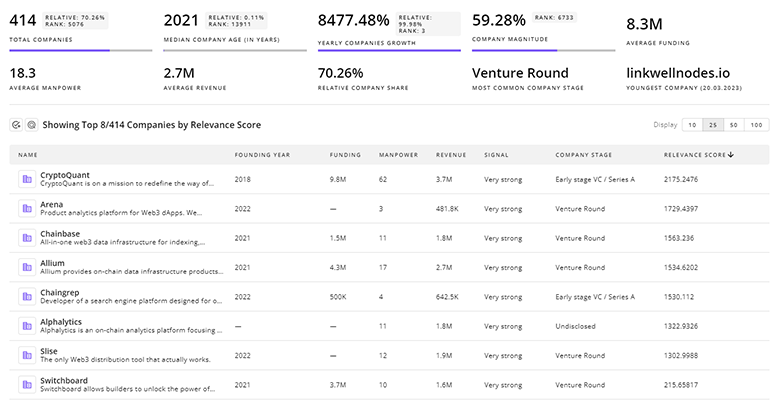
947 Rare-earth Elements Companies
Discover Rare-earth Elements Companies, their Funding, Manpower, Revenues, Stages, and much more
Rare-earth Elements Investors
The Investors tool by TrendFeedr offers a detailed perspective on 671 Rare-earth Elements investors and their funding activities. Utilize this tool to dissect investment patterns and gain actionable insights into the financial landscape of Rare-earth Elements.
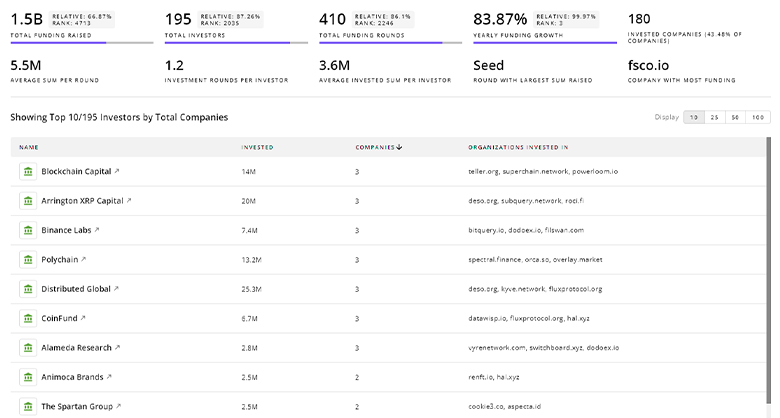
671 Rare-earth Elements Investors
Discover Rare-earth Elements Investors, Funding Rounds, Invested Amounts, and Funding Growth
Rare-earth Elements News
TrendFeedr’s News feature allows you to access 4.3K Rare-earth Elements articles as well as a detailed look at both historical trends and current market dynamics. This tool is essential for professionals seeking to stay ahead in a rapidly changing environment.
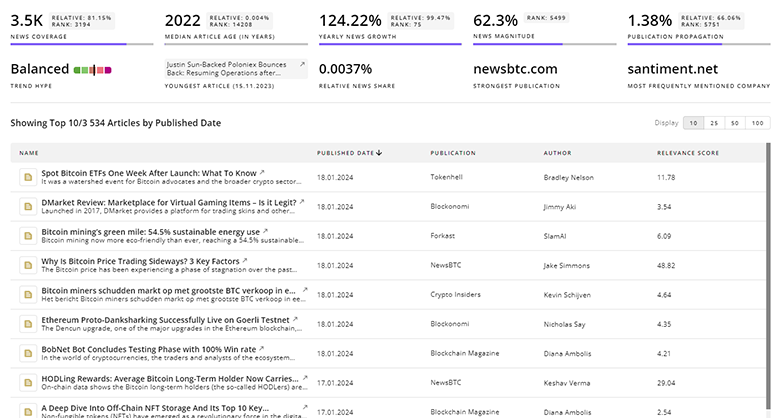
4.3K Rare-earth Elements News Articles
Discover Latest Rare-earth Elements Articles, News Magnitude, Publication Propagation, Yearly Growth, and Strongest Publications
Executive Summary
The rare-earth elements sector is shifting from a raw-material focus to one where separation technology, recycling capability and low-impact extraction determine access to premium markets. Quantitative forecasts in the trend data (a 2024 market size of USD 12,400,000,000 and CAGR 12.83%) underline accelerating demand driven primarily by permanent magnets for electrification and wind. Strategic priorities for industry and investors should therefore be: secure or partner for separation IP, accelerate scalable recycling capacity, and pursue alternative feedstocks that shorten commercialization time versus greenfield mines. Firms that combine defensible separation technology with quick path-to-feedstock (recycling, modular refining, or permitted low-impact deposits) will capture margin and contract leverage as supply tightness materializes.
Partner with us to offer cutting-edge insights into trends and tech. We welcome your input.