Remote Collaboration Report
: Analysis on the Market, Trends, and TechnologiesThe remote collaboration market is expanding rapidly and is already supported by $8.80B in cumulative funding, a sign that investors continue to place sizable bets on specialty collaboration plays. Forecasts reinforce this momentum: the market is projected to reach $31.8B by 2033 Remote Collaboration Market Size, Share Growth & Forecast while adjacent definitions of workplace transformation extend that opportunity to as much as $188.7B by 2035 Workplace Transformation Market to Reach US$ 188.7 Billion by 2035. Hybrid work patterns, accelerating AI adoption, and demand for bandwidth-resilient, security-conscious platforms now determine winners; companies that demonstrate measurable productivity gains in regulated or low-bandwidth environments capture the highest enterprise value.
This report was last revised 44 days ago. See a missing piece? Your input can help — contact us.
Topic Dominance Index of Remote Collaboration
The Dominance Index for Remote Collaboration delivers a multidimensional view by integrating data from three key viewpoints: published articles, companies founded, and global search trends
Key Activities and Applications
- Real-time video conferencing and spatial audio for distributed teams, with increasing emphasis on perceptual quality for creative and technical work.
- Persistent collaborative artifacts that link pre-meeting, in-session, and post-meeting outputs (so-called collaboration objects) to preserve context and decision trails.
- Asynchronous visual workflows—recorded walkthroughs, time-stamped annotations, and thread-based feedback—used to reduce meeting load and accelerate decision cycles Watch and Learn.
- Cobrowsing and interaction middleware that enable secure, install-free co-control of web applications for sales, support, and telemedicine use cases.
- Immersive XR sessions and digital twins for training, engineering review, and remote maintenance where spatial presence and 3D fidelity materially improve task outcomes.
- Managed remote-workplace services including secure device management and integration services for hybrid fleets, reflecting demand for outsourced operations and compliance expertise Remote Workplace Services Market Size & Share Analysis | 2026.
Emergent Trends and Core Insights
- AI as embedded collaborator. Generative and conversational agents are moving from meeting assistants to persistent contributors that summarize, tag, and route work into downstream workflows, changing how teams capture and reuse knowledge Worldwide Collaborative Applications Forecast, 2024–2028: AI, Multimodality, and Multiplayer Workspaces.
- Bandwidth-agnostic delivery wins regulated and emerging markets. Platforms that operate in constrained networks (ultra-low bandwidth, offline modes) create defensible positions in defense, field services, and frontier markets.
- Shift from session-first to artifact-first collaboration. Persistent, searchable session outputs increase long-term ROI by converting meetings into reusable knowledge assets.
- Interoperability and middleware demand. Enterprises struggle to integrate multiple vendors; any-to-any bridging and API-first interaction layers become high-priority procurement items.
- Immersive use cases move to production in verticals. AR/VR adoption accelerates in training, manufacturing, and healthcare where immersive interactions generate measurable task improvements Enabling Remote Collaboration Through AR/VR and Metaverse in Europe.
- Security and sovereignty as procurement filters. Data residency, zero-trust collaboration controls, and certified compliance posture now gate many enterprise deals Collaboration Security: A Security Discipline Born from Hybrid Work.
Technologies and Methodologies
- Low-latency streaming and advanced codecs that deliver high-fidelity screen and media sharing for creative workflows and remote review Workbench – Collaborative screen sharing for designers and developers.
- Presence-aware collaboration objects and CRDTs for concurrent editing and persistent context across asynchronous contributors.
- Web-native, browser-first architectures using WebRTC and cloud streaming to reduce friction and support platform-agnostic access.
- AI-driven orchestration engines that detect required skills or resources and automatically spawn micro-sessions, route tasks, or surface experts to reduce collaboration latency.
- Secure middleware and cobrowsing APIs enabling session-level data control, field redaction, and compliance without full desktop access—critical for finance and healthcare Surfly.
- Spatial audio and proximity models implemented in virtual offices to recreate unstructured hallway interactions and manage conversational density in virtual spaces Collaborative virtual environment market insights.
Remote Collaboration Funding
A total of 278 Remote Collaboration companies have received funding.
Overall, Remote Collaboration companies have raised $8.8B.
Companies within the Remote Collaboration domain have secured capital from 1.0K funding rounds.
The chart shows the funding trendline of Remote Collaboration companies over the last 5 years
Remote Collaboration Companies
- Immersive Wisdom — Immersive Wisdom provides an ultra-low-bandwidth remote ops center for distributed operations, designed to operate on commodity laptops and in offline modes; this positioning targets defense, field services, and constrained-network deployments where other collaboration tools fail. The company reports phased revenue growth to $3.20M in 2023 and runs a compact team (≈46 employees), reflecting a product-led approach focused on mission-critical deployments. Its value proposition is practical: enable coordinated action where connectivity and bandwidth are unreliable.
- Samesurf — Samesurf claims a patented cobrowsing stack that replaces legacy screen sharing for interactive web sessions; it supports GDPR and HIPAA compliance and is used for telemedicine, customer support, and assisted sales. Revenues are modest (≈$1.20M in 2023) and the company emphasizes security controls like field redaction and session recording to win regulated customers. Its technical moat is patent protection for cobrowsing primitives that reduce friction for browser-only interactions.
- PhasedConnect — PhasedConnect focused on platform interoperability, enabling seamless any-to-any meetings across Teams, Zoom, and Webex; that interoperability focus addresses a major enterprise pain point around vendor fragmentation. The firm's small team pursued enterprise pilots before ceasing operations, illustrating the market difficulty of building cross-vendor bridging without deep OEM partnerships. The product lesson remains: universal interoperability solves real integration friction that procurement teams frequently cite Tech application issues from using multiple collaboration vendors worldwide 2020.
- Duckly — Duckly builds pair-programming tooling that synchronizes code editing across disparate IDEs while offering audio and terminal sharing, targeting developer workflows where deep integration outweighs general-purpose meeting features. The team is tiny (≈3 employees) and the product is optimized for engineering velocity and low friction pairing sessions, which creates a defensible niche inside engineering toolchains. Duckly's approach underlines the strategic logic: own a critical workflow rather than a broad but shallow feature set.
- Colomba Link — Colomba Link develops a server-less, offline-first framework for secure structured-data collaboration that targets use cases needing strong data sovereignty and resilience. With a very small engineering footprint and seed-stage funding, the company emphasizes local-first collaboration models and version control on structured data—features attractive to customers in regulated industries and those with strict data residency requirements.
TrendFeedr's Companies feature is your gateway to 1.6K Remote Collaboration companies.
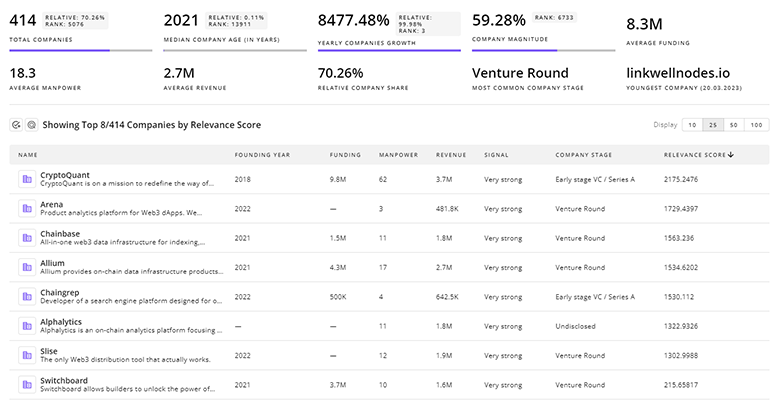
1.6K Remote Collaboration Companies
Discover Remote Collaboration Companies, their Funding, Manpower, Revenues, Stages, and much more
Remote Collaboration Investors
The Investors tool by TrendFeedr offers a detailed perspective on 1.2K Remote Collaboration investors and their funding activities. Utilize this tool to dissect investment patterns and gain actionable insights into the financial landscape of Remote Collaboration.
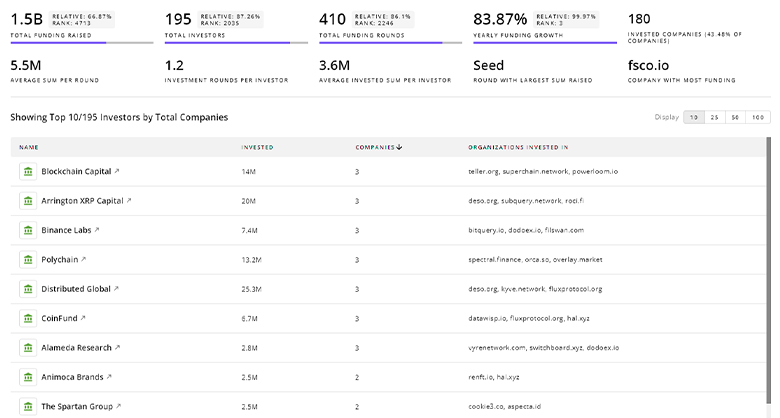
1.2K Remote Collaboration Investors
Discover Remote Collaboration Investors, Funding Rounds, Invested Amounts, and Funding Growth
Remote Collaboration News
TrendFeedr’s News feature allows you to access 2.3K Remote Collaboration articles as well as a detailed look at both historical trends and current market dynamics. This tool is essential for professionals seeking to stay ahead in a rapidly changing environment.
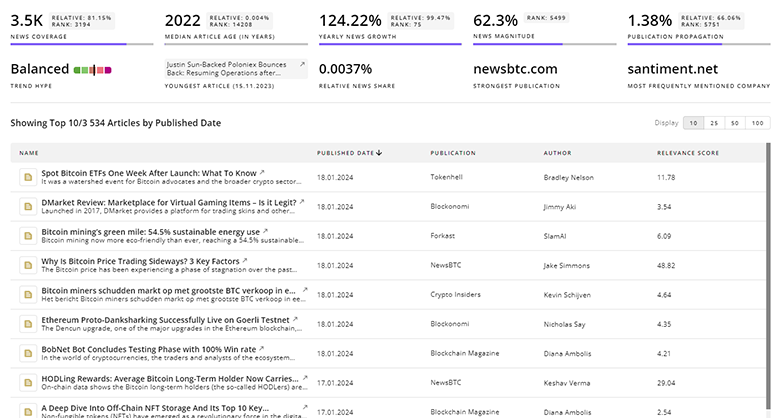
2.3K Remote Collaboration News Articles
Discover Latest Remote Collaboration Articles, News Magnitude, Publication Propagation, Yearly Growth, and Strongest Publications
Executive Summary
Remote collaboration now competes on measurable operational outcomes: bandwidth resilience, security and sovereignty, workflow integration, and artifact persistence. Market projections show a substantial addressable opportunity, yet enterprise procurement is shifting toward vendors that reduce real friction in regulated or constrained environments. The winning plays are clear: specialize where you can deliver verifiable productivity or compliance outcomes, integrate deeply into critical enterprise systems, and design for mixed synchronous/asynchronous work patterns. Companies that demonstrate those capabilities will convert investor interest into sustainable commercial value.
Partner with us to offer cutting-edge insights into trends and tech. We welcome your input.