Risk Mitigation Report
: Analysis on the Market, Trends, and TechnologiesThe risk mitigation landscape is accelerating into a financial-first discipline: the global risk-management market totaled $12,090,000,000 in 2024, with sustained demand for AI-driven quantification and real-time monitoring as primary investment levers. Market forecasts and sector studies reinforce rapid scale: industry research projects expansion to $51.97 billion by 2033, reflecting a multi-year push to convert technical exposures into board-level, dollar-denominated decisions Risk Management Market Size, Share | Industry Report, 2033. Manufacturers alone increased mitigation budgets by 12% year-over-year, spending roughly $4.2 billion in 2025, underlining how operational and supply-chain pressures are translating directly into measurable mitigation spend 2025 State of the Market Outlook and Insights – The Baldwin Group.
This report was last revised 103 days ago. See a missing piece? Your input can help — contact us.
Topic Dominance Index of Risk Mitigation
The Dominance Index for Risk Mitigation delivers a multidimensional view by integrating data from three key viewpoints: published articles, companies founded, and global search trends
Key Activities and Applications
- Cyber Risk Quantification (CRQ) that produces financial loss distributions to inform underwriting, capital allocation and remediation budgets; this activity is now a procurement criterion for insurers and large enterprises.
- Real-time supply-chain exposure monitoring and buffer optimization, driven by tariff and geopolitical shifts that force inventory and routing strategy changes Supply chain risk pulse 2025: Tariffs reshuffle global trade priorities.
- Parametric and alternative risk-transfer (ART) instruments for climate and catastrophe exposures, enabling faster liquidity and hedging of tail events 2025 Technology Industry Risk Report - Marsh.
- Continuous control efficacy validation (automated control efficacy testing) that measures whether deployed mitigations actually reduce exposure rather than only documenting compliance.
- Third-party and vendor risk intelligence combining technical posture, financial stability and compliance signals to rank external exposures for prioritized remediation.
- Human risk management and behavioral countermeasures that reduce social-engineering losses by shaping decision contexts, micro-training and adaptive controls.
Emergent Trends and Core Insights
- Financialization of technical risk: Organizations demand dollar-level impact metrics (loss distributions, expected annual loss) before approving remediation capital; this is now a procurement expectation among insurance and corporate buyers.
- AI-native quantification and governance: Firms plan stepped increases in predictive analytics and model-driven mitigation—68% of risk officers expect to boost investment in predictive analytics in the next 12 months—making AI integral to prioritization and reporting Aon's Global Risk Management Survey.
- Cyber remains priority but converges with physical and financial risk: 73% of executives rank cyber as a top business risk, yet mitigation now ties cyber scenarios to physical continuity and capital planning Allianz Risk Barometer.
- Operational resilience engineering replaces checklist compliance: Organizations move from episodic exercises to continuous scenario-based stress testing and digital twins for system resilience.
- Parametric and ART growth for climate and catastrophe exposures: Rapid payouts and simpler claims triggers are driving public-sector and corporate adoption where modelled triggers align to business continuity needs.
Technologies and Methodologies
- AI-augmented probabilistic modeling (Bayesian networks, Monte Carlo) for end-to-end loss forecasting and mitigation optimization.
- Real-time telemetry ingestion and digital twins to simulate cascading failures and validate mitigation effects before deployment Mitigating IT Systemic Risk.
- Automated Control Efficacy Testing (ACET) that closes the loop between evidence, remediation and residual risk measurement.
- Risk data aggregation and standardized reporting frameworks (BCBS239 alignment, FAIR translation) to support regulatory and board reporting.
- Continuous Threat Exposure Management (CTEM) and SOAR orchestration for prioritized, automated remediation workflows that reduce mean time to mitigation.
- Federated and privacy-preserving AI for cross-party risk modeling where data cannot be centralized, enabling decentralized quantification without leaking sensitive inputs.
Risk Mitigation Funding
A total of 1.2K Risk Mitigation companies have received funding.
Overall, Risk Mitigation companies have raised $67.9B.
Companies within the Risk Mitigation domain have secured capital from 4.0K funding rounds.
The chart shows the funding trendline of Risk Mitigation companies over the last 5 years
Risk Mitigation Companies
- Kovrr — Kovrr financially quantifies cyber risk on demand, delivering insurance-grade loss distributions that link cyber posture to expected financial exposure and underwriting metrics. Their platform helps security teams present remediation cases in CFO terms so capital requests align with enterprise risk appetite. Kovrr's funding and product focus support rapid integration with risk registers and insurer workflows. Kovrr is profiled in company datasets as a specialized CRQ provider.
- Infolock — Infolock offers managed DSPM and data discovery services that automate data classification and regulatory readiness for privacy regulations like GDPR, reducing compliance remediation cycles and data exposure windows. Their recent partnership activity targets outsourced DSPM delivery for mid-market firms that lack in-house data governance teams. This positioning tightens the link between data inventory and measurable reduction in data breach risk.
- PrivIQ — PrivIQ develops AI-powered automated data privacy controls and risk scoring, enabling continuous monitoring of personal data flows and automated evidence collection for audits. Their platform caters to regulated industries where demonstrable chain-of-custody and fast reporting materially cut regulatory and legal exposure. The product emphasis is on reducing manual compliance costs through machine-assisted classification and reporting.
- ADRM Security — ADRM Security builds managed security services and a DEFENDER™ managed platform that automates control testing and alert validation for operational networks and cloud estates. Their service model converts sporadic assessments into persistent validation cycles, shrinking the window between vulnerability detection and confirmed remediation. The company's managed offering targets organizations that prefer outcome guarantees over tooling alone.
- NVISIONx — NVISIONx provides data risk intelligence and has recently scaled with $4.6M in funding to expand its platform for contextual risk scoring across data assets. Their tooling overlays data lineage with exposure metrics so teams can prioritize remediation where the business impact is greatest. NVISIONx exemplifies the new class of vendors that tie deep data telemetry to rapid, financially relevant risk narratives.
TrendFeedr's Companies feature is your gateway to 10.2K Risk Mitigation companies.
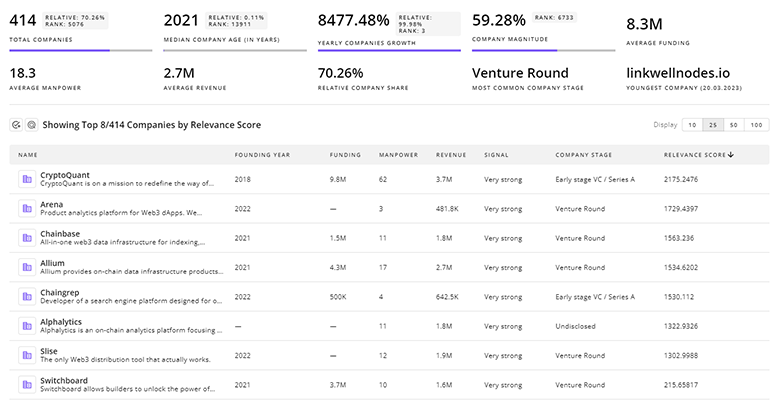
10.2K Risk Mitigation Companies
Discover Risk Mitigation Companies, their Funding, Manpower, Revenues, Stages, and much more
Risk Mitigation Investors
The Investors tool by TrendFeedr offers a detailed perspective on 4.3K Risk Mitigation investors and their funding activities. Utilize this tool to dissect investment patterns and gain actionable insights into the financial landscape of Risk Mitigation.
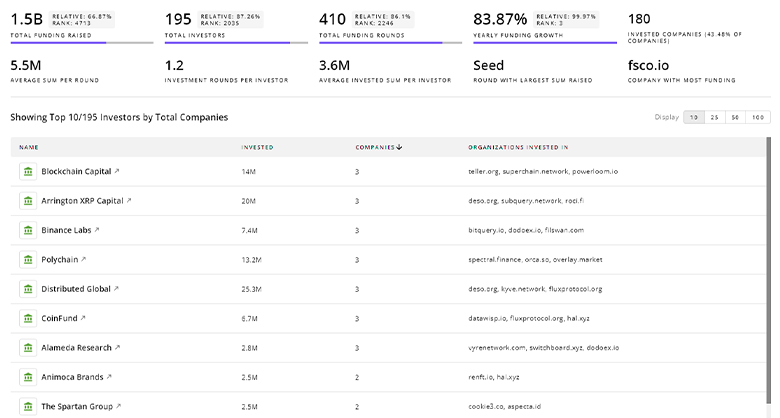
4.3K Risk Mitigation Investors
Discover Risk Mitigation Investors, Funding Rounds, Invested Amounts, and Funding Growth
Risk Mitigation News
TrendFeedr’s News feature allows you to access 10.0K Risk Mitigation articles as well as a detailed look at both historical trends and current market dynamics. This tool is essential for professionals seeking to stay ahead in a rapidly changing environment.
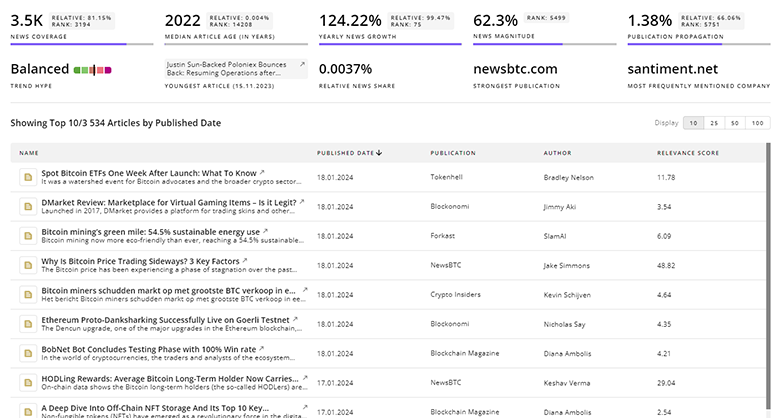
10.0K Risk Mitigation News Articles
Discover Latest Risk Mitigation Articles, News Magnitude, Publication Propagation, Yearly Growth, and Strongest Publications
Executive Summary
Risk mitigation has moved from checklist compliance into a capital-allocation conversation where impact quantification dictates priorities. The dominant strategic posture for companies and insurers centers on translating technical and environmental exposures into financial metrics, operationalizing continuous validation of controls, and adopting AI-enabled simulations that permit pre-deployment testing of countermeasures. Organizations that combine CRQ, real-time telemetry, and parametric transfer instruments will shorten decision cycles, reduce capital wasted on low-value work, and improve resilience against converging cyber, supply-chain and climate threats.
Partner with us to offer cutting-edge insights into trends and tech. We welcome your input.