Rooftop Solar Power Report
: Analysis on the Market, Trends, and TechnologiesThe rooftop solar power market is undergoing rapid structural expansion, driven by strong projected market growth and sharp policy and financing shifts: the trend report projects a market value of $919,190,000,000 with a CAGR of 20.60% through the forecast window, underlining a large commercial opportunity for integrated solutions. Regional cases expose opposite short-term dynamics — Germany added 5 GW in the first four months of 2024, showing how permitting and incentive reform can produce near-term surges while U.S. residential installs contracted 45% YoY even as community solar added 1,745 MWdc (a 35% increase), highlighting a shift from single-owner rooftop models to pooled/shared ownership.
This report was last revised 273 days ago. See a missing piece? Your input can help — contact us.
Topic Dominance Index of Rooftop Solar Power
The Dominance Index for Rooftop Solar Power delivers a multidimensional view by integrating data from three key viewpoints: published articles, companies founded, and global search trends
Key Activities and Applications
- Residential rooftop installations — homeowner self-consumption and bill reduction remain core demand drivers; adoption is uneven across markets and sensitive to financing and net-metering rules Solar Market Insight Report 2024 Year in Review – SEIA.
- Community and shared-ownership projects — rapid growth in subscriber models (notably 1,745 MWdc added in 2024 in the U.S.) makes community solar an increasingly effective channel to reach renters and multi-unit buildings.
- Commercial & Industrial (C&I) rooftop deployment — large, flat rooftops represent the highest near-term capacity opportunity; execution complexity and structural constraints make C&I projects attractive to vertically integrated developers with EPC and O&M capabilities.
- Rooftop PV plus storage (hybrid systems) — pairing batteries with rooftop PV is moving from value-add to near-standard in many markets as owners seek resilience and time-shifting of load, supported by falling battery costs and policy interest Small-scale solar outlook.
- BIPV and solar roofing — integration of PV into the building envelope targets new-build and high-aesthetic segments where homeowners or developers prefer an integrated roofing product over retrofits.
Emergent Trends and Core Insights
- Policy-driven leapfrogging: Fast regulatory simplification and targeted incentives produce concentrated deployment spikes (example: 5 GW in early 2024 in Germany), so near-term capacity is highly policy-sensitive Solar power continues to surge in 2024 – Ember Energy.
- Ownership model migration: The sector is shifting toward subscription, community, and third-party ownership as consumer financing and interest-rate dynamics compress upfront demand for pure CAPEX buys; community solar growth in 2024 is a clear signal of that model change.
- Storage attachment gains materiality: Battery add-rates for rooftop systems are rising, moving rooftop assets from intermittent bill-savers to grid-interactive resources able to provide resilience and peak-shaving services.
- Cost and supply-chain dynamics are bifurcating markets: Module cost declines and domestic manufacturing increases reduce lead-time risk, but elevated financing costs and lengthy interconnection queues remain binding constraints in several markets Major trends that shaped U.S. solar energy in 2024 – PV Magazine.
- Data and automation as the new margin: Companies that compress soft costs — automated engineering, instant permitting packages, and digital customer acquisition — capture outsized EBIT margin versus pure hardware suppliers.
Technologies and Methodologies
- High-efficiency silicon modules (PERC / HJT / HBC variants) — marginal module efficiency gains remain valuable where rooftop area constrains output; module innovation supports higher per-roof yields and is central for premium residential and C&I segments Rooftop Solar PV Module Market Research Report.
- Bifacial panels and reflectivity tuning — pairing bifacial modules with roof surface treatments (high albedo or reflective membranes) increases rear-side yield and is a high-value optimization for flat, elevated arrays Bifacial PV on Rooftops.
- Smart inverters and distributed grid services — grid-support functions at the edge (reactive power, anti-islanding, dynamic export limiting) convert aggregated rooftop fleets into utility-grade resources and reduce interconnection friction.
- Automated site assessment and permitting software — satellite/LiDAR based site scoring plus automated structural checks shorten sales lead times and reduce soft costs; platforms that integrate permitting templates materially lower time-to-install.
- Modular, retrofit battery platforms — service models that decouple battery ownership from the module (storage-as-a-service) reduce upfront cost hurdles and speed adoption in financing-sensitive residential markets.
Rooftop Solar Power Funding
A total of 336 Rooftop Solar Power companies have received funding.
Overall, Rooftop Solar Power companies have raised $46.6B.
Companies within the Rooftop Solar Power domain have secured capital from 1.1K funding rounds.
The chart shows the funding trendline of Rooftop Solar Power companies over the last 5 years
Rooftop Solar Power Companies
- Rocking Solar — focused on low-slope commercial roofs with a patent-pending single-axis tracking approach that claims higher yield on flat warehouses. Their system targets the large C&I segment where marginal yield lifts and lowered installation cost produce fast paybacks; the company positions itself as the specialist hardware provider for heavy-roof portfolios.
- Over Easy — develops lightweight vertical bifacial arrays and modular units designed for ballast-sensitive urban flat roofs and green roofs. Their product addresses structural load limits while delivering rear-side gains in reflected light conditions that are common on pale urban roofs.
- SMART ROOF — builds prefabricated rooftop modules that combine PV, rainwater capture, and amenity decking for commercial properties. Their approach sells the rooftop as a multi-service asset to landlords seeking ESG credits and tenant amenities, creating a differentiated revenue stack beyond electricity alone.
- 24-hour Solar Roof — targets commercial roofing replacement with a watertight, battery-backed PV roof system designed to supply continuous power. The company competes at the intersection of roofing and energy supply, offering an installation-led value proposition that reduces separate roofing and PV capex for building owners.
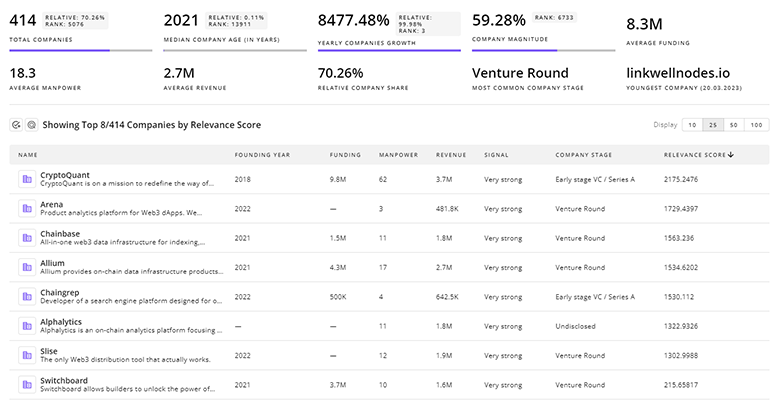
TrendFeedr's Companies feature is your gateway to 3.4K Rooftop Solar Power companies.
3.4K Rooftop Solar Power Companies
Discover Rooftop Solar Power Companies, their Funding, Manpower, Revenues, Stages, and much more
Rooftop Solar Power Investors
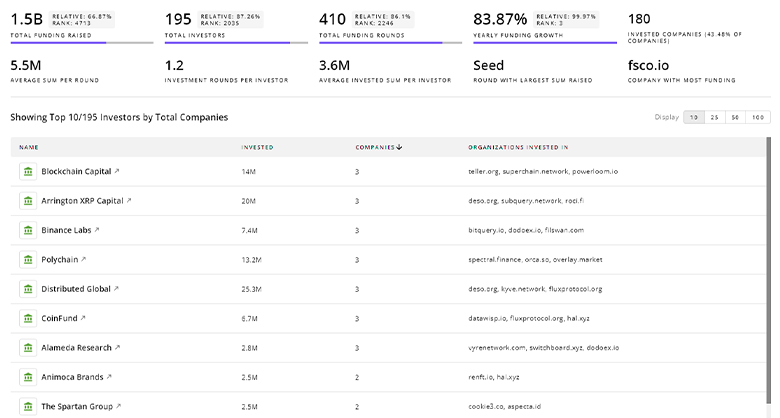
The Investors tool by TrendFeedr offers a detailed perspective on 1.5K Rooftop Solar Power investors and their funding activities. Utilize this tool to dissect investment patterns and gain actionable insights into the financial landscape of Rooftop Solar Power.
1.5K Rooftop Solar Power Investors
Discover Rooftop Solar Power Investors, Funding Rounds, Invested Amounts, and Funding Growth
Rooftop Solar Power News
TrendFeedr’s News feature allows you to access 20.4K Rooftop Solar Power articles as well as a detailed look at both historical trends and current market dynamics. This tool is essential for professionals seeking to stay ahead in a rapidly changing environment.
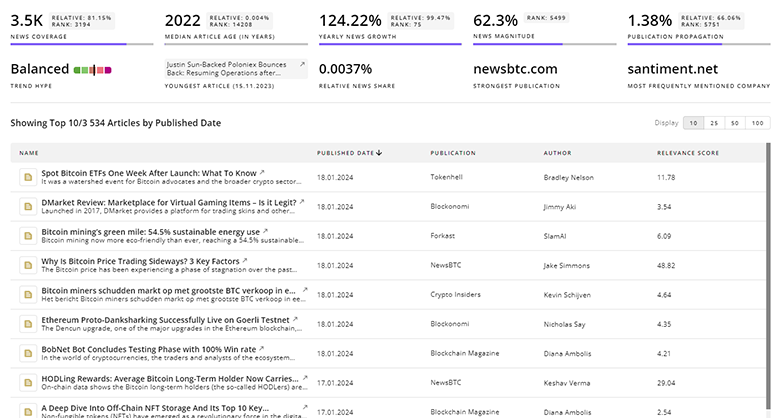
20.4K Rooftop Solar Power News Articles
Discover Latest Rooftop Solar Power Articles, News Magnitude, Publication Propagation, Yearly Growth, and Strongest Publications
Executive Summary
Rooftop solar is moving from a volume-driven installation business to a layered service economy where hardware, financing, and software intersect. The internal market forecast ($919.19B, CAGR 20.60%) frames a large prize for firms that can manage acquisition economics, technical execution, and long-term asset optimization. Short-term outcomes will be determined by policy moves and financing cost curves: jurisdictions that simplify permitting and raise net-metering or incentive thresholds will see swift capacity gains (as Germany did in early 2024), while markets with high borrowing costs will shift demand into shared-ownership and subscription products. For investors and operators, the highest expected returns sit with businesses that combine technical differentiation (bifacial optimization, integrated storage, non-invasive racking) with digital platforms that reduce soft costs and capture recurring O&M and data-driven revenue streams.
Partner with us to offer cutting-edge insights into trends and tech. We welcome your input.