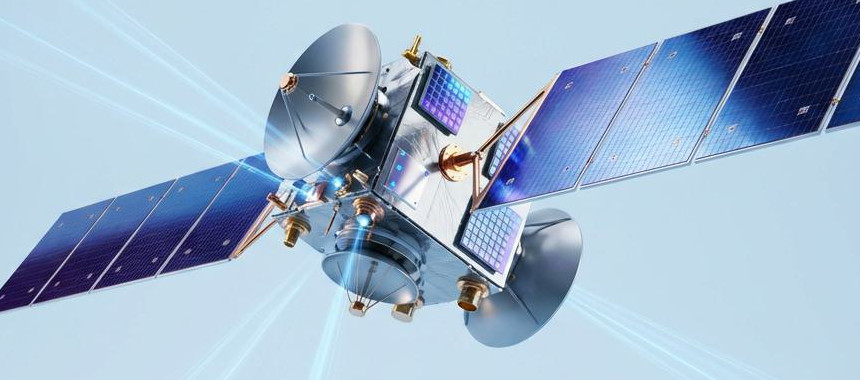
Satellite Telecommunications Report
: Analysis on the Market, Trends, and TechnologiesThe satellite telecommunications market is reaching a strategic inflection point where platform orchestration and ground-segment innovation determine near-term winners: global market analysis values the sector at $200,300,000,000 in 2025. Major LEO deployments and capacity expansion (current switched capacity > 150 Tbps, projected to exceed 800 Tbps within a few years) compress latency and wholesale bandwidth cost structures, enabling data-first MSS and direct-to-device business models that scale beyond traditional GEO payers. Investment and procurement are shifting from pure capacity buys toward software orchestration, NTN/3GPP integration and electronically steerable antenna ecosystems that convert orbital scale into predictable service quality researchandmarkets – Satellite Broadband Access, 2025.
18 days ago, we last updated this report. Notice something that’s not right? Let’s fix it together.
Topic Dominance Index of Satellite Telecommunications
To gauge the influence of Satellite Telecommunications within the technological landscape, the Dominance Index analyzes trends from published articles, newly established companies, and global search activity
Key Activities and Applications
- Broadband delivery to underserved and remote regions — Multi-orbit networks and HTS capacity are used to supply fixed and enterprise broadband where fiber is impractical, with operators packaging bandwidth for residential, government and enterprise customers.
- Direct-to-device (D2D) / Direct-to-Cell services — Satellites provide connectivity directly to standard handsets and IoT endpoints through 3GPP NTN support, enabling emergency messaging and staggered rollout of voice/data services in partnership with MNOs
- Mobile Satellite Services for aviation, maritime and public safety — High-capacity MSS and on-the-move terminals support real-time telemetry, passenger broadband and mission communications for critical operators.
- VSAT and enterprise backhaul — Satellite trunking and backhaul deliver resilient links for cellular base stations, enterprise branches and cloud connectivity, with backhaul demand growing alongside 4G/5G network rollouts Global Satellite Backhaul Market.
- Satellite-IoT and NB-IoT in LEO — Low-power NB-IoT services over LEO constellations enable global telemetry for logistics, agriculture and asset tracking at low ARPU but high volume potential.
Emergent Trends and Core Insights
- LEO capacity surge is changing economics — Constellation counts and system capacity expansions push the sector from scarcity pricing to volume-driven services, reshaping wholesale price points and enabling new consumer and industrial use cases
- Services are shifting from voice to data — Mobile satellite services revenue is now dominated by data, with telemetry and broadband representing the largest MSS share and driving terminal innovation.
- Software-defined orchestration outranks raw orbit count — Multi-orbit traffic management, cloud-native ground stacks and SDN control planes now determine margin capture more than satellite ownership alone.
- Terminal SWaP and ESA adoption dictate market access — Electronically steerable arrays and low-SWaP terminals are the gatekeepers for mobility and D2D deployments; vendors that deliver compact, low-cost, multi-band panels accelerate operator rollouts.
- Regulatory and sovereign sourcing factors fragment addressable markets — Regional sovereignty requirements and spectrum licensing force multi-strategy go-to-market approaches, creating premium niches for compliant, trusted suppliers researchandmarkets - Impact of Satellite Connectivity on Emerging Markets, 2025.
Technologies and Methodologies
- High-Throughput Satellites (HTS) and Ka/Ku spot-beam architectures — Multiply capacity per satellite and reduce cost per bit to serve broadband and enterprise verticals.
- LEO constellations with on-board switching and inter-satellite links — Onboard routing and optical inter-satellite links reduce ground hops and latency for global session continuity TESAT.
- Electronically steerable arrays (ESA) and flat-panel phased arrays — Provide fast beam steering for mobile and D2D use cases while shrinking logistical footprint and installation complexity.
- 3GPP NTN integration and D2D standards (Release 17+) — Standardization enables unmodified handsets and mass-market device ecosystems to access satellite paths under operator control
- Cloud-native ground segment and GSaaS — Virtualized, multibeam ground stations and ground-as-a-service reduce capital barriers and accelerate constellation onboarding
- AI/ML for network optimization and anomaly detection — Machine learning improves spectrum use, predictive maintenance and dynamic resource allocation across multi-orbit networks.
Satellite Telecommunications Funding
A total of 778 Satellite Telecommunications companies have received funding.
Overall, Satellite Telecommunications companies have raised $157.3B.
Companies within the Satellite Telecommunications domain have secured capital from 2.9K funding rounds.
The chart shows the funding trendline of Satellite Telecommunications companies over the last 5 years
Satellite Telecommunications Companies
- Get SAT — Get SAT develops high-efficiency, micronized antenna panels and compact terminal systems for ground, air and maritime mobility, reducing Size, Weight and Power constraints for on-the-move broadband. Their InterFlat terminal targets defence and commercial mobility customers and was positioned for strategic acquisition in 2024. Get SAT bridges high-performance phased panel design with production techniques that suit rapid integration into existing vehicle and vessel platforms
- Quasar Satellite Technologies — Quasar offers a pure-digital, multibeam phased array ground station that supports dozens of simultaneous satellite links from a compact aperture, dramatically lowering ground segment capital and footprint. The product targets LEO operators and GSaaS customers seeking rapid scale and automation for constellation operations, positioning Quasar as a cost-efficient ground orchestrator
- Sofant Technologies — Sofant focuses on ultra-low SWaP terminals and fast beam switching for mobile SATCOM, enabling small form-factor airborne and vehicular installations. Their modular approach and industry-leading SWaP metrics make them an ingredient supplier for operators pursuing MSS and D2D mobility, particularly where mechanical gimbals are impractical
- Coxsat. Technology Co. Ltd — Coxsat develops low-cost Ka/Ku band active phased arrays and millimeter-wave flat panels, aiming to deliver scalable, manufacturable ESAs for both SATCOM and 5G mmWave applications. Their roadmap emphasizes integration of silicon RF and calibration algorithms to lower per-unit costs for maritime and enterprise mobility terminals
- Virtual Satellites — Virtual Satellites is researching a new peer-to-peer signal propagation approach that, if validated, could offer alternative long-range links while sidestepping some orbital debris risks. The project remains early stage and experimental, but it highlights the market appetite for radical alternatives that reduce dependency on physical constellation scale
Get detailed analytics and profiles on 5.6K companies driving change in Satellite Telecommunications, enabling you to make informed strategic decisions.
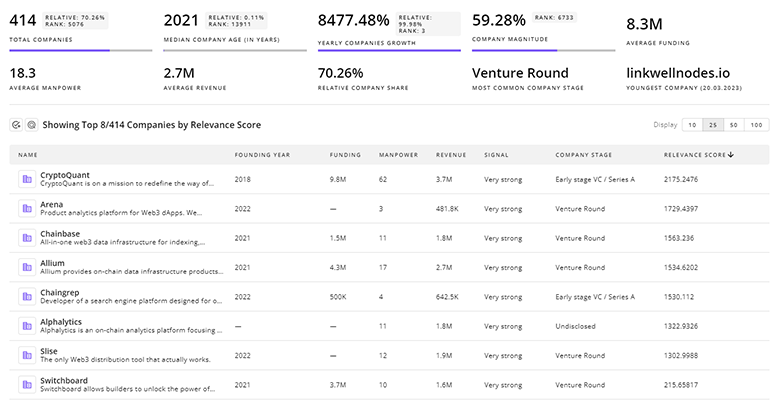
5.6K Satellite Telecommunications Companies
Discover Satellite Telecommunications Companies, their Funding, Manpower, Revenues, Stages, and much more
Satellite Telecommunications Investors
TrendFeedr’s Investors tool provides an extensive overview of 3.3K Satellite Telecommunications investors and their activities. By analyzing funding rounds and market trends, this tool equips you with the knowledge to make strategic investment decisions in the Satellite Telecommunications sector.
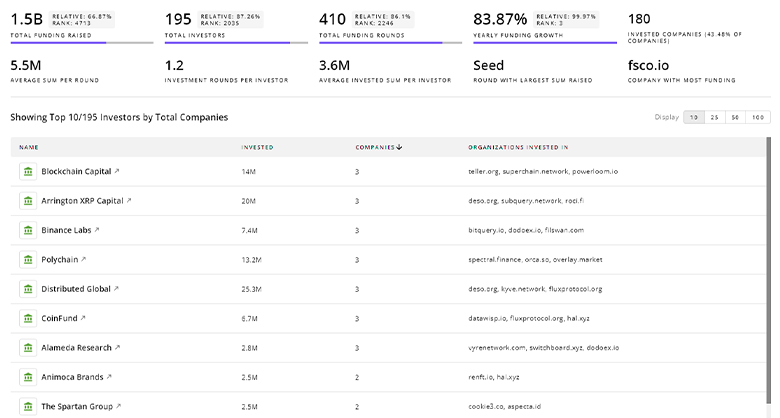
3.3K Satellite Telecommunications Investors
Discover Satellite Telecommunications Investors, Funding Rounds, Invested Amounts, and Funding Growth
Satellite Telecommunications News
Explore the evolution and current state of Satellite Telecommunications with TrendFeedr’s News feature. Access 15.6K Satellite Telecommunications articles that provide comprehensive insights into market trends and technological advancements.
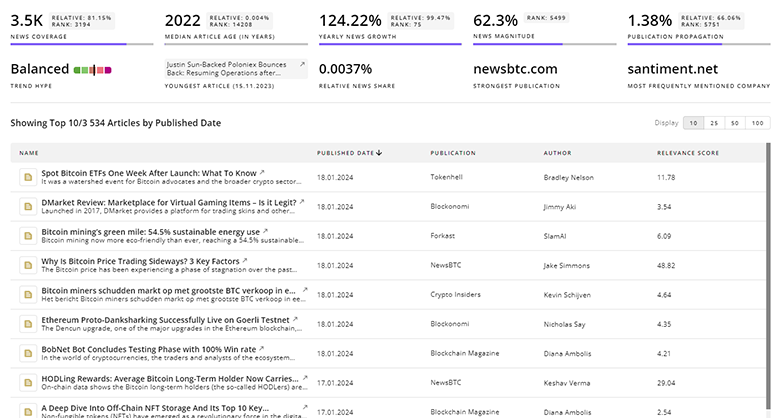
15.6K Satellite Telecommunications News Articles
Discover Latest Satellite Telecommunications Articles, News Magnitude, Publication Propagation, Yearly Growth, and Strongest Publications
Executive Summary
The business imperative for participants is clear: capture value in the software and terminal layers that convert orbital capacity into consistent, low-latency services. Investors and operators should prioritize suppliers that deliver low-SWaP, multi-band ESAs; cloud-native ground orchestration; and 3GPP-compliant NTN stacks that integrate with mobile operators. Regional regulatory complexity and spectrum constraints will reward localized partnerships and government-grade compliance capabilities, creating differentiated margins for companies that combine technical IP with certifiable security and procurement readiness. Companies focused only on selling raw capacity or legacy mechanically steered terminals face margin compression as LEO capacity proliferates; conversely, firms that sell orchestration, subscription-grade connectivity and compact terminals will convert scale into durable service economics.
We're looking to collaborate with knowledgeable insiders to enhance our analysis of trends and tech. Join us!