Smart Charging Report
: Analysis on the Market, Trends, and TechnologiesThe smart charging sector is shifting from hardware roll-out to software-led energy orchestration, backed by $17.56B in total funding directed to the topic, which signals strong investor conviction in platform and services models rather than pure charger hardware. Market forecasts reinforce rapid expansion: the smart EV charger market was estimated at USD 4.13 billion in 2023 and is projected to expand at a 32.20% CAGR toward USD 50.92 billion by 2032, highlighting the commercial runway for software that manages load, V2G, and energy arbitrage Smart EV Charger Market – Zion Market Research.
88 days ago, we last updated this report. Notice something that’s not right? Let’s fix it together.
Topic Dominance Index of Smart Charging
To gauge the influence of Smart Charging within the technological landscape, the Dominance Index analyzes trends from published articles, newly established companies, and global search activity
Key Activities and Applications
- Dynamic load management for sites and fleets — real-time allocation of available power across sockets and vehicles to avoid utility upgrades and peak penalties; this activity is central to residential multi-unit installations and fleet depots where site capacity is fixed.
- Vehicle-to-Grid and Vehicle-to-Home (V2G/V2H) services — managed bidirectional energy flow to provide grid ancillary services or home backup power; deployments now target frequency regulation and local resilience use cases.
- Battery-health aware fast charging — optimized charge profiles (pre-charge and staged currents) that mitigate lithium plating and capacity fade while shortening effective charge times, using digital-twin models and cell-level insights Adaptive Health-Aware Fast Charging Strategy.
- Charging-as-a-Service (CaaS) and subscription models — operators bundle hardware, energy, and platform services to reduce upfront cost for site hosts and to monetize uptime and flexibility over time EV Charging As A Service Market – Future Market Insights.
- Mobile and temporary charging solutions — battery-buffered trucks, portable DC fast chargers, and on-demand vans that address coverage gaps and events without long grid interconnection lead times EV Portable Charging Devices Market (BlueWeave Consulting).
Emergent Trends and Core Insights
- AI-first orchestration of distributed assets — forecast models and 15-minute re-optimization windows are becoming distinguishing features for platforms that monetize energy flexibility and predict user departure times.
- Bidirectional charging is moving into commercial markets — utilities and platform providers are testing V2G for frequency response and congestion relief; commercial pilots indicate rapid response capability but require refined safety and warranty models Enabling Grid Services with Bidirectional EV Chargers.
- Battery intelligence as a recurring revenue vector — physics-based BMS augmentation and cell-level telemetry enable Battery Health as a Service (BHaaS), turning lifecycle extension into a quantifiable economic benefit for fleet owners battgenie.life.
- Ultra-fast charging shifts CAPEX calculus — breakthroughs in cell chemistry and high-power chargers (liquid cooling, modular power modules) reduce the need for large stationary buffer batteries at sites, changing how operators size and finance DCFC deployments StoreDot.
- Wireless and automated conductive charging adopt practical niches — dynamic and contactless approaches gain traction for fleets, autonomous vehicles, and constrained urban sites where hands-free operation or automated docking delivers operational efficiency Easelink.
- Platform-hardware bifurcation — funding and strategic value concentrate on software and energy-management platforms while charger hardware commoditizes, producing a market structure where the intelligence layer captures disproportionate margins.
Technologies and Methodologies
- Advanced optimization engines and digital twins — multi-objective solvers (genetic, swarm, hybrid) and high-fidelity simulation models schedule charging to minimize cost, battery wear, and grid impact in under the operational time budget A Digital Twin for Real-Time and Predictive Optimization of Electric Vehicle Charging.
- Dynamic Load Management (DLM) and site-level buffering — power allocation algorithms that throttle per-socket power, pair with on-site storage or flywheel boosters to supply short high-power bursts without grid upgrades ZOOZ Power.
- Cell-level telemetry and chip-on-cell monitoring — contactless on-cell sensors provide granular State of Health and support safer XFC and V2G operations Dukosi.
- ISO 15118 / Plug & Charge and standards adoption — secure vehicle-charger authentication reduces friction for users and enables seamless billing, an essential ingredient for large-scale residential and commercial rollouts IDC PeerScape: Practices for Implementing Electric Vehicle Charge Point Management.
- Edge computing and low-latency control stacks — localized inference for fault detection and fast decision loops (necessary for sub-second grid services) combined with cloud orchestration for market participation News Landscape: rapid advances in algorithmic control ForInsightsConsultancy.
Smart Charging Funding
A total of 329 Smart Charging companies have received funding.
Overall, Smart Charging companies have raised $17.6B.
Companies within the Smart Charging domain have secured capital from 1.2K funding rounds.
The chart shows the funding trendline of Smart Charging companies over the last 5 years
Smart Charging Companies
Pleevi — Pleevi offers an AI optimization API that schedules fleet and site charging to minimize cost, grid penalties, and CO2 intensity by recalculating plans at 15-minute intervals; the company positions its engine as a white-label service for commercial sites and utilities, turning forecast accuracy into a monetizable product.
Pleevi's strength is its research lineage and focus on local solar and tariff signals, which make it a direct candidate for fleet depots and workplace charging optimization where tariff arbitrage and battery longevity matter.Bovlabs — Bovlabs delivers a distributed intelligence back office that integrates with smart meters, chargers, and light blockchain nodes to enable P2P energy transactions and V2G aggregation; the company emphasizes a smart-agent approach that learns consumption patterns to optimize local renewables self-consumption and flexibility monetization.
Its niche is combining peer-to-peer settlement with charger orchestration—useful for community microgrids and municipal pilots where expanding usable distributed capacity quickly creates measurable ROI.Plugzio — Plugzio targets multi-unit residential and managed properties with turnkey deployment services and a management platform that simplifies rebate planning, installation, and ongoing monetization for property managers, reducing the soft-cost friction that blocks residential charging rollouts.
The company's practical value lies in lowering installation complexity and enabling hosts to offer managed charging without large upfront capital, creating a predictable revenue stream for residential operators.NeoCharge — NeoCharge commercializes the Smart Splitter, which lets two Level-2 EVs share a single 240V circuit and avoids expensive electrical panel upgrades, saving customers an average of $2,200 in installation costs; this product attacks the primary residential CAPEX barrier to broad Level-2 adoption.
NeoCharge fits the immediate market need for low-friction home electrification and is strategically valuable to property managers and multi-dwelling unit operators.Ampereon — Ampereon develops an AI-powered Level-2 automation layer that converts ordinary outlets into hands-free, scheduled chargers, claiming battery life extension and automated off-peak scheduling; their focus is on making residential charging seamless for users while capturing the software value add for fleets and homeowners.
Their product roadmap emphasizes minimal hardware change with a software subscription model, aligning with the market's shift toward software margins over hardware margins.
Get detailed analytics and profiles on 2.5K companies driving change in Smart Charging, enabling you to make informed strategic decisions.
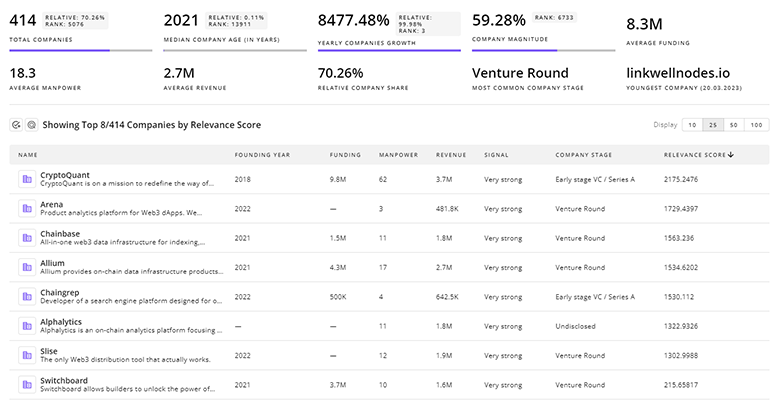
2.5K Smart Charging Companies
Discover Smart Charging Companies, their Funding, Manpower, Revenues, Stages, and much more
Smart Charging Investors
TrendFeedr’s Investors tool provides an extensive overview of 1.3K Smart Charging investors and their activities. By analyzing funding rounds and market trends, this tool equips you with the knowledge to make strategic investment decisions in the Smart Charging sector.
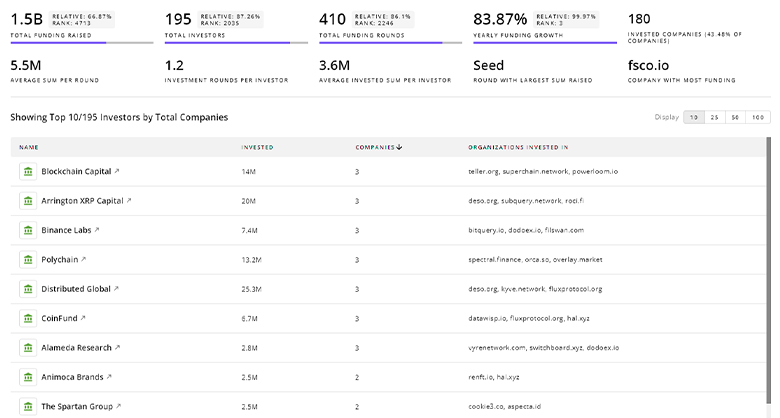
1.3K Smart Charging Investors
Discover Smart Charging Investors, Funding Rounds, Invested Amounts, and Funding Growth
Smart Charging News
Explore the evolution and current state of Smart Charging with TrendFeedr’s News feature. Access 2.5K Smart Charging articles that provide comprehensive insights into market trends and technological advancements.
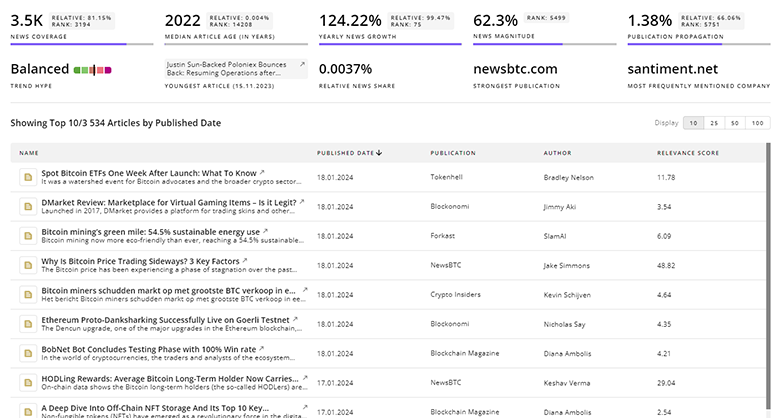
2.5K Smart Charging News Articles
Discover Latest Smart Charging Articles, News Magnitude, Publication Propagation, Yearly Growth, and Strongest Publications
Executive Summary
Smart charging today is an energy-management discipline: the commercial winners will be those that convert distributed vehicle batteries into controllable, verifiable grid resources while preserving battery health and user convenience. Investment patterns and market forecasts show that software platforms, optimization engines, and V2G enablement capture the financial upside; hardware that fails to embed these capabilities faces margin pressure. Practical, near-term opportunities exist at three intersection points: (1) residential and multi-unit CAPEX avoidance via circuit-sharing and dynamic balancing, (2) fleet reliability and uptime through AI monitoring and predictive maintenance, and (3) grid monetization through aggregated V2G and ancillary services. Strategic priorities for incumbents and new entrants should therefore be: secure direct integration with vehicle BMS and site telemetry, demonstrate verifiable battery-health outcomes, and build market access into energy markets or utility programs to turn flexibility into recurring revenue.
We're looking to collaborate with knowledgeable insiders to enhance our analysis of trends and tech. Join us!