
Vehicles To Grid Report
: Analysis on the Market, Trends, and TechnologiesThe vehicles-to-grid (V2G) market sits at a rapid-growth inflection: the internal trend data places the 2024 market at USD 3.7 billion with a stated CAGR of 23.6%, and a 2030 projection of USD 13.0 billion — a profile that explains why pilots are scaling into commercial programs and why software-led aggregators and fleet use cases dominate strategic activity. The macro picture from recent market studies confirms wide variance in near-term sizing (single-digit billions today versus multi-tens of billions by 2030+), but the consistent implication is clear: firms that combine bidirectional charging hardware, market participation software, and utility partnerships capture the largest immediate value pools
364 days ago, we last updated this report. Notice something that’s not right? Let’s fix it together.
Topic Dominance Index of Vehicles To Grid
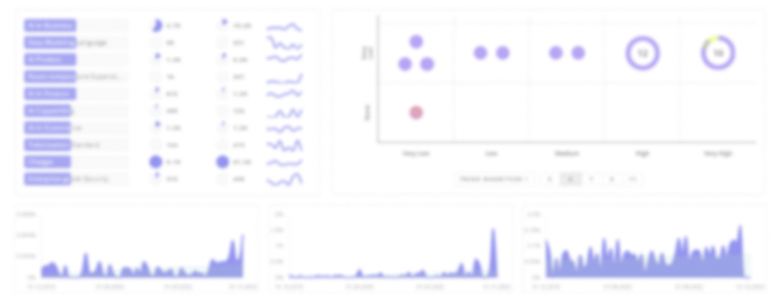
The Topic Dominance Index offers a holistic analysis of Vehicles To Grid, merging data from 3 diverse sources: relevant published articles, newly founded companies, and global search metrics.
Key Activities and Applications
- Bidirectional charging (V2G/V2H/V2B): enabling EVs to discharge to grid, building, or home for demand response, ancillary services and emergency power
- Frequency response and reserve services: aggregated EV fleets provide seconds-to-minutes response to frequency excursions and spinning reserve markets, monetized via aggregators or direct utility contracts
- Peak shaving and energy arbitrage/time shifting: charging during low-price windows and discharging into high-price periods to reduce peak procurement or demand charges (especially for depot fleets) Vehicle-to-Grid (V2G) Market Research Report.
- Fleet electrification + V2G orchestration: depot and school-bus fleets used as virtual power plants (VPPs) for predictable capacity and local resilience
- Renewable integration and microgrid buffering: EV batteries absorb excess solar/wind and supply back at demand peaks, lowering renewable curtailment and smoothing load profiles Vehicle-to-Grid Market Outlook 2024–2034.
Emergent Trends and Core Insights
- Platform aggregation dominates early value capture: software aggregators that can coordinate thousands of vehicles, bid into markets, and handle settlement are becoming the gatekeepers for grid services revenue Vehicle-to-Grid Market Landscape
- Fleets lead commercial scale: depot-based fleets (school buses, delivery vans, municipal fleets) provide predictable availability and centralized charging, accelerating V2G business cases compared to individual residential participation Vehicle-to-Grid (V2G) Market Size & Share 2025-2037.
- Standards and market rules are the gating factor: ISO 15118, OpenADR and evolving utility/TSO market rules determine which V2G revenue streams are accessible; early movers with standards compliance gain faster utility access
- Hardware segmentation: AC bidirectional chargers enable residential and light commercial use; high-power DC bidirectional units target fleets and faster market dispatch — hardware economics and installation costs shape which segments scale first
- Battery economics and lifecycle management drive owner acceptance: compensation structures must offset perceived battery-degradation risk; companies combining BMS analytics and revenue optimization raise owner participation
- Policy accelerators: targeted pilots, interconnection rules, and incentives (e.g. DOE EV Grid Assist) materially shorten commercialization timelines where they exist Vehicles-to-Grid Integration Assessment Report (DOE).
Technologies and Methodologies
- Bidirectional EVSE (AC and DC): charger hardware with grid-interface inverters and certified safety/islanding logic; DC solutions serve fleet V2G use cases where power and turnaround matter.
- Aggregation & VPP software platforms: real-time orchestration, market bidding engines, and settlement modules enable aggregated EV fleets to act as VPPs in ancillary and capacity markets Vehicle-to-Grid in EV Charging Infrastructure.
- Advanced BMS + analytics: predictive state-of-charge, degradation forecasting, and constrained dispatch to protect battery health while maximizing revenue.
- Market forecasting & ML optimization: price/renewable forecasts and driver-behavior models maximize arbitrage and ancillary revenues while safeguarding owner convenience WeaveGrid.
- Communication & standards stacks: ISO 15118, OpenADR, and secure telematics for authenticated, low-latency control and settlements Vehicle-to-Grid Technology Market Overview 2025.
- Edge/grid-forming control and microgrid integration: chargers and controllers that can operate islanded or support grid restoration use cases are emerging for resilience applications
Vehicles To Grid Funding
A total of 177 Vehicles To Grid companies have received funding.
Overall, Vehicles To Grid companies have raised $6.9B.
Companies within the Vehicles To Grid domain have secured capital from 684 funding rounds.
The chart shows the funding trendline of Vehicles To Grid companies over the last 5 years
Vehicles To Grid Companies
-
Youree — Youree operates a machine-learning platform that converts fleets of EVs into distributed storage assets by optimizing charging windows and dispatch for grid economics; it targets fleet and aggregated residential portfolios to provide predictable VPP revenue while minimizing battery stress through behavioral forecasting
Citation: -
Gridio — Gridio provides smart-charging software that schedules EV charging to the cheapest and cleanest energy, enabling owner savings and grid flexibility; its product suits energy retailers and CPOs seeking simple residential load-shifting and early V2G aggregation pilots
Citation: -
Electric Miles — Electric Miles builds an Internet-of-Energy charge-management platform and a consumer smart-charge app that aggregates distributed chargers for grid services; the company focuses on monetizing flexibility for utilities and sharing revenue with drivers, making it an attractive partner for regional VPP experiments
Citation: -
Cell Propulsion — Cell Propulsion develops electric commercial vehicles and the supporting digital ecosystem (BMS, telematics) for fleet operators; by linking vehicle hardware, powertrain, and fleet-level management, it offers a practical route to deploy V2G services in last-mile logistics and municipal fleets without replacing existing operational models
Citation: -
DG Matrix — DG Matrix advances power-electronics hardware (solid-state transformer / Power Router) that simplifies multi-source integration for chargers and microgrids; its hardware can reduce footprint and improve controllability of bidirectional chargers, making high-power fleet V2G deployments more economically feasible
Citation:
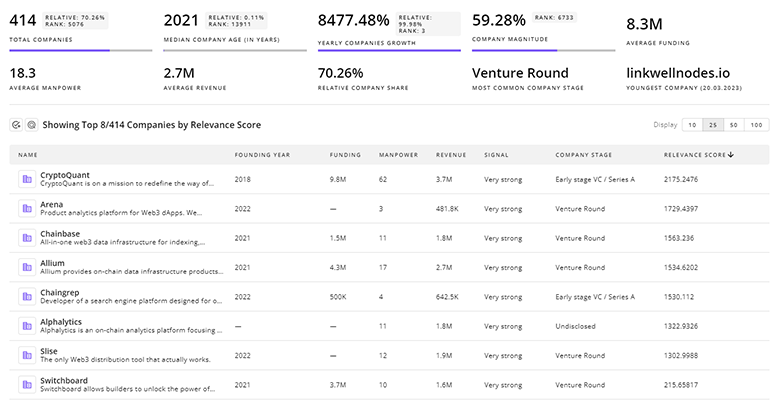
Stay connected with industry movements through TrendFeedr’s Companies tool, which covers 829 Vehicles To Grid companies.
829 Vehicles To Grid Companies
Discover Vehicles To Grid Companies, their Funding, Manpower, Revenues, Stages, and much more
Vehicles To Grid Investors
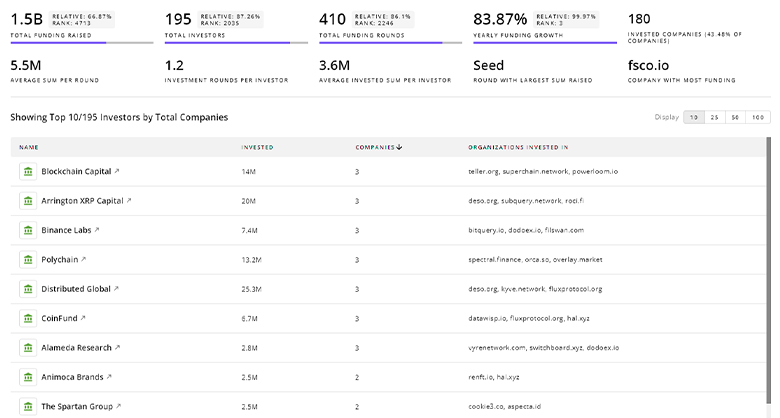
Discover investment patterns and trends with TrendFeedr’s Investors tool based on insights into 745 Vehicles To Grid investors. This tool is essential for understanding the financial ecosystem of Vehicles To Grid and developing successful investment strategies.
745 Vehicles To Grid Investors
Discover Vehicles To Grid Investors, Funding Rounds, Invested Amounts, and Funding Growth
Vehicles To Grid News
TrendFeedr’s News feature grants you access to 2.6K Vehicles To Grid articles. This tool supports professionals in tracking both past trends and current momentum in the industry.

2.6K Vehicles To Grid News Articles
Discover Latest Vehicles To Grid Articles, News Magnitude, Publication Propagation, Yearly Growth, and Strongest Publications
Executive Summary
V2G is moving from isolated trials to economically viable, location-specific deployments where fleet predictability, utility partnerships, and standards compliance align. The strongest near-term returns appear where three elements converge: (1) fleets or concentrated vehicle pools that offer predictable availability, (2) software platforms that aggregate, bid, and settle market services, and (3) hardware that supports bidirectional flow with certified safety and metering. Regulators and market operators will determine the pace of residential adoption by setting participation rules and compensation structures; until then, commercial fleets and depot solutions will lead revenue generation and deliver the bulk of grid-service value. For investors and corporate strategists, the actionable axis is platform integration: secure aggregator relationships with utilities, tightly coupled battery-health analytics to protect asset warranties, and selective hardware partnerships for fleet-grade, high-power chargers will create defensible positions as V2G shifts from pilots into procurement contracts and market participation.
We're looking to collaborate with knowledgeable insiders to enhance our analysis of trends and tech. Join us!