Smart Home Control Report
: Analysis on the Market, Trends, and TechnologiesThe smart home control market is entering a phase where integration and measurable operational value determine winners: total addressable market estimates for focused smart home control sit at $73.7B in 2024, growing at an estimated 13.7% CAGR on available projections. Platform winners will be those that convert device connectivity into recurring software and energy-management revenue while addressing privacy and local-first control expectations reported across industry analyses Smart Homes and Home Automation – 12th Edition. Immediate commercial plays concentrate on (1) protocol translation and low-latency middleware for mixed ecosystems, (2) retrofit, low-friction hardware that avoids rewiring, and (3) energy arbitration that ties buildings into utility demand signals—each supported by patent and market activity signaling accelerating adoption of edge AI and interoperable standards smart home hub.
270 days ago, we last updated this report. Notice something that’s not right? Let’s fix it together.
Topic Dominance Index of Smart Home Control
To gauge the influence of Smart Home Control within the technological landscape, the Dominance Index analyzes trends from published articles, newly established companies, and global search activity
Key Activities and Applications
- Security monitoring and surveillance integration — Unified control panels that combine cameras, locks, alarms and automated routines remain primary purchase drivers for homeowners and property managers; demand is rising for solutions that reduce false alarms and enable remote professional monitoring.
- HVAC and climate automation with occupancy learning — Systems that learn presence and leverage weather forecasts to reduce HVAC consumption by ~25–30% in pilots are now core use cases for control platforms that emphasize energy ROI News Landscape Report.
- Energy management and solar/EV integration — Controllers that arbitrate local generation, storage, and demand-response signals (including EV charging) are shifting purchases from convenience to cost savings for MDUs and developers Global Home Automation Market.
- Retrofit-friendly device conversion — Wireless switch modules and battery-free controls that avoid rewiring substantially lower installation friction and accelerate adoption in existing housing stock.
- Centralized and multi-location hub management — Demand for hubs that support multi-protocol stacks (Zigbee, Z-Wave, Thread, Matter, Wi-Fi) and multi-site management (for landlords and operators) is rising, with Wi-Fi remaining dominant in hub connectivity share.
- Accessibility and assisted-living systems — Customized automation for users with mobility or sensory limitations is a meaningful vertical with measurable outcomes in independence and care cost reduction.
Emergent Trends and Core Insights
- Local-first control and privacy premium — Consumer and regulatory pressure is shifting preferences to edge processing and local data storage; vendors that offer verifiable local operation as a product differentiator capture trust-sensitive segments.
- Protocol abstraction as the strategic moat — Companies that act as a low-latency translator between legacy systems (KNX, Z-Wave, Zigbee) and modern standards (Matter/Thread) position themselves as indispensable middleware for integrators and DIY ecosystems Homey (LG acquisition).
- Energy ROI drives B2B demand — Property owners and MDUs require quantified OpEx savings; products that demonstrate measurable consumption reduction (examples of up to 50% thermal energy savings in targeted deployments) shift procurement from CapEx to OpEx justification models Appartme.
- AI for contextual automation, not just voice — The next wave moves beyond voice commands to contextual scene orchestration that uses multimodal sensing and behavior models executed at the edge to preserve latency and privacy.
- Retrofit economics beat feature innovation for mass market — Affordable, non-invasive installation solutions lower the entry barrier and expand total addressable market in regions with large existing housing stock iotty Smart Home.
Technologies and Methodologies
- Edge AI and hybrid cloud/edge architectures — Architectures that perform inference locally and use cloud only for non-identifying analytics reduce latency and increase resilience; local execution is now a product requirement in privacy-sensitive markets.
- Matter/Thread and multi-protocol gateways — Adoption of Matter and Thread is accelerating cross-vendor interoperability; successful hubs provide backward compatibility with Zigbee/Z-Wave while offering certified Matter drivers.
- Federated and privacy-preserving learning — Federated approaches let systems improve predictive models without centralizing raw user data, answering both performance and compliance needs.
- Low-friction retrofit hardware (PLC, micro-modules, battery-less switches) — Power-line communication modules and micro in-wall modules that sit behind existing switches enable rapid retrofit installs and reduce per-unit install time and cost eSMART Technologies.
- AI-assisted energy arbitration — Algorithms that coordinate HVAC, EV charging, storage and PV output to respond to real-time price signals and utility demand response produce directly monetizable outcomes for commercial operators.
- Non-phone interfaces and tangible controls — Wall panels, physical buttons, and minimal-interaction controllers broaden accessibility for non-smartphone users and improve household adoption across all demographics Senic.
Smart Home Control Funding
A total of 177 Smart Home Control companies have received funding.
Overall, Smart Home Control companies have raised $6.3B.
Companies within the Smart Home Control domain have secured capital from 546 funding rounds.
The chart shows the funding trendline of Smart Home Control companies over the last 5 years
Smart Home Control Companies
- Picostone — Picostone focuses on theater-style dimming, scene scheduling and both centralized and decentralized automation for retrofit residential projects. The company emphasizes rapid, practical automations that fit existing wiring and claims deployments in 3,600+ homes, leveraging local service channels in India to scale unit economics.
- SwitchBee — SwitchBee sells patented wireless modules that convert conventional wall switches into smart controls without neutral wiring, targeting the large retrofit segment where rewiring cost blocks adoption. Their value lies in very low install time and an app-first dashboard that aggregates lighting, shutters and HVAC controls for turnkey DIY upgrades.
- SMAHO — SMAHO offers a vendor-agnostic, GDPR-aware cloud platform that provides manufacturers with an out-of-the-box remote control and voice integration stack. By packaging a privacy-first deployment option and ready integrations to Alexa/Google/Siri, SMAHO reduces time-to-market for device makers while addressing European compliance constraints.
- InstaHub — InstaHub markets a 5-in-1 plug-in sensor (occupancy, temperature, humidity, light, pressure) designed for ultra-fast room deployment and energy waste discovery. Its main proposition is very low installation overhead and analytics for building managers to identify >30% energy waste opportunities in under-commissioned buildings.
- Homeable — Homeable targets accessibility and assisted living by co-designing automation packages for users with mobility and sensory needs. The firm partners with care organizations to translate automation into measurable independence gains and care budget reductions, positioning automation as a funded health and social care intervention rather than a discretionary consumer purchase.
Get detailed analytics and profiles on 2.8K companies driving change in Smart Home Control, enabling you to make informed strategic decisions.
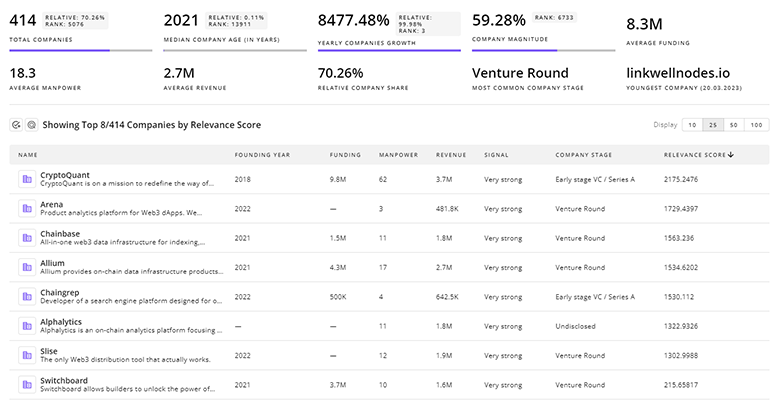
2.8K Smart Home Control Companies
Discover Smart Home Control Companies, their Funding, Manpower, Revenues, Stages, and much more
Smart Home Control Investors
TrendFeedr’s Investors tool provides an extensive overview of 512 Smart Home Control investors and their activities. By analyzing funding rounds and market trends, this tool equips you with the knowledge to make strategic investment decisions in the Smart Home Control sector.
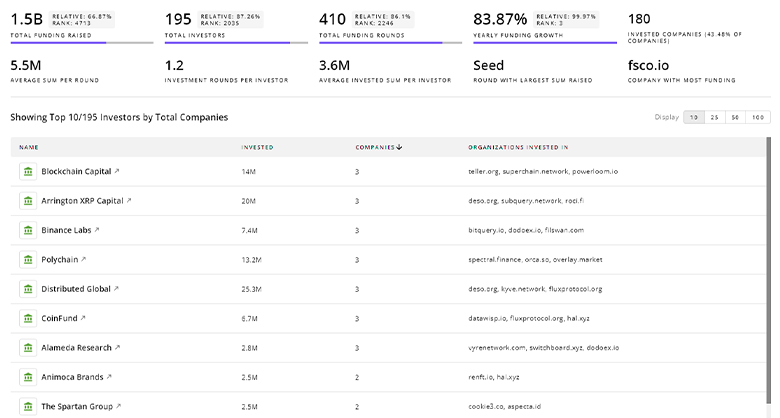
512 Smart Home Control Investors
Discover Smart Home Control Investors, Funding Rounds, Invested Amounts, and Funding Growth
Smart Home Control News
Explore the evolution and current state of Smart Home Control with TrendFeedr’s News feature. Access 4.6K Smart Home Control articles that provide comprehensive insights into market trends and technological advancements.
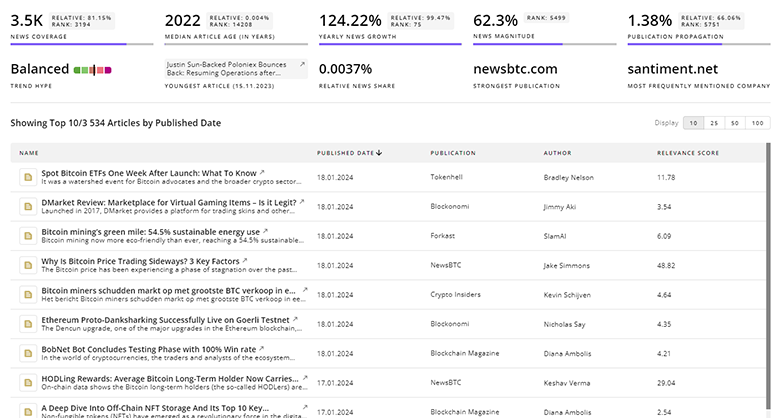
4.6K Smart Home Control News Articles
Discover Latest Smart Home Control Articles, News Magnitude, Publication Propagation, Yearly Growth, and Strongest Publications
Executive Summary
Smart home control has matured into an industry defined by integration, measurable operational outcomes, and consumer trust. The commercial axis is shifting from isolated smart devices to middleware and services that convert device telemetry into energy savings and operational contracts. Vendors that combine low-friction retrofit hardware, protocol-agnostic middleware, and verifiable privacy controls will earn placement in high-value stacks. For property managers and utilities, the most immediate opportunity is energy arbitration and demand-response services that convert one-time installations into repeatable revenue streams. For consumer segments, success depends on delivering simple, resilient control that works locally when networks fail and that provides clear ROI for buyers who control budgets.
We're looking to collaborate with knowledgeable insiders to enhance our analysis of trends and tech. Join us!