Smart Logistics Report
: Analysis on the Market, Trends, and TechnologiesThe smart logistics landscape shows a layered growth trajectory anchored in pervasive digitization: global market baselines recorded in specialist trend data include a 2020 market size of $2,438,000,000, while market forecasts from independent research place the near-term sector at ~$32.35 billion (2024) with multiyear expansion toward >$250 billion in the next decade FactMR – Smart Logistics Market. Investment and deployments concentrate on three value pools — real-time visibility, AI orchestration, and intralogistics automation — and companies that can convert high-fidelity sensor data into autonomous operational decisions will extract disproportionate margin as the industry reconfigures around platform integration and vertical specialization.
25 days ago, we last updated this report. Notice something that’s not right? Let’s fix it together.
Topic Dominance Index of Smart Logistics
To gauge the influence of Smart Logistics within the technological landscape, the Dominance Index analyzes trends from published articles, newly established companies, and global search activity

Key Activities and Applications
- Real-time asset and condition monitoring: IoT sensors, RFID and NB-IoT implementations turn packaging, pallets and containers into continuous data sources for location, temperature and tamper events, reducing loss and improving SLA compliance.
- Predictive and prescriptive route planning: AI/ML models ingest traffic, weather and historical performance to optimize routing and dynamic load consolidation, lowering miles and dwell time while raising on-time delivery rates.
- Autonomous intralogistics and goods-to-person systems: AMRs, AGVs and goods-to-person robotics accelerate picking throughput and density in constrained footprints, delivering measurable throughput uplifts in modern warehouses.
- Yard, gate and dock orchestration: Digitized yard management and EV yard fleets resolve the major friction at the line-haul / warehouse boundary, cutting detention, recurring idle time and billing errors.
- Cold-chain integrity and high-value handling: Contactless multi-sense monitoring and secure telemetry ensure regulatory compliance and product integrity for pharma and life sciences shipments.
- Reverse logistics and returns automation: Dedicated platforms for returns processing reduce recovery time and recoverable revenue, especially for electronics and apparel verticals.
- Control-tower orchestration (cloud-native): Cloud control towers aggregate multimodal feeds and push automated exceptions and reconciliation workflows to execution layers for faster resolution and improved contingency management Simacan.
Emergent Trends and Core Insights
- AI first planning moving to autonomous execution: Predictive engines are transitioning from advisory outputs to prescriptive actions that trigger execution (reschedules, reassignments, dynamic reroutes), creating measurable reductions in manual intervention and faster exception throughput.
- Edge processing at the sensor and dock: Latency-sensitive operations (safety interlocks, cold-chain alerts, robotic navigation) shift processing to edge gateways to avoid round-trip cloud delays and reduce bandwidth costs, enabling real-time closed-loop control.
- Visibility data as a utility: Standardized, multi-sensor feeds (location + condition + event) are becoming the platform currency; firms that operate vendor-neutral, high-quality telemetry pipelines capture recurring integration revenue by servicing many orchestration stacks BOX ID.
- Yard and transition-point as a competitive moat: Digitizing yard/dock operations yields outsized ROI because it resolves a persistent, high-cost bottleneck across shippers and 3PLs; specialized players capture steady, contractable service fees and sustainability credits via electrified yard fleets Lazer Logistics.
- Sustainability becomes an operational lever: Emissions metrics tie directly to route and capacity optimization; operators convert reduced fuel and EV-mile savings into cost and compliance benefits for customers, turning ESG into a measurable line-item advantage.
- Micro-fulfillment and retrofit automation growth: Demand for small-footprint, modular automation in urban and store-adjacent sites increases, and retrofit solutions that avoid major facility downtime (rack-retrofits, aisle-by-aisle automation) accelerate adoption among operators with legacy infrastructure.
Key takeaway: successful operators combine high-quality telemetry, ML decision-engines and low-friction execution interfaces at transition points (yard, dock, last mile) to convert visibility into recurring operational savings.
Technologies and Methodologies
- IoT sensor networks (GPS, RFID, NB-IoT) and multi-sense telemetry for continuous location and condition data capture, enabling shipment-level SLAs and tamper detection Transforming Logistics: The Impact of IoT.
- Machine learning and optimization engines for demand forecasting, network rebalancing, and dynamic pricing of freight capacity Solvoyo.
- Digital twins and simulation frameworks to stress-test network changes, assess contingency routing and validate layout/automation investments prior to capital deployment Logivations.
- Cloud-native control towers and microservices TMS/WMS architectures that reduce implementation friction and enable modular upgrades, supporting rapid partner on-boarding and cross-enterprise collaboration Digital Logistics market report.
- Edge computing and federated analytics at warehouses and vehicles to execute time-critical logic locally while preserving centralized learning models.
- Autonomous and semi-autonomous robotics (AMRs/AGVs, goods-to-person) integrated with WMS execution layers to increase throughput and reduce labor dependency in high-velocity fulfillment nodes Global Logistics Automation analysis.
- Blockchain for provenance and documentation security on cross-border flows where immutable records reduce disputes and improve auditability SmartCargo.
Smart Logistics Funding
A total of 401 Smart Logistics companies have received funding.
Overall, Smart Logistics companies have raised $42.6B.
Companies within the Smart Logistics domain have secured capital from 1.6K funding rounds.
The chart shows the funding trendline of Smart Logistics companies over the last 5 years
Smart Logistics Companies
- SMART Logistics — SMART Logistics embeds IoT monitoring into reusable transport items (pallets, racks and bins) to provide continuous location and environmental condition data that improves fleet utilization and loss prevention. The company focuses on converting passive assets into measured data sources and integrating that data with enterprise planning systems to reduce inventory buffer costs. This approach delivers immediate operational KPI improvements for manufacturers and 3PLs that manage large RTP fleets.
- H+Trace — H+Trace provides contactless multi-sense monitoring for shipments, detecting tampering, impact and temperature deviations without package intrusion. Their solution targets high-sensitivity verticals (pharma, electronics) where chain-of-custody and integrity generate premium margins; the sensor approach reduces manual inspections and accelerates automated claims resolution. H+Trace’s compact deployments make it attractive for regional carriers and specialty forwarders.
- Cartesian Kinetics Inc — Cartesian Kinetics offers retrofit Omni-Rack Robotics that convert existing racks into ASRS lanes, enabling automation without full facility rebuilds. Their aisle-by-aisle installation model reduces capex disruption and shortens payback timelines for legacy warehouses that cannot afford long shutdown windows. The product targets operators seeking incremental automation gains while protecting existing facility investments.
- SCALLOG — SCALLOG deploys compact goods-to-person robotic systems for order preparation, focusing on e-commerce and retail distribution centers that need flexible, scalable picking capabilities. Its modular robot fleet and shelf-lifting approach reduce picker travel and support rapid seasonal scaling. The company’s light-footprint installations suit urban and distributed fulfillment nodes where space and time to deploy are critical constraints.
- Bizlog Value Chain — Bizlog Value Chain specializes in full-service reverse logistics, handling returns, refurbish, and remarketing for electronics and apparel. Their networked approach and process automations recover revenue from returns and minimize stock reintroduction lead times; this capability is highly relevant to retailers looking to recapture margin and reduce waste. Bizlog’s service model demonstrates how smart logistics extends beyond outbound flows into value recovery channels.
Get detailed analytics and profiles on 2.9K companies driving change in Smart Logistics, enabling you to make informed strategic decisions.
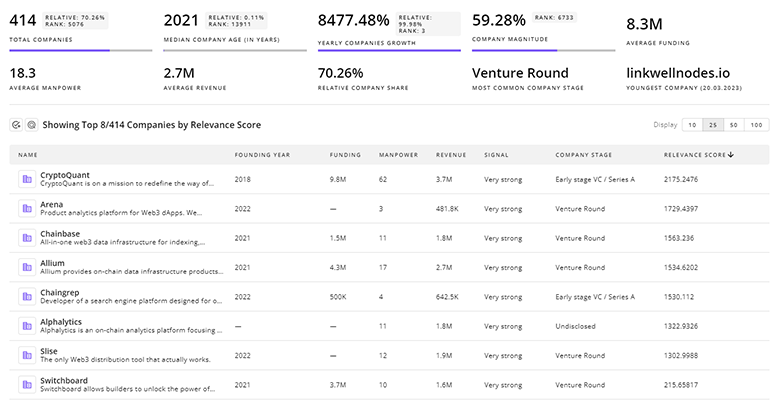
2.9K Smart Logistics Companies
Discover Smart Logistics Companies, their Funding, Manpower, Revenues, Stages, and much more
Smart Logistics Investors
TrendFeedr’s Investors tool provides an extensive overview of 2.1K Smart Logistics investors and their activities. By analyzing funding rounds and market trends, this tool equips you with the knowledge to make strategic investment decisions in the Smart Logistics sector.
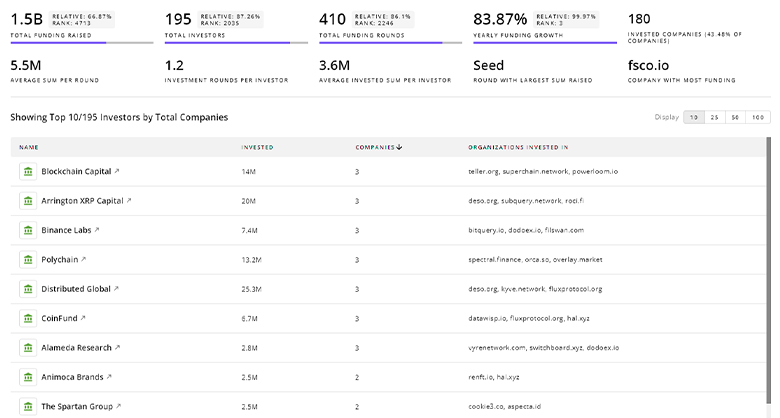
2.1K Smart Logistics Investors
Discover Smart Logistics Investors, Funding Rounds, Invested Amounts, and Funding Growth
Smart Logistics News
Explore the evolution and current state of Smart Logistics with TrendFeedr’s News feature. Access 1.7K Smart Logistics articles that provide comprehensive insights into market trends and technological advancements.

1.7K Smart Logistics News Articles
Discover Latest Smart Logistics Articles, News Magnitude, Publication Propagation, Yearly Growth, and Strongest Publications
Executive Summary
Smart logistics now separates companies that collect data from those that operationalize it. The high-value zone sits where accurate, multi-modal telemetry feeds meet AI systems that act automatically on exceptions and continuously optimize execution at key choke points: yard, dock, intralogistics and last mile. Investment and market forecasts point to continued double-digit growth; practical winners will either build the integrative platforms that control planning and execution or become indispensable, vendor-neutral providers of the high-quality data and execution modules those platforms require. Firms that treat visibility as a utility and close the loop from sensing to autonomous action will convert technology investments into predictable, recurring value for shippers and carriers alike.
We're looking to collaborate with knowledgeable insiders to enhance our analysis of trends and tech. Join us!