
Smart Transportation Report
: Analysis on the Market, Trends, and TechnologiesThe smart transportation market stands at a decisive inflection, with an addressable market of $35,650,000,000 in 2025 and a projected pathway to $264,000,000,000 by 2030, driven by accelerating technology adoption and municipal procurement for smarter traffic control and fleet systems. Investments concentrate on real-time traffic management, fleet telematics, and Mobility-as-a-Service integrations, and these investments align with the internal projection of a 12.8% CAGR for the trend. External market estimates vary, which signals both upside opportunity and measurement risk for vendors that cannot demonstrate verifiable, short-term ROI Smart Transportation Market – BCC Research.
38 days ago, we last updated this report. Notice something that’s not right? Let’s fix it together.
Topic Dominance Index of Smart Transportation
To gauge the influence of Smart Transportation within the technological landscape, the Dominance Index analyzes trends from published articles, newly established companies, and global search activity
Key Activities and Applications
- Real-time traffic monitoring and adaptive signal control, enabling measurable congestion reduction through dynamic signal timing and incident response, increasingly delivered as cloud-hosted SaaS for faster deployment.
- Fleet telematics and predictive maintenance, combining IoT sensors, telematics and AI to lower fuel use and downtime while extending asset life for logistics and municipal fleets.
- Smart ticketing and account-based fare collection, moving public transit away from legacy hardware toward integrated payment and passenger information platforms that improve boarding speed and revenue protection.
- Mobility-as-a-Service (MaaS) platforms and multimodal trip orchestration, offering plan-book-pay experiences that stitch transit, micromobility and on-demand services into single UX flows, important for cities targeting ridership and equity outcomes Smart Transportation Market.
- Curb and micromobility management, integrating docking, parking and dynamic curb allocation to monetize scarce urban curb space and manage delivery and micro-mobility flows.
- Autonomous transit corridors and depot/yard automation, where Level-4 capable retrofit solutions and autonomous yard vehicles reduce operating cost for high-frequency routes and logistics hubs ADASTEC Corp..
Emergent Trends and Core Insights
- Market forecasts diverge; the internal trend report supports a 12.8% CAGR while third-party forecasts span 11.9% to 21.7%, indicating model sensitivity to scope and modality assumptions
- Traffic management and adaptive signal control remain the dominant revenue generator, and pilots repeatedly return travel-time savings and emissions reductions when AI and V2X elements are combined Smart Transportation Market – Mordor Intelligence.
- Edge-cloud hybrid architectures are moving from optional to required as agencies demand low latency safety functions plus centralized oversight for planning and compliance Global Smart Transportation Market Overview 2025.
- Data verticalization is emerging as the primary source of durable value; firms that convert raw telemetry into validated safety or ESG outcomes capture disproportionate procurement budgets.
- Public procurement and grant programs remain decisive demand levers; municipalities will prioritize vendors that can show quantifiable safety, carbon and operational outcomes within defined pilot budgets Smart Transportation Market – ResearchAndMarkets.
Technologies and Methodologies
- IoT sensor networks and V2X communications, including DSRC/C-V2X stacks and roadside units, to create the real-time fabric that enables cooperative safety and signal priority.
- AI/ML for demand forecasting and dynamic optimization, powering dispatch, DRT and microtransit systems that maximize utilization and reduce empty miles.
- Digital twins and agent-based simulation for scenario testing of network changes, infrastructure investments and autonomous deployments that reduce real-world validation cost
- Edge computing and MEC architectures to guarantee deterministic response times for safety-critical workflows, shifting some decisioning off the cloud without losing centralized telemetry Smart Transportation Market Summary – Grand View Research.
- Cloud-native SaaS orchestration platforms for scheduling, ticketing, and fleet operations that accelerate rollouts and allow iterative feature delivery Optibus.
- Secure data governance and PKI for C-ITS, combining message security and auditing to meet procurement and liability requirements for V2X and intersection control.
Smart Transportation Funding
A total of 1.5K Smart Transportation companies have received funding.
Overall, Smart Transportation companies have raised $219.2B.
Companies within the Smart Transportation domain have secured capital from 5.9K funding rounds.
The chart shows the funding trendline of Smart Transportation companies over the last 5 years
Smart Transportation Companies
- Taabi Mobility Limited — Taabi offers a modular SaaS stack for logistics operators that pairs AI fuel optimization with vehicle health and driver behaviour interventions. The company targets measurable KPI gains in fuel and uptime while providing on-ground advisory services to ensure technology adoption. Taabi’s focus on program co-design reduces implementation friction for construction and heavy fleet operators
- Tourmo — Tourmo provides an AI augmentation layer that unifies telematics, video, fuel and maintenance data to automate operational workflows. The platform emphasizes real-time, contextualized decisioning so operations teams receive prioritized actions rather than raw alerts. Tourmo’s approach reduces manual analyst load and speeds incident resolution for medium and large fleets
- Transcality — Transcality creates automated, scalable transportation digital twins to simulate city-scale mobility and support procurement decisions. The company emphasizes speed and reproducibility so planners can test charging networks, signal timing changes or DRT pilots before committing capital. This simulation focus shortens the validation cycle for expensive infrastructure projects
- Pantonium Inc — Pantonium supplies an AI dispatch engine that autonomously generates globally optimized routes and schedules for shared passenger transport. The platform enables flexible, demand-responsive transit while reducing empty miles and operational cost, making it attractive to transit agencies and medical/student transport providers
Get detailed analytics and profiles on 8.2K companies driving change in Smart Transportation, enabling you to make informed strategic decisions.
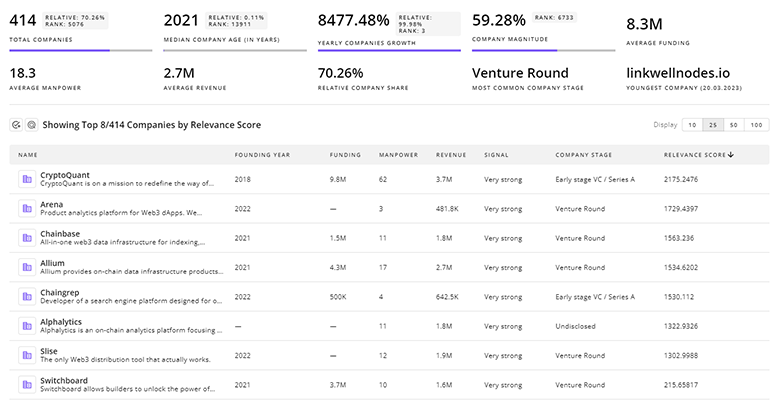
8.2K Smart Transportation Companies
Discover Smart Transportation Companies, their Funding, Manpower, Revenues, Stages, and much more
Smart Transportation Investors
TrendFeedr’s Investors tool provides an extensive overview of 7.1K Smart Transportation investors and their activities. By analyzing funding rounds and market trends, this tool equips you with the knowledge to make strategic investment decisions in the Smart Transportation sector.
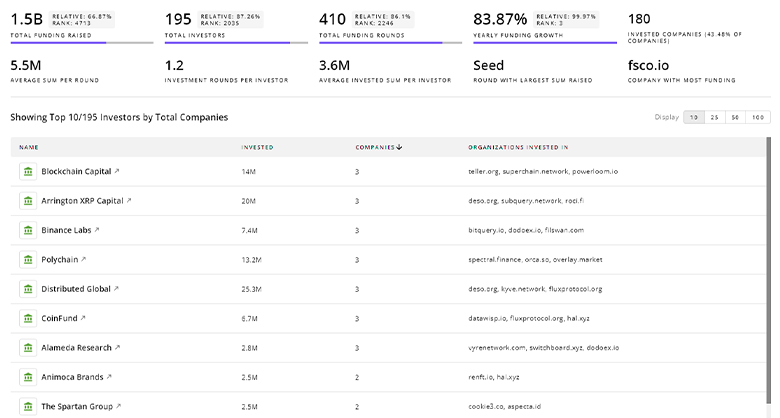
7.1K Smart Transportation Investors
Discover Smart Transportation Investors, Funding Rounds, Invested Amounts, and Funding Growth
Smart Transportation News
Explore the evolution and current state of Smart Transportation with TrendFeedr’s News feature. Access 26.9K Smart Transportation articles that provide comprehensive insights into market trends and technological advancements.
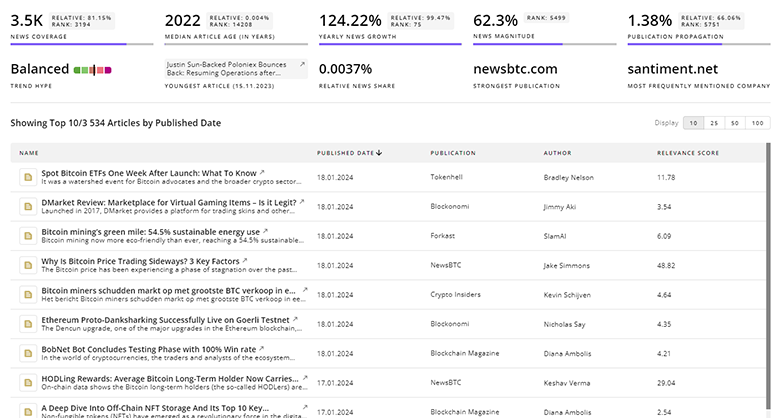
26.9K Smart Transportation News Articles
Discover Latest Smart Transportation Articles, News Magnitude, Publication Propagation, Yearly Growth, and Strongest Publications
Executive Summary
Smart transportation now equals measurable operational improvement plus verified safety and emissions outcomes. The internal market baseline positions the sector at $35.65 billion in 2025 with a 12.8% CAGR and a $264 billion pathway by 2030 when policy, procurement, and private investment align. Vendors that convert telemetry into auditable ROI, embed low-latency edge decisioning, and offer simulation-backed procurement will capture the most durable contracts. Municipal buyers should demand verifiable KPIs and modular APIs to avoid lock-in, while investors should target companies that couple immediate operational savings with a clear data-monetization plan.
We're looking to collaborate with knowledgeable insiders to enhance our analysis of trends and tech. Join us!