Solar Charging Report
: Analysis on the Market, Trends, and TechnologiesThe solar charging market is materially expanding: the trend report records a 2024 market size of $860,000,000 and a projected compound growth trajectory of 19.3% CAGR, driven by rising EV adoption, growing off-grid demand, and faster technology adoption of power-conversion controls and storage integration. These dynamics split the opportunity set between (a) consumer-grade portable systems concentrated on small, flexible panels and power banks and (b) infrastructure-grade solar EV charging (carports, canopies, modular stations) where integrated storage and intelligent controls create the highest commercial value.
51 days ago, we last updated this report. Notice something that’s not right? Let’s fix it together.
Topic Dominance Index of Solar Charging
To gauge the influence of Solar Charging within the technological landscape, the Dominance Index analyzes trends from published articles, newly established companies, and global search activity
Key Activities and Applications
- Portable device charging — lightweight foldable panels, solar power banks and phone-case integrations serving outdoor recreation, travel, and rural/off-grid users; these products represent a major consumer entry point for the market.
- Emergency and humanitarian power — compact, ruggedized solar chargers and integrated battery kits used by NGOs, disaster relief teams, and remote clinics to maintain communications and basic power during outages.
- Residential and workplace EV charging — rooftop PV plus home battery or canopy/carport installations that prioritize daytime charging and reduce grid draw for private fleets and employees.
- Commercial solar carports and mobility hubs — modular carport systems with integrated PV, BESS, and chargepoint management for retailers, office parks, and transit nodes; these convert underused parking real estate into distributed generation and EV charging revenue centers alliedmarketresearch - Solar Carport Charging Station Market, 2026.
- Micro-mobility and fleet charging — off-grid and on-grid e-bike/e-scooter hubs and depot chargers that use small PV arrays plus local storage to lower operating costs and enable carbon-free first/last-mile services.
Emergent Trends and Core Insights
- Platformization of value capture — software and energy-management platforms that coordinate PV generation, BESS, and EV charge scheduling are becoming the primary margin pool; hardware increasingly behaves as a commoditized input while platform providers capture recurring revenue.
- Evidence: companies are integrating cloud-based controllers and predictive scheduling to monetize flexibility and grid services.
- Storage as the operational pivot — pairing PV with battery storage shifts solar from intermittent complement to a reliable daytime charging source; field studies show storage increases the solar share of home EV charging substantially, making station economics viable in many deployments FoxiAI Intelligence Briefing.
- Form-factor expansion via flexible and thin-film modules — amorphous and thin-film panels enable integration into backpacks, apparel, and curved vehicle surfaces, opening continuous low-power charging use cases for wearables and sensors.
- Direct DC and DC-to-DC architectures — system designs that avoid inefficient AC inversion (PV → AC → DC) and instead use DC-to-DC pathways to charge batteries or EV packs are appearing in prototypes and early commercial products, improving round-trip efficiency for solar EV charging.
- Policy and site economics concentrate demand — Asia-Pacific and targeted government programs (tax credits, subsidies) continue to anchor large-scale deployments, while retail and workplace hosts drive commercial adoption in North America and Europe Portable Solar Charger Market analysis.
Technologies and Methodologies
- Maximum Power Point Tracking (MPPT) — essential control technique for maximizing PV harvest; next-gen controllers integrate faster sampling, microcontroller logic, and temperature compensation to sustain higher yield in variable irradiance.
- Integrated BESS with advanced BMS — LiFePO4 and NCM chemistries coupled with smart battery management extend cycle life and allow solar stations and portable power units to guarantee service after sunset.
- DC-to-DC fast charging stacks — converters and control stacks that deliver PV energy directly to DC loads or EV batteries, avoiding AC conversion losses and enabling higher instantaneous solar utilization for charging Sun-Powered Car Charger.
- Flexible and foldable PV materials — thin-film and polymer substrates that support foldable panels, backpacks, and wearable integrations increase usability in low-weight applications.
- AI and predictive energy management — weather forecasting and usage prediction modeled into charge schedulers to preposition storage and shift charging windows for maximum solar capture and minimized grid costs.
- Modularity and rapid deployment designs — plug-and-play carports and modular canopy systems that reduce permitting and labor intensity, accelerating installation velocity for commercial hosts.
Solar Charging Funding
A total of 121 Solar Charging companies have received funding.
Overall, Solar Charging companies have raised $3.6B.
Companies within the Solar Charging domain have secured capital from 384 funding rounds.
The chart shows the funding trendline of Solar Charging companies over the last 5 years
Solar Charging Companies
- Sunnoo — Sunnoo markets a mobile solar EV charging unit and a patented tracking turret that increases daily energy capture by 10–12% vs static mounts; the design targets fast-deploy fleets and sites where permitting delays block traditional installations and emphasizes energy yield per square meter as the commercial lever.
- Solarcycle.uk — Solarcycle focuses on modular off-grid chargers for micro-mobility (e-bikes and e-scooters) and has deployed demonstration hubs across the UK and Spain; their value proposition couples low civil works with simple maintenance to serve municipal and tourism sites seeking carbon-free last-mile infrastructure.
- Icarus RT, Inc. — Icarus RT provides retrofit solutions that harvest waste heat from PV arrays and convert it to additional electrical output using a heat-engine turbo expander, claiming 12–18% incremental energy increases on existing arrays; the company positions itself as a high-ROI retrofit specialist for asset owners seeking margin expansion without new land or modules.
- Solar Panda — Solar Panda operates a PAYG rent-to-own model in East Africa, combining compact solar kits with financing and after-sales service; the model has scaled quickly in low-income markets by converting everyday fuel spend into asset ownership and steady recurring revenues for the operator.
- Soltiq — Soltiq develops autonomous mobile solar charging stations and modular systems designed for rapid deployment, targeting highway corridors and temporary event sites; their offering reduces installation friction and is tailored to hosts that cannot absorb high civil or permitting overhead.
Get detailed analytics and profiles on 2.8K companies driving change in Solar Charging, enabling you to make informed strategic decisions.
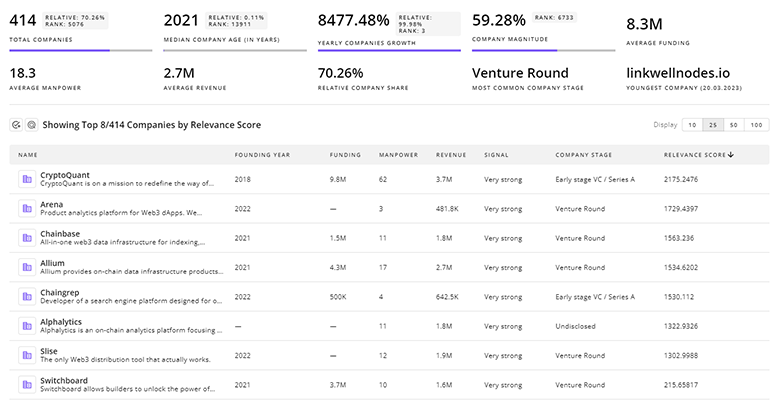
2.8K Solar Charging Companies
Discover Solar Charging Companies, their Funding, Manpower, Revenues, Stages, and much more
Solar Charging Investors
TrendFeedr’s Investors tool provides an extensive overview of 281 Solar Charging investors and their activities. By analyzing funding rounds and market trends, this tool equips you with the knowledge to make strategic investment decisions in the Solar Charging sector.
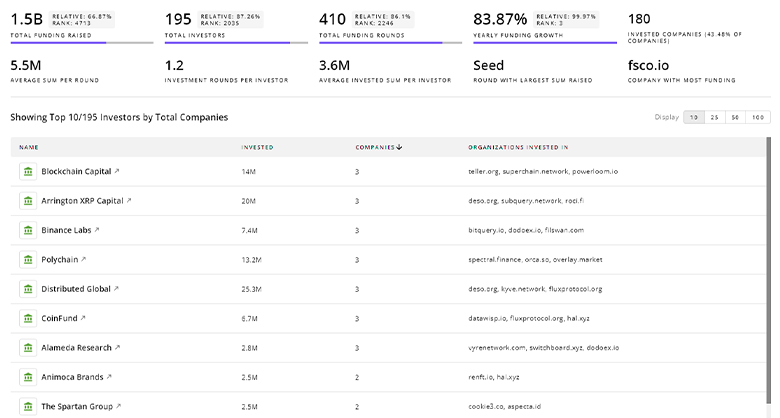
281 Solar Charging Investors
Discover Solar Charging Investors, Funding Rounds, Invested Amounts, and Funding Growth
Solar Charging News
Explore the evolution and current state of Solar Charging with TrendFeedr’s News feature. Access 2.4K Solar Charging articles that provide comprehensive insights into market trends and technological advancements.
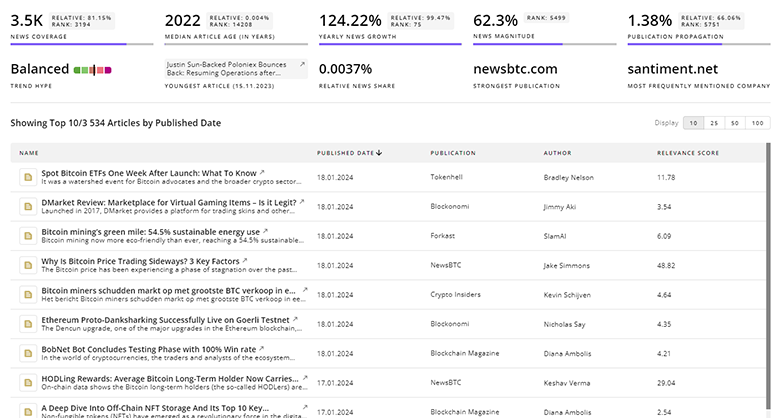
2.4K Solar Charging News Articles
Discover Latest Solar Charging Articles, News Magnitude, Publication Propagation, Yearly Growth, and Strongest Publications
Executive Summary
The commercial frontier for solar charging sits where hardware, storage, and software intersect: incremental panel efficiency matters, but the largest near-term value lies in integrated systems that coordinate PV harvesting, battery buffering, and intelligent scheduling to serve mobile loads and EV fleets. The market data—including a 2024 base size of $860 million and elevated multi-year CAGR estimates—shows room for both consumer-facing portable products and capitalized infrastructure plays. Winners will combine lower deployment friction, predictable asset economics (rental/PPA models or managed services), and proprietary control algorithms that monetize flexibility for hosts and grid operators. Service-centric business models and targeted product form factors (modular canopies, DC-to-DC charging stacks, and wearable/foldable PV) present the clearest pathways to capture commercial margins in the next five years.
We're looking to collaborate with knowledgeable insiders to enhance our analysis of trends and tech. Join us!