Supervisory Control And Data Acquisition Report
: Analysis on the Market, Trends, and TechnologiesThe SCADA market is accelerating into a software-and-services-led growth phase, anchored by a projected market value of USD 26,600,000,000 by 2032 and a 11.2% CAGR reported in the internal trend data, which signals sustained investment in cloud, analytics, and edge deployments across utilities and industrial sectors. External market forecasts corroborate double-digit expansion in many scenarios, with variations by methodology and horizon that point to the same strategic inflection: vendors must migrate to recurring-revenue software models, secure edge architectures, and AI-enabled operational services to capture the highest-margin growth precedenceresearch – SCADA Market Report, 2025.
290 days ago, we last updated this report. Notice something that’s not right? Let’s fix it together.
Topic Dominance Index of Supervisory Control And Data Acquisition
To gauge the influence of Supervisory Control And Data Acquisition within the technological landscape, the Dominance Index analyzes trends from published articles, newly established companies, and global search activity
Key Activities and Applications
- Real-time monitoring and remote control of distributed infrastructure (power grids, water networks, oil & gas field assets) — SCADA remains the primary operational fabric for geographically dispersed asset fleets and grid operations mordorintelligence - Supervisory Control And Data Acquisition (SCADA) Market Report.
- Predictive maintenance and condition monitoring — high-frequency telemetry from PLCs/RTUs feeds ML models that move alerts from threshold alarms to probabilistic failure forecasts, reducing unplanned downtime in continuous process industries.
- Secure IT/OT integration and compliance data capture — automated collection and normalization of operational metrics for regulatory reporting and ESG scorecards is now a routine SCADA use case
- Edge processing for low-latency control loops — moving analytics and some control logic to gateways and smart RTUs to preserve real-time behavior while reducing central server load
- Cybersecurity hardening and intrusion detection for OT — embedding security at gateway and historian layers is now business-critical given rising attacks on industrial networks zionmarketresearch - Supervisory Control and Data Acquisition (SCADA) Market Insights, 2024.
Emergent Trends and Core Insights
- Software and services are the primary growth engines. Multiple sources show faster revenue expansion in software/SaaS and services relative to hardware, shifting vendor economics toward recurring revenue and higher lifetime value per customer
- Edge-native control displaces pure centralization. Field devices with embedded compute and local analytics reduce latency and improve resilience, but they increase the complexity of distributed governance and patching
- Wireless and private cellular connectivity accelerate remote telemetry cost-effectively. Wireless SCADA and 5G/LPWAN options enable previously uneconomic monitoring points and speed rollouts for dispersed assets MarketsandMarkets - Wireless SCADA.
- Data governance and sovereignty fragment deployments. Multi-jurisdictional regulations push sensitive customers toward on-premises or sovereign cloud alternatives, reducing one-size-fits-all platform plays and increasing value for localized, certified vendors
- AI shifts SCADA from observability to decision support. Predictive models, root-cause grouping, and alarm prioritization reduce operator overload and convert SCADA data into prescriptive actions that can be automated or presented with explainability layers
Technologies and Methodologies
- Industrial IoT gateways that translate legacy field protocols into secure, metadata-rich streams for analytics platforms, enabling phased modernization without PLC replacement
- Edge computing nodes (RTU/PLC + compute) that run containerized analytics and local control to reduce cloud dependency for latency-sensitive functions
- Machine learning for anomaly detection and predictive maintenance using multi-modal telemetry (vibration, temperature, power signatures) and probabilistic lifetime models
- Secure wireless stacks and private 4G/5G for telemetry (LTE-M, NB-IoT, private 5G) to support low-power, wide-area connectivity and reduce site wiring costs
- Cloud-native, microservices and containerized HMI/SCADA components for faster deployments, multi-tenant operations, and automated updates — enabling SaaS delivery for mid-market customers
Supervisory Control And Data Acquisition Funding
A total of 286 Supervisory Control And Data Acquisition companies have received funding.
Overall, Supervisory Control And Data Acquisition companies have raised $4.2B.
Companies within the Supervisory Control And Data Acquisition domain have secured capital from 670 funding rounds.
The chart shows the funding trendline of Supervisory Control And Data Acquisition companies over the last 5 years
Supervisory Control And Data Acquisition Companies
- Laquisscada — A niche integrator and controller specialist that focuses on lightweight, vendor-agnostic SCADA deployments for municipal water and wastewater operators. The company emphasizes fast commissioning and local compliance features that suit regulated utilities with constrained IT teams.
- Arishti — Offers low-footprint RTU and telemetry solutions for remote energy and micro-grid sites, combining compact hardware with a cloud management layer to accelerate deployments where cellular backhaul is the only practical option.
- RenewGrid — Focuses on SCADA and energy management for distributed renewable assets, including PV farms and storage. Their product set pairs edge controllers with a lightweight analytics service that supports O&M teams in emerging markets.
- Softcapp — Provides middleware that contextualizes legacy PLC/RTU data and prepares it for ML pipelines and digital twin models; targeted at manufacturers who need accelerated AI pilots without replacing control hardware.
- Userve Wireless — Specializes in secure, long-range wireless SCADA telemetry for remote infrastructure projects; their competitive angle is hardened gateways that implement protocol translation with integrated security policies for critical assets.
Get detailed analytics and profiles on 8.0K companies driving change in Supervisory Control And Data Acquisition, enabling you to make informed strategic decisions.
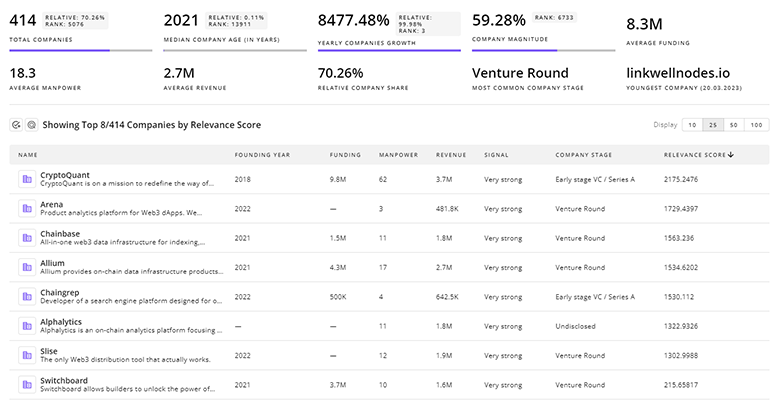
8.0K Supervisory Control And Data Acquisition Companies
Discover Supervisory Control And Data Acquisition Companies, their Funding, Manpower, Revenues, Stages, and much more
Supervisory Control And Data Acquisition Investors
TrendFeedr’s Investors tool provides an extensive overview of 705 Supervisory Control And Data Acquisition investors and their activities. By analyzing funding rounds and market trends, this tool equips you with the knowledge to make strategic investment decisions in the Supervisory Control And Data Acquisition sector.
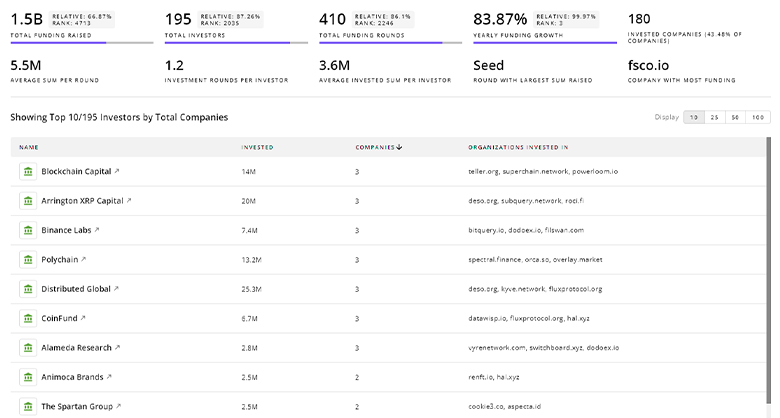
705 Supervisory Control And Data Acquisition Investors
Discover Supervisory Control And Data Acquisition Investors, Funding Rounds, Invested Amounts, and Funding Growth
Supervisory Control And Data Acquisition News
Explore the evolution and current state of Supervisory Control And Data Acquisition with TrendFeedr’s News feature. Access 5.2K Supervisory Control And Data Acquisition articles that provide comprehensive insights into market trends and technological advancements.
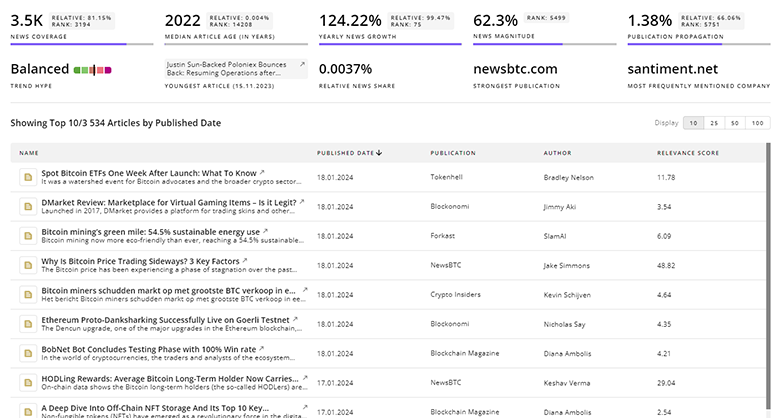
5.2K Supervisory Control And Data Acquisition News Articles
Discover Latest Supervisory Control And Data Acquisition Articles, News Magnitude, Publication Propagation, Yearly Growth, and Strongest Publications
Executive Summary
SCADA is no longer only about telemetry; it is the industrial data layer that, when coupled with edge compute, AI, and secure service delivery, becomes a measurable profit center. The clearest commercial opportunity lies in converting hardware deals into subscription services: platform licensing, managed analytics, and field-services retainers. Technical priorities for buyers and vendors converge on three items — hardened edge nodes that run local analytics, strict OT security embedded at gateways and controllers, and standardized metadata practices so AI models ingest semantically rich signals rather than raw counts. For investment strategy, target small, specialized vendors that provide the contextualization and security layers (middleware, explainable alarm management, sovereign cloud connectors) because they are the most likely acquisition targets for incumbents chasing higher margin, software-centric growth. Operational leaders should treat data governance, patching of distributed edge nodes, and multi-jurisdiction compliance as first-order requirements rather than afterthoughts; success depends on doing those well at scale.
We're looking to collaborate with knowledgeable insiders to enhance our analysis of trends and tech. Join us!