Sustainable Aquaculture Report
: Analysis on the Market, Trends, and TechnologiesThe sustainable aquaculture market is on a clear growth trajectory, projected to reach USD 12,800,000,000 by 2030 with a CAGR of 11.3%, driven by technology-led intensification and policy-backed financing that target supply security and low-impact production. Market forecasts and industry trackers corroborate rapid expansion from mid-decade valuations (e.g. USD 6.04 billion in 2024) toward near-double valuations by the early 2030s, reflecting persistent demand for certified, traceable seafood and accelerated adoption of Recirculating Aquaculture Systems (RAS), AI monitoring, and circular feed inputs MetricWaveInsights.
59 days ago, we last updated this report. Notice something that’s not right? Let’s fix it together.
Topic Dominance Index of Sustainable Aquaculture
To gauge the influence of Sustainable Aquaculture within the technological landscape, the Dominance Index analyzes trends from published articles, newly established companies, and global search activity
Key Activities and Applications
- Recirculating Aquaculture Systems (RAS) — land-based, closed-loop production that minimizes water exchange and increases biosecurity; operators prioritize modular RAS for year-round, local supply. Evidence shows rising investment in RAS projects and related infrastructure AlliedMarketResearch.
- Integrated Multi-Trophic Aquaculture (IMTA) — co-cultivating finfish with seaweed and shellfish to recycle nutrients and reduce effluent loads; IMTA projects show meaningful gains in resource circularity and reduced discharge. Academic and field studies report significant nutrient uptake when IMTA is implemented alongside RAS or flow-through systems Review of Quality of Aquaculture Services.
- Sustainable Feed Development — production and integration of insect protein, single-cell proteins, microalgae, and plant-derived omega-3s to replace fishmeal and fish oil and improve feed-related lifecycle impacts Frost & Sullivan.
- AI-Enabled Health and Water Management — real-time sensing, computer vision, and predictive analytics to lower mortality, optimize feed, and automate oxygen/flow responses; pilot cases report meaningful reductions in disease losses and feed waste Persistence Market Research.
- Offshore & Floating RAS Hybrids — enclosed or semi-enclosed floating systems that combine the control of RAS with offshore space to produce high-value species while reducing coastal impacts PRNewswire.
- Traceability & Certification Platforms — blockchain and digital verification systems to support certification (ASC/MSC/BAP) and retailer requirements for origin and environmental metrics.
Emergent Trends and Core Insights
- Land-based production is consolidating as the default strategy for premium, low-risk supply. Investments in inland and hybrid facilities have accelerated where access to clean water and affordable renewables exists, shifting capex toward controlled environments and energy resilience.
- Digital platforms are moving from monitoring tools to operational control layers. Firms that combine IoT sensors, ML models, and automation capture measurable operational improvements in feed conversion and mortality reduction, converting technical capability into margin expansion.
- Feed autonomy reduces systemic risk and materially changes lifecycle footprints. Novel sources such as single-cell protein from industrial sidestreams and land-derived omega-3s remove pressure on wild stocks and improve LCA outcomes, creating a procurement advantage for integrated producers World Bank.
- Waste valorization converts cost centers into revenue streams. Biofloc systems, insect bioconversion, and shell-waste biorefineries provide feed, fertilizer, or materials (e.g. bioplastics) that improve unit economics when implemented at scale.
- Investment gap vs. job/production potential creates actionable public-private financing opportunities. Estimates show a USD 1.5 trillion financing need to reach production scenarios that could supply 255 million metric tons and 22 million jobs by 2050, signalling markets for blended finance and impact capital.
- Regulatory tightening accelerates technology substitution. Bans or restrictions on open-net pens in some markets are driving rapid adoption of RAS, closed containment, and novel offshore designs, raising barriers for legacy pen operators.
Technologies and Methodologies
- Advanced RAS and Hybrid Floating RAS — modular filtration, biofiltration, UV sterilization, and oxygen management integrated with energy recovery systems; these systems are the backbone technology for scalable inland production.
- IoT + Machine Learning Control Loops — networks of dissolved oxygen, pH, ammonia, and temperature sensors feeding ML models that adjust feeders, pumps, and aeration to optimize feed conversion and reduce stress-related mortality.
- Bioconversion & Circular Feed Production — Black Soldier Fly larvae, microbial single-cell protein grown on agro-sidestreams, and microalgae oil production for DHA/EPA replace marine inputs and improve resilience to feed price shocks Aquaterraomega3.
- Computer Vision & Biomass Estimation — automated fish counting and weight estimation hardware delivers accurate FCR calculations and inventory control, enabling precise harvest scheduling ArgosAI.
- Resource Recovery & Biorefineries — automated shell-waste processing and protein extraction from processing sidestreams turn by-products into oils, proteins, or materials for feed and nonfood markets, improving plant economics.
- Traceability Stacks (Blockchain + Digital Twins) — immutable records for certification compliance and retailer sourcing requirements; these systems are increasingly required for premium supply contracts AquaSource International.
Sustainable Aquaculture Funding
A total of 249 Sustainable Aquaculture companies have received funding.
Overall, Sustainable Aquaculture companies have raised $15.3B.
Companies within the Sustainable Aquaculture domain have secured capital from 919 funding rounds.
The chart shows the funding trendline of Sustainable Aquaculture companies over the last 5 years
Sustainable Aquaculture Companies
- AquaFood AB
AquaFood AB converts seafood processing sidestreams into food-grade protein and omega-3 oils through pH-shift and fractionation processes, creating ingredients that improve yield per harvested fish and reduce pressure on wild stocks. The company positions its output as direct feed and human-grade inputs, supporting closed-loop value chains and higher resource efficiency. - Merall Bioproducts GmbH
Merall Bioproducts GmbH operates a low-input crayfish production system paired with an automated green biorefinery that processes shell waste into bioplastics and value products, enabling near zero-waste operations at small scale. Their model demonstrates how vertical integration of processing can convert disposal costs into product revenue in niche species markets. - KOA Biotech
KOA Biotech provides autonomous, onsite pathogen testing that shortens detection times from days to real time, which operators report can cut mortality and treatment costs significantly and support targeted antimicrobial stewardship. The technology directly addresses the biosecurity constraint that limits high-density production economics. - Ocean Twist Biotechnology
Ocean Twist Biotechnology (formerly Ittinsect) uses biotech processes to convert insects, microalgae, and agricultural by-products into a 1:1 fishmeal protein replacement, with validated trials across European farms that report parity in growth performance. Their feed inputs reduce dependence on wild fish and shorten feed supply chains. - Quinterra
Quinterra integrates aquaponics with Black Soldier Fly larvae bioconversion to transform food waste into fish feed and vegetables within a single regenerative system, targeting urban and peri-urban deployments where waste streams and demand converge. The model emphasises circularity and off-grid resilience for small producers.
Get detailed analytics and profiles on 1.1K companies driving change in Sustainable Aquaculture, enabling you to make informed strategic decisions.
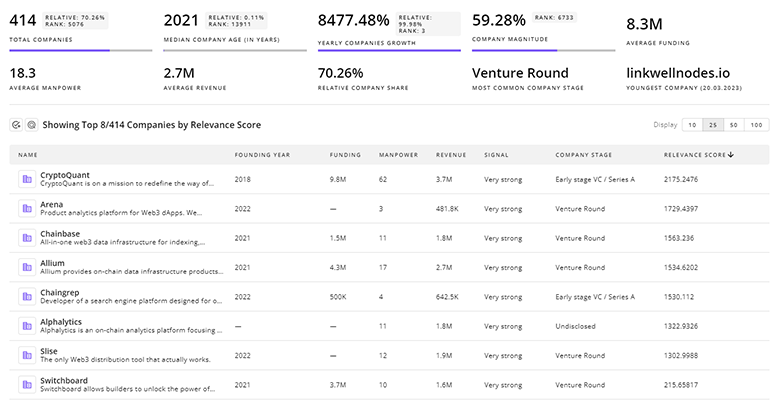
1.1K Sustainable Aquaculture Companies
Discover Sustainable Aquaculture Companies, their Funding, Manpower, Revenues, Stages, and much more
Sustainable Aquaculture Investors
TrendFeedr’s Investors tool provides an extensive overview of 765 Sustainable Aquaculture investors and their activities. By analyzing funding rounds and market trends, this tool equips you with the knowledge to make strategic investment decisions in the Sustainable Aquaculture sector.
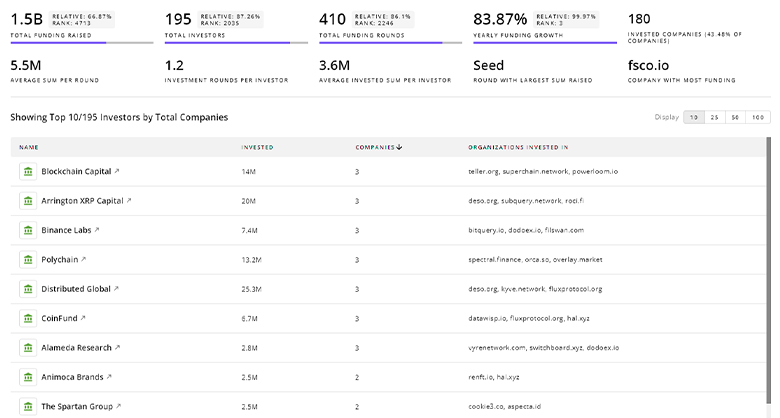
765 Sustainable Aquaculture Investors
Discover Sustainable Aquaculture Investors, Funding Rounds, Invested Amounts, and Funding Growth
Sustainable Aquaculture News
Explore the evolution and current state of Sustainable Aquaculture with TrendFeedr’s News feature. Access 706 Sustainable Aquaculture articles that provide comprehensive insights into market trends and technological advancements.
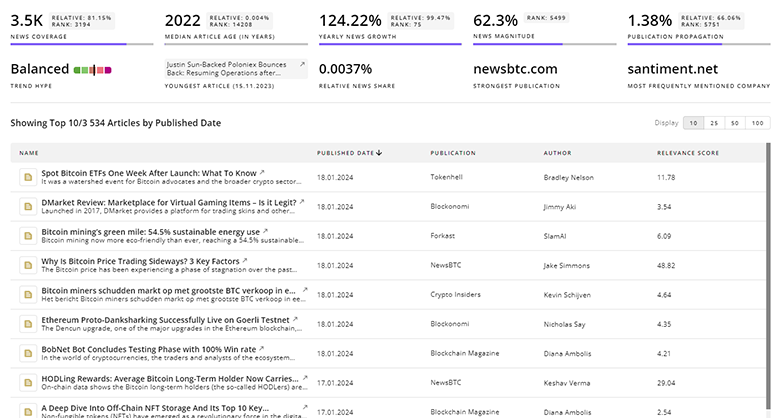
706 Sustainable Aquaculture News Articles
Discover Latest Sustainable Aquaculture Articles, News Magnitude, Publication Propagation, Yearly Growth, and Strongest Publications
Executive Summary
Sustainable aquaculture is at a practical inflection: scaling requires simultaneous mastery of engineered production, feed independence, and data-driven operational control. The most investible strategies combine land-based or hybrid production (to secure biosecurity and supply stability) with proprietary inputs (circular feeds, local omega-3s) and a software control layer that converts sensor data into autonomous actions. Public capital and blended finance will determine which geographies become competitive production hubs, since energy cost and water quality remain the decisive operating levers. For industry participants, the near-term playbook is clear: secure feed and energy supply chains, demonstrate verified sustainability through traceability, and deploy analytics that convert technical improvements into real margin recovery.
We're looking to collaborate with knowledgeable insiders to enhance our analysis of trends and tech. Join us!