Sustainable Waste Management Report
: Analysis on the Market, Trends, and TechnologiesThe sustainable waste-management sector sits at a capital-and-technology inflection where $16.47B in cumulative funding has already underwritten innovation in material conversion, digital traceability, and modular processing — yet market projections point to far larger systemic opportunity, with estimates of USD 2.44 trillion by 2035 driven by circular-economy adoption and technology scaling Waste Management Market Size to Hit USD 2.44 Trillion by 2035. This report synthesizes patent activity, corporate signals, and recent market analyses to show where capital and operational focus must shift: from commoditized collection toward high-specification feedstock production, auditable compliance data services, and decentralized energy/materials generation. The analysis below uses trend-level datapoints and company profiles to identify where value concentration will migrate and the practical actions incumbents, investors, and policy designers must prioritize to lead the coming consolidation and productization of waste streams.
63 days ago, we last updated this report. Notice something that’s not right? Let’s fix it together.
Topic Dominance Index of Sustainable Waste Management
To gauge the influence of Sustainable Waste Management within the technological landscape, the Dominance Index analyzes trends from published articles, newly established companies, and global search activity
Key Activities and Applications
- Source segregation and compliance orchestration — Implementing systems that ensure feedstock quality at origin, combined with producer-facing EPR management platforms, remains the necessary upstream control to unlock downstream value.
- High-value material conversion (chemical/thermal upcycling) — Converting mixed or hard-to-recycle fractions into manufactured inputs (e.g. fuels, chemical intermediates, construction fillers) increasingly replaces low-margin mechanical recycling Enerkem.
- Organic-waste valorization on-site — Distributed anaerobic digestion and containerized biodigesters convert institutional/foodservice waste into biogas and digestate, reducing logistics cost and methane emissions How the World Bank is tackling the growing global waste crisis.
- Automated high-accuracy sorting — Robotics and AI optical sorters raise recyclate purity and permit processing of blended streams that formerly required costly manual separation Technological Advancements Enabling Smart Waste Management.
- Traceability and ESG reporting services — Digital ledgers and IoT telemetry are now core products: buyers demand auditable provenance for recycled inputs and waste-derived credits, creating upstream pricing premiums for verifiable material flows Global Waste Management Outlook 2024 | UNEP.
Emergent Trends and Core Insights
- Feedstock-to-product capture is the margin lever — Patent and market signals show the highest value accrues to firms that can convert low-value mixed waste into certified, high-specification outputs (e.g. UBQ-type thermoplastics or fuel intermediates). This moves waste firms into manufacturing economics rather than services UBQ Materials.
- Data integrity equals commercial premium — Buyers (brands, corporates) will pay materially higher fees only when material provenance and lifecycle impacts are auditable in real time; digital traceability therefore becomes a pricing moat rather than a compliance afterthought Waste Management Market Size, Share | Growth Report.
- Geographic divergence: modular decentralization vs. centralized incumbency — Europe and parts of Asia favor tightly regulated, high-efficiency centralized plants; other regions (Latin America, Africa) are scaling modular, local processing to close massive infrastructure gaps — this creates distinct playbooks for scale and financing Global Waste Management Market overview.
- Patent concentration signals near-term winners — Recent surge in patent filings (hundreds in 2023–2025), especially in plastics recycling, battery recovery, and construction-grade upcycling, indicates the next wave of commercially defended assets will be chemical and process engineering IP.
- Operational inclusion as resilience advantage — Models that incorporate informal collectors into verified supply chains (pay, training, digital links) reduce feedstock leakage and create durable social and procurement moats for partners in high-density markets.
Technologies and Methodologies
- AI/ML optical sorting and automated robotics — Improves separation speed and purity; critical for MRF upgrades and to feed advanced recycling units.
- Advanced thermal/chemical conversion (pyrolysis, gasification, catalytic depolymerization) — Enables conversion of mixed plastics and residuals into chemicals and fuels, shifting economics from disposal to feedstock sales DataBridge Market Research.
- Modular anaerobic digestion and on-site biogas systems — Containerized digesters and modular AD plants reduce transport emissions and create local energy loops for commercial campuses The Waste Transformers.
- IoT-enabled collection, route optimization, and smart bins — Deliver operational fuel and fleet efficiencies and feed ESG dashboards used for corporate reporting smart waste management overview.
- Blockchain/ledger-based material passports — Link physical recovery to buyer claims and carbon marketsWaste2Wear.
- Construction upcycling techniques — Turning industrial residues and engineered recyclates into cement fillers and structural components sequesters large volumes of material permanently, addressing landfill capacity constraints.
Sustainable Waste Management Funding
A total of 489 Sustainable Waste Management companies have received funding.
Overall, Sustainable Waste Management companies have raised $16.5B.
Companies within the Sustainable Waste Management domain have secured capital from 1.6K funding rounds.
The chart shows the funding trendline of Sustainable Waste Management companies over the last 5 years
Sustainable Waste Management Companies
- Rekart Innovations Private Limited — Rekart operates as a Producer Responsibility Organization that couples IoT-enabled collection systems with brand-facing compliance services; it reports partnerships across 250+ brands and 178+ municipalities, positioning it as an effective orchestrator of urban EPR flows in India. Rekart's model reduces administrative friction for producers and creates scalable feedstock pipelines for local recyclers, an efficiency that investors are increasingly valuing.
- Limetrack — Limetrack offers a low-friction B2B food-waste tracking and collection platform focused on compliance and Scope-1/3 reporting for hospitality and retail customers; its value leans on simplifying audits and enabling small operators to comply with EU/UK organics mandates. The company's compact tech stack targets fast municipal rollouts where regulatory pressure is intensifying.
- The Waste Transformers — The Waste Transformers sells containerized anaerobic digesters that convert on-site food waste into biogas and fertilizer, serving businesses that produce ≥300 kg/day of organic waste; the modular design reduces logistics cost and tightens local energy/resource loops. Their model demonstrates how asset light deployment can turn institutional waste streams into energy and soil inputs.
- Hasiru Dala Innovations — Hasiru Dala integrates informal waste workers into formal circular value chains through training, direct procurement, and digital traceability, creating an inclusive recovery model that improves collection rates while delivering pronounced social impact. This approach both lowers feedstock leakage and strengthens ESG narratives for brand partners in emerging-market deployments.
- TrashCon — TrashCon develops automated segregation technology capable of processing unsegregated municipal waste into bio and non-bio fractions with reported bio separation efficiency up to 99.6%, enabling downstream valorization into biogas, construction materials, and recycled sheets. Their end-to-end approach — from mechanical sorting to product upcycling — positions them as a practical integrator for municipalities aiming to eliminate open dumping.
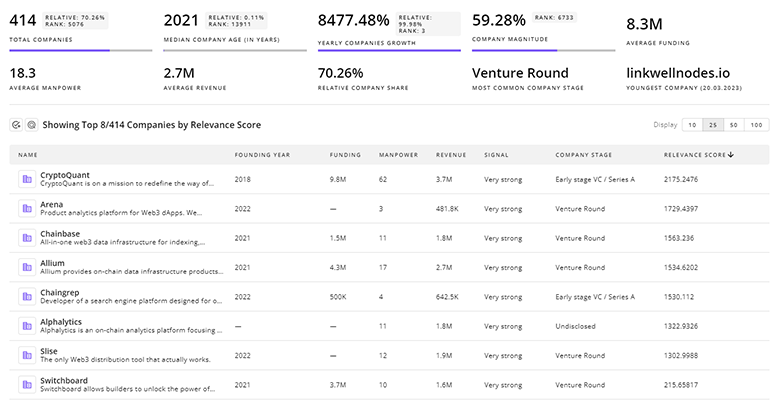
Get detailed analytics and profiles on 5.4K companies driving change in Sustainable Waste Management, enabling you to make informed strategic decisions.
5.4K Sustainable Waste Management Companies
Discover Sustainable Waste Management Companies, their Funding, Manpower, Revenues, Stages, and much more
Sustainable Waste Management Investors
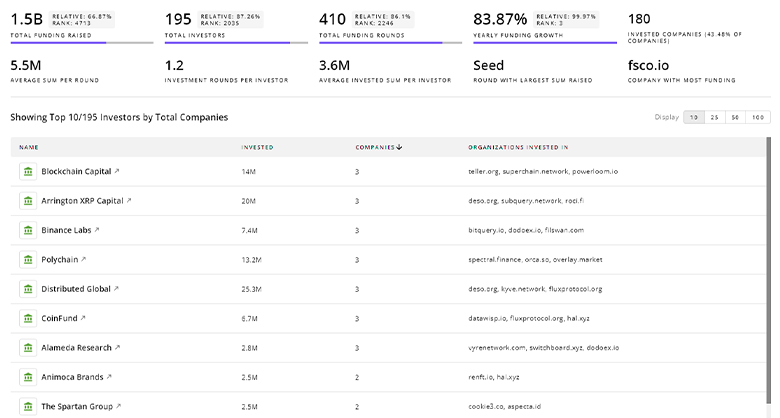
TrendFeedr’s Investors tool provides an extensive overview of 1.4K Sustainable Waste Management investors and their activities. By analyzing funding rounds and market trends, this tool equips you with the knowledge to make strategic investment decisions in the Sustainable Waste Management sector.
1.4K Sustainable Waste Management Investors
Discover Sustainable Waste Management Investors, Funding Rounds, Invested Amounts, and Funding Growth
Sustainable Waste Management News
Explore the evolution and current state of Sustainable Waste Management with TrendFeedr’s News feature. Access 1.8K Sustainable Waste Management articles that provide comprehensive insights into market trends and technological advancements.
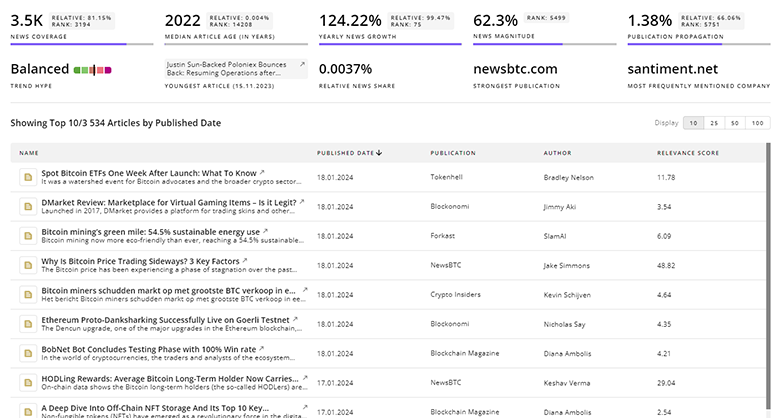
1.8K Sustainable Waste Management News Articles
Discover Latest Sustainable Waste Management Articles, News Magnitude, Publication Propagation, Yearly Growth, and Strongest Publications
Executive Summary
The sustainable waste-management landscape has moved beyond incremental operational improvement into a structural redefinition where material science, data integrity, and deployment geometry determine value capture. Firms that combine proven conversion technologies with auditable digital provenance — while securing certified feedstock through source controls or community-integrated collection — will convert scale into durable margins. Investors should reweight portfolios toward asset stacks that (1) lock in feedstock quality, (2) produce high-spec industrial inputs or fuels, and (3) offer verifiable ESG data services. For policy makers and corporates, the critical near-term tasks are harmonizing provenance standards, funding modular infrastructure in under-served regions, and aligning procurement to reward verified circular inputs. The race is no longer only to move waste; it is to make waste a dependable, certifiable, and high-value industrial input.
We're looking to collaborate with knowledgeable insiders to enhance our analysis of trends and tech. Join us!