
Telehealth Report
: Analysis on the Market, Trends, and TechnologiesThe telehealth market sits at a decisive growth inflection where clinical depth, reimbursement-aligned services, and EHR integration determine winner-take-most outcomes; the market was valued at $153,280,000,000 in 2025 and is growing at 25.7% CAGR, indicating both a large addressable opportunity and intense competition for sustainable margin. Pressure on providers to reduce avoidable admissions, combined with persistent clinician shortages, is shifting payer and system spending toward reimbursed, recurring pathways such as Remote Patient Monitoring and Chronic Care Management—segments that capture durable revenue rather than one-off virtual visits.
272 days ago, we last updated this report. Notice something that’s not right? Let’s fix it together.
Topic Dominance Index of Telehealth
To gauge the influence of Telehealth within the technological landscape, the Dominance Index analyzes trends from published articles, newly established companies, and global search activity
Key Activities and Applications
- Synchronous virtual consultations (primary and specialty): Real-time video and audio visits remain the most common access point for patients and are the primary driver of service revenue across outpatient care Telehealth Services in the US.
- Remote Patient Monitoring (RPM) for chronic disease management: Continuous vitals capture and exception-based clinical workflows are being commercialized into reimbursable programs (CCM/PCM/RTM), converting episodic tele-visits into ongoing revenue streams.
- Tele-critical care and tele-ICU: High-acuity telemedicine provides specialist oversight for ICU and emergency settings, reducing transfers and length-of-stay while centralizing scarce intensivist capacity.
- Behavioral health and telepsychiatry: Virtual psychiatry, therapy, and integrated medication management account for a large and growing share of virtual encounters given lower barriers to remote delivery.
- Remote diagnostics and specialty telecare (tele-optometry, teledentistry, teleneurology): Remote peripherals and device-enabled exams extend the clinical scope of virtual visits, enabling visit resolution for conditions previously requiring in-person equipment.
- Post-acute and SNF virtual coverage: Virtual physician coverage and nursing support for skilled nursing and post-acute settings reduce avoidable acute transfers and readmissions Third Eye Health.
Emergent Trends and Core Insights
- AI as workflow multiplier (triage, intake, documentation): AI-driven intake and documentation automation reduces clinician admin time and enables higher encounter throughput; organizations that combine AI triage with asynchronous care models capture higher utilisation efficiency 98point6.
- Revenue-first RPM and CCM commercialization: Providers are shifting investment toward RPM/CCM because these services map cleanly to reimbursed CPT pathways and recurring cash flows, making them the primary route to profitability for many vendors.
- Hybrid care as standard clinical design: Health systems design care pathways that mix in-person diagnostics with virtual follow-up and monitoring rather than replacing clinics entirely, improving access without compromising quality.
- Regulatory and licensure friction remains the gating factor in the U.S.: Cross-jurisdiction practice limits continue to constrain national provider networks; policy clarity on interstate telemedicine licensure will materially change provider deployment economics if enacted Policy friction and license barriers.
- Equity and access risk from the digital divide: Without targeted broadband and device programs, telehealth adoption will leave vulnerable populations behind, even as markets grow rapidly in well-connected regions North America and rural access dynamics.
Technologies and Methodologies
- EHR-native integration and FHIR-based workflows: Embedding virtual care into existing clinical records reduces friction and supports billing continuity; platforms that become EHR-first secure the high-value enterprise contracts.
- Device-agnostic RPM stacks with cellular gateways: Scalability favors platforms that ingest many device brands and provide plug-and-play connectivity to avoid hardware lock-in Global Telehealth Services.
- AI-enabled clinical decision support and predictive analytics: Predictive risk stratification and exception-based alerting enable clinician teams to focus on high-risk patients and reduce avoidable utilization tele-ICU predictive algorithms example AI market growth in telehealth.
- Asynchronous care (store-and-forward) for scale: Non-real-time consults and structured intake reduce specialist idle time and increase throughput across specialties Asynchronous care models and market forecasts.
- Secure cloud platforms and zero-trust architectures: Scalability and HIPAA compliance require cloud-native architectures with strong encryption, audit trails, and consent workflows to support multi-party sessions and device telemetry Cloud-based delivery dominance.
Telehealth Funding
A total of 16.8K Telehealth companies have received funding.
Overall, Telehealth companies have raised $791.7B.
Companies within the Telehealth domain have secured capital from 58.1K funding rounds.
The chart shows the funding trendline of Telehealth companies over the last 5 years
Telehealth Companies
- DigitalOptometrics — DigitalOptometrics delivers tele-optometry suites that let licensed optometrists perform comprehensive eye exams remotely using high-definition imaging and AI-assisted refraction. The company focuses on filling optical-retail and community-clinic gaps by enabling same-day remote prescriptions and retinal screening. This approach moves vision care from an episodic to a continuous service tied to retail partners and FQHCs, enabling new revenue per site without full-time onsite staffing.
- The TeleDentists — The TeleDentists operates a 24/7 national dentist network that triages urgent oral complaints via secure video and then coordinates next-day in-person care when needed. Their model reduces unnecessary ED visits for dental pain and integrates with urgent-care and retail clinic workflows to accelerate resolution. The company targets enterprise contracts with hospitals, senior living facilities, and employers to provide on-demand oral triage services.
- RemetricHealth — RemetricHealth pairs custom monitoring devices with integrated telehealth video for chronic respiratory and cardiometabolic programs, enabling clinicians to track objective lung function and vitals remotely. Their product-service bundle positions them to capture CCM/RPM contracts with physician groups and home-health agencies by demonstrating measurable clinical ROI. The firm emphasizes clinician-led monitoring with nurse escalation pathways to improve adherence and reduce readmissions.
- Certintell — Certintell focuses on safety-net providers and Federally Qualified Health Centers, delivering telehealth and RPM programs optimized for low-resource settings. Their virtual practice model and care-management services aim to close access gaps while producing measurable engagement metrics for payers and health systems. Certintell's service emphasis on audited workflows and simple patient touchpoints helps mitigate digital-literacy barriers in underserved populations.
- Orb Health — Orb Health offers Collaborative Virtual Care that embeds remote clinicians into a practice's workflow to deliver reimbursed Medicare services such as Chronic Care Management (CCM) as an extension of the practice rather than as a separate vendor silo. Their approach prioritizes "incident-to" care alignment and EMR-sync to preserve patient continuity and billing capture, positioning Orb Health as a scalable partner for primary-care practices facing capacity constraints.
Get detailed analytics and profiles on 121.9K companies driving change in Telehealth, enabling you to make informed strategic decisions.
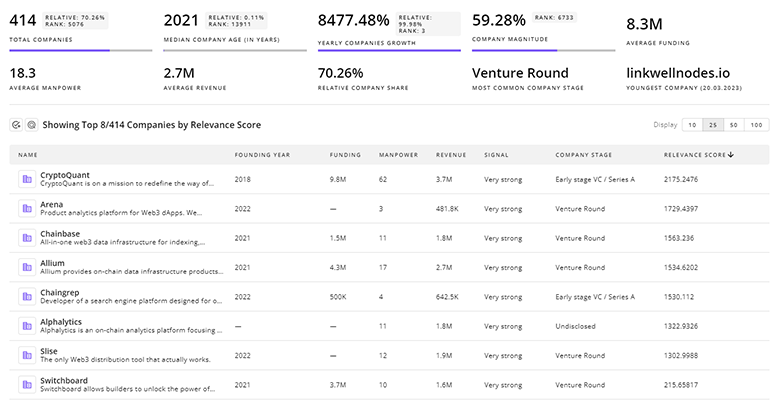
121.9K Telehealth Companies
Discover Telehealth Companies, their Funding, Manpower, Revenues, Stages, and much more
Telehealth Investors
TrendFeedr’s Investors tool provides an extensive overview of 35.9K Telehealth investors and their activities. By analyzing funding rounds and market trends, this tool equips you with the knowledge to make strategic investment decisions in the Telehealth sector.
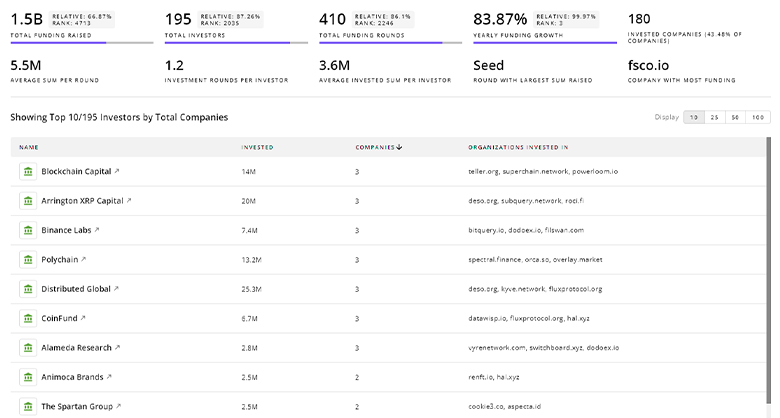
35.9K Telehealth Investors
Discover Telehealth Investors, Funding Rounds, Invested Amounts, and Funding Growth
Telehealth News
Explore the evolution and current state of Telehealth with TrendFeedr’s News feature. Access 88.8K Telehealth articles that provide comprehensive insights into market trends and technological advancements.
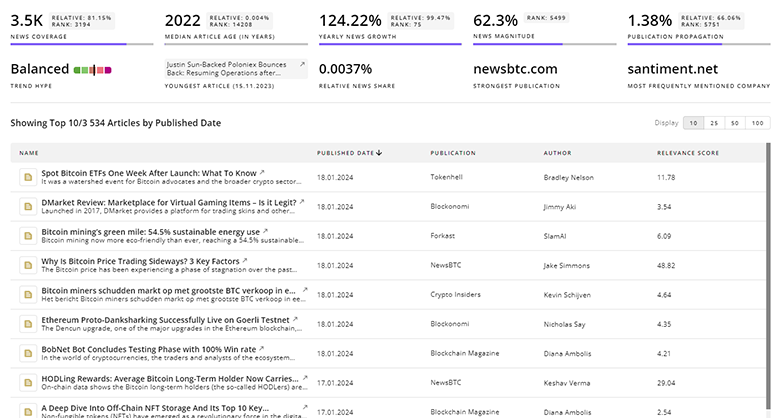
88.8K Telehealth News Articles
Discover Latest Telehealth Articles, News Magnitude, Publication Propagation, Yearly Growth, and Strongest Publications
Executive Summary
Telehealth has moved from episodic crisis response to an integrated component of care delivery where payment alignment dictates strategic winners. Market growth figures confirm ample demand, but alignment with reimbursed pathways—particularly RPM, CCM, and virtual specialty services that reduce downstream utilization—separates commercially viable offerings from disposable point solutions. The most defensible positions combine deep EHR integration, demonstrable clinical outcomes in high-value use cases (tele-critical care, chronic disease management, behavioral health), and flexible, device-agnostic technology stacks that scale across provider types. For investors and health system leaders, the immediate playbook is to prioritize partnerships and M&A that secure persistent revenue streams tied to payer incentives, invest in AI to reduce clinician burden, and allocate capital to close digital-access gaps so growth does not exacerbate health inequities.
We're looking to collaborate with knowledgeable insiders to enhance our analysis of trends and tech. Join us!