
Textile Manufacturing Report
: Analysis on the Market, Trends, and TechnologiesThe global textile manufacturing sector is undergoing rapid transformation, highlighted by a 50.09% rise in industry discourse over the past five years. Market projections point to a valuation of USD 696.16 billion by 2025, driven by a 7.1% CAGR through 2029 as manufacturers adopt digital printing, sustainable fibers, and automation to stay competitive (Textile Market Size, Competitors, Trends & Forecast to 2029). While Asia leads with stable 73% capacity utilization and 2.2-month order backlogs, 62% of firms cite demand weakness as a key concern, prompting a focus on resilience and agility (ITMF Global Textile Industry Survey, March 2025).
202 days ago, we last updated this report. Notice something that’s not right? Let’s fix it together.
Topic Dominance Index of Textile Manufacturing
To gauge the influence of Textile Manufacturing within the technological landscape, the Dominance Index analyzes trends from published articles, newly established companies, and global search activity
Key Activities and Applications
- Yarn Production: Converting raw natural and synthetic fibers into spun yarns via advanced spinning machinery, which commands a 46.2% share of the global machinery market in 2025 (Global Textile Machinery Market)
- Fabric Formation: Weaving and knitting operations using shuttleless looms and electronic knitting machines, crucial for apparel, home textiles, and technical fabrics
- Dyeing & Finishing: Enhancing textile properties-colorfastness, water repellency, and antibacterial performance-through eco-efficient processes to meet stringent quality and environmental standards
- Cut & Sew Assembly: Precision garment assembly integrating automated cutting and sewing cells that improve throughput while addressing labor shortages
- Digital Textile Printing: On-demand customization of complex patterns and logos, reducing waste and supporting small-batch, personalized production
- Circular Recycling: Textile-to-textile and post-consumer recycling to reclaim fibers-critical given that less than 1% of fibers today originate from recycled textiles
Emergent Trends and Core Insights
- Sustainability Imperative: Demand for eco-friendly fibers is surging, with consumers and regulators pushing for recycled, organic, and low-impact materials to cut the industry's 10% share of global CO₂e emissions (Global Textile Production Statistics 2025).
- Automation & AI Integration: Smart sensors and AI enable predictive maintenance and real-time process optimization, driving down labor costs and downtime in spinning, weaving, and finishing lines (Digital Textile Printing & Automation Trends).
- Technical Textile Expansion: Growing use of fire-resistant, antibacterial, and water-repellent fabrics in healthcare, defense, automotive, and construction is boosting segment growth at a 4.2% CAGR to 2033 (Textile Market Size, Share & Growth 2033).
- Supply Chain Transparency: Blockchain adoption for provenance tracking is improving compliance and trust, particularly in high-value supply chains facing geopolitical and demand uncertainties
- Regional Resilience: Asia's stable 73% capacity utilization contrasts with weaker demand in Europe, prompting strategic diversification into technical and home textiles
Technologies and Methodologies
- Advanced Spinning Frames: High-speed, energy-efficient rotors and open-end spindles delivering record throughput and quality control (World Markets for Textile Machinery 2023).
- IoT-Enabled Weaving & Knitting: Real-time monitoring of loom performance and fabric quality to reduce defects and downtime.
- Digital & 3D Printing: Inkjet textile printing and additive manufacturing for rapid prototyping and custom designs with minimal waste.
- Robotics in Assembly: Fully automated sewing cells addressing labor shortages and ensuring consistent garment quality.
- Textile Recycling Processes: Proprietary chemical and mechanical recycling converting mixed textile waste into virgin-quality fibers.
Textile Manufacturing Funding
A total of 122 Textile Manufacturing companies have received funding.
Overall, Textile Manufacturing companies have raised $3.7B.
Companies within the Textile Manufacturing domain have secured capital from 313 funding rounds.
The chart shows the funding trendline of Textile Manufacturing companies over the last 5 years
Textile Manufacturing Companies
Syre
Syre leads textile-to-textile recycling for polyester and other fibers, aiming to decarbonize the industry by achieving hyperscale recycling and transitioning from linear to circular supply chains with a Series C valuation over USD 108 million (Syre internal data).CelluCircle
CelluCircle's proprietary process recovers fibers from polycotton and synthetic blends, spinning them into new yarns or converting them into bio-based nanocomposites for 3D printing, thus cutting reliance on fossil-based plastics (CelluCircle internal data).ADOTC
ADOTC develops digitized robot sewing cells to fully automate garment and technical textile assembly, tackling fabric handling challenges and workforce shortages through integrated sensors, grippers, and monitoring dashboards (ADOTC internal data).Enschede Textielstad
This Dutch weaving mill produces custom fabrics from recycled denim, workwear, and cotton without dyeing-saving water and chemicals through production-on-demand and upcycled yarns for fashion and interiors (Enschede Textielstad internal data).Applied Textiles
Applied Textiles offers performance-enhancing textile technologies (Alta™) and supply chain management services, backed by an A2LA-accredited lab to optimize material properties for technical and industrial applications (Applied Textiles internal data).
Get detailed analytics and profiles on 2.5K companies driving change in Textile Manufacturing, enabling you to make informed strategic decisions.
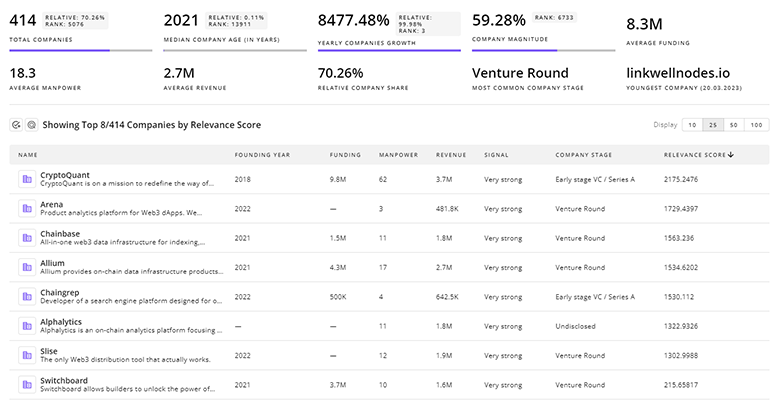
2.5K Textile Manufacturing Companies
Discover Textile Manufacturing Companies, their Funding, Manpower, Revenues, Stages, and much more
Textile Manufacturing Investors
TrendFeedr’s Investors tool provides an extensive overview of 290 Textile Manufacturing investors and their activities. By analyzing funding rounds and market trends, this tool equips you with the knowledge to make strategic investment decisions in the Textile Manufacturing sector.
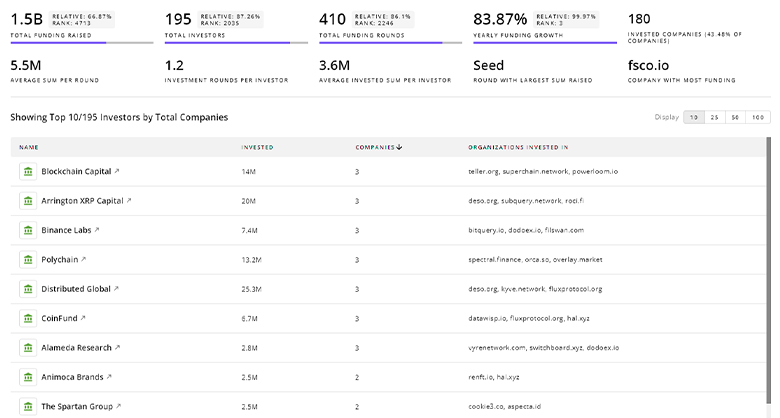
290 Textile Manufacturing Investors
Discover Textile Manufacturing Investors, Funding Rounds, Invested Amounts, and Funding Growth
Textile Manufacturing News
Explore the evolution and current state of Textile Manufacturing with TrendFeedr’s News feature. Access 1.5K Textile Manufacturing articles that provide comprehensive insights into market trends and technological advancements.

1.5K Textile Manufacturing News Articles
Discover Latest Textile Manufacturing Articles, News Magnitude, Publication Propagation, Yearly Growth, and Strongest Publications
Executive Summary
Textile manufacturing is at an inflection point, balancing market expansion with sustainability and automation imperatives. Stakeholders must invest in circular recycling, digital process control, and advanced machinery to capture the projected growth to USD 915.96 billion by 2029 at 7.1% CAGR. Regional players should leverage Asia's high capacity utilization and strength in technical textiles, while Western firms can differentiate through blockchain-enabled transparency and eco-friendly production. Innovative startups-Syre, CelluCircle, ADOTC, Enschede Textielstad, and Applied Textiles-are exemplars of this new paradigm, showcasing how specialized technologies and circular strategies unlock competitive advantage in a complex global landscape.
We're looking to collaborate with knowledgeable insiders to enhance our analysis of trends and tech. Join us!