Therapeutics Report
: Analysis on the Market, Trends, and TechnologiesThe therapeutics landscape has entered a platform-driven consolidation phase where scale and delivery solve clinical barriers as much as molecular innovation, supported by $1,943.52B in cumulative funding across the topic that signals intense capital concentration and competitive pressure. Market forecasts anchored to metabolic indications — notably a projected $150B obesity market by 2035 — emphasize that winners will combine platform discovery, evidence of real-world value, and practical delivery solutions to capture commercial upside.
118 days ago, we last updated this report. Notice something that’s not right? Let’s fix it together.
Topic Dominance Index of Therapeutics
To gauge the influence of Therapeutics within the technological landscape, the Dominance Index analyzes trends from published articles, newly established companies, and global search activity
Key Activities and Applications
- Targeted Protein Degradation (TPD) and molecular glue discovery: Companies are transitioning from target inhibition to deliberate protein removal to address resistance and "undruggable" targets, accelerating clinical-stage TPD programs and platform commercialization.
- Precision delivery of biologics to protected compartments: Development of macroencapsulation, exosome platforms, and transdermal delivery to reach the CNS and other sanctuary sites is a major activity that reduces systemic toxicity and enables repeatable dosing strategies.
- Tumor microenvironment reprogramming in oncology: Efforts center on converting immune-excluded tumors into infiltrated phenotypes using antibodies, enzymes, or biophysical interventions to expand immunotherapy responsiveness.
- Digital therapeutics and bioelectronics paired with pharmacology: Prescription software and wearable neuromodulation are being integrated into care pathways, shifting some indications toward hybrid drug-plus-software models. Theranica
- Therapeutic drug monitoring and model-informed dosing: Point-of-care and Bayesian dosing platforms are being deployed to narrow therapeutic windows and improve outcome predictability for high-risk agents.
Emergent Trends and Core Insights
- The Platform Premium: Investors reward scalable discovery and delivery platforms that generate multiple candidates; platform companies capture higher funding velocity and strategic partner interest, concentrating future value.
- Metabolic and population-scale blockbusters are reshaping strategy: High-revenue metabolic agents (e.g. obesity therapeutics) drive a commercial pivot back to high-prevalence indications where payer models and distribution innovations matter as much as efficacy Reimagining Business Models: Biopharma Trends 2026.
- Convergence of diagnostics and therapy (theranostics): Imaging-led radiopharmaceuticals that use a single targeting ligand for both diagnosis and treatment reduce dose uncertainty and enable precision dosing.
- Safety-first combination design: With immuno- and cell-based modalities showing potent efficacy but nontrivial toxicity, the dominant R&D pattern is combination regimens plus proactive toxicity-mitigation protocols informed by predictive biomarkers. This reduces late-stage attrition risk and supports payer acceptance.
- Demand for real-world evidence and alternative commercial channels: Payers and employers increasingly require outcomes and cost-effectiveness data; direct-to-employer and outcome-based contracts are being trialed for high-cost therapeutics.
Technologies and Methodologies
- Targeted Protein Degradation (TPD) toolchains (TORPEDO®, Auto/dx approaches): Iterative, platform-driven degrader discovery accelerates candidate quality and breadth. C4 Therapeutics, Inc.
- Exosome and extracellular vesicle delivery (programmable EVs): Scalable EV manufacturing that preserves targeting and payload capacity directly addresses blood-brain barrier constraints for CNS therapies.
- Macroencapsulation for sustained local protein delivery: Localized devices enable sustained biologic exposure in the CNS without systemic gene editing.
- Precision radiopharmaceuticals (theranostic pairs): Paired imaging and therapeutic radionuclides enable patient selection, on-treatment response monitoring, and dose personalization. Ariceum Therapeutics
- AI/ML-enabled discovery and multi-omics integration: Computational engines accelerate target identification, degrader design, and patient stratification, shortening preclinical timelines. SyntheX
- Point-of-care and non-invasive monitoring for dosing (LC-MS/MS, biosensors, breath/saliva assays): These enable adaptive dosing strategies and decentralized care.
- Focused ultrasound and wearable acoustic therapies for targeted enhancement of drug uptake: These non-invasive modalities augment tissue permeability and local efficacy.
Therapeutics Funding
A total of 21.3K Therapeutics companies have received funding.
Overall, Therapeutics companies have raised $1.9T.
Companies within the Therapeutics domain have secured capital from 70.5K funding rounds.
The chart shows the funding trendline of Therapeutics companies over the last 5 years
Therapeutics Companies
- Release Therapeutics — Release Therapeutics develops a cell macroencapsulation platform that delivers potent therapeutic proteins across the blood-brain barrier for CNS disorders. Their patented macroencapsulation approach emphasizes local protein delivery without permanent genomic modification, positioning the company as a specialist for CNS protein therapies where systemic exposure is problematic.
- Incendia Therapeutics — Incendia Therapeutics targets physical and biochemical barriers in the tumor microenvironment, developing antibodies such as PRTH-101 to disrupt extracellular matrix components and enable immune infiltration into solid tumors. Their TME-reprogramming strategy seeks to convert resistant tumors into responders for existing immunotherapies.
- Kayothera — Kayothera focuses on orally available inhibitors of retinoid and rexinoid nuclear receptor pathways implicated in cardiometabolic disease and certain cancers, pursuing small-molecule programs that target historically intractable nuclear signaling. Their approach addresses large-population metabolic indications by drugging previously inaccessible nuclear pathways.
- Navega Therapeutics — Navega Therapeutics applies non-permanent gene modulation (CRISPR and epigenome regulation concepts) to design long-duration, non-addictive pain therapies that mimic human loss-of-pain mutations; this is a high-impact, non-opioid pain strategy with clear societal relevance given opioid risks.
Get detailed analytics and profiles on 194.8K companies driving change in Therapeutics, enabling you to make informed strategic decisions.
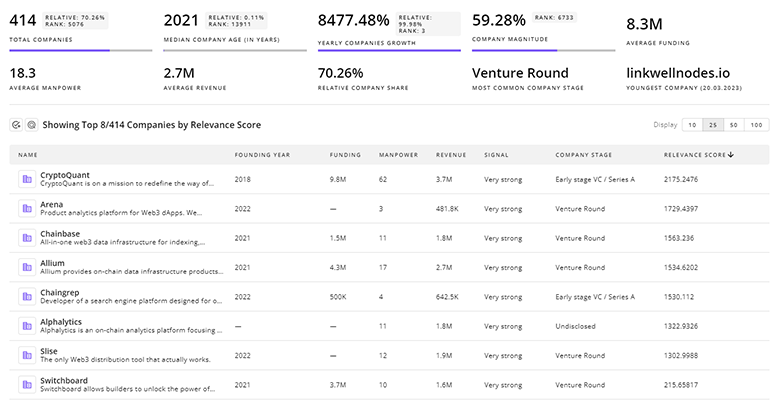
194.8K Therapeutics Companies
Discover Therapeutics Companies, their Funding, Manpower, Revenues, Stages, and much more
Therapeutics Investors
TrendFeedr’s Investors tool provides an extensive overview of 35.4K Therapeutics investors and their activities. By analyzing funding rounds and market trends, this tool equips you with the knowledge to make strategic investment decisions in the Therapeutics sector.
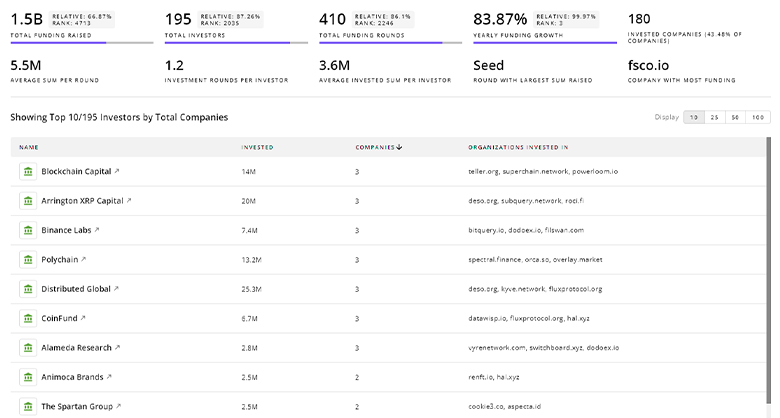
35.4K Therapeutics Investors
Discover Therapeutics Investors, Funding Rounds, Invested Amounts, and Funding Growth
Therapeutics News
Explore the evolution and current state of Therapeutics with TrendFeedr’s News feature. Access 181.7K Therapeutics articles that provide comprehensive insights into market trends and technological advancements.
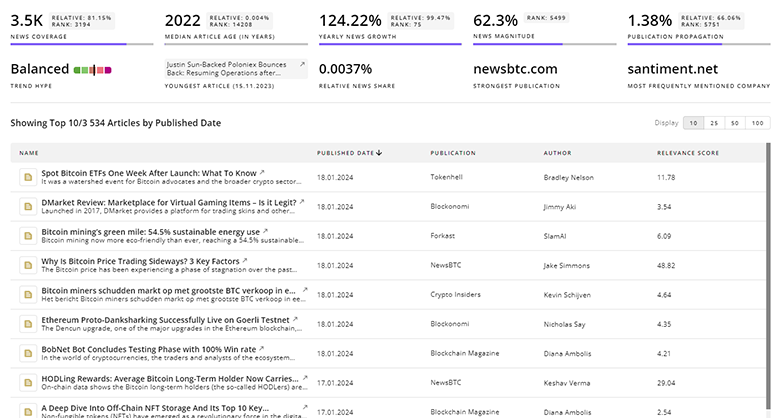
181.7K Therapeutics News Articles
Discover Latest Therapeutics Articles, News Magnitude, Publication Propagation, Yearly Growth, and Strongest Publications
Executive Summary
Therapeutics strategy must shift from single-asset optimism to platform discipline: owning discovery or delivery platforms shortens pipelines, reduces late-stage failure, and creates multiple commercialization paths. Commercial success will hinge on demonstrating measurable real-world benefits and manageable safety profiles that justify premium pricing for high-impact indications such as metabolic disease and advanced oncology. Investors and corporate strategists should prioritize platform M&A, mid-stage evidence generation (RWE and pragmatic studies), and manufacturing investments that enable patient-centric routes of administration; firms that combine a validated platform with pragmatic delivery mechanisms and clear payer evidence will capture disproportionate value as the sector consolidates.
We're looking to collaborate with knowledgeable insiders to enhance our analysis of trends and tech. Join us!