Vehicles Software Report
: Analysis on the Market, Trends, and TechnologiesThe vehicles software market is shifting from component-level electronics toward centralized, service-centric platforms and is already a sizeable business: $21,400,000,000 market value in 2024 with a 10.7% CAGR and an expected rise to $39,400,000,000 by 2030. This transition creates three simultaneous pressures: carriers of engineering complexity (centralized compute and middleware), material shifts in post-sale monetization (OTA and features-on-demand), and acute operational risk in validation and field maintenance (software-related recalls and update logistics). Companies that secure platform hooks (middleware, secure OTA, consented data access) will capture recurring revenue, while those solving fleet-scale orchestration and safety verification will command strategic premium.
46 days ago, we last updated this report. Notice something that’s not right? Let’s fix it together.
Topic Dominance Index of Vehicles Software
The Topic Dominance Index offers a holistic analysis of Vehicles Software, merging data from 3 diverse sources: relevant published articles, newly founded companies, and global search metrics.
Key Activities and Applications
- Over-the-air (OTA) lifecycle management for firmware and software, including manifests, rollback packages, and staged deployments to fleets.
- Unified vehicle OS and middleware development (SOA/SOME-IP, virtualization, hypervisors) to enable cross-domain feature delivery and Features-on-Demand monetization.
- Fleet telematics, remote diagnostics, and predictive maintenance using cloud/edge pipelines to reduce downtime and extend service margins.
- Simulation, digital twin, and validation toolchains for ADAS/Autonomy certification and rapid regression testing at scale.
- Dealer and aftermarket software (DMS, recall automation, inventory and service optimization) that converts service events into measurable efficiency gains and incremental revenue.
Emergent Trends and Core Insights
- Software-Defined Vehicles (SDV) mainstreaming: Large forecasts and industry programs show SDV architectures becoming the de facto platform for new vehicles, changing purchase and lifecycle economics Automotive Software Trends - Deloitte US.
- Mass shift to centralized compute and zonal E/E: Zonal controllers and HPCs replace dozens of distributed ECUs, simplifying update rollouts but raising single-point integration risk.
- Recall profile rising, with service-experience consequences: Software-related recall incidence leapt from 13% to 42% in one year, increasing the premium on secure OTA and remote repair workflows Automotive Technology Trends in 2025 - ACV MAX.
- AI in development and validation: AI-driven simulation and predictive analytics compress development times by up to ~30% in reported cases, changing R&D resource allocation and reducing pre-launch risk Automotive Software Development: Trends and Challenges - Apriorit.
- Market for standardized procurement and software marketplaces: OEMs and system integrators are sponsoring neutral procurement channels to tame fragmentation and accelerate certified supply (marketplace models for validated software components).
- Regulatory and security gating: Cybersecurity management and software update governance are now regulatory preconditions for market access in many jurisdictions, shifting security from optional to mandatory certification activity.
Technologies and Methodologies
- OTA platforms and lifecycle governance (manifest generation, staged rollouts, rollback/rollback verification, low-power update confirmation) to support multi-year feature roadmaps.
- Service-Oriented Architecture (SOA), SOME/IP and middleware stacks that permit independent service deployment across vehicle domains and support CI/CD for features.
- Centralized/zonal compute with virtualization and containerization to host mixed-criticality workloads and enable function-specific update granularity.
- Digital twins and AI-driven validation for synthetic testing, regression checks, and predictive safety assurances that scale validation without proportional vehicle fleets.
- Rust-based runtimes and memory-safe stacks for safety-critical ECUs to reduce vulnerability exposure and meet strict functional safety constraints.
- Fleet orchestration and telematics integration combining edge analytics, V2X/5G, and cloud APIs to optimize routing, charging, and maintenance windows.
Vehicles Software Funding
A total of 73 Vehicles Software companies have received funding.
Overall, Vehicles Software companies have raised $13.9B.
Companies within the Vehicles Software domain have secured capital from 310 funding rounds.
The chart shows the funding trendline of Vehicles Software companies over the last 5 years
Vehicles Software Companies
- Veecle — Veecle supplies a Rust-based runtime and a focused software stack for Infineon Aurix processors plus a first-mover Android Automotive VHAL integration that links modern infotainment to vehicle functions; this positions the company as a low-level ingredient supplier for safety-sensitive domains seeking memory-safety and deterministic behavior. Their small, specialist team targets OEMs and Tier-1s that require high-integrity runtimes. Veecle funding and technical positioning suggest a product-led path into middleware contracts.
- SDVerse — SDVerse operates an industry B2B marketplace created with backing from large OEM/Tier stakeholders; it is designed to standardize procurement and accelerate certified software sourcing by surfacing validated components and enabling direct commercial relationships between vendors and buyers. The platform reduces procurement friction for OEM software teams and creates a route to scale for specialized suppliers that can meet verification and integration standards.
- BizzyCar — BizzyCar builds AI-driven recall management and service automation for dealers and OEM service channels, automating identification, prioritization and appointment scheduling for recall repairs. Their platform reduces friction in post-sale remediation and converts safety events into measurable service visits, making the aftermarket more profitable for dealers that integrate it.
- embotech — embotech offers real-time optimization and MPC solvers for autonomy and logistics automation, with validated deployments in factory and port environments; their solver technology is aimed at deterministic control problems where latency and mathematical guarantees matter. This makes them valuable for logistics automation projects and constrained autonomy scenarios that require certified control behaviors.
Stay connected with industry movements through TrendFeedr’s Companies tool, which covers 637 Vehicles Software companies.
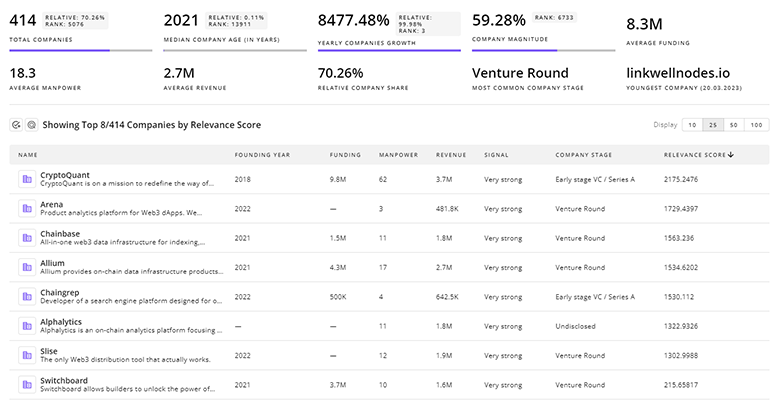
637 Vehicles Software Companies
Discover Vehicles Software Companies, their Funding, Manpower, Revenues, Stages, and much more
Vehicles Software Investors
Discover investment patterns and trends with TrendFeedr’s Investors tool based on insights into 470 Vehicles Software investors. This tool is essential for understanding the financial ecosystem of Vehicles Software and developing successful investment strategies.
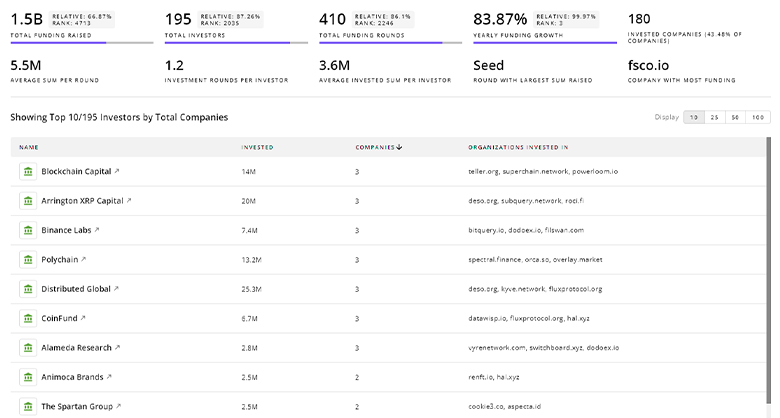
470 Vehicles Software Investors
Discover Vehicles Software Investors, Funding Rounds, Invested Amounts, and Funding Growth
Vehicles Software News
TrendFeedr’s News feature grants you access to 566 Vehicles Software articles. This tool supports professionals in tracking both past trends and current momentum in the industry.
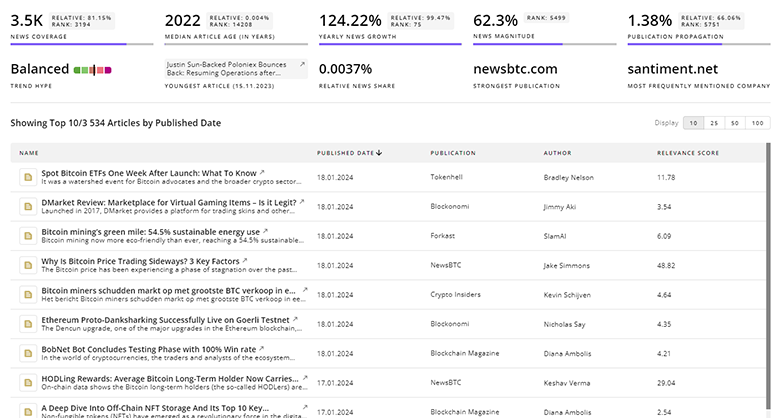
566 Vehicles Software News Articles
Discover Latest Vehicles Software Articles, News Magnitude, Publication Propagation, Yearly Growth, and Strongest Publications
Executive Summary
The vehicles software landscape is converging on a small set of architectural primitives—centralized compute, standardized middleware, secure OTA governance, and validated simulation—that will determine industrial winners. Short-term value accrues to firms that solve fleet orchestration, secure update delivery, and validation at scale; mid-term power will concentrate with platform integrators that lock in standardized interfaces and procurement channels. For incumbent OEMs and Tier-1s the priority is stabilizing an update lifecycle that reduces field failures; for software suppliers the priority is proving integration, safety compliance, and measurable ROI for fleet operators. Investors and strategic buyers should target companies that (1) supply hardened, safety-centric runtimes, (2) own validated simulation/verification pipelines, or (3) enable compliant, consented access to vehicle data and OTA distribution, because those capabilities convert technical differentiation into repeatable revenue.
We're looking to collaborate with knowledgeable insiders to enhance our analysis of trends and tech. Join us!