
Virtual Influencers Report
: Analysis on the Market, Trends, and TechnologiesThe virtual influencer market is shifting from experimental use to measurable commercial asset, with a 2025 market size of $12,830,000,000 and a projected high-growth trajectory driven by content monetization and platform integrations. Brands are reallocating budgets: recent campaign data shows virtual-influencer spend rose 30% year-over-year in Q3 2025, while virtual campaigns expanded 45% YoY within total influencer activity, signaling a material reweighting of creator budgets toward synthetic talent and hybrid activations Influencer Marketing Levels Up in Q3 – Linqia.
86 days ago, we last updated this report. Notice something that’s not right? Let’s fix it together.
Topic Dominance Index of Virtual Influencers
The Topic Dominance Index offers a holistic analysis of Virtual Influencers, merging data from 3 diverse sources: relevant published articles, newly founded companies, and global search metrics.
Key Activities and Applications
- Brand storytelling and IP creation — Virtual influencers are used as persistent brand-owned characters that deliver repeatable narratives across campaigns and channels, reducing talent risk and protecting messaging continuity.
- Product launches and shoppable content — Avatars host live commerce events, product demos and AR try-ons that tie directly to purchase flows, increasing attribution clarity for social commerce programs Virtual Influencers.
- 24/7 customer engagement and conversational assistants — Brands deploy virtual personas for round-the-clock recommendations and service interactions, blending scripted brand voice with NLP responses to scale support and discovery.
- Performance-based campaigns and measurable attribution — Platforms and analytics layers attach sales and conversion KPIs to avatar activity, enabling pay-for-performance models and tighter ROI governance.
- IRL + virtual hybrid activations — Holographic and AR-enhanced appearances at events extend reach and drive earned media, with IRL activations growing 67% YoY in recent campaign mixes.
Emergent Trends and Core Insights
- Control premium for synthetic talent — Brands value the predictability of virtual influencers for brand safety and scheduling, which justifies higher up-front production spend when the campaign requires tight messaging control.
- Audience segmentation at scale — Companies now deploy micro-avatars tailored to regional dialects and subcultures, improving engagement with younger demographics that already follow virtual characters in large numbers Virtual influencers - statistics & facts.
- Cost-performance divergence — Virtual posts can deliver higher engagement while lowering per-post talent fees; reported engagement for avatars exceeded some macro human creators with lower average cost-per-post.
- Regulatory and disclosure pressure — Transparency requirements and IP rights questions are rising, forcing platforms and brands to adopt explicit labeling and to formalize likeness and content ownership contracts.
- Performance measurement becomes the moat — Proprietary scoring and purchase-attribution systems are emerging as the defensible layer that will determine which tech providers command premium integration fees The Platform Schism: Aggregators vs. Ingredient Specialists.
Technologies and Methodologies
- Generative models and GANs for imagery — Deep generative models create high-fidelity facial features and textures used in avatar pipelines, reducing manual art hours while increasing photorealism.
- Motion capture and real-time animation stacks — Actor capture and retargeting feed real motions into avatars for livestreams and event projections, enabling synchronized IRL/virtual appearances.
- Natural language generation and conversational AI — NLG engines produce contextually appropriate captions and replies while conversational agents maintain persona consistency at scale.
- Proprietary attribution scoring and fraud detection — Layered analytics combine on-platform signals with anonymized purchase data to create ROI scores that buyers trust for performance contracts.
- AR/volumetric capture and in-app shoppable flows — Volumetric and AR assets enable try-ons and native checkout paths that shorten conversion time and improve measurement.
Virtual Influencers Funding
A total of 66 Virtual Influencers companies have received funding.
Overall, Virtual Influencers companies have raised $3.7B.
Companies within the Virtual Influencers domain have secured capital from 246 funding rounds.
The chart shows the funding trendline of Virtual Influencers companies over the last 5 years
Virtual Influencers Companies
- Iconig AI — Iconig builds AI-generated influencers and social celebrities designed for rapid rollout across fashion and brand campaigns. The company positions itself on unlimited scalability and strict control of persona behaviour, which appeals to brands prioritizing stable messaging. Iconig packages creative direction with automated content pipelines so clients can iterate avatars without repeated production overheads. (Company profile and positioning).
- DCVERSE — DCVERSE focuses on hyper-realistic AI humans and a creator platform that enables brands to own persistent avatar IP in APAC markets. Their product strategy targets immersive marketing and creatorverse integrations to reduce reliance on external talent bookings. Small-team structure allows fast prototyping for localized campaigns and live commerce pilots. (Seed-stage avatar production + platform emphasis).
- The AI Influencer Company — This UK agency sculpts custom AI personas and runs activation programs that combine data-driven optimization with narrative design. They sell creation plus managed campaigns so brands receive both the creative IP and the executional workflow to scale content across platforms. Their offering suits mid-market brands that want controlled, repeatable influencer outputs without human talent risk. (Agency model with tailored persona engineering).
- IMPRV — IMPRV automates the full influencer lifecycle and is explicitly piloting virtual influencers as an acquisition channel with near-zero human acquisition cost. The platform combines AI discovery, outreach automation, fraud detection and payments which enables brands to launch campaigns programmatically. The firm positions virtual talent not just as content producers but as scalable demand engines embedded inside automated performance funnels. (Automation + virtual influencer experimentation).
- Virtual Influencer Agency — Operating since 2017, this agency builds avatars with full character histories and conversational capabilities for brands seeking long-term persona IP. They pair creative storytelling with conversational AI so avatars can engage followers in meaningful arcs that evolve over time. Their expertise sits at the intersection of narrative design and technical integration, useful for brands that need both creative depth and operational control. (Creative studio + conversational AI).
Stay connected with industry movements through TrendFeedr’s Companies tool, which covers 292 Virtual Influencers companies.
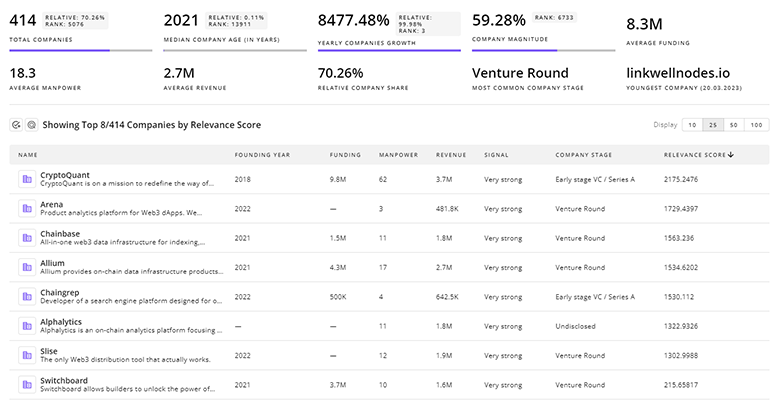
292 Virtual Influencers Companies
Discover Virtual Influencers Companies, their Funding, Manpower, Revenues, Stages, and much more
Virtual Influencers Investors
Discover investment patterns and trends with TrendFeedr’s Investors tool based on insights into 449 Virtual Influencers investors. This tool is essential for understanding the financial ecosystem of Virtual Influencers and developing successful investment strategies.
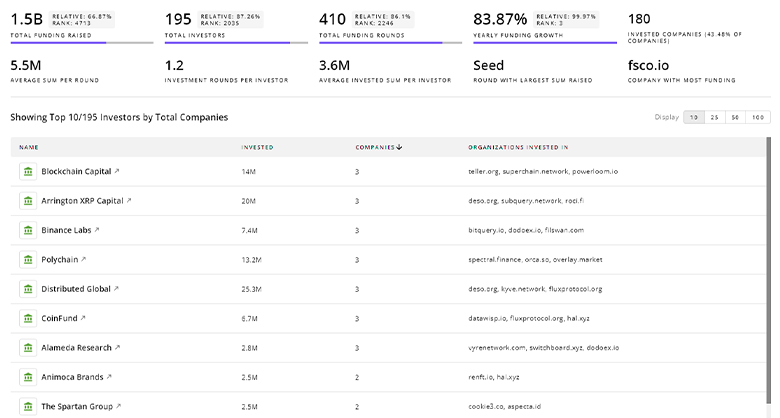
449 Virtual Influencers Investors
Discover Virtual Influencers Investors, Funding Rounds, Invested Amounts, and Funding Growth
Virtual Influencers News
TrendFeedr’s News feature grants you access to 667 Virtual Influencers articles. This tool supports professionals in tracking both past trends and current momentum in the industry.
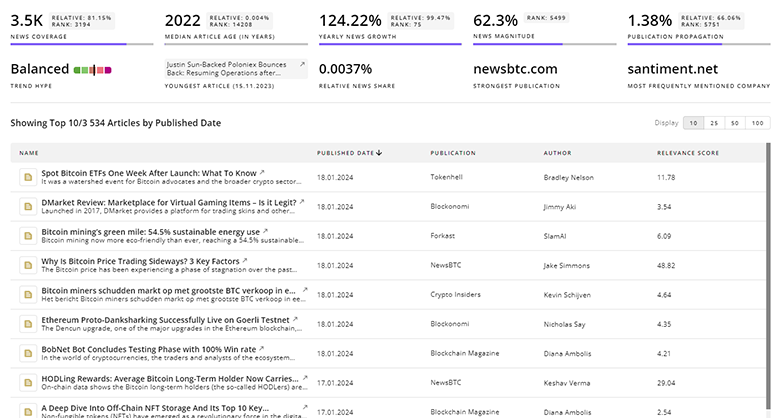
667 Virtual Influencers News Articles
Discover Latest Virtual Influencers Articles, News Magnitude, Publication Propagation, Yearly Growth, and Strongest Publications
Executive Summary
Virtual influencers are now a strategic tool for brands that need precise control, measurable ROI and scalable content velocity. The market shows strong current scale and aggressive forward projections, which drives two practical imperatives for business leaders: secure access to reliable attribution and fraud-detection systems that can validate synthetic reach, and decide whether to own creation IP or integrate best-in-class ingredient technologies into existing martech stacks. Early adopters that combine high-fidelity creative production, performance measurement, and clear disclosure policies will convert novelty into repeatable revenue streams and capture disproportionate share as the sector consolidates.
We're looking to collaborate with knowledgeable insiders to enhance our analysis of trends and tech. Join us!