Virtual Machine Report
: Analysis on the Market, Trends, and TechnologiesThe virtual machine market sits at a strategic inflection where security-first isolation, AI workload enablement, and stateful orchestration drive commercial choices: the market was $20,260,000,000 in 2024 and internal forecasts record a 18.3% CAGR projection that underpins near-term investment priorities. Market reports reinforce double-digit growth for the rest of the decade, with demand concentrated where VM features solve measurable cost, compliance, or performance pain-points grandviewresearch – Virtual Machine Market, 2023.
261 days ago, we last updated this report. Notice something that’s not right? Let’s fix it together.
Topic Dominance Index of Virtual Machine
The Topic Dominance Index offers a holistic analysis of Virtual Machine, merging data from 3 diverse sources: relevant published articles, newly founded companies, and global search metrics.
Key Activities and Applications
- Server consolidation and cost optimization. Enterprises continue to consolidate physical servers into VM pools to reduce capital and operating expenses while improving utilization.
- Legacy application modernization and migration. Encapsulation and application-level migration keep mission-critical legacy workloads running while reducing risk during cloud moves.
- Security sandboxing and cyber resilience. Rapid creation of isolated replicas and "thin digital twin" recovery environments shorten ransomware recovery timelines from days to minutes in production-like testbeds.
- AI/ML workload enablement and GPU pooling. Virtualization solutions that expose, pool, and schedule accelerators (GPUs) across tenants materially improve AI TCO for training and inference researchandmarkets - Virtual Machines Market, 2025.
- Developer productivity and state management. Instant snapshotting, branching, and shareable VM state are used to accelerate debugging, CI workflows, and reproducible experiments.
- Edge and embedded virtualization. Small-footprint hypervisors and VMs for ARM and RISC-V power industrial control, IoT gateways, and low-latency edge compute Skelmir, LLC.
Emergent Trends and Core Insights
- AI-aware execution layers reframe the VM as an allocation and scheduling surface for accelerators. Cloud and on-prem VM lines add GPU-aware features and AI orchestration hooks, making GPU sharing and latency control a procurement requirement for AI teams researchandmarkets - Asia Pacific Virtual Machine Market, 2024.
- Lightweight VM primitives (unikernels and micro-VMs) gain traction where security and boot velocity matter; these aim to deliver VM-level isolation with minimal runtime overhead.
- Hybrid control planes that manage VMs across public cloud, private clusters, and edge are standard purchasing criteria for large accounts; orchestration integration with container platforms is now table-stakes.
- Security-first patterns center on minimal trusted computing bases and immutable images; micro-VM sandboxes and isolated recovery copies provide auditable, testable remediation workflows that regulators value.
- Open-source hypervisor momentum continues in non-x86, edge, and regulated markets where cost, auditability, and customization matter; hardware-specific hypervisors for ARM and RISC-V appear in embedded and telecom footprints Xvisor.
- Regulatory and sovereignty pressures fragment procurement: regional providers that guarantee in-country hosting and compliance capture workloads that global clouds cannot service without added complexity Servers Australia.
Technologies and Methodologies
- Type 1 hypervisors with minimal emulation. Rust-based and minimal hardware-emulation projects reduce overhead for cloud workloads and speed VM boot/migration.
- Unikernels and micro-VMs. Production unikernel platforms run single binaries as secure VMs to minimize attack surface and improve density.
- GPU virtualization and resource pooling. Software-defined GPU pools route accelerator cycles to VMs with near-bare-metal performance to lower AI infrastructure cost per model run VirtAITech.
- Stateful branching and VM snapshot sharing. Tools that let teams fork a full VM state (memory + filesystem) enable deterministic debugging, parallel experiment paths, and safe patch rehearsals.
- Agent-execution VMs for autonomous code. Secure, verifiable runtime layers host AI agents' generated code with audit and verification hooks to control real-world side effects.
- VM–container interoperability. Platforms expose VMs as first-class workloads inside Kubernetes or provide conversion pathways when migration to containers makes sense.
- Cloud-managed hypervisors and API-first provisioning. RESTful provisioning, IaC templates, and integrated observability for VM fleets accelerate operations in multi-site deployments.
Virtual Machine Funding
A total of 367 Virtual Machine companies have received funding.
Overall, Virtual Machine companies have raised $27.1B.
Companies within the Virtual Machine domain have secured capital from 1.2K funding rounds.
The chart shows the funding trendline of Virtual Machine companies over the last 5 years
Virtual Machine Companies
VM2020 Solutions — VM2020 Solutions operates a recovery-first product that converts storage snapshots into live, instrumented testbeds called CyberVR using patented Thin Digital Twins; the platform focuses on rapid ransomware recovery and compliance rehearsal by rebuilding full-stack systems across x86, VMware, and IBM Power without agents. Customers in regulated industries use the capability to validate remediations before production rollouts, shortening exercise cycles from days to minutes (revenue reported: $900K in 2022).
VirtaMove — VirtaMove specializes in application encapsulation and migration for Windows server workloads, enabling lift-and-shift without code changes by packaging server applications into VM-free containers or move-ready artifacts; the product targets complex legacy migrations and reduces business disruption during modernization. The company has raised $18.80M in buyout-style rounds and positions itself as migration intelligence for enterprises.
Agents Virtual Machine — Agents Virtual Machine (AVM) provides a runtime for the agent economy: a secure execution layer that lets autonomous agents produce, run, and verify code without manual DevOps. AVM targets high-throughput, verifiable execution with minimal operational footprint—an emerging niche where controlling the side effects of AI-generated code matters for safety and compliance.
NanoVMs — NanoVMs operates the only production-ready managed unikernel platform in market reports, offering unikernels that run Linux binaries as single-address-space, minimal VMs to reduce attack surface and boot time while increasing density; NanoVMs supports KVM, Xen, and bare-metal targets and has raised $3.39M in venture funding.
VERS — VERS builds stateful branching infrastructure that lets developers create child VMs with full memory and filesystem inheritance so teams can explore multiple execution paths without resetting state; the offering targets developer workflows, reproducibility in ML experiments, and safer patch testing, contributing to faster engineering cycles at small teams (seed-stage with modest revenue).
Stay connected with industry movements through TrendFeedr’s Companies tool, which covers 2.3K Virtual Machine companies.
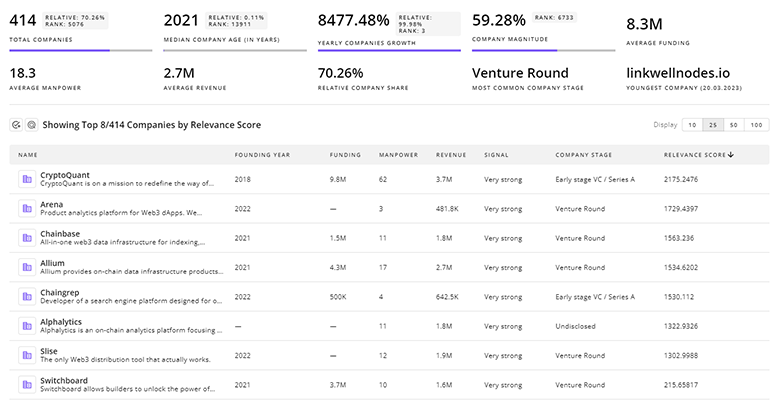
2.3K Virtual Machine Companies
Discover Virtual Machine Companies, their Funding, Manpower, Revenues, Stages, and much more
Virtual Machine Investors
Discover investment patterns and trends with TrendFeedr’s Investors tool based on insights into 2.4K Virtual Machine investors. This tool is essential for understanding the financial ecosystem of Virtual Machine and developing successful investment strategies.
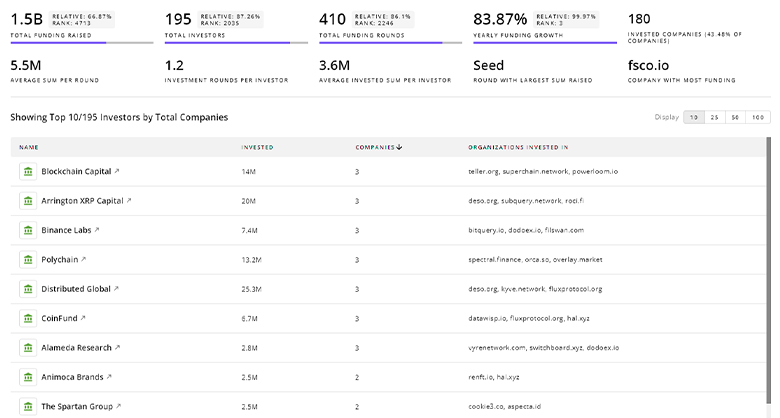
2.4K Virtual Machine Investors
Discover Virtual Machine Investors, Funding Rounds, Invested Amounts, and Funding Growth
Virtual Machine News
TrendFeedr’s News feature grants you access to 8.9K Virtual Machine articles. This tool supports professionals in tracking both past trends and current momentum in the industry.
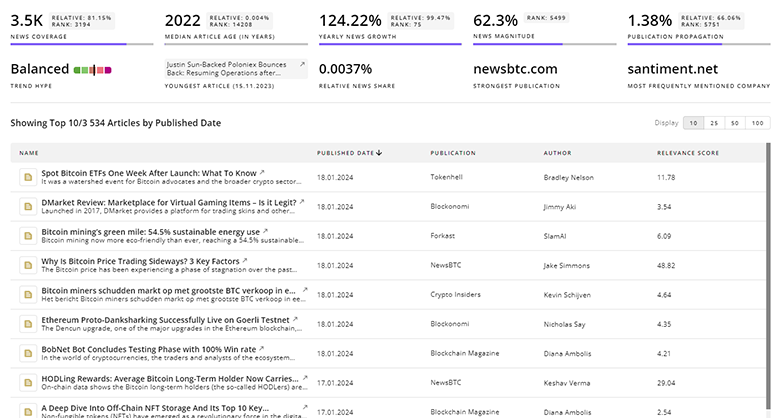
8.9K Virtual Machine News Articles
Discover Latest Virtual Machine Articles, News Magnitude, Publication Propagation, Yearly Growth, and Strongest Publications
Executive Summary
Virtual machines remain the pragmatic scaffold on which cloud, edge, and regulated computing use cases are executed, but the locus of value has shifted: buyers now pay for execution intelligence—security assurance, accelerator-aware scheduling, and rapid, auditable state replication—rather than raw VM count. Providers that embed GPU pooling, provide secure agent execution lanes, or supply instant, production-like testbeds convert VM capability into measurable business outcomes: reduced recovery times, lower AI TCO, and faster developer cycles. For enterprise strategy teams, the imperative is clear: prioritize vendors and partners that couple hypervisor stability with specialized execution features (secure snapshots, unikernels, GPU orchestration, and stateful branching) and insist on procurement metrics that track those outcomes (recovery RTO, accelerator utilization, test-rehearsal velocity). These capabilities will determine which players capture the premium above commoditized VM hosting and which become cost utilities.
We're looking to collaborate with knowledgeable insiders to enhance our analysis of trends and tech. Join us!