Virtual Power Plant Report
: Analysis on the Market, Trends, and TechnologiesThe Virtual Power Plant (VPP) market has moved from experiment to industrial-scale deployment: the market reached $4,600,000,000 in 2024 with a projected compound trajectory at 21.6% CAGR toward a $32,200,000,000 market by 2034. This momentum reflects two linked forces: rapid addition of distributed renewable capacity that creates urgent need for coordinated flexibility, and software-driven orchestration that converts fragmented assets into commercially tradable capacity. Market reports present a range of forecasts and segment emphases, but the internal trend data above should be treated as the baseline for planning; competing forecasts confirm the same direction and similar magnitudes, reinforcing the case for near-term investment in platform-grade orchestration, asset-level telemetry, and market-integration capabilities grandviewresearch – Virtual Power Plant Market, 2025.
47 days ago, we last updated this report. Notice something that’s not right? Let’s fix it together.
Topic Dominance Index of Virtual Power Plant
The Topic Dominance Index offers a holistic analysis of Virtual Power Plant, merging data from 3 diverse sources: relevant published articles, newly founded companies, and global search metrics.
Key Activities and Applications
- DER Aggregation and Fleet Orchestration — Aggregating rooftop solar, stationary batteries, EV chargers, CHP, and controllable loads into a single dispatchable portfolio remains the primary VPP business function and revenue source; residential solar-plus-storage and industrial flexibility are high-value inputs.
- Ancillary Services & Grid Balancing — VPPs participate in frequency regulation, spinning/standing reserve, and capacity markets by bidding aggregated flexibility; several operators now secure multi-megawatt ancillary contracts by presenting predictable dispatch profiles to TSOs and ISOs.
- Energy Trading and Price Arbitrage — Software layers enable buy-low / sell-high strategies across day-ahead and real-time markets; value stacking of arbitrage, capacity, and ancillary services drives unit economics. Market pilots report clear revenue uplift when accurate short-term forecasting is layered with automated bidding.
- Demand Response & Load Flexibility — Coordinated control of HVAC, water heating, industrial processes, and EV charging provides fast, predictable downward and upward adjustments; demand response remains the leading VPP technology segment by usage and near-term revenue potential imarcgroup - Virtual Power Plant Market Report, 2024.
- Resilience and Backup Services — VPPs package distributed storage and local generation to supply emergency power, reducing reliance on peaker plants and delivering resilience during extreme weather events, which increases utility willingness to sign multi-year contracts.
- Community Energy & Virtual Net Metering — Aggregation across neighborhoods and commercial portfolios enables community energy billing and local markets, improving consumer participation while unlocking regulatory incentives in select jurisdictions.
Emergent Trends and Core Insights
- AI-driven orchestration is the operational differentiator — Platforms that embed machine learning for generation and load forecasting, risk-aware scheduling, and price prediction reduce imbalance penalties and materially improve dispatch economics.
- EVs are moving from load to flexible storage nodes — Vehicle-to-grid and managed charging increasingly act as mobile batteries inside VPP portfolios, expanding available flexibility and lengthening dispatch windows.
- Hybrid VPPs that provide dispatchable clean power win premium contracts — Markets discount purely intermittent capacity; projects combining long-duration storage, thermal dispatchables, or bioenergy with software orchestration command higher market access and pricing.
- Regulatory evolution is enabling scale — State and national rules that recognize aggregated DERs as market participants are expanding capacity market eligibility and simplifying settlement, accelerating commercial VPP rollouts in North America and Europe.
- Platform consolidation vs. specialist insurgency — The competitive field is splitting: large aggregators and utilities pursue scale via acquisitions and partnerships, while small specialists monetize niche flexibility (heat pumps, industrial processes, V2G) or supply critical components like DERMS and edge gateways.
Technologies and Methodologies
- Distributed Energy Resource Management Systems (DERMS) — Centralized orchestration stacks with market-grade bidding engines and compliance modules; essential for wholesale participation and regulatory reporting.
- AI/ML Forecasting and Optimization — Bi-LSTM and ensemble forecasting for generation/load plus risk-aware schedulers (e.g. CVaR-based optimization) reduce forecast error and exposure to imbalance costs technologyreview - How Virtual Power Plants are Shaping Tomorrow's Energy System, 2024.
- Edge Gateways and Low-Latency Controls — Secure edge devices execute fast dispatch commands and provide local fail-safe control, minimizing central processing burden and improving response times for frequency services.
- Digital Twins and Synthetic Testing — Virtual asset replicas and scenario simulators allow pre-certification of VPP behavior against market rules and regulatory tests, improving acceptance in capacity and ancillary markets.
- Blockchain and Regulated Digital Asset Rails — Emerging for P2P settlement, transparent provenance of flexibility credits, and tokenized community incentives; viability depends on regulatory clarity and integration with wholesale settlement systems openvpp.energy.
- Multi-service Value Stacking Methodologies — Architecture that prioritizes simultaneous revenue streams (energy, capacity, ancillary, resiliency) and resolves conflicts through economic hierarchy and risk constraints is now standard for commercial VPPs.
Virtual Power Plant Funding
A total of 245 Virtual Power Plant companies have received funding.
Overall, Virtual Power Plant companies have raised $47.9B.
Companies within the Virtual Power Plant domain have secured capital from 1.1K funding rounds.
The chart shows the funding trendline of Virtual Power Plant companies over the last 5 years
Virtual Power Plant Companies
- Markedroid — Markedroid provides household-focused VPP orchestration that aggregates solar, storage, and smart inverters into an AI-managed fleet for retail customers. Its asset-agnostic cloud platform aims to maximize homeowner market participation through automated forecasting and price-aware dispatch. The company targets direct-to-consumer adoption pathways to reduce friction with traditional utility procurement. Early funding and pilot deployments indicate product-market fit in regulatory environments that favor residential aggregation.
- Enspi.io — Enspi.io builds a web3-enabled VPP exchange and AI optimization stack that packages enterprise demand response and curtailment into tradable products. The platform emphasizes automated scheduling for large facilities and uses tokenized settlement to accelerate onboarding in underserved markets. With seed funding and an explicit focus on market participation tools, Enspi.io positions itself as a commercial-grade VPP marketplace provider.
- IE-ENERGY d.o.o. — IE-ENERGY is a Croatia-based licensed energy trader building a regional VPP that focuses on digital market interfaces and regulatory navigation across European balancing markets. The startup designs localized aggregation products and aims to capture ancillary revenues for small-scale producers and prosumer communities. Its licensing and EIC recognition give it market access advantages in select EU markets.
- Islay Power — Islay Power develops optimization algorithms and patents intended to give aggregators an edge in real-time bidding and storage dispatch. The company emphasizes algorithmic moat construction over scale, using intellectual property to secure commercial contracts and defend pricing power. Their technical focus suggests a playbook of licensing software to utilities and aggregators rather than large asset ownership.
- VPP Lab — VPP Lab offers a compact VPP stack targeted at regional deployments in Asia, with product designs optimized for local market rules and high renewable penetration. The startup packages forecasting, DER telemetry, and demand response tools into a lightweight solution intended for telco and microgrid integrators. Pilot projects in South Korea test interoperability with national grid control systems and local TSOs.
Stay connected with industry movements through TrendFeedr’s Companies tool, which covers 852 Virtual Power Plant companies.
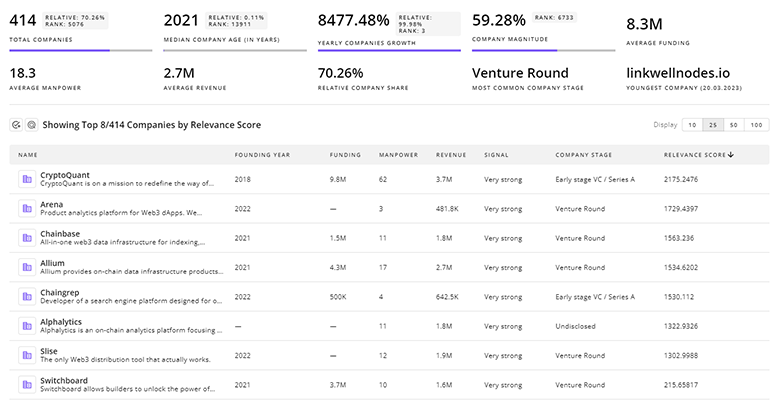
852 Virtual Power Plant Companies
Discover Virtual Power Plant Companies, their Funding, Manpower, Revenues, Stages, and much more
Virtual Power Plant Investors
Discover investment patterns and trends with TrendFeedr’s Investors tool based on insights into 1.5K Virtual Power Plant investors. This tool is essential for understanding the financial ecosystem of Virtual Power Plant and developing successful investment strategies.
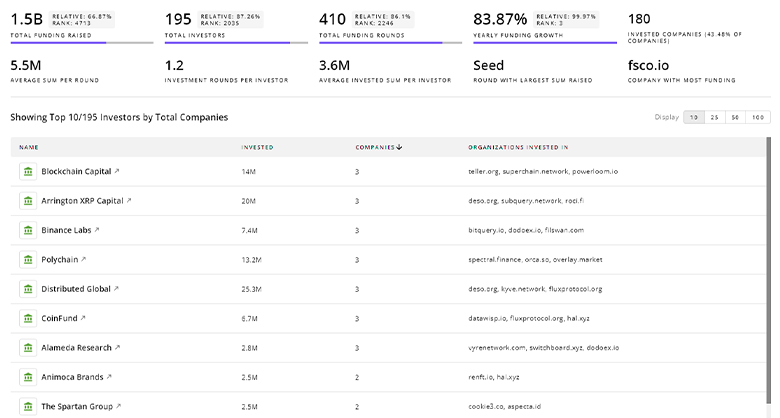
1.5K Virtual Power Plant Investors
Discover Virtual Power Plant Investors, Funding Rounds, Invested Amounts, and Funding Growth
Virtual Power Plant News
TrendFeedr’s News feature grants you access to 3.9K Virtual Power Plant articles. This tool supports professionals in tracking both past trends and current momentum in the industry.
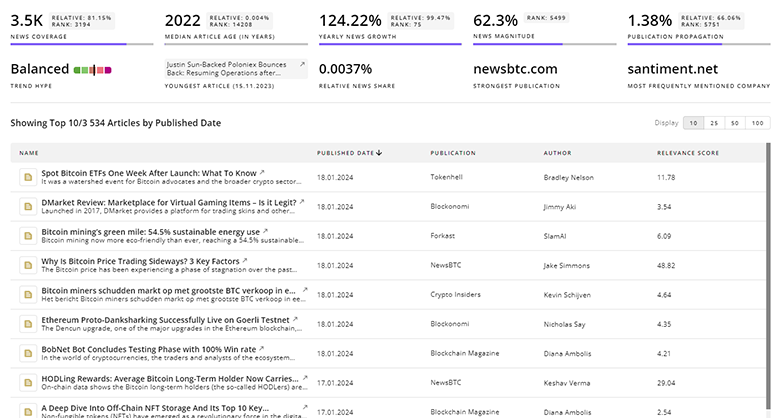
3.9K Virtual Power Plant News Articles
Discover Latest Virtual Power Plant Articles, News Magnitude, Publication Propagation, Yearly Growth, and Strongest Publications
Executive Summary
The VPP market is transitioning from pilot experiments to commercial scale because distributed renewables and electrification create structural demand for coordinated flexibility. The clearest economic path combines precise short-term forecasting, secure low-latency controls, and multi-market participation; firms that integrate these elements—supported by clear regulatory positioning—will capture the most value. Companies should decide whether to pursue platform scale (requiring regulatory access and installed portfolios) or to specialize in a technical moat (advanced DERMS, edge hardware, or defensible optimization IP). For investors and utility strategists, prioritized actions are: fund modular DERMS and edge hardware to accelerate deployments, secure supply chains for critical power electronics, and engage regulators to ensure aggregated resources can compete in high-value markets.
We're looking to collaborate with knowledgeable insiders to enhance our analysis of trends and tech. Join us!