Workflow Automation Report
: Analysis on the Market, Trends, and TechnologiesThe market for workflow automation sits at a decisive inflection: enterprise adoption is accelerating but vendor differentiation now depends on how platforms handle unstructured work and governance. Market analysis reports a 2025 market size of $23,770,000,000 and continued double-digit expansion across adjacent segments, driving heavy investment in AI-native authoring, observability, and legacy-system infiltration Workflow Automation Market – Size, Report & Forecast. Cloud deployments and no-code interfaces lower buyer friction, while agentic automation and intelligent document processing set the bar for measurable ROI in finance, healthcare, and logistics.
269 days ago, we last updated this report. Notice something that’s not right? Let’s fix it together.
Topic Dominance Index of Workflow Automation
To understand the relative impact of Workflow Automation relative to other known Trends and Technologies, our Dominance Index examines three correlated timelines: the volume of articles published, the number of companies founded, and the intensity of global search interest.
Key Activities and Applications
- Process Standardization and Approval Workflows — Mapping and enforcing repeatable steps, approvals, and audit trails for regulated functions such as KYC and claims processing.
- Robotic Process Automation (RPA) for Repetitive Tasks — UI-driven bots automate high-volume entry tasks (invoicing, order updates), often as a bridge to deeper integrations.
- Intelligent Document Processing (IDP) — OCR + ML pipelines transform unstructured files into structured records, enabling downstream automation and exception routing.
- Cross-System Orchestration and iPaaS — API/webhook orchestration that ties ERP, CRM, and legacy apps into coherent end-to-end flows; a dominant buyer requirement for enterprise projects.
- Human-in-the-Loop & Governance Workflows — Hybrid flows that combine AI decisions with human oversight to preserve control, compliance, and explainability in mission-critical processes.
- Specialized Vertical Automation — Deep solutions for high-friction domains (freight payables, healthcare prior auth, dealership accounting) that capture outsized ROI through domain knowledge and tailored exception handling.
Emergent Trends and Core Insights
- AI-First Authoring and Agentic Workflows. Platforms now offer natural-language or observation-driven workflow generation that eliminates manual mapping; vendors that embed reliable agent tooling win faster adoption.
- Cloud + Observability = Enterprise Acceptance. Cloud deployment remains dominant; enterprises demand observability and audit trails for autonomous agents to mitigate risk and satisfy compliance teams.
- Market Sizing Divergence Reflects Scope Differences. Forecasts vary widely because some reports count software alone while others count the full automation ecosystem; expect reported CAGRs in the ~9–18% band depending on scope Workflow Automation Market (MRF).
- Legacy System Infiltration as a Competitive Moat. Techniques that operate non-invasively across portals and spreadsheets (multimodal agents, computer vision) open enterprise addressable market segments that pure iPaaS players struggle to reach.
- No-Code / Low-Code Democratization — with Guardrails. Business users can create flows quickly, but enterprises insist on governance layers and process mining to manage scale and ROI.
- Verticalization Remains Profitable. Narrow players solving acute domain problems (e.g. freight payables, prior authorizations) show higher adoption velocity and clearer ROI than horizontal feature sets.
Technologies and Methodologies
- Agentic AI & Multi-Agent Frameworks — Multi-agent orchestration enables complex, multi-step decisioning and autonomous task handoffs; critical where workflows require situational reasoning Moving Agentic Workflows into Work.
- Intelligent Document Processing (IDP) — Hybrid OCR + ML models generate schemas and map fields automatically, reducing manual configuration time.
- Observation-Led Automation & Local Execution — Tools that learn from user interactions (screen recordings, keystrokes) enable automation where APIs are missing, and local execution addresses data-sovereignty concerns.
- Declarative Workflow Modeling & Portable Metadata — Declarative definitions and DAG-style representations make workflows portable between execution environments and enable automated optimization.
- Process Mining + Workflow Analytics — Instrumentation and analytics identify high-value automation candidates and measure realized ROI; process mining becomes the intake filter for hyperautomation programs.
- RPA with Computer Vision & Multimodal Perception — Combining vision and screen interaction extends RPA into legacy portals where API access is impossible.
Workflow Automation Funding
A total of 1.7K Workflow Automation companies have received funding.
Overall, Workflow Automation companies have raised $48.3B.
Companies within the Workflow Automation domain have secured capital from 5.7K funding rounds.
The chart shows the funding trendline of Workflow Automation companies over the last 5 years
Workflow Automation Companies
- Workflow86 — Workflow86 uses an AI-driven workflow builder that converts plain-language requirements into fully configured process automations, enabling rapid internal deployments with human-in-the-loop controls. Their product targets teams that need to automate multi-step operations without long professional services engagements, aiming for speed of deployment and repeatability. The firm sits at the intersection of no-code authoring and agent augmentation, positioning it to be an enabler for business-owned automation programs.
- Skipflow — Skipflow focuses on composable, observable automation components designed to be auditable and transparent for enterprise use. The company emphasizes modular AI components that allow inspection and debugging of agent decisions, addressing the governance gap that limits LLM-driven automations in regulated sectors. Its product strategy targets risk-sensitive buyers that require traceability as a gating criterion for automation scale.
- WorkBeaver — WorkBeaver captures workflows by watching user interactions and runs automations locally on the desktop, providing an approach that preserves data sovereignty and reduces cloud transmission risk. This local, observation-based model suits regulated environments and organizations unwilling to move sensitive workflows into multi-tenant clouds; it also simplifies automation of legacy Windows applications.
- Flowbit AI — Flowbit AI targets medium-sized enterprises in Germany with tailored back-office automation that claims up to 80% reduction in manual workload for specific processes, coupling rapid implementation with GDPR-first architecture. Their go-to-market emphasizes measurable short-term ROI and regionally compliant deployments, creating a defensible niche in European mid-market accounts.
- BravoTran — BravoTran is a vertical specialist automating freight forwarder payables using AI-driven document extraction and a workflow design that resolves exceptions through a tailored approval loop. Its sector focus translates into faster time-to-value for logistics customers, making it a clear example of how domain expertise beats general-purpose feature sets for high-friction operations.
TrendFeedr’s Companies feature offers comprehensive insights into 10.6K Workflow Automation companies.
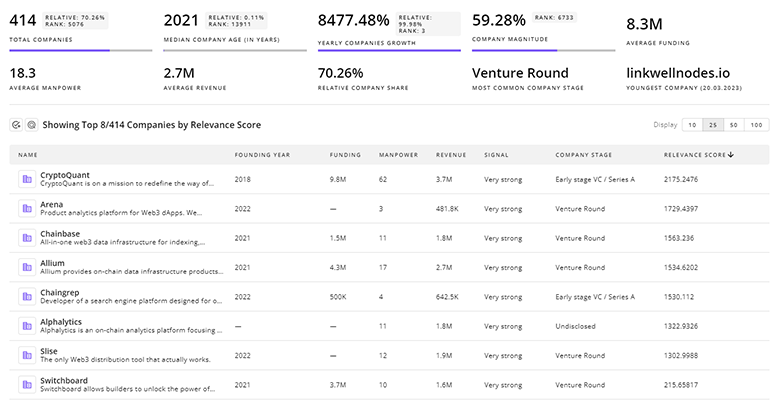
10.6K Workflow Automation Companies
Discover Workflow Automation Companies, their Funding, Manpower, Revenues, Stages, and much more
Workflow Automation Investors
TrendFeedr’s Investors tool offers you a detailed perspective into 6.0K Workflow Automation investors and their funding activities. This information enables you to analyze investment trends and make informed decisions in the Workflow Automation market.
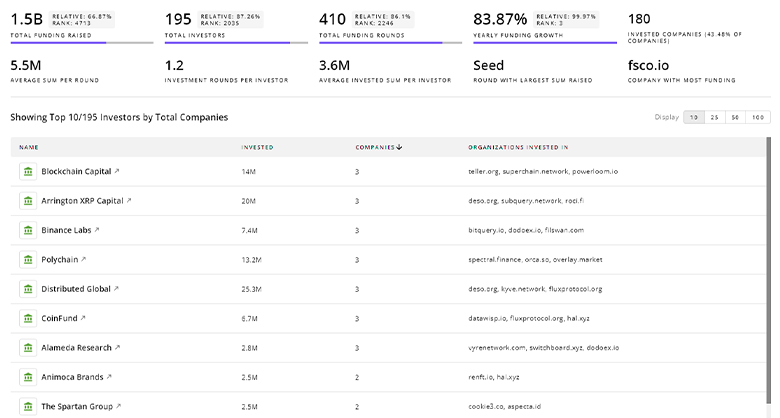
6.0K Workflow Automation Investors
Discover Workflow Automation Investors, Funding Rounds, Invested Amounts, and Funding Growth
Workflow Automation News
TrendFeedr’s News feature delivers access to 6.3K articles focused on Workflow Automation. Use this tool to stay informed about the latest market developments and historical context, which is crucial for strategic decision-making.
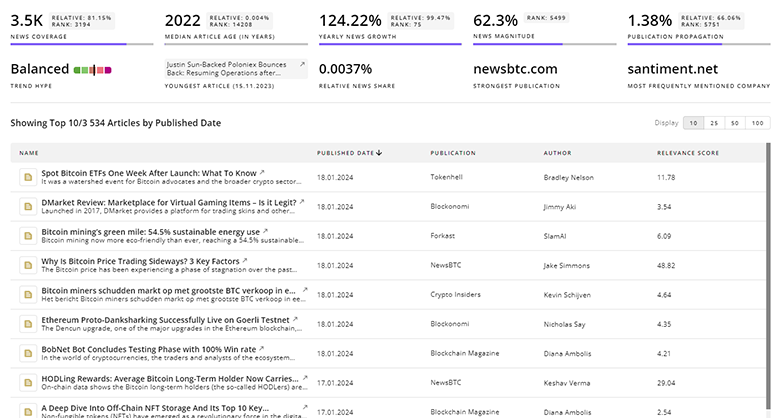
6.3K Workflow Automation News Articles
Discover Latest Workflow Automation Articles, News Magnitude, Publication Propagation, Yearly Growth, and Strongest Publications
Executive Summary
Workflow automation has moved from point productivity projects to a strategic capability that combines agentic AI, document intelligence, and orchestration. Buyers will fund platforms that demonstrate measurable ROI on the highest-volume, highest-friction processes and that provide governance, observability, and legacy-system reach. Vendors have two viable paths: scale as a horizontal platform with enterprise governance primitives, or cement defensible vertical moats where domain rules, compliance, and specialized exception handling create stickiness. For practitioners, the immediate priorities are: instrument process telemetry, apply process mining to prioritize automation candidates, adopt hybrid human-in-the-loop patterns for sensitive flows, and select automation partners that prove both execution reliability and governance.
We're looking to collaborate with knowledgeable insiders to enhance our analysis of trends and tech. Join us!