Agent Architecture Report
: Analysis on the Market, Trends, and TechnologiesThe agent architecture sector is at an inflection point: the identified vendor cohort reports a combined annual revenue of $1.22 billion and accelerating market attention, while external market forecasts show rapid commercial scale potential Agentic AI Architecture Market Size | CAGR of 44.5%. Firms that productize agent lifecycle tooling (development, orchestration, observability, governance) and pair those platforms with industry-specific agent libraries capture both immediate automation value and the governance premium required by regulated buyers Agentforce 2dx: Redefining AI Agent Development for the Enterprise.
This report was last updated 379 days ago. Spot an error or missing detail? Help us fix it by getting in touch!
Topic Dominance Index of Agent Architecture
To identify the Dominance Index of Agent Architecture in the Trend and Technology ecosystem, we look at 3 different time series: the timeline of published articles, founded companies, and global search.
Key Activities and Applications
- Customer support and contact-center automation: agents handle triage, escalate complex cases to humans, and reduce mean response times by converting hours-long waits to minute-level resolution in reported deployments Agent architecture: How AI decision-making drives business impact.
- Claims and transaction processing (insurance, finance, real estate): multi-agent pipelines automate evidence collection, parallel sub-agent processing, and decisioning to increase throughput and lower manual error rates Agentic AI: Automated Claims Processing Multi-Agent System.
- Workflow orchestration and enterprise automation: sense-plan-act pipelines coordinate cross-system tasks (order-to-cash, procurement, SLA remediation) using tool-calling and API integrations for end-to-end execution.
- Data enrichment and synthesis: autonomous crawlers and RAG-enabled agents ingest unstructured sources, produce vectorized knowledge, and supply downstream analytics and decision agents Agentic AI Disruption in Enterprise Intelligence.
- Observability, testing, and governance workflows: agent-level logging (reasoning traces), time-travel debugging, and policy enforcement are deployed to meet audit, privacy, and compliance needs in enterprise settings Ready or Not, Here Comes Agentic AI.
Emergent Trends and Core Insights
- Standards and interoperability are moving to the top of buyer checklists: industry protocols (A2A, MCP) and vendor alliances seek to prevent fragmentation as enterprises deploy many agent types Google’s Agent2Agent interoperability protocol aims to standardize agentic communication Addressing The Challenge Of AI Agent Interoperability.
- Multi-agent orchestration wins for complex workflows: systems that coordinate specialized sub-agents (triage, retrieval, action) deliver higher ROI than single-agent deployments for business processes with branching logic and parallel tasks.
- Governance-first product features convert pilots into enterprise contracts: explainable chains of reasoning, RBAC for agents, and runtime policy engines are decisive procurement criteria for regulated sectors.
- No-code/low-code agent studios accelerate adoption across business units: citizen developers and domain SMEs can assemble agent workflows, increasing internal uptake and shortening time to measurable outcomes.
- Data architecture becomes a gating factor: enterprises with mature data control planes and vector stores enable reliable RAG agents; others face high integration costs and brittle behavior.
Technologies and Methodologies
- Large Language Models and Retrieval-Augmented Generation: LLMs power natural language planning and RAG supplies factual grounding for action-taking agents.
- Multi-agent frameworks and orchestration tools: libraries and platforms (LangChain variants, orchestration runtimes, CrewAI-style controllers) enable task decomposition, service calling, and coordination.
- Reinforcement learning for coordination and negotiation: RL is applied where agents must learn cooperative policies, optimize resource allocation, or negotiate outcomes under changing conditions.
- Observability and time-travel debugging: traceable reasoning logs and replay analytics are becoming product features to satisfy auditability and incident analysis.
- Policy engines and runtime enforcement: centralized policy layers (prompt sanitization, action constraints, credential vaulting) prevent unauthorized actions and maintain least-privilege in agent deployments Airia’s Agent Constraints news signal.
Agent Architecture Funding
A total of 40 Agent Architecture companies have received funding.
Overall, Agent Architecture companies have raised $400.4M.
Companies within the Agent Architecture domain have secured capital from 123 funding rounds.
The chart shows the funding trendline of Agent Architecture companies over the last 5 years
Agent Architecture Companies
- TheAgentic — TheAgentic offers an integrated agent infrastructure combining reasoning LLMs, a digital worker framework, and web automation to let startups and SaaS firms build private digital workers at lower cost; their AI Launchpad program provides engineering teams to accelerate 0-to-1 deployments and reduce operational infrastructure friction.
- Agentplex — Agentplex builds a community and platform for intelligent agents and sponsors a large-scale AI Agents challenge to surface novel agent applications; they focus on workflow-adaptive agents that combine NLP and ML to operate in real time and promote an ecosystem approach rather than a single-vendor stack.
- Agentech — Agentech targets insurance claims with hundreds of specialized digital agents working alongside adjusters; the company reports up to 4x claim throughput improvements by automating document parsing, evidence extraction, and routine adjudication while preserving human decision oversight.
- Action Agent, Inc — Action Agent packages RAG-driven agents, automation actions, and plugin-like connectors (CRM, content platforms) to deliver industry-focused automation for real estate, travel, and e-commerce; their emphasis on bi-directional sync (e.g. WordPress-centric data sync) targets teams that need agents to act across heterogeneous SaaS stacks.
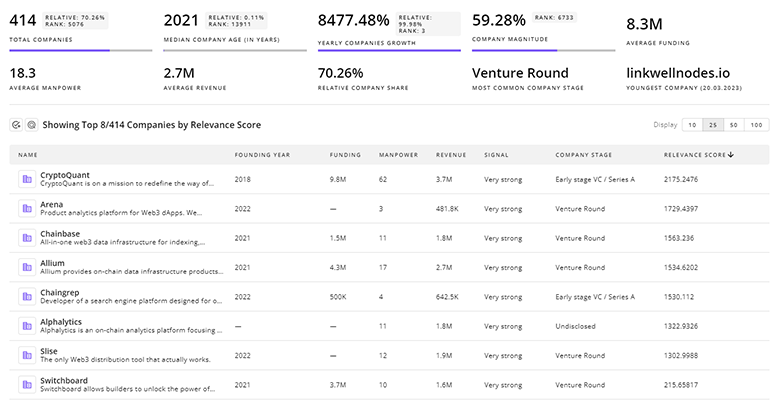
Identify and analyze 204 innovators and key players in Agent Architecture more easily with this feature.
204 Agent Architecture Companies
Discover Agent Architecture Companies, their Funding, Manpower, Revenues, Stages, and much more
Agent Architecture Investors
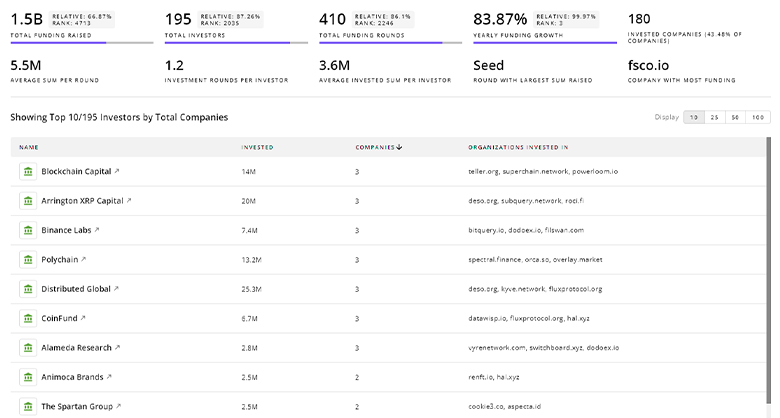
TrendFeedr’s investors tool offers a detailed view of investment activities that align with specific trends and technologies. This tool features comprehensive data on 174 Agent Architecture investors, funding rounds, and investment trends, providing an overview of market dynamics.
174 Agent Architecture Investors
Discover Agent Architecture Investors, Funding Rounds, Invested Amounts, and Funding Growth
Agent Architecture News
Stay informed and ahead of the curve with TrendFeedr’s News feature, which provides access to 220 Agent Architecture articles. The tool is tailored for professionals seeking to understand the historical trajectory and current momentum of changing market trends.
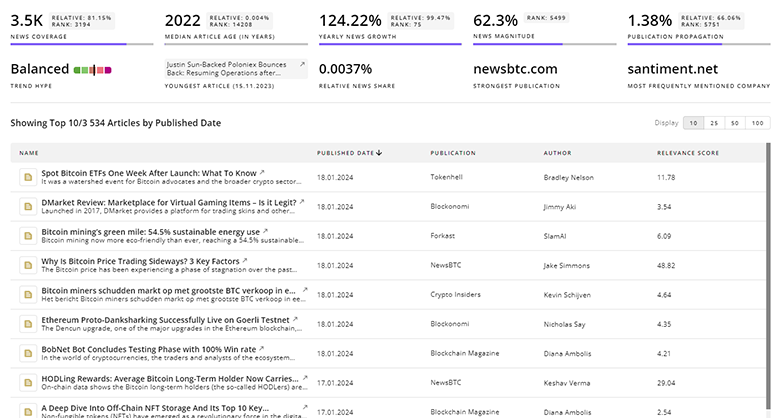
220 Agent Architecture News Articles
Discover Latest Agent Architecture Articles, News Magnitude, Publication Propagation, Yearly Growth, and Strongest Publications
Executive Summary
Agent architecture is maturing from experimental models into enterprise-grade systems by combining LLM reasoning, modular skill libraries, multi-agent coordination, and hardened observability and governance. The companies and patterns that will win are those that treat agents as lifecycle-managed software: instrumented for performance, governed for compliance, and packaged with domain libraries that deliver measurable business outcomes. For buyers, prioritize platforms that reduce integration cost (prebuilt connectors and RAG-ready data layers), provide strong agent-level controls and audit trails, and demonstrate domain proof-points; for vendors, productize agent lifecycle operations (development studio, orchestration, observability, policy engine) and ship industry starter kits to shorten procurement cycles.
Interested in enhancing our coverage of trends and tech? We value insights from experts like you - reach out!