Foundation Model Report
: Analysis on the Market, Trends, and TechnologiesThe foundation model space is accelerating into enterprise-grade deployments and vertical specialization, anchored by sizeable capital flows and widespread developer activity; the internal trend data records 959 companies working on foundation models and $38.20B in total funding to date, signaling large-scale market commitment and resource concentration.
This article was last updated 368 days ago. If you find any info is missing, let us know!
Topic Dominance Index of Foundation Model
The Dominance Index of Foundation Model looks at the evolution of the sector through a combination of multiple data sources. We analyze the distribution of news articles that mention Foundation Model, the timeline of newly founded companies working in this sector, and the share of voice within the global search data
Key Activities and Applications
- Model core development and pre-training at scale for multimodal capabilities (text, image, audio, video) — organizations focus on producing base models that downstream teams can adapt for many tasks.
- Fine-tuning and vertical specialization where practitioners adapt foundation models to regulated or domain-specific contexts such as finance, healthcare, and law to improve accuracy and compliance.
- On-device and private inference to reduce latency and preserve data privacy; major platform moves enable developers to run foundation-model capabilities locally on phones and edge hardware Apple’s Foundation Models open on-device AI to your apps in iOS 26.
- Production inference and model-as-a-service operations, including vector retrieval and RAG pipelines, to supply enterprise applications with current, auditable knowledge.
- Simulation, synthetic-data generation, and digital twins for engineering, climate, and drug discovery workflows where large models create scenarios, accelerate experiments, and produce labeled training data for downstream systems.
Emergent Trends and Core Insights
- Verticalization: foundation models are being specialized into industry-specific variants (finance, radiology, automotive perception), increasing trust and regulatory fit for high-stakes use cases.
- Multimodal fusion and long-context reasoning are moving from research to product: teams integrate vision, language, sensor, and time-series signals to handle complex decision tasks in robotics, autonomous systems, and Earth-system modeling.
- Model-agnostic orchestration and retrieval layers are becoming standard design patterns: systems treat models as replaceable components and add retrieval and verification to improve factuality and latency economics.
- Edge and small-model performance innovations reduce inference costs and enable offline use cases; recent open-source releases demonstrate progress in energy- and latency-efficient architectures for constrained hardware.
- Governance and policy friction around open weights and dual‑use risk shape investment and deployment strategies; governments and multilateral initiatives put open-weight management and monitoring on the agenda.
Technologies and Methodologies
- Transformer-based pretraining with self-supervised objectives remains the dominant backbone for text and many multimodal models, enabling transfer to a wide range of tasks.
- Chain-of-Thought and reasoning variants improve multi-step decision performance for complex tasks and planning pipelines.
- Parameter-efficient fine-tuning (PEFT) approaches such as low-rank adapters reduce the compute and data needed to adapt huge models to narrow domains.
- Retrieval-augmented generation (RAG) and vector databases provide real-time grounding and factuality controls for deployed systems, linking LLM outputs to auditable knowledge stores.
- Multimodal architectures that fuse vision, language, and sensor streams support robotics and autonomous driving use cases (for example, BEV perception and NeRF/occupancy networks for spatial understanding).
- Physics- and domain-informed models (physics-informed neural nets, hybrid numerical-AI models) power digital twins and climate or engineering simulations where physical constraints matter.
Foundation Model Funding
A total of 399 Foundation Model companies have received funding.
Overall, Foundation Model companies have raised $42.9B.
Companies within the Foundation Model domain have secured capital from 1.4K funding rounds.
The chart shows the funding trendline of Foundation Model companies over the last 5 years
Foundation Model Companies
- Prior Labs — Prior Labs develops foundation capabilities for tabular and spreadsheet data, positioning models as analytics primitives for business intelligence and scientific workflows; they target high-value enterprise workflows where structured data dominates, offering reduced integration friction compared with free-form LLM pipelines.
- Bioptimus — Bioptimus focuses on pathology and biomedical foundation models, delivering models trained on curated pathology datasets to accelerate diagnostics and R&D; the company combines model releases with academic partnerships to validate clinical performance and regulatory pathways.
- Liquid AI — Liquid AI publishes compact foundation models that prioritize inference speed and energy efficiency for edge deployments; their architectures aim to support long-context tasks on constrained hardware and to lower the operational cost of running foundation models in production.
- Backflip AI — Backflip builds 3D foundation models that convert scans into manufacturable digital twins, targeting industrial inspection, simulation, and additive manufacturing workflows; their stack shortens the loop from physical asset to validated digital representation and automates downstream CAD and tooling steps.
- Raidium — Raidium concentrates on radiology-focused foundation models and has recently secured grant and accelerator support to commercialize medical imaging models; they combine clinical partnerships and model fine-tuning to target regulatory-compliant diagnostic support tools.
Uncover actionable market insights on 1.0K companies driving Foundation Model with TrendFeedr's Companies tool.
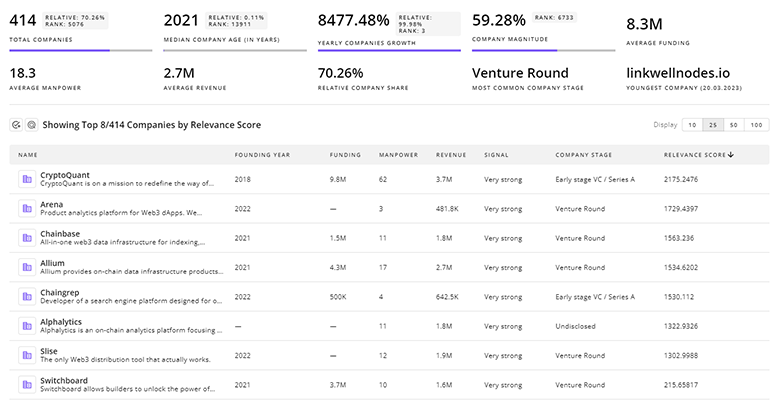
1.0K Foundation Model Companies
Discover Foundation Model Companies, their Funding, Manpower, Revenues, Stages, and much more
Foundation Model Investors
Get ahead with your investment strategy with insights into 2.3K Foundation Model investors. TrendFeedr’s investors tool is your go-to source for comprehensive analysis of investment activities and financial trends. The tool is tailored for navigating the investment world, offering insights for successful market positioning and partnerships within Foundation Model.
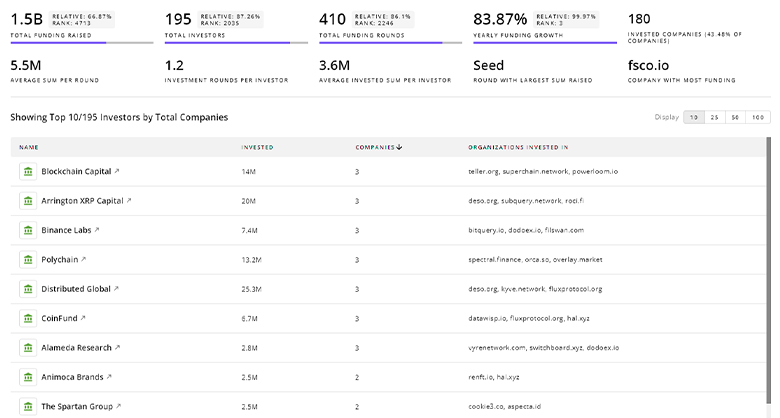
2.3K Foundation Model Investors
Discover Foundation Model Investors, Funding Rounds, Invested Amounts, and Funding Growth
Foundation Model News
TrendFeedr’s News feature offers access to 1.6K news articles on Foundation Model. The tool provides up-to-date news on trends, technologies, and companies, enabling effective trend and sentiment tracking.
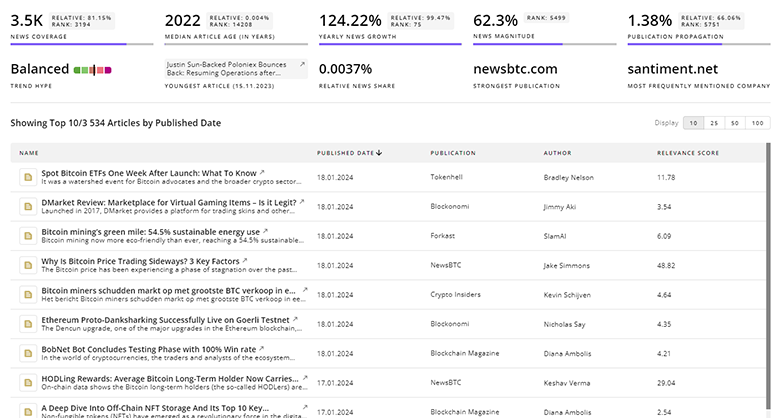
1.6K Foundation Model News Articles
Discover Latest Foundation Model Articles, News Magnitude, Publication Propagation, Yearly Growth, and Strongest Publications
Executive Summary
The foundation model landscape has entered a phase where scale, specialization, and systems integration define winners. Firms that pair high-quality base models with vertical data, rigorous evaluation regimes, and operational primitives for production inference will capture disproportionate value. Short-term commercial opportunity lies in domain-specific fine-tuning, on-device and edge-efficient models, and retrieval-grounded deployment patterns that improve factuality and auditability. For strategic investors and enterprise adopters, priorities are: assess data governance and regulatory fit early, instrument model outputs with retrieval and monitoring for traceability, and prefer modular architectures that let organizations swap or upgrade models without rearchitecting downstream systems. These practical steps translate the current wave of research advances into repeatable, compliant, and revenue-generating products.
Have expertise in trends or technology? Your input can enrich our content — consider collaborating with us!